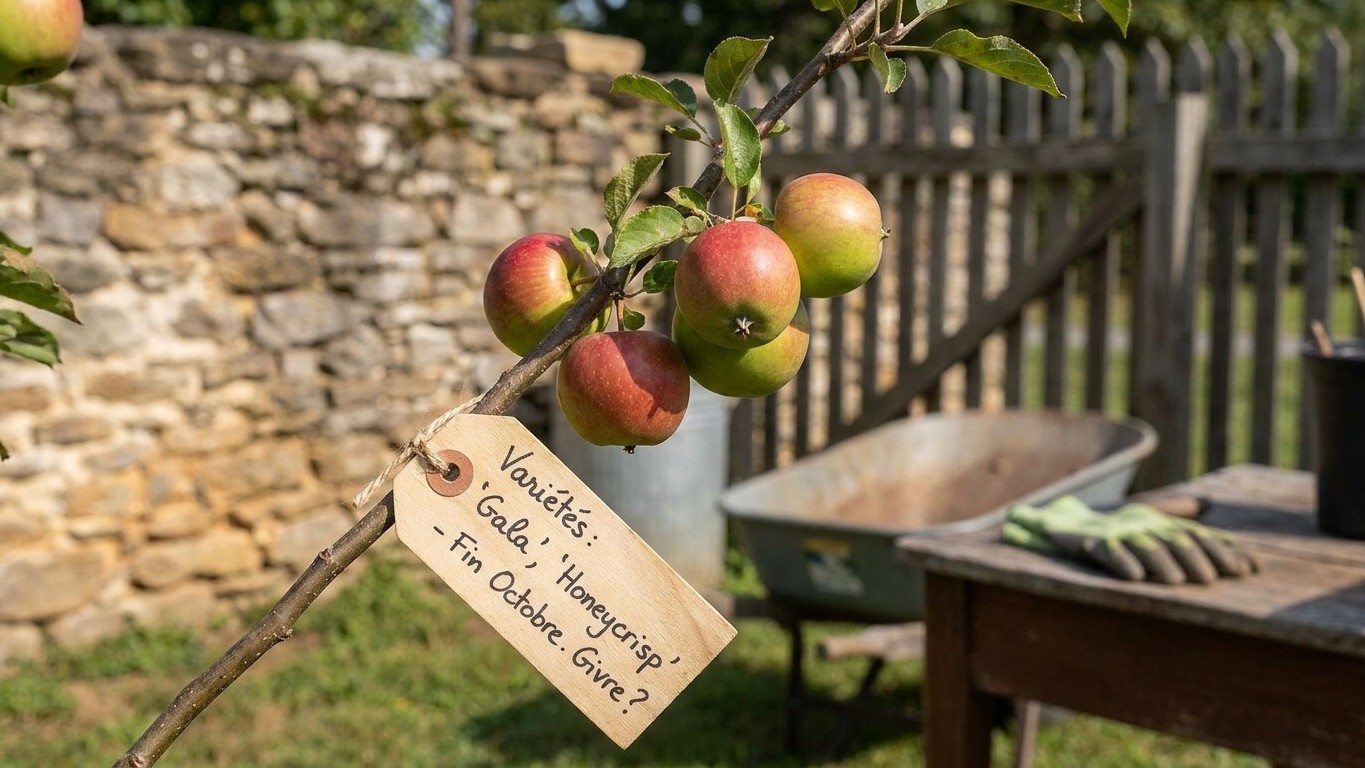

Tidewater apple growers who plant a high-chill variety because it sounded classic often watch it limp through bloom, drop fruit early, or simply sulk for years. The coastal plain’s winters rarely dip cold enough, long enough, to satisfy trees bred for real dormancy — the trees stay confused, not dead, which is worse, since you don’t find out until the harvest that never quite comes. The fix isn’t abandoning apples near the coast. It’s matching the variety to the winter you actually have.
Can you grow apples in Virginia
Yes, and across most of the state. The USDA’s 2023 Plant Hardiness Zone Map, built on 1991-2020 normals, puts Virginia at zones 5a to 8b, a range wide enough to run from the high ridges of the Blue Ridge and southwest Virginia down to the Tidewater coast. NOAA’s NCEI 1991-2020 climate normals at the Virginia Beach reference station put the coldest month’s average daily minimum at 31.8°F, a mild figure typical of the coastal plain. That number describes the coast, not the mountains. Highland County and the counties along the West Virginia line run colder in winter and later in spring, closer to the climate covered in our guide to growing apples in West Virginia.
A mild coastal winter is not automatically an advantage for apples. The crop wants a real cold dormancy, and a reading near 31.8°F for the coldest month’s average minimum, as measured at Virginia Beach, sits at the mild edge of what a high-chill variety wants. That is part of why Virginia’s commercial apple orchards cluster inland, in the Shenandoah Valley and the hill country around Winchester, where colder winters and well-drained slopes suit the crop better than the flat, humid coastal plain where the 31.8°F figure was recorded.
None of this rules out growing apples near the coast. It means picking a variety suited to a shorter, milder winter and accepting a somewhat higher disease workload in the humid air off the Chesapeake. Match the variety to your end of the state rather than to a single statewide zone number, and treat the 5a to 8b range as a reminder that Virginia is really several different apple climates stacked in one state. Coastal Virginia’s mild, humid growing conditions are closer to the conditions covered in our page on growing apples in New Jersey than to the mountain climate a few hours west.
Which varieties suit this climate

Start with hardiness, then check chill, and once you’ve settled on varieties, the Virginia apple Calendar lays out the bloom and harvest windows to expect. A variety’s published hardiness zone tells you whether the tree survives a Virginia winter, and our guide to Virginia apple Best varieties breaks down which cultivars actually fit each region. The separate winter chill requirement, the number of cold hours below roughly 45°F the tree needs before it flowers normally, tells you whether it blooms well once it does survive. Get the hardiness zone wrong and the tree dies. Get the chill requirement wrong and it flowers thin and ragged for as long as it lives.
Several cultivars publish a hardiness range that covers most of Virginia. ‘Liberty’ and ‘Enterprise’ are both rated to zones 4 through 8 and bred for resistance to apple scab, which matters in the state’s humid summers. ‘GoldRush’, also scab-resistant, is rated zones 5 through 8 and is known in nursery catalogs for an unusually late bloom, a useful trait where spring frost runs late. ‘Arkansas Black’ and ‘Stayman Winesap’ are older Mid-Atlantic favorites rated zones 5 through 8. ‘Honeycrisp’ is commonly listed at zones 3 through 8, wide enough to cover the whole state, though it carries more disease trouble than the scab-resistant group above.
| Variety | Catalog hardiness zones | Chill requirement | Bloom timing | Typical harvest |
|---|---|---|---|---|
| ‘Liberty’ | 4-8 | Moderate to high | Mid-season | Late September |
| ‘Enterprise’ | 4-8 | Moderate to high | Mid to late season | Mid-October |
| ‘GoldRush’ | 5-8 | Moderate to high | Late season | Late October |
| ‘Arkansas Black’ | 5-8 | Moderate | Mid-season | Mid to late October |
| ‘Stayman Winesap’ | 5-8 | Moderate | Mid-season | Early to mid October |
Virginia’s winters, even the mild coastal ones described above, deliver enough cold for any of the varieties in that table. The risk here runs the other way. A low-chill variety bred for the Deep South or for California’s Central Valley, needing only a few hundred chill hours, can break dormancy erratically in a Virginia winter and bloom during a warm January spell, then have nothing left to open properly come spring. Skip the low-chill selections sold for zones 8 and 9 in southern catalogs, since none is suited to Virginia. Buy from a nursery that prints the chill requirement on the tag, and match it to a moderate-to-high figure rather than guessing.
Planting a pair that works here
Apples need cross-pollination from a second tree blooming at the same time, and at least one member of that pair has to carry fertile pollen. Some old, popular varieties, including ‘Stayman Winesap’, are triploids with sterile pollen. Two Stayman trees, or a Stayman planted next to another triploid, will not set fruit for each other no matter how well they bloom together.
From the varieties above, ‘Liberty’ and ‘Enterprise’ bloom close enough in the same mid-to-late window to make a realistic backyard pair, both diploid and both fertile for each other. If you want ‘Stayman Winesap’ for its old Mid-Atlantic flavor, plant it beside ‘Liberty’ or ‘Enterprise’ rather than beside another triploid variety, so it always has fertile pollen nearby when it opens. ‘GoldRush’ blooms late enough that it pairs better with ‘Enterprise’, which also runs mid to late, than with an early bloomer that may finish flowering before GoldRush even opens.
A crabapple with a long bloom period works as the second tree too, if the yard only has room for one full-size apple. Keep the pollenizer within normal bee-flight range of the fruiting tree, and remember that a single tree standing alone, however healthy, will bear little or nothing most years.
The frost that costs a crop here

NOAA’s NCEI 1991-2020 climate normals for the NAS Oceana station near Virginia Beach put the 30 to 70 percent probability window for the last spring freeze at March 20 to April 3, and the first fall freeze in the same probability band at November 10 to November 24. Those dates describe the coast. The Blue Ridge and southwest Virginia, closer to the country covered in our guide to growing apples in West Virginia, run weeks later in spring and weeks earlier in fall.
The frost that actually costs a Virginia grower a crop rarely kills the tree itself. A freeze that arrives after the buds open to the pink stage kills the open flowers, not the wood, so the tree leafs out fine that summer while carrying no apples at all. The closer bloom sits to that March 20 to April 3 window, the higher the odds of losing the whole crop to a freeze the tree itself never notices.
Two things help at the margins. Site the orchard on a slope or high ground where cold air drains away rather than in a low spot where frost pools, and go easy on hard, late-winter pruning, since heavy pruning tends to push bloom earlier into that risky window. The real protection, especially at a site near the late edge of the freeze window or higher inland, is choosing a variety that blooms later in the first place. ‘GoldRush’, with its documented late bloom, and ‘Enterprise’, which runs mid to late, carry less risk here than an early bloomer opening its flowers while frost still sits in that 30 to 70 percent band at Virginia Beach’s own reference station, let alone further inland where the window runs later still.
The apple year in Virginia
Work off the tree’s stage, not the date on a calendar. A warm week or a cold one shifts every stage below by days or even weeks.
- Dormancy: from leaf drop through winter. Prune while the tree is fully dormant, well ahead of spring growth, so cuts have time to callus.
- Green tip: the first green shows at the bud tips, typically before Virginia Beach’s own last-frost window of March 20 to April 3 opens. Any dormant oil spray belongs before this stage, not after.
- Pink: buds swell and show pink color without opening. Watch this stage closely against a late freeze, since the flowers inside are nearly exposed.
- Bloom: flowers open fully. This is the stage most exposed to the frost damage described above, and the reason a late-blooming variety carries less risk near the tail end of the frost window.
- Petal fall and fruit set: petals drop and pollinated flowers begin swelling into fruit, usually once freeze risk near the coast has dropped well past the 30 to 70 percent band.
- Harvest: timing depends on variety, from late September for ‘Liberty’ to late October for ‘GoldRush’, and should finish well ahead of the first fall freeze, which NOAA’s normals put at November 10 to November 24 near Virginia Beach and earlier inland.
Local help
For a variety list matched to your county and current spray timing for scab, fire blight and codling moth, contact Virginia Cooperative Extension, the state’s land-grant extension service. Extension agents track local bloom dates and pest pressure on the ground, which is detail no statewide climate normal can give you, and they can tell you whether your own slope runs closer to the coastal frost dates above or to the later, colder pattern of the interior.
Common questions
My apple tree bloomed fine but set almost no fruit. What happened?
Check pollination first, before assuming frost. A second variety blooming at the same time is required for most apples, and a tree standing alone, or paired only with another sterile-pollen variety like a second ‘Stayman Winesap’, will bloom well and still set little fruit.
Can I plant just one apple tree in a small yard?
One tree alone rarely fruits well, since most varieties need cross-pollination from a different variety blooming at the same time. If space only allows one full-size tree, a nearby crabapple with an overlapping bloom period, or a neighbor’s tree within bee range, can serve as the pollen source.
How long before a new apple tree bears fruit in Virginia?
It depends mainly on rootstock, not on the state. A dwarf tree on a size-controlling rootstock typically starts bearing several years sooner than the same variety grown on a standard, seedling rootstock, regardless of which part of Virginia it’s planted in.
Do apple trees need a lot of spray in Virginia’s humid summers?
Humidity raises disease pressure, especially apple scab and fire blight, more than it raises pest pressure directly. Scab-resistant cultivars such as ‘Liberty’, ‘Enterprise’ and ‘GoldRush’ cut the spray schedule considerably compared with a disease-prone variety like ‘Honeycrisp’, though Virginia Cooperative Extension’s current guidance is still worth checking since pressure shifts from year to year.
Will summer heat hurt an apple tree in Virginia?
Not as much as the humidity does. The USDA hardiness zone mostly measures winter cold tolerance, not summer heat, and in Virginia it’s fungal disease brought on by humid summers, not heat stress itself, that causes most of the trouble. Choosing a disease-resistant cultivar matters more here than worrying about heat alone.