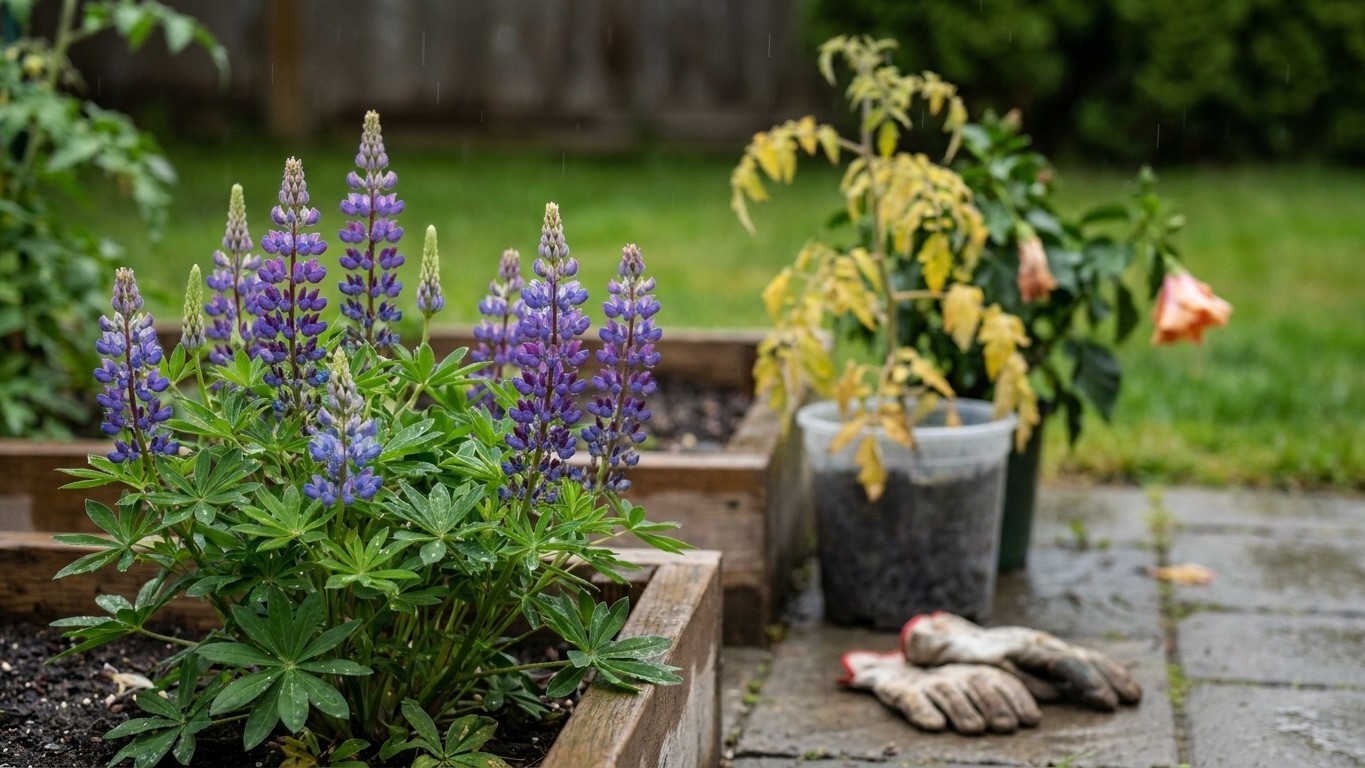

British Columbia’s coast runs mild and wet through winter and cool through summer, and that decides which flowers actually perform here. Environment and Climate Change Canada’s 1981-2010 climate normals for the Vancouver Int’l A station put the coldest month’s average minimum at 0.8 °C, with essentially zero days a year reaching 90°F. Flowers built for damp, moderate conditions, such as foxglove, hydrangea, rhododendron and hellebore, thrive. Sun and heat lovers like lantana, zinnia and tropical hibiscus sulk or rot. Check ECCC’s frost normals for your own district before you set a planting date, since the coast and the interior are not the same garden.
Flowers that thrive in British Columbia
Foxglove (‘Camelot’ series)

Foxglove is built for exactly the climate ECCC’s normals describe: cool, damp summers with no real heat spike. The ‘Camelot’ series flowers in its first year from an early sowing, reaching 3 to 4 feet, and self-seeds readily in the moist, humus-rich soil common on the coast. It tolerates the mild winter minimum around Vancouver without protection, though the biennial types are short-lived and worth replacing every second year.
Hydrangea ‘Endless Summer’

Big-leaf hydrangeas like ‘Endless Summer’ rebloom on both old and new wood, which matters where a late cold snap can nip the first flush. Bloom color runs blue in acidic soil and pink in alkaline soil, a trait fixed on the seed packet and label regardless of where you garden. The shrub wants steady moisture and some afternoon shade, both easy asks given the coast’s rainfall pattern and cool summer air.
Rhododendron ‘Nova Zembla’

Rhododendrons are practically the signature shrub of coastal British Columbia gardens, and ‘Nova Zembla’ is a hardy, widely sold red-flowered cultivar that blooms mid-spring on a dense evergreen frame. It needs acidic, well-drained soil, the opposite of standing water, so raised beds or slopes suit it better than a low wet corner. The mild coldest-month minimum ECCC records for Vancouver keeps its evergreen foliage from the winter burn that harsher climates cause.
Dahlia ‘Café au Lait’

Dahlias reward the long, mild growing season between ECCC’s mean last spring frost of March 18 and mean first fall frost of November 10, a window that runs roughly eight months on average at the Vancouver reference station. ‘Café au Lait’ produces dinner-plate blooms in soft blush tones from midsummer to the first hard frost. Its tubers are frost-tender and most growers lift them where winter soil stays wet, though the mild coldest-month reading means some coastal gardeners leave them mulched in place and accept occasional losses.
Sweet pea ‘Cupani’

This heirloom climbing sweet pea is the fragrant, deep-purple-and-maroon parent of most modern sweet pea breeding, and it flowers best when the roots stay cool. Sown once the ECCC mean last frost date of March 18 has safely passed, and given a trellis, it climbs 5 to 6 feet and blooms through early and midsummer before the season’s heat, such as it is here, ends the show.
Hellebore (Lenten rose)

Hellebores bloom in late winter to early spring, often while frost is still a possibility, and their tough evergreen foliage shrugs off the kind of mild cold ECCC’s 0.8 °C coldest-month minimum describes for the Vancouver area. They want part shade and soil that drains but never dries out, conditions the coastal rainfall pattern provides without much help from the gardener. Once established, a clump needs almost no attention beyond an annual tidy of old leaves.
Flowers that struggle in British Columbia
Lantana ‘Miss Huff’
Lantana needs a long run of real heat to flower heavily, and with zero days a year above 90°F recorded in ECCC’s Vancouver normals, coastal gardens rarely give it that. It is also frost-tender and will not survive a coastal winter outdoors even with the relatively mild minimum on record. Most BC gardeners who grow it treat it as a container annual, moved under cover before the first fall frost.
Zinnia ‘Benary’s Giant’
Zinnias want dry heat and full sun to look their best, and cool, humid summer nights are exactly what brings on powdery mildew and leaf spot. Typical symptoms show up by midsummer:
- A grey-white dusty coating on the upper leaf surface
- Lower leaves yellowing and dropping early
- Flower stems staying short and buds opening late
Good air circulation, wide spacing and morning watering only reduce the problem. They do not eliminate it in a climate this damp.
French lavender ‘Otto Quast’
French lavender needs sharp drainage and a dry summer to avoid root and crown rot, and it is markedly less winter-hardy than English lavender. Coastal BC’s wet winter soil, sitting well above freezing most of the season according to ECCC’s 0.8 °C coldest-month minimum, is still wet enough for long enough to rot the roots of a plant bred for a Mediterranean dry season. Raised, gritty beds help, but many coastal gardeners get better results from English lavender types instead.
Bearded iris ‘Immortality’
Bearded iris rhizomes rot if they sit in waterlogged soil over winter, and heavy coastal rainfall on clay ground is a common way to lose a planting. The fix is not climate, it is drainage: a raised bed or a slope, rhizomes planted high with the top exposed to the air, and soil that is never allowed to stay soggy for weeks at a stretch.
Tropical hibiscus
Tropical hibiscus needs frost-free warmth year round and cannot take even the mild cold ECCC’s normals record for the Vancouver coldest month. It has no place outdoors here past the first fall frost. Gardeners who want the look grow it in a pot and bring it inside for winter, or plant hardy hibiscus (Hibiscus moscheutos) instead, which tolerates cold soil that would kill the tropical species outright.
Putting a border together
Start with height, back to front. Tall plants like foxglove and dahlia go at the rear or center of an island bed, mid-height shrubs like rhododendron and hydrangea fill the middle layer, and low, spreading plants like hellebore edge the front. Skipping this order is the single most common beginner mistake: a border planted at random height ends up hiding its own shorter flowers by midsummer.
Succession of bloom
A border that peaks once and goes quiet for the rest of the season looks unfinished. The trick is layering bloom times so something is always flowering, using the catalogue bloom windows printed on the seed packet or plant tag as your planning tool.
| Season | Example flower | Height | Catalogue bloom window |
|---|---|---|---|
| Late winter to early spring | Hellebore | 12-18 in | Late winter into early spring |
| Mid-spring | Rhododendron ‘Nova Zembla’ | 5-6 ft | Mid-spring |
| Early to midsummer | Foxglove ‘Camelot’ | 3-4 ft | Early to midsummer |
| Early summer to fall | Hydrangea ‘Endless Summer’ | 3-5 ft | Early summer through fall |
| Midsummer to frost | Dahlia ‘Café au Lait’ | 3-4 ft | Midsummer to first fall frost |
Count the bloom windows against your own frost dates rather than the calendar month printed on a packet grown somewhere else. Catalogue figures are usually written for a generic season and can run a week or two either way depending on how warm the spring turns out to be.
Repetition and spacing
Repeating the same flower color or shape at intervals along a border reads as designed, while one of everything reads as cluttered. Three clumps of the same dahlia spaced along a 15-foot bed does more visual work than fifteen different single plants. Leave real gaps at planting time, even though the bed looks sparse for the first season. Hydrangea and rhododendron both reach full width within a few years, and a border planted tight now means digging up and moving shrubs later, which sets root growth back further than most gardeners expect.
Finally, match water needs within a group rather than scattering thirsty plants among drought-tolerant ones. Sweet pea and hydrangea both want consistent moisture and can share a bed; French lavender wants the opposite and is better kept to its own raised, gritty corner where the hose does not reach as often.
Local help
British Columbia’s Master Gardener programs run through regional volunteer chapters and are a genuinely useful free resource for plant problems specific to your own soil and microclimate, something no province-wide guide can fully cover. For plant lists, pest bulletins and current growing advice tailored to the province, the BC Ministry of Agriculture and Food’s extension service is the place to start, and it is worth checking their current bulletins before committing to a large planting. For more on the province’s growing conditions county by county, see our British Columbia guides.
Common questions
Can I grow lavender in my yard if it stays wet all winter?
French lavender types like ‘Otto Quast’ generally will not tolerate it, but English lavender is considerably more winter-hardy and copes better with damp soil if it drains within a day or two of rain. A raised bed or mound of gritty soil solves most of the problem regardless of type.
Will dahlias survive winter in the ground on the coast?
Sometimes, depending on how wet a given winter turns out and how sharp your drainage is, but it is not reliable. A thick mulch layer improves the odds, and lifting the tubers and storing them dry over winter removes the guesswork entirely.
Why do my zinnias get moldy white leaves every August?
That is powdery mildew, and it shows up almost every year in coastal gardens because cool, humid summer nights favor the fungus even without much rain. Wider spacing, morning watering and full sun exposure reduce it, but a wet-summer year will still bring some.
Is British Columbia one climate for gardening purposes?
No. The figures in this guide come from the Vancouver Int’l A weather station and describe the mild, wet coast. The interior and northern parts of the province see colder winters and hotter, drier summers, closer in some ways to conditions further inland such as those covered in our Manitoba flowers guide, and heat lovers that fail on the coast, like zinnia and lantana, do noticeably better in a true hot-summer climate such as the one described in our California flowers guide.
Related guides
- Flowers That Actually Thrive in Alberta, and the Ones That Struggle
- Flowers That Actually Thrive in Yukon, and the Ones That Struggle
- Flowers That Actually Thrive in Manitoba, and the Ones That Struggle