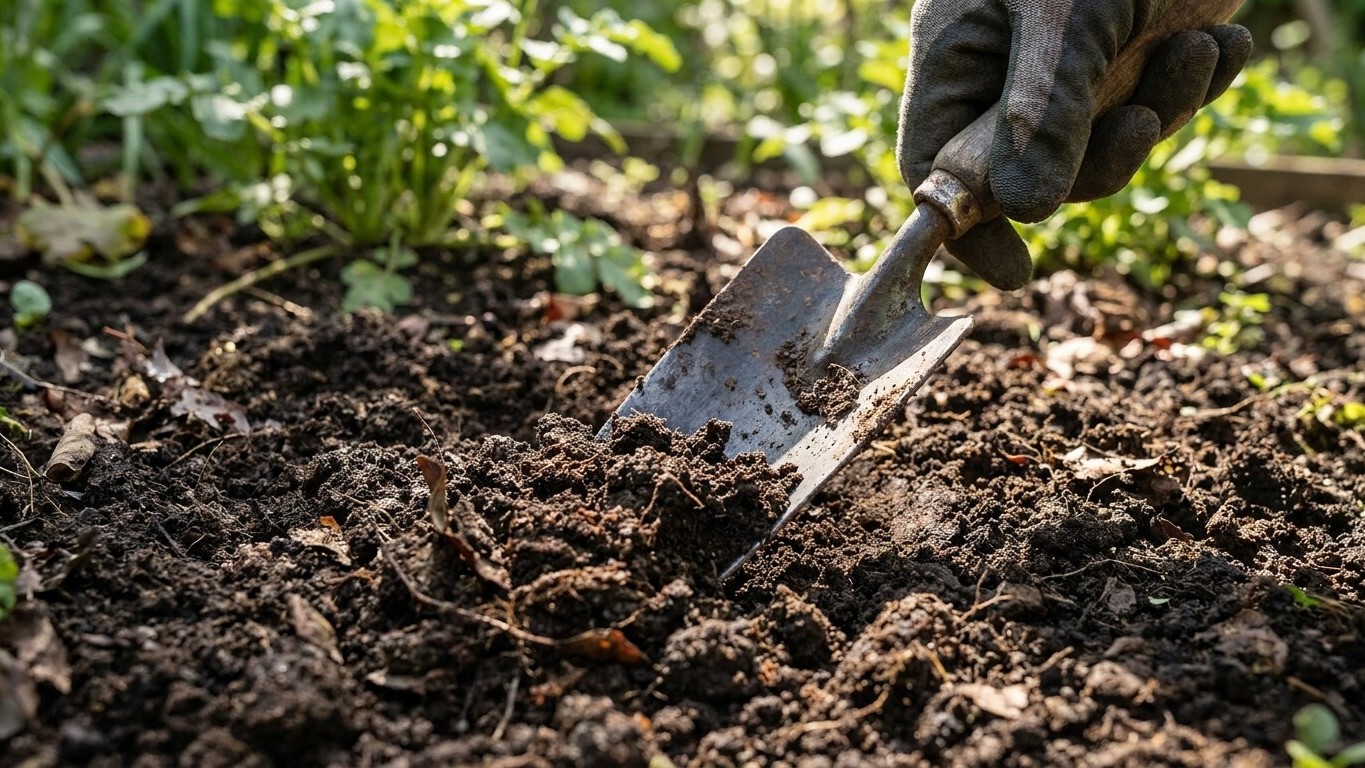

Push a trowel into a typical Rhode Island garden bed and the odds favor a silty, strongly acid loam called the Narragansett series, the soil USDA lists as representative of the state. It is not heavy clay, and it is not sand. Knowing what that series actually contains, and what your own dirt does under a simple ribbon test, tells you more in five minutes than any bag of fertilizer will.
What is under your garden

The Narragansett series is an Inceptisol, a young soil that has not had time to develop the strong, distinct layers you see in older soils elsewhere in the country. USDA’s Soil Survey Geographic Database records the surface horizon of this series as strongly acid, with a pH around 5.3, and textured as a loam to silt loam: 34 percent sand, 6 percent clay, and 60 percent silt. Organic matter in the surface layer runs about 4.0 percent, and drainage is classed as well drained.
| Reading | Value (surface horizon) |
|---|---|
| Surface pH | about 5.3 (strongly acid) |
| Sand | 34 percent |
| Silt | 60 percent |
| Clay | 6 percent |
| Organic matter | about 4.0 percent |
| Drainage class | well drained |
That table describes the series USDA uses to represent Rhode Island, drawn from an average of 39 mapped components. It is not a reading of your particular bed. A river bottom, a hillside, or a lot where a builder scraped the topsoil and pushed subsoil or fill into the yard can behave nothing like it. Treat these numbers as a starting expectation for the region, not as a substitute for testing what you’re actually standing on.
Reading your own dirt in five minutes
Two quick checks will tell you a lot before you spend a dime. First, the ribbon test: squeeze a moist handful of soil between your thumb and forefinger, pushing it out into a ribbon. Silt loam, like Narragansett, will form a short ribbon that breaks easily and feels smooth, almost silky, with little grit. True clay stretches into a long, shiny ribbon; sand will barely hold together at all.
Second, the jar test. Fill a clear quart jar about a third full with soil, top it with water, shake hard, then let it sit overnight. Sand drops first and settles at the bottom within a minute or two. Silt follows over the next few hours, and clay, if there’s much of it, stays suspended longest and settles as the thinnest top layer. Measure the layers and you have a rough texture reading for your own yard, no lab required. If your jar shows a thick clay band or almost no fine material at all, you’re gardening in something different from the state’s representative soil, and the amendments below need adjusting accordingly.
Testing before you amend
Guessing at soil chemistry is one of the more expensive habits a gardener can pick up. Lime and sulphur both take months to shift pH, and applying the wrong one, or the right one in the wrong amount, sets you back a full season rather than saving you one. A lab test costs a few dollars and tells you the actual pH, phosphorus, potassium, and organic matter percentage of your specific bed, none of which you can judge reliably by eye or by taste of the local reputation.
The regional pH figure for Rhode Island’s representative soil, about 5.3, lets you expect strongly acid ground. Expecting is not knowing. Fill, compost additions, wood ash from an old burn pile, or decades of lawn lime can all push a particular yard well away from that regional number in either direction.
To pull a sample that actually represents your bed:
- Pick one planting area at a time; don’t mix a vegetable bed with a lawn sample.
- Use a clean trowel or soil probe and pull 6 to 8 cores from scattered spots across that area.
- Dig to the depth roots actually occupy, roughly 6 to 8 inches for vegetables and flower beds.
- Break up clumps, remove stones and roots, and mix the cores together in a clean bucket.
- Pull about a pint of the mixed soil, let it air dry if the lab requests it, and bag it with the area labeled.
- Submit it to your extension soil lab with the crop or plant you intend to grow noted on the form.
Amending it
Because the representative pH for Rhode Island’s soil sits at about 5.3, well under the 5.5 threshold, lime is the tool that matters here, not sulphur. Sulphur would push already acid ground further in the wrong direction.
Lime, not sulphur
Strongly acid soil locks up phosphorus, making it chemically unavailable to roots even when there’s plenty in the ground. It also punishes brassicas, cabbage, broccoli, and their relatives are especially prone to clubroot disease in acid soil. Ground limestone raises pH gradually, working over one to three growing seasons rather than weeks, so apply it in fall and expect the full effect the following year, not the next month. Never reach for elemental sulphur on ground that tests this acid; that’s a fix for the opposite problem.
Organic matter for a silty structure
At 6 percent clay and 60 percent silt, this soil isn’t heavy clay and it isn’t sand, so it skips the extreme fixes those textures demand. Silt-dominant ground can still crust on the surface after hard rain and compact under repeated foot traffic, because silt particles are fine and pack together without the coarse gaps sand provides or the strong aggregate structure clay can form. Working in compost, leaf mold, or aged manure every season keeps that structure open, improves water infiltration, and adds to the roughly 4.0 percent organic matter already present. This is a one-season improvement you’ll notice by the way water soaks in rather than pooling.
What this soil does not need
Skip the heavy-clay playbook, don’t work in sand hoping to loosen the ground, since that combination with silt can actually seal into something closer to concrete when it dries. And skip the sandy-soil playbook too; this isn’t fast-draining ground that dries out in a day. If your own jar test shows a real clay band or mostly sand, though, follow the correction that matches what you actually found, not what the regional soil suggests.
Drainage and compaction
The Narragansett series is classed as well drained, which is good news if your particular lot matches it: water moves through the profile at a workable rate rather than sitting on the surface for days after a storm. That said, standing water in your yard after rain doesn’t necessarily mean the underlying soil type is at fault. Compaction from construction equipment, repeated foot traffic, or a hardpan layer left by grading can turn even well-drained ground into a soggy mess.
A percolation test settles the question in an afternoon. Dig a hole about a foot deep and a foot wide, fill it with water, let it drain once, then fill it again and time how far the water level drops over an hour. A drop of an inch or more per hour points to reasonably good drainage. Slower than that, especially under an inch an hour, suggests compaction or a denser layer is fighting the soil’s natural tendency to drain.
Double digging, once the standard fix for compacted ground, has fallen out of favor because it disrupts soil life and structure that take years to rebuild, often undoing more than it fixes. If your percolation test comes back slow and the compaction runs deep, a raised bed filled with quality topsoil is usually the more honest answer than three seasons of amendment that may not overcome a hardpan below.
- Do: add organic matter yearly and keep foot traffic off wet beds.
- Avoid: tilling or working the soil while it’s saturated, which destroys structure fast.
- Plant elsewhere or raise the bed: if percolation runs under an inch per hour and the slow layer sits within a foot of the surface.
Local help
The University of Rhode Island’s Cooperative Extension runs soil testing for state residents and will read your results against your specific garden plans, not just hand you a printout. Bring your questions along with the sample; the county-level staff who process these tests talk through what the numbers mean for what you’re trying to grow.
Common questions
Is all Rhode Island soil the same as the Narragansett series?
No. The Narragansett series is the soil USDA designates as representative of the state, based on averaged data from 39 mapped components. Your particular yard, especially near rivers, on hillsides, or on any lot that’s been graded or filled, can differ substantially.
How often should I retest my soil pH?
Every two to three years for an established garden bed, or sooner after a heavy lime or sulphur application, since it takes seasons for the full effect to show up in test results.
Can I raise soil pH faster than lime allows?
Not without risk. Pushing lime rates higher than recommended can overshoot into alkaline territory and lock up different nutrients than the acidity did. Steady, moderate applications over a season or two are the safer route.
Why does my soil seem sandier or clayier than the numbers here suggest?
The figures in this article describe the representative surface horizon of a mapped soil series, not a measurement of your cultivated bed. Fill dirt, erosion, and past landscaping all change local texture, which is exactly why a jar test or ribbon test on your own soil matters more than the regional average.