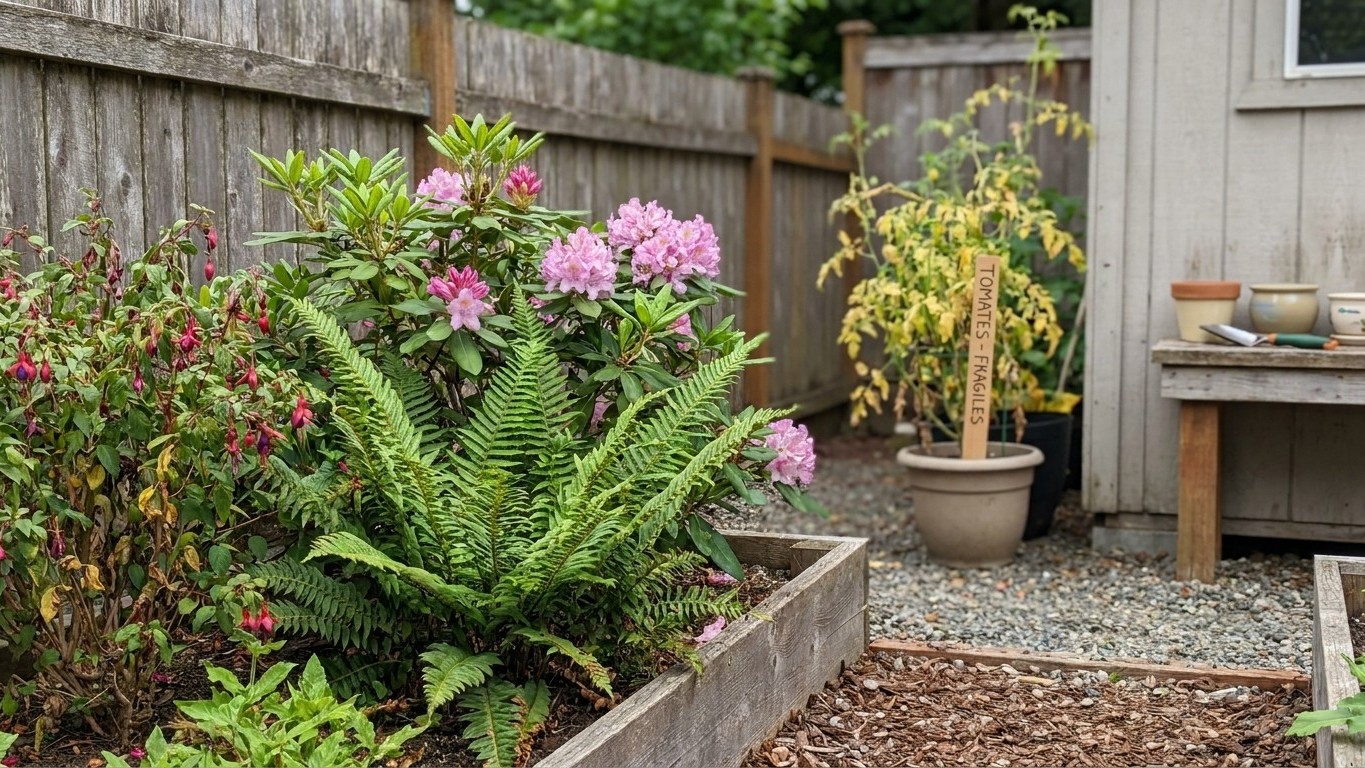

What actually decides whether a flower makes it here isn’t summer heat, it’s how cold your yard gets in January. Some parts of the state barely dip below freezing most winters; others sit in mountain valleys where the ground locks up hard. The flowers that thrive are the ones matched to your winter, not your summer, so before you fall for a plant tag at the nursery, find your zone and check the cold rating against it, using the coldest number that fits your actual property, not the mildest one in the region.
What thrives in Washington

The single trait that decides whether a flower survives here is winter cold, not summer heat. NOAA’s 1991-2020 climate normals put the mean minimum temperature of the coldest month at 37.1°F at the Seattle reference station, mild enough that many marginally hardy shrubs and perennials come through without dieback in the western part of the state. That figure does not hold for the whole territory. East of the Cascades, winters run far colder and drier, which is why the USDA hardiness map spans zone 4a to zone 9a across Washington rather than a single band.
Cold tolerance matters more than heat tolerance
Seattle’s own climate normals record only 3.0 days a year above 90°F, so heat stress is a minor factor for most western Washington gardens. That is a very different growing problem from a place like Texas, where summer heat is the main filter on what survives. Here, the plants that struggle are the ones that need a hot, dry summer to set flower or ripen wood, not the ones that need to survive a hard freeze. Zinnias, lantana and other sun-baked annuals often look thin and slow to bloom in a cool Puget Sound summer, even though they would perform well in a hotter state.
Cold hardiness, by contrast, is the trait to check first on any tag. A plant rated hardy to zone 7 or warmer is a gamble in the colder pockets of the state and a safe bet on the coast. Gardeners working in the mountain valleys and high plateaus, where winter minimums drop close to true zone 4a conditions, face a challenge closer to what growers deal with in Alberta than to what a Seattle gardener sees: a short season bracketed by hard cold on both ends.
East of the Cascades, drought tolerance matters as much as cold hardiness. Summers there run hotter and drier than the coastal figures captured at the Seattle reference station, and gardeners in that half of the state do better with yarrow, blanket flower (Gaillardia) and Russian sage (Perovskia), all of which handle a dry summer stretch and a sharp interior winter in the same season.
Rot resistance is the other trait that separates flowers that do well here from those that rot out. Western Washington’s winters are wet as much as they are mild, and plants that need sharp drainage, lavender and many silver-leaved Mediterranean herbs among them, fail from soggy crowns long before cold ever touches them. Raised beds, gritty soil amendments and a spot against a south wall solve more of that problem than any amount of extra winter mulch.
Families that combine cold hardiness with tolerance of wet soil do the heavy lifting in most Washington borders: the buttercup family (hellebores, columbine, delphinium), the iris family, and the aster family, which covers everything from black-eyed Susan to Michaelmas daisy. Roses also do well across most of the state’s milder zones, provided the variety is chosen for disease resistance rather than for bloom size alone, since damp air favors black spot and mildew.
Native plants worth the space
A native plant that is already suited to the local rainfall pattern, day length and soil needs far less babying once it has a season or two to root in. That single fact is why native flowers earn a spot in a border even when they are less showy than a hybrid: the water bill and the spray schedule both go down.
Plants suited to the Pacific Northwest
Camas (Camassia quamash), with its blue spring spikes, and red columbine (Aquilegia formosa) are two of the region’s most reliable native perennials, both adapted to the cycle of wet winters and drier summers that defines western Washington. Red-flowering currant (Ribes sanguineum) blooms early enough to feed the first hummingbirds and bumblebees out of winter dormancy, and Oregon grape (Mahonia aquifolium) holds its yellow flowers and blue berries through conditions that would flatten a less hardy shrub. Further into the state’s interior, where rainfall drops off sharply, native lupine (Lupinus polyphyllus) and rabbitbrush handle the drier, more continental climate better than most garden hybrids.
- Camas (Camassia quamash): blue-purple spring bloom, tolerates winter-wet meadow soil
- Red columbine (Aquilegia formosa): red and yellow nodding flowers, part shade
- Red-flowering currant (Ribes sanguineum): pink-red spring blooms, feeds early pollinators
- Oregon grape (Mahonia aquifolium): evergreen, yellow flowers, drought-tolerant once established
- Douglas aster (Symphyotrichum subspicatum): late-summer purple bloom, supports late-season bees
Native flowers also carry a pollinator argument that a bred cultivar often cannot match. Regional bees and butterflies evolved alongside these species, and many native bees are specialists that only collect pollen from a narrow group of plants. Plant natives in blocks rather than scattering single specimens, so pollinators have a target patch they can find and use efficiently.
None of this means a native-only border is required, or even always the better-looking choice. It means that when a spot in the design calls for a tough, low-input plant, reaching for a regional native first saves both money and maintenance over reaching for an imported alternative with similar looks.
Perennials that come back

A perennial is only as reliable as the zone it is planted in. In the milder parts of western Washington, at the zone 8 and 9 end of the state’s range, plants that a colder-climate gardener treats as tender annuals can persist for years. In the colder interior and mountain valleys, the reverse is true: a plant sold nationally as a hardy perennial dies back to nothing the first hard winter.
Reading a plant tag against your zone
A nursery tag that lists “hardy to zone 7” is not making a promise, it is stating the coldest zone where the plant has been shown to survive winter outdoors. If your property sits at zone 6 or colder on the USDA map, that plant is a candidate for a container you bring in, a heavy mulch, or an annual you simply replant each spring. Match the zone number on the tag to your own site, not to the mild end of the state’s range, since a Seattle-area zone rating does not travel to a mountain valley two hours away.
| Plant | Where it comes back reliably | Behavior in a colder Washington garden |
|---|---|---|
| Peony (Paeonia) | Most of the state’s zone range | Fully hardy, needs winter chill to bloom well |
| Daylily (Hemerocallis) | Zone 4 and warmer | Reliable statewide, tolerates both wet and dry sites |
| Lavender (Lavandula) | Zone 7 to 9, dry sites | Often lost to wet crowns rather than cold |
| Dahlia | Zone 8 and warmer, mild coastal sites | Tubers usually lifted and stored over winter |
| Catmint (Nepeta) | Zone 4 and warmer | Comes back reliably even in colder valleys |
Dahlias are the clearest example of a plant that behaves differently depending on where in Washington it is grown. Left in the ground over a wet, cold winter east of the Cascades, the tubers usually rot. In a sheltered Puget Sound garden with decent drainage, some gardeners overwinter them in place under a thick mulch, though lifting the tubers and storing them dry remains the more dependable habit statewide. Snapdragons and some geraniums follow a similar pattern: perennial by nature, but grown here as an annual because the odds of a clean overwintering are not good enough to bet a border on.
Putting a border together
A border reads as designed rather than scattered when it is built in layers by height, with the tallest plants at the back of a bed viewed from one side or the middle of a bed viewed from all sides. Delphiniums, tall phlox and climbing roses anchor the back layer, mid-height perennials like echinacea, rudbeckia and bearded iris fill the middle, and low edging plants such as candytuft or creeping thyme finish the front.
Keeping something in bloom
Succession of bloom is what keeps a border from having one spectacular month and eleven quiet ones. Spring bulbs, daffodils and early tulips, open before most perennials have even broken dormancy. Peonies and iris carry early summer. Rudbeckia, echinacea and phlox take over for the height of summer. Sedum, asters and Japanese anemone extend color into fall. Planting for at least three of those four windows is what separates a border that looks good all season from one that peaks once and fades.
Repeating a color or a plant at intervals along the border does more for the finished look than any single showpiece plant. Three clumps of the same blue salvia spaced through a bed read as a deliberate design choice, while three different blue-flowered plants scattered singly just read as clutter. The same logic applies to foliage: repeating a silver-leaved plant like artemisia at intervals ties a mixed border together even when the flower colors around it change.
Leave room at planting for the size a perennial reaches at maturity, not the size it arrives in the pot. A gallon-size peony or hosta looks lonely the first year at its full mature spacing, but crowding plants to fill that gap now means digging and dividing everything within a few seasons. Filling the temporary gaps with cheap annuals for the first year or two solves the empty-bed problem without compromising the long-term spacing.
Local help
Washington State University Extension maintains regional plant lists and a Master Gardener program with volunteers in most counties who can tell you what survives at your specific address, not just your zone. Start at the WSU Extension site and search for your county’s Master Gardener clinic or plant sale. For more on gardening elsewhere in the state, the Washington guides section covers vegetables, soil and other topics county by county.
Common questions
What zone is Washington state for planting?
Washington spans USDA zones 4a to 9a, according to the USDA Plant Hardiness Zone Map’s 2023 update. Coastal and Puget Sound areas sit at the mild end, the Cascade mountains and eastern high country sit at the cold end, so check your own zip code rather than assuming a statewide answer.
Can I grow flowers that need full sun in western Washington?
Yes, but expect slower growth and thinner bloom than a hot-summer state produces. NOAA’s climate normals for the Seattle reference station show only 3.0 days a year above 90°F, so full-sun annuals bred for intense heat, like many zinnias and lantana, often need the sunniest, most sheltered spot in the yard to perform close to their catalog description.
Why did my perennial come back one year and die the next?
The most common reason is a winter that dipped colder than the plant’s rated zone, or a wet spell that rotted the crown rather than froze it. A perennial can survive several mild winters and then fail the one year conditions push past its limit, which is why matching the tag to your exact zone, not one zone milder, is the safer bet.
When is it safe to plant flowers outside in spring?
In western Washington, NOAA’s 1991-2020 normals put the last spring freeze at the Seattle-area reference station somewhere between February 27 and March 18, but cold, wet soil and low late-winter light hold most flowers back well past that date regardless. Treat that window as the earliest a frost is unlikely, not as a planting date, and wait for the soil itself to warm before setting out anything tender.
Related guides
- Flowers That Actually Thrive in Oregon, and the Ones That Struggle
- Flowers That Actually Thrive in Idaho, and the Ones That Struggle
- Flowers That Actually Thrive in Alberta, and the Ones That Struggle