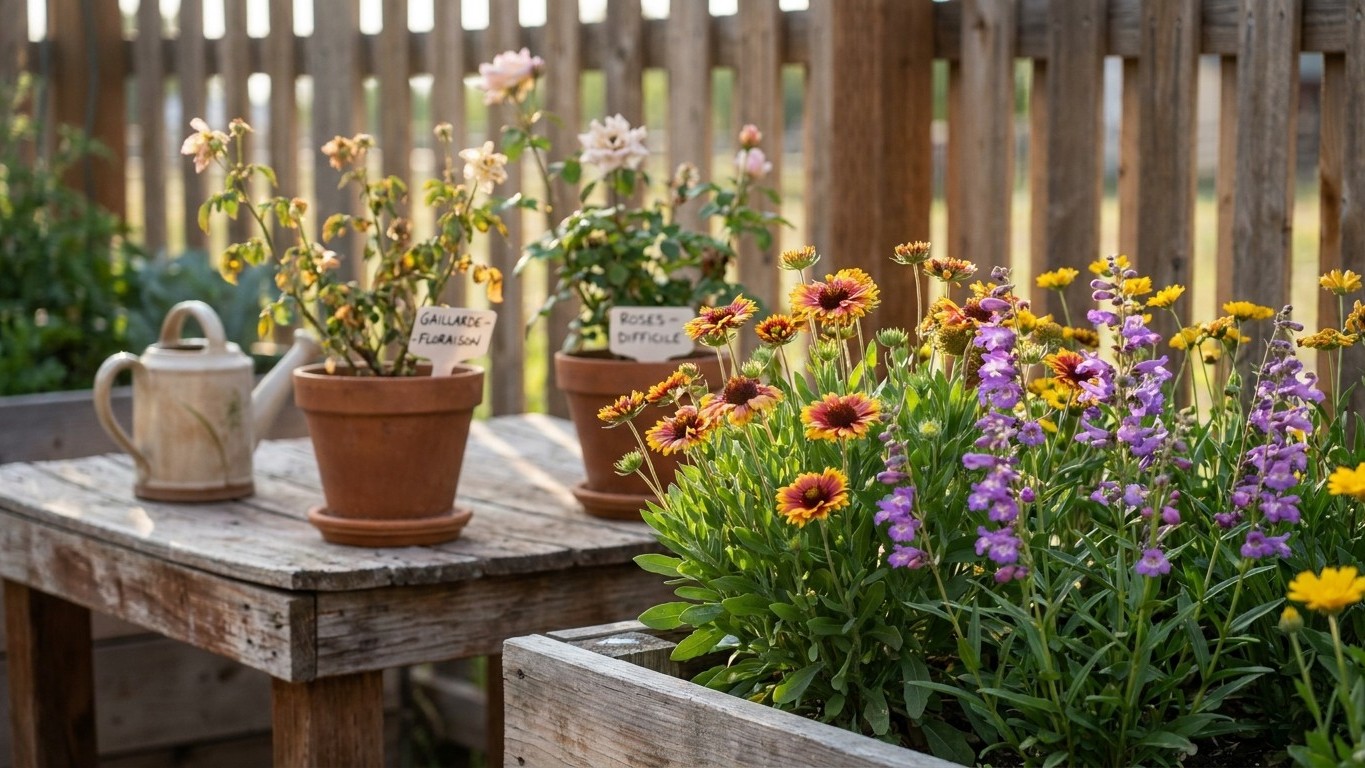

Flowers that thrive in Wyoming are built for cold winters and dry summers rather than heat and humidity. NOAA’s 1991-2020 climate normals put Cheyenne’s coldest month at an average daily low of 18.1F, and the USDA Plant Hardiness Zone Map rates the state 3a-6a, so a plant needs to shrug off hard freezes to earn a spot in the border. The single check that saves the most disappointment: read the zone number on the plant tag and match it against your own elevation, not the state average.
What thrives in Wyoming

Zone 6 on a plant tag means one thing in Cheyenne’s milder pocket and something else entirely a county away, where elevation drags the range down toward zone 3. That gap is the whole story here. Most of Wyoming never sees the 90-degree afternoons that punish gardens elsewhere, so heat tolerance barely matters, while relentless wind and dry air do the damage humidity would in other states. What survives isn’t what’s marketed as tough — it’s what’s built for cold and drought together.
Cold hardiness comes first
Start every plant decision with the hardiness zone on the tag. USDA’s map puts most of Wyoming between zone 3a and zone 6a, and Cheyenne sits toward the milder end of that range while mountain towns and high plains sit toward the cold end. A perennial rated for zone 4 or lower is the safer bet almost everywhere in the state. One rated zone 6 might survive a mild winter near Cheyenne and still die back to the roots, or die outright, a county away at higher elevation.
Heat is rare, dryness is constant
Because 90-degree days are uncommon at the Cheyenne reference station, flowers bred for southern heat tolerance gain nothing here. What matters more is drought resistance once established, since irrigation is expensive and wind pulls moisture out of soil fast. Species with narrow, silvery, or hairy leaves, like yarrow and Russian sage, evolved to hold water and resist wind desiccation. Broad-leafed, moisture-hungry annuals bred for humid climates are the ones that struggle most, wilting by afternoon even with regular watering.
Families that carry these traits reliably include the aster family (coneflowers, blanketflower, asters), the mint family (Russian sage, catmint, bee balm), and the pea family (wild lupine, some clovers used as groundcover). Gardeners moving from a milder, wetter state often bring plant lists that simply don’t apply. The same comparison shows up clearly if you look at what struggles versus thrives in a state with the opposite problem, like the humid summers covered in our Illinois flowers guide, where heat and moisture, not cold, decide the outcome.
Native plants worth the space
Plants native to the wider Rocky Mountain and Great Plains region already survived the cold snaps, the wind, and the dry stretches that catch imported garden varieties off guard. Once established, usually after their first full year, natives typically need far less supplemental water than nursery hybrids bred for a different climate. That matters in a state where irrigation water is not always cheap or plentiful.
Blanketflower (Gaillardia aristata), a shaggy orange-and-yellow daisy-like bloom, is native across the region and reseeds itself readily once it’s happy in a spot. Blue flax (Linum lewisii) produces sky-blue flowers on wiry stems that open in the morning and drop by afternoon, repeating for weeks. Rocky Mountain penstemon (Penstemon strictus) sends up spikes of violet-blue tubular flowers that hummingbirds and native bees both work hard. Pasque flower (Pulsatilla patens), one of the earliest bloomers, pushes lavender cup-shaped flowers through late snow before most perennials have even broken dormancy.
What they bring for pollinators
Native bees, many of them ground-nesting species not found east of the Mississippi, evolved alongside these plants and recognize their bloom shapes and bloom times in ways they don’t always recognize showy hybrids. Yarrow’s flat flower clusters give small beneficial wasps and hoverflies an easy landing pad. Prairie coneflower (Ratibida columnaris), with its drooping yellow petals around a tall brown cone, holds up through wind that would flatten a more delicate cultivated variety.
Planting a run of natives along a fence line or a dry slope where nothing else has succeeded is often the fastest way to get color into a difficult spot. They don’t need amended soil or a sheltered microclimate. They need sun, drainage, and patience through the first season while roots establish below ground before top growth catches up.
Perennials that come back

A perennial only comes back reliably here if its hardiness zone rating sits at or below the local zone. Peonies (Paeonia lactiflora), rated hardy to zone 3, are about as dependable as a flower gets in this climate and often outlive the gardener who planted them. Russian sage (Perovskia atriplicifolia), rated to zone 4, returns from woody stems every spring with silvery foliage and a haze of small blue flowers through late summer.
Plenty of popular garden perennials are only marginal here, or fail outright, despite being perennial in warmer states. Read the zone number on the tag as a limit, not a suggestion, and when a plant is rated right at the edge of your local zone, treat it as needing extra winter protection like a thick mulch layer rather than assuming it will simply come back.
| Plant | Catalogue hardiness zone | Behavior in Wyoming |
|---|---|---|
| Peony (Paeonia lactiflora) | Zone 3 | Reliable perennial, returns for decades |
| Russian sage (Perovskia atriplicifolia) | Zone 4 | Reliable perennial once established |
| Shasta daisy ‘Becky’ | Zone 5 | Marginal, benefits from winter mulch |
| Lavender ‘Munstead’ | Zone 5 | Marginal at elevation, needs sheltered, fast-draining spot |
| Dahlia | Zone 8-10 | Not hardy here, grown as an annual or lifted and stored each fall |
That last row matters more than gardeners expect. A dahlia tuber left in the ground over a Wyoming winter will not survive the freeze, no matter how mild the fall felt. It has to be dug up, dried, and stored indoors, then replanted after the last spring frost, or bought fresh each year and grown strictly as a summer annual. The same logic applies to any plant tag reading zone 7 or warmer: treat it as an annual purchase, not a long-term investment, unless you’re prepared to overwinter it indoors.
Putting a border together
A border that looks good from June through the first fall frost needs height layers, a bloom sequence, and repeated color, planned before anything goes in the ground rather than added piecemeal.
Layer by height
- Back row: delphinium, hollyhock, or tall Russian sage for structure and a windbreak effect
- Middle row: coneflower, bee balm, or blanketflower for the main color mass
- Front row: blue flax, dianthus, or low-growing yarrow to soften the edge
Wind is a bigger design constraint here than in most states, so tall plants at the back also double as a buffer that protects shorter, more delicate blooms in front of them from getting shredded.
Sequence bloom across the season
Pasque flower opens before the last spring frost has even passed, giving color while most of the border is still bare soil. Peonies and early penstemon carry early summer. Blanketflower, coneflower, and Russian sage take over for the long stretch through the hottest weeks. Asters and late-blooming yarrow varieties close out the season into the first fall frost. Gaps between these bloom windows are where a border looks tired, so plant at least one thing scheduled to open as the previous wave fades.
Repeat two or three colors through the length of the bed rather than scattering one of everything. A single blue flax plant reads as an accident. Six of them threaded through the middle row reads as a decision. Leave real space between young plants at installation, even though it looks sparse the first year. Perennials in this climate often spend their first season building roots below ground before they put on much top growth, and crowding them early just means digging some back out in year two.
Local help
The University of Wyoming Extension Service maintains county offices and Master Gardener programs that keep plant lists tuned to local elevation and soil, which matters more here than in most states given how much conditions shift within a short drive. Before finalizing a border plan, check their current recommendations at the University of Wyoming Extension, and browse our other Wyoming guides for related planting timelines. A gardener working through a far colder growing window, like the one described in our Nunavut flowers guide, faces the same zone-first logic taken to its extreme.
Common questions
Can I grow roses in Wyoming?
Some can survive, but stick to varieties bred specifically for cold hardiness rather than typical hybrid tea roses. Look for roses rated hardy to zone 4 or lower on the tag, and expect some winter dieback even on the hardiest types in a harsh year.
Why did my perennial come back smaller or not at all this year?
The most common cause is a hardiness rating that was marginal for your exact location to begin with, especially at higher elevation than the Cheyenne reference station. A hard freeze outside the normal window, or a winter with little insulating snow cover, can also kill roots that survived previous years fine.
Is it too late to plant flowers if I missed the spring frost date?
No. NOAA’s 1991-2020 normals put the last spring freeze at Cheyenne between May 7 and May 18, but that’s a range, not a deadline, and it shifts earlier or later depending on elevation and the year. Many annuals and perennials can still be planted well into summer as long as they have time to establish before the first fall frost, which falls between September 24 and October 5 at the same reference station.
Do I need to water native plants once they’re established?
Occasional deep watering during an extended dry stretch helps even established natives look their best, but most will survive without it once their root systems are developed. The first full growing season is when they need the most consistent moisture, before their drought tolerance kicks in.
Related guides
- Flowers That Actually Thrive in Montana, and the Ones That Struggle
- Flowers That Actually Thrive in South Dakota, and the Ones That Struggle
- Flowers That Actually Thrive in Illinois, and the Ones That Struggle