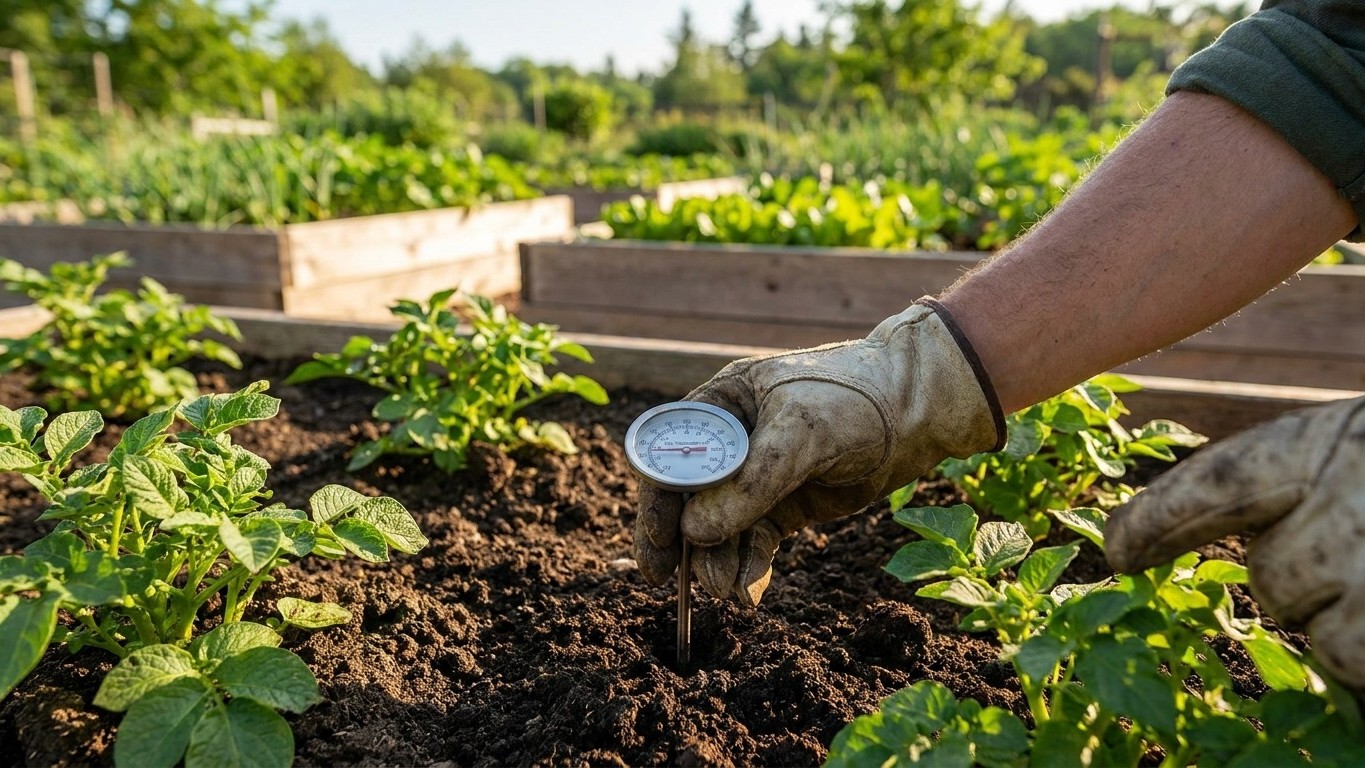

Soil temperature above 90 degrees Fahrenheit stops a potato plant from setting or filling tubers, according to Utah State University Extension. That single threshold explains Why Potatoes Stop Sizing in a Hot Summer, and why a garden that looks lush in July can still hand over a thin, undersized harvest, sometimes marked by Rough Skin, Cracks and Odd Shapes, Wilt on Potatoes where growth was interrupted by heat, heat-stressed foliage more vulnerable to Early Blight on Potatoes as well as Late Blight on Potatoes, or shallow-set tubers pushed toward the surface that turn into Green Potatoes. The fix isn’t more water or fertilizer. It’s timing the whole crop so the tubers do their bulking before the ground gets that hot.
The short answer

Utah State University Extension states it plainly: tuber set and fill is inhibited by high temperatures once soils climb past 90 F. That’s the ceiling on this crop, and it’s a biological switch, not a stress the plant can push through with extra care. Above that line, the plant keeps growing leaves and stems, but the underground work of building tubers slows or stalls. A gardener watching healthy green foliage all August can still dig a disappointing crop in September if the soil spent weeks in that danger zone.
This is why the planting date matters more than almost anything else in the process. Both Utah State University Extension and the University of Maine Cooperative Extension point to the same window: get seed potatoes into the ground as soon as soil reaches 50 F, which lands 14 to 21 days before the last frost date in most regions, and Cutting Seed Potatoes a few days ahead of time lets the cut surfaces heal before they go into cool soil. Choosing an early-maturing variety like the Kennebec Potato Caribe Potato Yukon Gold Potato Yellow Finn Potato Superior Potato Red Pontiac Potato gives the crop a head start, letting tubers bulk up well before soil temperatures climb into that dangerous 90 F range.russet-burbank/”>Russet Burbank Potato Red Norland Potato gives the crop a head start, letting tubers bulk up before soil temperatures climb into that dangerous 90 F range.caribe/”>Caribe Potato can also help the crop finish bulking before summer heat sets in. Knowing exactly When to Plant Potatoes and keeping in mind How Deep and How Far Apart to Plant Potatoes helps the crop get off to a strong start. That head start isn’t about beating frost for its own sake. It’s about pushing the tuber-forming stage of the plant’s life into the cooler weeks of the season, before summer soil temperatures climb toward that 90-degree ceiling.
In regions where summer runs long and hot, above 90 F for extended stretches, the practical answer shifts from “plant potatoes” to “plant potatoes early and dig a spring crop,” which makes knowing When to Dig Potatoes just as important as when to plant them. That means treating the harvest window as the constraint and working backward from it, rather than planting on a fixed calendar date and hoping the weather cooperates. A gardener in a short, mild-summer climate has more flexibility. A gardener in a region where 90-degree soil is the summer norm has almost none, and the early planting date becomes the entire strategy, since getting the crop out of the ground early also means paying closer attention to Curing Potatoes and to Storing Potatoes properly so that early harvest doesn’t go to waste.
What actually decides it
The soil temperature switch
Potato tubers form and swell underground, which means the soil, not the air, is what the plant actually experiences. Once that soil crosses the 90 F threshold identified by Utah State University Extension, the plant’s internal signal to keep building tuber tissue is suppressed. This is why mulch, shade cloth over the row, deep watering during a heat wave, and even Hilling Potatoes can matter so much in marginal climates: they’re not cosmetic fixes, they’re attempts to keep the root zone under that ceiling a little longer.
Light on the tuber, not just heat in the soil
A second, separate mechanism governs tuber quality rather than tuber size: exposure to light. Both extension sources note that tubers pushed up near the surface or left uncovered turn green and develop solanine, a compound that makes the flesh bitter and, in enough quantity, unsafe to eat. This isn’t a heat problem. It’s a light problem, and it happens whether the season was cool or scorching. Hilling soil up around the base of the plant is the physical barrier that keeps developing tubers in the dark while they bulk up underground.
Seed quality as a hidden variable
The third mechanism has nothing to do with weather and everything to do with what went into the ground. Utah State University Extension is direct about this: uncertified seed potatoes carry virus. A virus-infected seed piece can produce a plant that looks fine early on but never yields the way a healthy plant would, regardless of how well the temperature and light variables are managed. This is a mechanism a gardener can miss entirely, because the plant doesn’t necessarily look sick. It just underperforms, and the cause traces back to the seed source, not the season.
Put these three together and a case the sources never mention still becomes reasoncable to work through: a gardener with decent seed, correct hilling, but a planting date too close to the heat of summer will still lose yield to the temperature switch, because getting two of three mechanisms right doesn’t override the third.
How to do it
- Check soil temperature before anything else. Wait until it reaches 50 F, then plant 14 to 21 days ahead of the last expected frost date, per Utah State University Extension and the University of Maine Cooperative Extension.
- Buy certified seed potatoes. Uncertified seed, including grocery-store potatoes, carries virus risk according to Utah State University Extension, and there’s no way to fix that once it’s in the ground.
- Cut seed pieces into blocky chunks, 1 3/4 to 2 1/4 ounces each, with at least one eye per piece and never smaller than an inch across, following the University of Maine Cooperative Extension guidance.
- Dig furrows 4 to 6 inches deep and set seed pieces in, then cover with about 2 inches of soil, per the University of Maine Cooperative Extension.
- Space seed pieces 8 to 12 inches apart within the row, with 30 to 36 inches between rows, per University of Maine and Utah State guidance.
- Hill the plants once they reach about 6 inches tall. Utah State University Extension notes the first hilling should happen within four weeks of planting.
- Continue hilling as the plants grow, up to three times over the season according to the University of Maine Cooperative Extension, always covering exposed tubers so they don’t green up.
- Harvest before soil temperatures spend extended time above 90 F in hot-summer regions, since that’s the point past which tuber fill is already compromised.
- Cure and store the crop cool, moist, and dark: 38 F at 95 percent humidity per the University of Maine Cooperative Extension, or 40 to 45 F per Utah State University Extension.
What goes wrong
- Planting too late for the soil temperature window. Waiting for a fixed calendar date instead of checking soil temperature means the tuber-filling stage lands squarely in the hottest weeks of summer. The remedy is simple: track soil temperature in spring and plant as soon as it hits 50 F, 14 to 21 days before the last frost date.
- Using seed from the grocery store or an unlabeled source. Utah State University Extension is specific that uncertified seed carries virus, and an infected plant underperforms no matter how well everything else is managed. The fix is sourcing certified seed potatoes before the season starts, not after a poor harvest raises questions.
- Skipping or delaying hilling. Tubers that sit near the surface catch light, turn green, and develop solanine, making them bitter, per Utah State University Extension. The remedy is hilling as soon as plants reach about 6 inches tall and repeating it, up to three times, as the season progresses.
- Storing the harvest somewhere warm or lit. Light in storage causes the same greening and solanine problem as light in the garden. The fix is a cool, dark, moist space, 38 F at 95 percent humidity per the University of Maine Cooperative Extension, or 40 to 45 F per Utah State University Extension, with no light reaching the tubers.
- Assuming a hot summer can be watered through. More irrigation doesn’t undo the temperature switch that inhibits tuber set and fill above 90 F soil temperature. In regions where that heat runs long, the remedy is shifting the whole plan toward an early planting date and a spring harvest rather than trying to push the crop through a hot stretch.
Common questions
Can I fix a heat-stressed potato crop with more water?
No. Utah State University Extension identifies high soil temperature itself, above 90 F, as the factor that inhibits tuber set and fill. Watering keeps the plant alive and may cool the soil slightly, but it doesn’t reverse the biological slowdown once that threshold is crossed for an extended period.
Why did my potatoes turn green?
Green skin comes from light exposure, either from tubers sitting too close to the soil surface in the garden or from light reaching them in storage. Both Utah State University Extension and the University of Maine Cooperative Extension point to the same cause, and the green color signals solanine, which makes the potato bitter.
Is it really necessary to buy certified seed potatoes?
Yes, according to Utah State University Extension. Uncertified seed, including potatoes bought for eating, can carry virus that reduces plant performance in ways that aren’t always visible until harvest, when yield comes up short for no obvious reason.
How many times should I hill my potato plants?
The University of Maine Cooperative Extension recommends hilling up to three times over the course of the season, starting once plants reach about 6 inches tall. Utah State University Extension adds that the first hilling should happen within four weeks of planting.