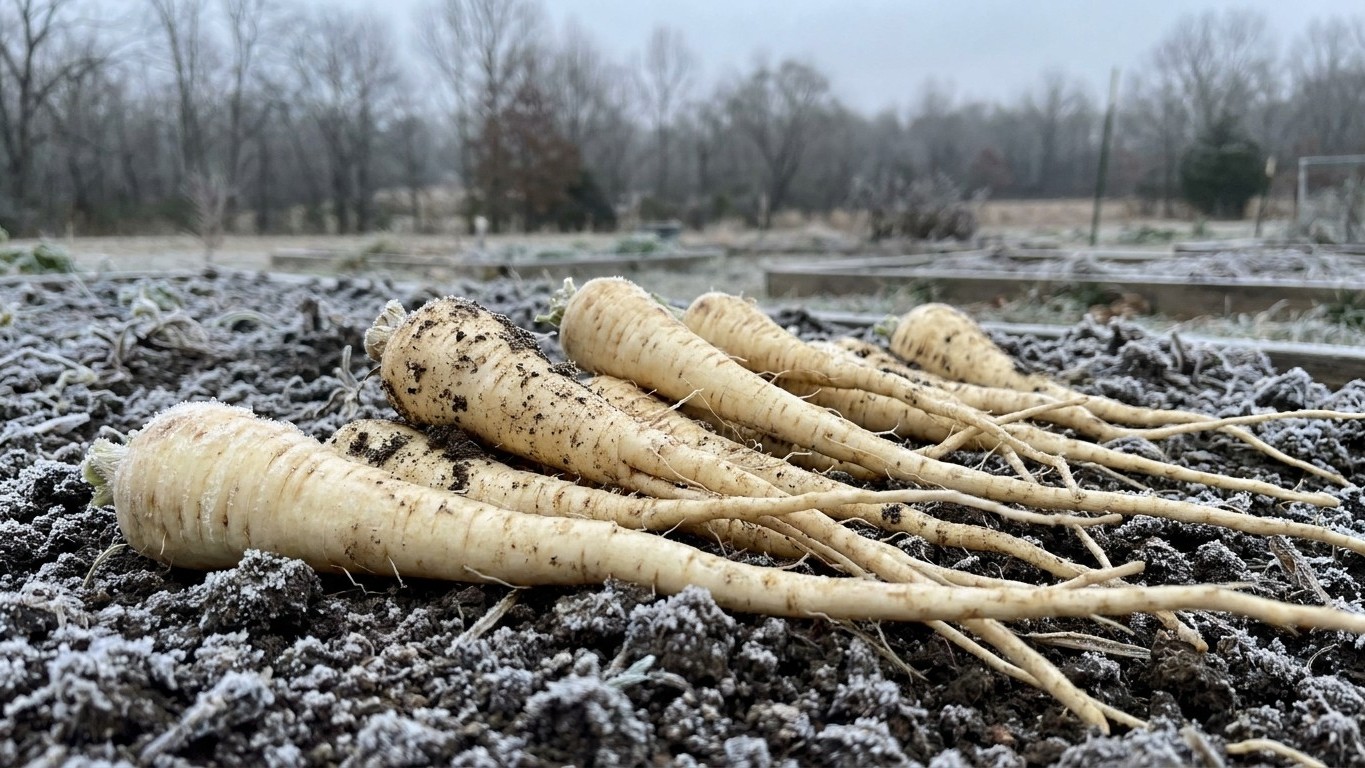

Parsnips will grow across most of Alabama, but whether they turn sweet depends on how many hard, frosty nights the ground actually sees. Around Huntsville, the coldest month averages a nightly low of 33.1°F, mild enough that a real, sustained cold snap isn’t guaranteed most winters. The root will size up just fine. The sugar that makes parsnips worth growing needs weeks of frost, and that’s the piece Alabama can’t promise everywhere.
The short answer

Start with what the plant actually needs, not what the map says. A parsnip left in the ground converts stored starch into sugar only after several consecutive weeks of cool, frosty weather. That’s a biological trigger, not a calendar date, and it has nothing to do with what hardiness zone your county falls into. A zone number tells you whether the plant survives the winter. It says nothing about whether the winter was cold enough, long enough, to sweeten a root sitting six inches under the soil.
That distinction matters here because 33.1°F is a mean minimum, not a record low and not a monthly average. It’s the average of the coldest nighttime readings across the entire coldest month, based on the 1991-2020 climate normals from NOAA’s National Centers for Environmental Information, using Huntsville as the reference station. A number that close to the freezing line means many nights dip just below 32°F and plenty of others don’t dip at all. Some winters bring a solid stretch of hard frost. Others bring a handful of cold nights broken up by weeks of mild, wet weather that does nothing for sugar conversion.
Compare that to a northern garden where the coldest month averages well into the teens or single digits. There, frost exposure is long and continuous, and parsnips reliably turn candy-sweet by midwinter. In the Huntsville area, and in much of Alabama generally, the frost is real but inconsistent from one year to the next. Some seasons deliver enough cold to sweeten the crop nicely. Others leave the roots pleasant but closer to a plain, starchy carrot cousin than the deeply sweet parsnip gardeners rave about.
None of this means skip the crop. It means set the right expectation. Grow parsnips in Alabama for a reliable harvest of a mild, nutty root vegetable, and treat the deep sweetness as a bonus that shows up in colder years, not a guarantee you can bank on every season. Leaving roots in the ground as late into winter as the soil stays workable gives them the best shot at whatever frost does arrive.
Does the season fit?
Parsnips are sown directly in the garden bed, not started indoors and transplanted, so every day of the 100 to 120 days needed to reach maturity counts from the moment seed touches soil. Here’s how that timeline lines up against the Huntsville-area frost window.
- Sowing date. Seed goes in 2 to 3 weeks before the last spring frost. With that frost falling between March 19 and April 3 in the Huntsville area, sowing lands somewhere around late February through mid-March.
- Germination. Parsnip seed is slow and often erratic, taking 14 to 21 days to emerge. A gardener who doesn’t see sprouts after a week shouldn’t assume failure and re-sow; wait out the full three weeks before disturbing the bed.
- Maturity window. Counting 100 to 120 days from seeding puts roots at full size sometime between mid-June and mid-July, well before any autumn cold arrives.
- The long hold. Mature parsnips don’t need to come out of the ground right away. Left in place through summer and into fall, they wait for the first frost, which arrives in the Huntsville area between November 2 and November 16.
- The margin. That leaves roughly four months between full maturity and the first real frost exposure, plenty of buffer, and because winters here rarely freeze the ground solid, roots can typically stay in the soil well past that first frost date to bank a few extra cold weeks before harvest.
Taken together, the season fits comfortably. The tight part isn’t time, it’s discipline: resisting the urge to pull roots the moment they look full-sized, since the whole point of the wait is the frost exposure still to come.
What goes wrong here
- Forked or split roots in heavy or stony ground. Parsnips push a single taproot straight down, and anything that blocks it, clay, compacted soil, or buried rocks, causes the root to split into two or three legs. Much of Alabama’s red clay falls into this category. The fix is deep, loose soil: double dig the bed to at least 12 inches, or work in enough coarse sand and compost to break up heavy clay before sowing, not after.
- Forked roots from overwatering. This is a separate cause from soil texture, and it catches gardeners who assume they’ve solved the problem by improving drainage. Consistently soggy soil during root development also causes forking, independent of what the ground is made of. Water deeply but infrequently once roots are established, letting the top few inches dry between waterings.
- A season that stalls before maturity. Sowing too late in spring, or in cold, slow-draining soil that delays germination past three weeks, can push maturity into the hottest part of summer, when parsnip growth slows. Sow as early as the last-frost window allows and keep the seedbed consistently moist until sprouts appear.
- A winter too mild to sweeten the crop. Some years the coldest stretch simply doesn’t last long enough to trigger much starch-to-sugar conversion. There’s no remedy for the weather itself, but leaving roots in the ground through every cold snap available, rather than harvesting early for convenience, gives them the best chance the season offers.
Before pulling parsnips on a bright afternoon, there’s a warning that almost never makes it onto garden pages, and it belongs here. According to North Carolina Extension Gardener Plant Toolbox, “All parts of this plant contain furocoumarins which can make skin sensitive to light causing burns so be sure to wear gloves, long sleeves and long pants when dealing with it.” That’s not limited to the leafy tops; it covers the whole plant, root included.
What makes this particular injury catch people off guard is the mechanism behind it. The burn doesn’t come from the sap alone. It happens when sap contacts skin and that skin is then exposed to sunlight. Neither one causes it by itself. That’s why a gardener can spend an hour pulling tops or handling roots on a sunny harvest day, feel nothing at the time, and notice red, burn-like marks on their hands or forearms hours later, once the sun has done its part. Because the reaction depends on light, not just contact, washing the sap off afterward doesn’t undo the exposure that already happened. The only real protection is preventing the sap from reaching skin in the first place: gloves, long sleeves, and long pants whenever handling parsnip foliage or roots, especially on a clear, sunny day.
Checking this against your own county
Huntsville’s frost dates and winter averages are a starting point, not a substitute for what happens in your own yard. Suburban and rural gardens routinely see the last spring frost later, and the first fall frost earlier, than an airport weather station reports, sometimes by one to two weeks, and more at higher elevation. A garden in the hills north of Huntsville or tucked into a low-lying valley elsewhere in the state can run on a noticeably different frost calendar than the reference station used here.
For local planting dates, soil test recommendations, and county-specific frost guidance, contact the Alabama Cooperative Extension System. Their agents work county by county and can tell you how your particular ground and elevation shift the numbers in this article, in either direction.
Common questions
Do parsnips need a specific variety for Alabama’s climate?
No variety is specified in the available guidance for this crop, and none should be assumed. Focus instead on soil preparation and timing, which matter more here than variety choice.
Can I speed up sweetening by refrigerating harvested parsnips?
The sweetening process described in the available guidance happens through weeks of frost exposure while the root is still in the ground. Nothing published here addresses whether cold storage after harvest replicates that effect.
What if my parsnips come up forked even in loose, sandy soil?
Check watering habits before blaming the soil. Consistently wet conditions during root development cause forking on their own, separate from soil texture, so a well-prepared bed can still produce split roots if it’s kept too damp.
Is it safe to compost parsnip tops after harvest?
The safety concern here is skin contact combined with sunlight while handling the living or freshly cut plant, not disposal. Wear gloves and long sleeves while cutting and clearing tops, regardless of what happens to the material afterward.