
Alabama’s growing season runs longer than most of the country, but that doesn’t mean you can plant whatever you want whenever you feel like it. The state stretches across three USDA Hardiness Zones (7b in the far north, 8a and 8b through the middle, and 9a along the immediate Gulf Coast), which means a gardener in Huntsville is working with a frost date nearly a month earlier than someone in Mobile. Right now, at the end of August, the real opportunity isn’t spring planting at all. It’s the fall window, and in Alabama that window is wide open for several more weeks.
Alabama’s Climate Zones and What They Actually Mean

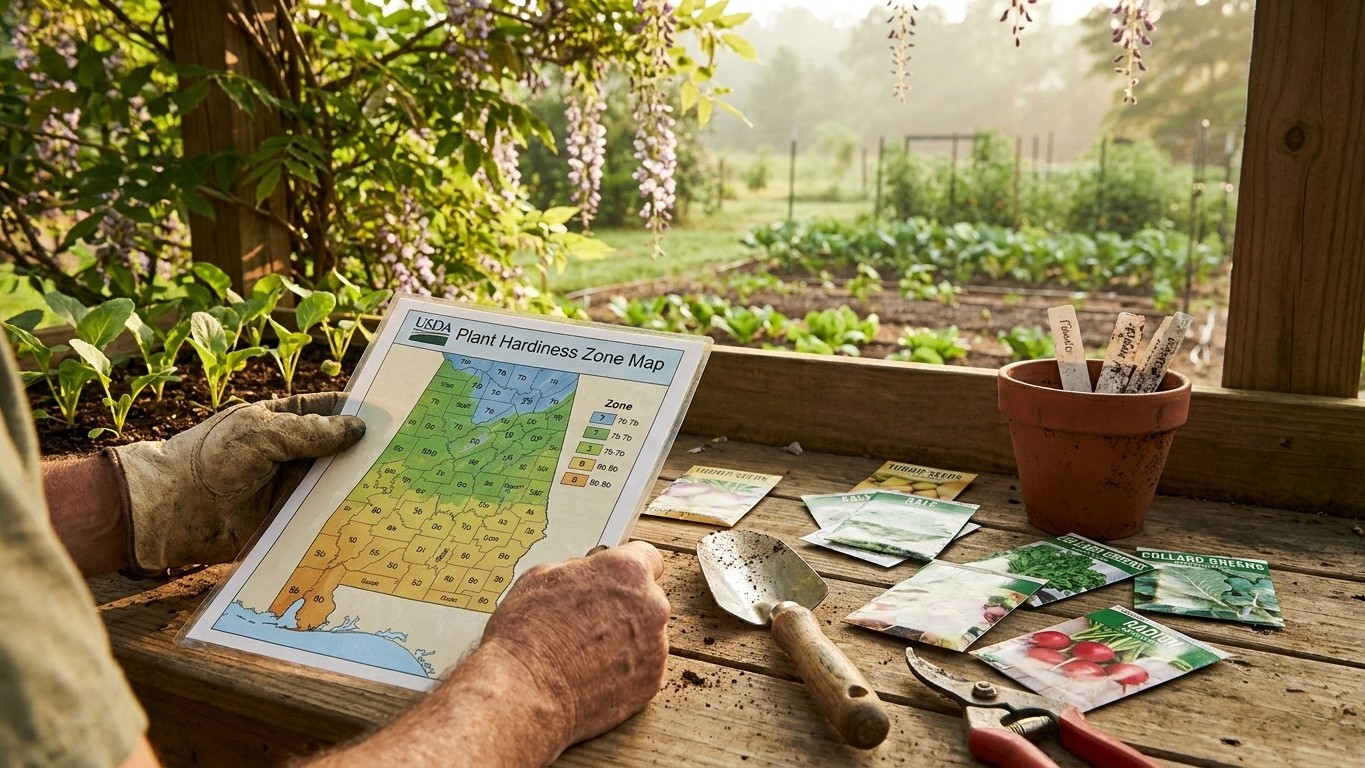
Pull up the USDA Plant Hardiness Zone Map and Alabama looks like a gradient, not a single climate. The northern tier, including Huntsville, Florence, and Gadsden, sits in zone 7b, with average winter lows dipping to 5-10°F. Central Alabama, covering Birmingham, Montgomery, and Tuscaloosa, falls mostly in zone 8a. Southern Alabama, from Dothan down to Mobile and the coastal counties, ranges from 8b to 9a, where winter lows rarely drop below 20°F.
That gradient matters more than most catalog planting guides let on. A tomato variety rated for “90 days to maturity” behaves differently in Mobile’s humid, nearly-frost-free winters than it does in a Huntsville backyard that sees a handful of nights in the teens. The practical takeaway: find your county’s average first frost date through the Alabama Cooperative Extension System before trusting a national planting calendar. North Alabama typically sees first frost in mid-to-late October. The Gulf Coast can push that into December some years.
Summer heat is the other defining factor, and it’s a bigger obstacle than winter cold. Alabama routinely posts July and August afternoons in the mid-90s with dew points that make the air feel like a wrung-out towel. Plants that thrive in drier Southern states (Texas Hill Country tomatoes, for instance) can struggle here simply because the humidity never lets foliage dry out, inviting fungal disease. Even heat-loving crops like peppers and vining plants like pumpkins require some adjustment to Alabama’s muggy conditions, and understanding the specifics of Growing Peppers in Alabama or Growing Pumpkins in Alabama can make the difference between a struggling patch and a productive one. The same logic applies to Growing Sweet Corn in Alabama, where timing and humidity management matter just as much as soil prep. Perennial crops face their own set of quirks too, and gardeners looking into Growing Asparagus in Alabama will find the state’s mild winters and humid summers call for a different approach than the guides written for colder climates.
Late Summer Is Fall Planting Season, Not the Off-Season
Here’s what a lot of transplants from cooler states get wrong: they assume the gardening year in Alabama winds down after summer harvest. It doesn’t. Late August through mid-September is prime time to get a second round of crops in the ground, and the extended frost-free period is exactly what makes it possible. Cool-season greens are the obvious choice for this window, and Growing Spinach in Alabama during the fall shoulder season tends to produce better results than a spring attempt, since the crop can mature before summer heat forces it to bolt.
Collard greens, turnip greens, mustard greens, and kale can go into the ground right now from transplants or seed. These are Southern staples for a reason. They tolerate the lingering heat of early September, then get sweeter after the first light frost converts starches to sugars. Growing Beets in Alabama is another smart move for this window, since root crops benefit from this window too, and Growing Carrots in Alabama is a great example of a crop that thrives when seeded during this fall stretch same timing too; Growing Parsnips in Alabama follows the same logic, since the long slow maturation and post-frost sweetening that make them worthwhile elsewhere works just as well here. It’s also the ideal window for a second potato crop, and Growing Potatoes in Alabama this time of year takes advantage of cooling soil temperatures before the ground gets too cold. This same fall timeline is worth keeping in mind for other seasonal traditions, like knowing When to Carve a Pumpkin in Alabama so it lasts through the season. Broccoli and cabbage transplants also do well started in late August for a harvest that runs into December in central and southern counties.
Root crops deserve a spot too. Carrots, beets, and turnips planted by direct seed in early-to-mid September have enough time to mature before serious cold sets in, especially in zones 8a and warmer. Radishes are the fastest payoff, often ready in three to four weeks, which makes them a good confidence-builder for anyone new to fall planting.
Garlic is the outlier here. Alabama gardeners typically wait until October or even early November to plant garlic cloves, giving them just enough cold exposure without rotting in warm, wet soil. If you’re marking a calendar for fall garden tasks, garlic belongs a few weeks after the greens and root crops go in, not alongside them.
What Not to Plant Right Now
Warm-season crops like tomatoes, peppers, and squash are done for the year if you haven’t already got them established. Starting them from seed in late August leaves too little time before frost, even in the mildest coastal counties. Save that energy for succession planting cool-season crops instead, or start prepping beds for next spring.
Soil: Alabama’s Red Clay Is the Real Obstacle
Ask any longtime gardener in the Piedmont region what frustrates them most, and clay soil usually tops the list. Much of central and eastern Alabama sits on heavy red clay that drains poorly, compacts easily, and can turn concrete-hard during dry spells. It’s mineral-rich, which sounds like a plus, but the structure fights against root growth and water penetration.
The fix isn’t glamorous: organic matter, added consistently, over years, not weeks. Working two to three inches of compost into planting beds before each season improves drainage and gives roots room to spread. Raised beds are a popular workaround across the state precisely because they let gardeners bypass native clay entirely, filling beds with a purchased or blended soil mix instead.
Coastal and southern Alabama counties deal with a different soil story. Sandy soils near Mobile and Baldwin County drain fast, sometimes too fast, which means nutrients wash out before plants can use them. Gardeners there lean more on mulch and more frequent, lighter feeding rather than the clay-focused compost strategy used up north.
A simple soil test through the Alabama Cooperative Extension System, run through Auburn University’s extension office, costs a modest fee and tells you exactly what your specific plot needs rather than guessing. Given how much soil chemistry varies within just a few counties, this is one of the more useful $10 investments a new Alabama gardener can make.
Humidity, Pests, and Disease Pressure
Alabama’s combination of heat and moisture creates near-perfect conditions for fungal problems: powdery mildew on squash, early blight on tomatoes, black spot on roses. Spacing plants further apart than seed packets suggest, to improve airflow, cuts down on this pressure more than any spray regimen. Watering at soil level instead of overhead, ideally in early morning so foliage dries quickly, is a habit that pays off across nearly every crop grown in the state.
Pest pressure runs high too. Japanese beetles show up reliably in June and July across the northern half of the state. Stink bugs and squash vine borers are persistent summer nuisances in home gardens statewide. Fire ants, a fact of life in most Alabama yards, complicate hand-weeding and harvesting in ways gardeners in northern states simply don’t have to think about. None of this is unique to Alabama, but the combined intensity, heat, humidity, and a long pest season, is higher here than in much of the country.
Regional Differences Worth Planning Around
North Alabama, around Huntsville and the Tennessee Valley, gets a real winter, cold enough that some perennial herbs and less hardy shrubs need mulching or containers you can move indoors. Gardeners there also get a slightly shorter but still workable window for fall brassicas and greens.
Central Alabama, the Birmingham-to-Montgomery corridor, is the state’s broadest middle ground: mild enough winters for extended fall harvests, hot enough summers that afternoon shade cloth on tomatoes and peppers genuinely helps yield. This is also the region where clay soil problems tend to be most pronounced.
South Alabama and the Gulf Coast operate on an almost different calendar. Frost might not arrive until December, or some years barely at all in the immediate coastal strip. That opens the door to growing collards, kale, and lettuce practically all winter, and it means fall planting can be pushed later, into early October, without the same risk northern gardeners face.
One detail that surprises a lot of new Alabama gardeners: the state’s humidity means container plants often need watering more frequently than the soil surface suggests, since heat and airflow around raised containers dry them out faster even when the ambient air feels saturated. Checking soil moisture an inch or two down, rather than judging by the top layer, catches this before plants show stress.
Digging Into Specific Crops
Everything above is really about timing — knowing which stretch of Alabama’s weather works for you and which works against you. That logic plays out differently depending on what you’re growing, so it’s worth following the thread into the specifics. Garlic is the clearest case of the state’s mild winter cutting both ways: without enough cold, a clove won’t divide into a bulb at all, and planting dates, varieties and winter cold for garlic lays out how to make sure your ground gets that chill. Your lawn runs into the opposite problem — a grass built for cool weather has no chance against an Alabama summer — and what to plant and when to feed your lawn works through picking a grass that actually matches the summers you get. Tomatoes sit right on the calendar’s edge, with a narrow window before the last freeze deciding everything else that follows, and planting dates, varieties and local pests for tomatoes walks through how that one date shapes the whole season. Start wherever your garden is headed next.