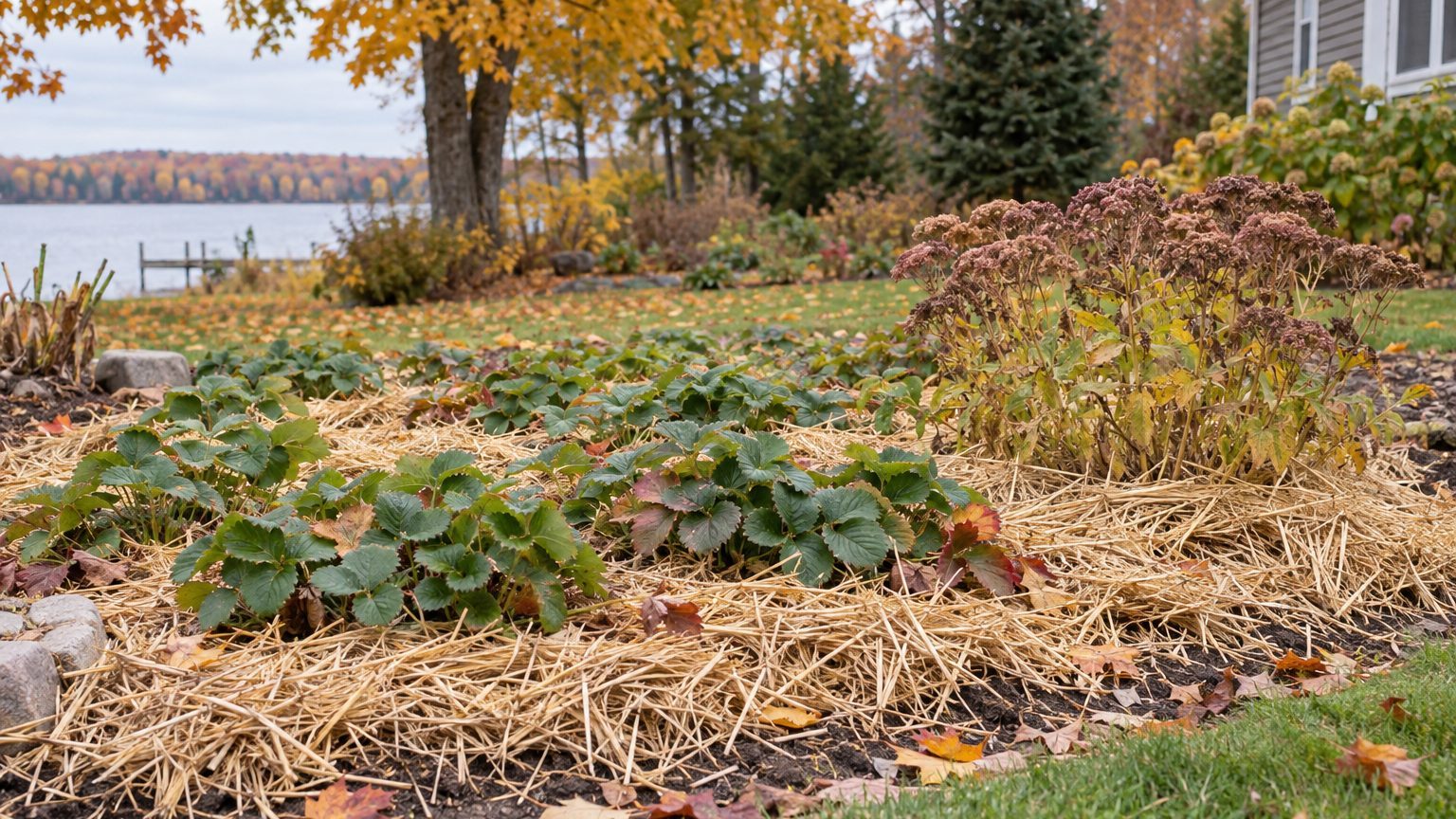

Wait for the cold, then mulch. In Alabama, that means holding off until the first fall freeze window of November 2 to November 16 has passed (the Huntsville reference range from NOAA’s 1991-2020 normals). After that, spread a 2-inch to 3-inch layer of clean straw over strawberries and a loose ring of mulch around borderline perennials. Mulch laid in October, while the soil is still warm, tends to cause rot. Hardy, established plants often get through without any.
When to put winter mulch down in Alabama
Winter mulch is not a blanket meant to keep plants warm. In cold states it goes on after the ground has started to freeze, so the soil stays frozen instead of thawing and refreezing around the roots. Applied too early, it holds warmth and moisture against the crowns and gives pests a cozy place to settle. Alabama bends that rule, because the ground here behaves differently.
Does the ground freeze here?
Mostly not for long. NOAA’s 1991-2020 Climate Normals put the mean daily minimum of the coldest month at 33.1°F at the Huntsville reference station, which is just above freezing. The average winter night, does not freeze, and the soil rarely locks up for the season the way it does in Ohio or Minnesota. Freezes still arrive in cold snaps. The same NOAA normals (station USW00003856) place the 30-to-70 percent probability of a 32°F freeze between November 2 and November 16.
Those are airport figures. Suburban and rural gardens often see the first fall frost one to two weeks earlier than the airport does, and higher ground can see it earlier still. Your county’s own dates matter more than the reference city’s, and the first and last frost dates in Alabama are the place to look them up. The colder and higher your garden sits, the closer the northern logic comes: soil can freeze hard during a snap, thaw, and freeze again.
The window to write down
Put mulch down after the November 2 to November 16 first-frost window has passed and a few freezing nights have come through. If your garden runs colder than the airport, start watching a week or two earlier. The plants need those first frosts to slow down and harden off. Mulch smothering them while they are still growing will keep the crowns damp and soft.
Is it needed at all? For hardy perennials already settled in, usually not. In a climate where the average low of the coldest month stays above 32°F, mulch does a different job than it does up north. It holds soil moisture through dry winter spells, suppresses winter weeds, and serves as a cover to pull over plants on the occasional frost night. Strawberries and plants at the edge of their hardiness are the ones that repay the effort.
Strawberries
A strawberry plant keeps its growing point, the crown, right at the soil surface. In cold climates the danger is heaving: the soil freezes, thaws, and freezes again, pushing crowns up and leaving the roots exposed to dry air. That is the northern gardener’s reason for a thick straw blanket.
Alabama’s reference climate gives you less of that and more of something else. Cold snaps arrive, and bare crowns take the full hit from a hard freeze. Later in the season, the same mulch is what you pull over open blossoms when a late frost threatens. So the straw does three jobs here: it buffers the crowns in a freeze, holds moisture in the bed, and keeps weeds from taking over before spring growth starts.
Use clean straw. Wheat straw is a common choice because it is hollow, light and slow to mat. Hay is a poor substitute, since it carries seed heads that sprout into a weed crop in the strawberry bed. Fluff the straw by hand rather than packing it. NC State Extension’s Gardener Handbook says: “A 2-inch to 3-inch layer of mulch suppresses most annual weed seeds and makes it easy to hand-pull any that do germinate.” Strawberries fit that range well. Straw settles, so measure after you have spread it, and stop at 3 inches. More is not better, and a thick, soggy layer sitting on the crowns is how you get rot instead of protection.
Timing follows the frost. Wait until the plants have taken their first real frosts, which means after the November 2 to November 16 window at the airport reference station, earlier at your place if you garden in the countryside or on higher ground. Spread the straw over the rows and tuck it around the plants, leaving the leaves and crowns lightly covered rather than buried.
Spring is the other half of the job. Pull the straw off the crowns when new leaves begin pushing through, and keep it beside the rows for frost nights. Left on, mulch holds the crowns in shade and moisture just as growth wants light and warmth. Straw tucked between rows also keeps the berries clean once they set. More on bed setup, varieties and care is in growing strawberries.
Perennials and borderline plants
The USDA Plant Hardiness Zone Map (2023 edition, built on 1991-2020 normals) places Alabama in zones 7a-9a. The system rests on a single variable, the average annual extreme minimum temperature, so it says nothing about how long the cold lasts or how wet the winter is. Within that range, most established perennials chosen for the region come through winter fine without mulch. The ones that benefit are plants sold as hardy only to the warmer part of that range, anything planted late in fall that has not yet put out deep roots, and shrubs on the north side of a house that never get winter sun.
Mediterranean herbs like rosemary and sage are classic borderline cases, and so are lantana, salvias and cannas. They tolerate the average winter and struggle with the occasional hard snap. For the herb side of this, getting perennial herbs through the winter covers it in more detail.
| Plant type | What mulch does for it | How to place it |
|---|---|---|
| Newly planted perennials | Keeps moisture steady while roots establish | Ring around the plant, not touching the crown |
| Borderline plants (rosemary, lantana, salvias, cannas) | Buffers roots and base during a cold snap | Ring around the base, with extra on hand for frost nights |
| Established, hardy perennials | Moisture and weed control, optional | Thin ring, pulled back from the stems |
Timing matches the strawberries: after the frost window, not before. Cut tender growth back only after frost has blackened it, and mulch after that.
The shape of the mulch matters as much as the depth. Mulch a ring, not a pile: 2 to 3 inches deep, pulled back from the crown and stems. NC State Extension’s handbook gives the same order of depth for woody plants: “Provide a 3-inch layer of mulch to reduce water loss and maintain uniform soil moisture and temperature around roots.” That sentence covers trees and shrubs, but it keeps perennial rings from running deeper than they need to. A heap against the crown holds water against the stem, and that is how a ring turns into a volcano. The longer version of that warning is in mulching without killing the plant.
Shredded leaves, pine straw and chopped bark all work for rings. Whole, flat leaves are the exception, because they mat into a wet sheet over the crown.
What goes wrong
The first mistake is timing. Mulch that goes on before the November 2 to November 16 window has passed is on too early. The plants are still growing, the soil is still warm, and damp straw on top of that is an invitation for rot. A crown that has gone soft, dark, and sour-smelling in winter is the typical sign. Waiting for frost avoids it.
Matting is the second problem. Wet winters press whole leaves and finely chopped material into a dense, slimy layer that blocks air from the soil. It looks tidy and does damage underneath. Loose, fluffy straw and coarse mulch keep air moving. If a layer has gone slick, rake it open and let it dry.
The vole-in-the-mulch story is a northern one. It belongs to places with deep snow cover and long-frozen ground, where small rodents tunnel under a blanket for months. At the Huntsville reference station, the more realistic version is slugs and crown rot where mulch stays soggy and sits tight against stems. If you garden at a higher, colder elevation, your county extension office can tell you whether rodents are a local concern.
The last failure is forgetting to uncover. Mulch left on strawberry crowns into spring shades new growth and holds it back, producing pale, leggy leaves. Check the rows when the weather begins to warm and pull the straw aside as soon as new leaves show.
Common questions
Do I need to Mulch Strawberries in Alabama at all?
Strawberries benefit more than most plants. The average winter low at the Huntsville reference station sits just above freezing, but individual cold snaps still bring hard freezes. A light layer of clean straw gives the crowns cover and holds moisture, and it can be pulled over blossoms later in the season.
Can I use leaves or pine straw instead of straw?
Pine straw and shredded leaves work well around perennials, since they stay loose. Whole leaves mat and rot over the crown. For strawberries, clean wheat straw is the usual pick because it is light and free of weed seeds.
My garden is colder than the airport. When should I mulch?
Earlier. Rural and suburban gardens often see the first fall frost one to two weeks sooner than the airport station, and higher ground more so. Start watching for freezing nights ahead of the November 2 to November 16 range and mulch after the first few have passed. More Alabama timing advice is collected in the Alabama guides, and your county extension office can confirm local dates.
How deep should winter mulch be?
NC State Extension’s handbook gives a 2-inch to 3-inch layer for weed suppression and a 3-inch layer for moisture around roots. Do not go beyond that range. Pull it back from crowns and stems so water does not collect against them.