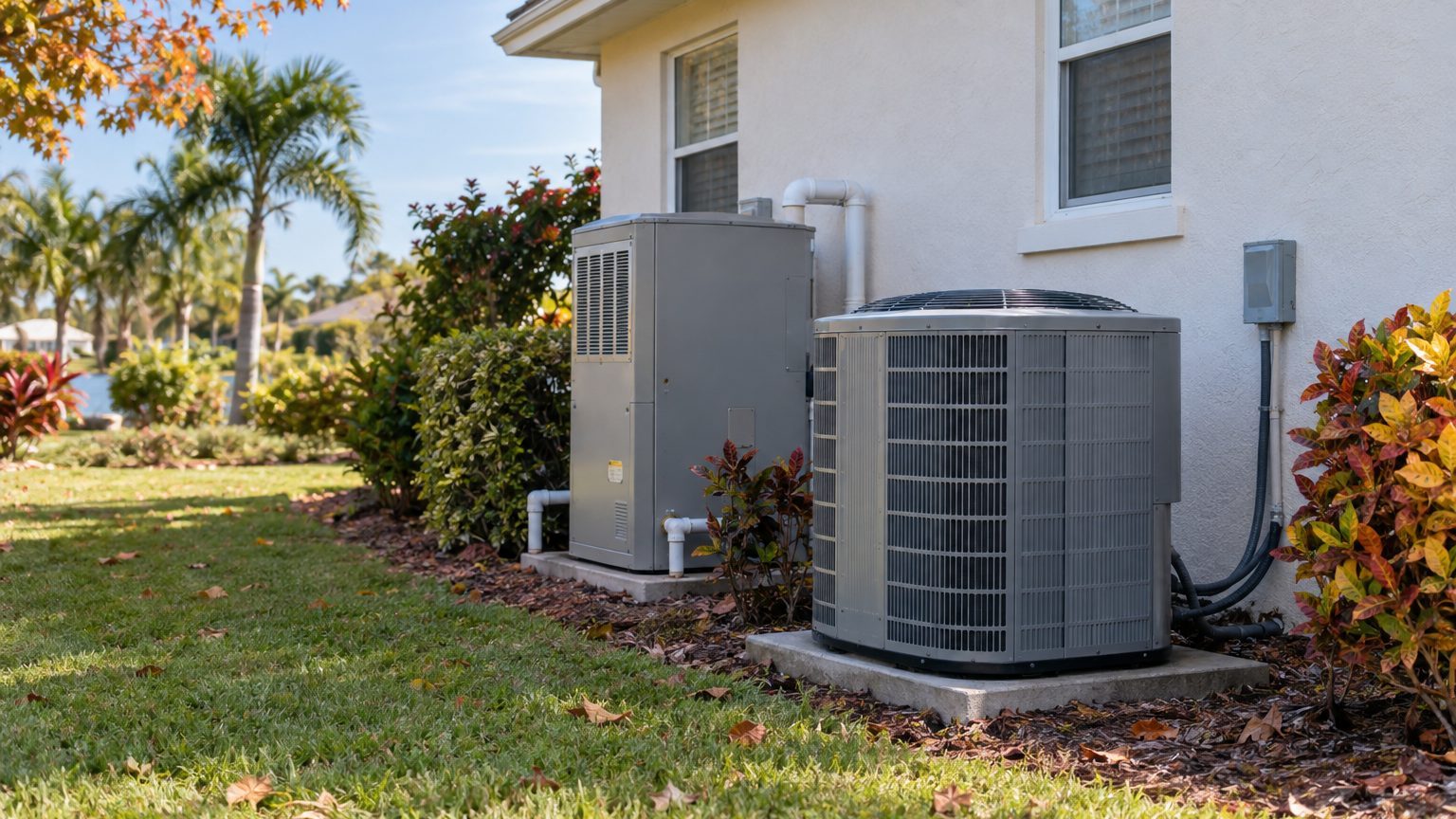

A gas furnace is the cheaper of the two to run in Alabama, but not by much: $2.60 less per million Btu of delivered heat than a heat pump. The gap is small enough that three things can outweigh it: how efficient the heat pump is, whether a gas line already serves the house, and whether the home needs air conditioning too.
The short answer for Alabama
At average Alabama residential prices, a natural gas furnace at 95% AFUE delivers a million Btu of heat for $17.82. A heat pump at 8.1 HSPF2 (a seasonal COP of about 2.4) delivers the same amount for $20.42. Electric resistance, such as baseboard heaters or a plain electric furnace, comes in at $48.48. These numbers are computed from U.S. Energy Information Administration residential prices, ENERGY STAR efficiencies and standard EIA energy conversions.
Read them for what they are. They compare fuels on the same unit of heat, running cost only. They are not a yearly bill, which depends on the size of the house, its insulation, the thermostat and the winter. They are also not the price of buying and installing either system, where the two can differ a lot.
The heat pump figure uses the ENERGY STAR minimum for a ducted system. A unit that beats that minimum delivers heat for less than $20.42, so the $2.60 gap is a ceiling for a well-chosen unit, not a fixed penalty. The gas figure rests on an EIA average as well, and utilities price gas differently, so your own bill is the number to check against.
Bottom line: with gas service already at the house, the furnace costs less to run; without it, a heat pump is far cheaper to run than electric resistance. A $2.60 difference per million Btu is real but modest, and it rarely justifies running a new gas line by itself.
What each option costs to run in Alabama
| System | Efficiency used | Cost per million Btu delivered |
|---|---|---|
| Electric resistance (baseboard) | 100% efficient | $48.48 |
| Heat pump | 8.1 HSPF2 (seasonal COP about 2.4) | $20.42 |
| Natural gas furnace | 95% AFUE | $17.82 |
The electricity side of the table uses 16.54 cents per kWh, the average residential price year-to-date through July 2026 in the U.S. Energy Information Administration’s Electric Power Monthly, Table 5.6.B. That is a statewide average, and rate plans differ by utility. The gas side starts from EIA’s average residential gas price, converted at about 1,037 Btu per cubic foot, while electricity converts at 3,412 Btu per kWh. For a firm gas number, read the per-unit price on your own utility bill.
Efficiency matters as much as the price of the fuel because you are paying for heat, not for kilowatt-hours or cubic feet. Resistance heating turns each kWh into exactly one kWh of heat. A heat pump moves heat from outdoor air instead of making it, so at a seasonal COP of about 2.4 each unit of electricity brings in roughly 2.4 units of heat. Same electricity price, very different result. A furnace at 95% AFUE sends nearly all of its gas energy into the house, which is how cheap gas stays cheap on delivery.
One detail is worth knowing when you shop. ENERGY STAR asks more of ductless equipment (8.5 HSPF2 or higher) than of ducted (8.1 or higher) because a ductless system has no duct losses and starts with an advantage. The $20.42 figure uses the ducted minimum. HSPF2 rates heating and SEER2 rates cooling (15.2 is the minimum for both kinds), so compare the same letter between units. What HSPF2 Measures, and Why Ductless Asks for More goes deeper. Compare systems on cost per million Btu delivered, never on fuel price alone.
How cold it gets, and what that does to a heat pump
Huntsville International Airport, the reference station here, averages about 2,831 heating degree days a year (base 65°F), according to NOAA’s 1991-2020 Climate Normals. Degree days add up how far each day’s mean temperature sat below 65°F, so they translate a climate into fuel. The number describes a heating season that is moderate and fairly long, not brutal. The same station logs about 2,107 cooling degree days, so summer cooling is a serious load too.
The coldest month’s mean daily minimum is 33.1°F. That average sits just above freezing, which tells you most nights in January are chilly rather than frigid. It also means some nights run colder than that, and Huntsville is one station. Mountain counties in the northern part of the state can run colder, so check local conditions before relying on a city figure.
Here is how that touches a heat pump. The 2.4 COP behind the $20.42 figure is a seasonal average. In deep cold a heat pump’s efficiency drops, and the system leans on a backup, either electric resistance strips or a furnace, to carry the coldest nights. Those backup hours cost more per Btu, which is part of why the seasonal figure sits where it does. With winters like Huntsville’s, those hours should be a small slice of the season, because a heat pump rarely leaves its efficient range. For the mechanics, How Cold Is Too Cold for a Heat Pump covers what happens as temperatures fall.
Nothing here resembles the northern worries about a heat pump that cannot keep up for weeks. In the Huntsville area, a heat pump spends most of the winter in its efficient range, so the backup only matters on the coldest nights. In higher, colder parts of the state, ask an installer how the system handles the backup before you decide.
What homes in Alabama already heat with
The Energy Information Administration’s 2020 Residential Energy Consumption Survey shows electricity as the main heating fuel in 64% of Alabama homes. Natural gas is the main fuel in 28%, and propane in 5%. By equipment, 45% of homes rely on a furnace and 39% on a central heat pump. The survey publishes no figure for steam or hot-water boilers, or for fuel oil and kerosene, because too few households were found to report one. That is different from saying none exist.
These shares show what was installed, which tells you which fuel looked cheap when the houses were built. They are not a recommendation, and they are state shares from a national survey, not a count for your county. The 45% for furnaces also covers more than gas: the gas and propane shares are smaller than the furnace share, so not every furnace burns gas.
For the choice you face, the useful question is whether gas service reaches your house. A home that already has a gas line and a working furnace is comparing a $2.60 running-cost edge against replacement cost. A home heated by electricity, which describes most of the state, would have to pay to bring gas in before the furnace advantage applied at all. For many of those houses, the heat pump is the natural upgrade from resistance heat. A house heated by a boiler would be a different conversion, since a heat pump has no radiators to feed and would need either ductwork or a ductless setup.
For a wider look at the state, see Heating a Home in Alabama. Check whether gas service already reaches your street before pricing a switch in either direction.
When the other choice wins
Because the furnace is cheaper to run, the heat pump is the “other choice” here, and it wins in several common situations.
The first is no gas service. Without a line at the house, the furnace figure of $17.82 is not available to you, and the real comparison is the heat pump at $20.42 against electric resistance at $48.48. In that case the heat pump is the clear running-cost choice.
The second is cooling. With about 2,107 cooling degree days a year at Huntsville, most homes here run air conditioning for a long stretch. A heat pump heats and cools with one system, so you replace the central air conditioner and the heat source together. A gas furnace still needs a separate cooling system alongside it. If the air conditioner is near the end of its life, that shifts the math toward the heat pump even though gas is cheaper per Btu. Ductless or Central helps with the next decision if you go that route.
The third is a dual-fuel setup, a heat pump paired with a gas furnace. The heat pump carries most of the season and the furnace takes the coldest nights, which suits homes that already have gas and want one system for the cooling season.
The fourth is an old furnace with years left. A working furnace that still heats well is cheaper than any new equipment, whatever the running-cost table says. If it is failing, Repairing a Furnace or Replacing It lays out the decision. Keep a healthy furnace running, and when a system needs replacing, price the heat pump against the furnace plus a separate air conditioner.
Common questions
Is a gas furnace always cheaper to run than a heat pump in Alabama?
At average residential prices, yes: $17.82 against $20.42 per million Btu delivered. A heat pump above the ENERGY STAR minimum narrows that gap, and your utility’s actual rates move it too.
Does a heat pump keep up during a cold snap in north Alabama?
Its efficiency drops in deep cold, and a backup (resistance strips or a furnace) covers the coldest nights. Huntsville’s coldest-month mean minimum is 33.1°F, so winters there stay within a heat pump’s efficient range most of the time. Colder mountain areas can differ.
Does the $20.42 figure include air conditioning?
No. It is heating only, for a ducted unit at 8.1 HSPF2. Cooling is rated separately by SEER2, with 15.2 as the ENERGY STAR minimum.
Why does ductless need a higher HSPF2 than ducted for the same label?
Ductless systems have no duct losses, so they start ahead. ENERGY STAR requires 8.5 or higher for non-ducted split systems and 8.1 or higher for ducted ones. Those are minimums to earn the label, not typical values.