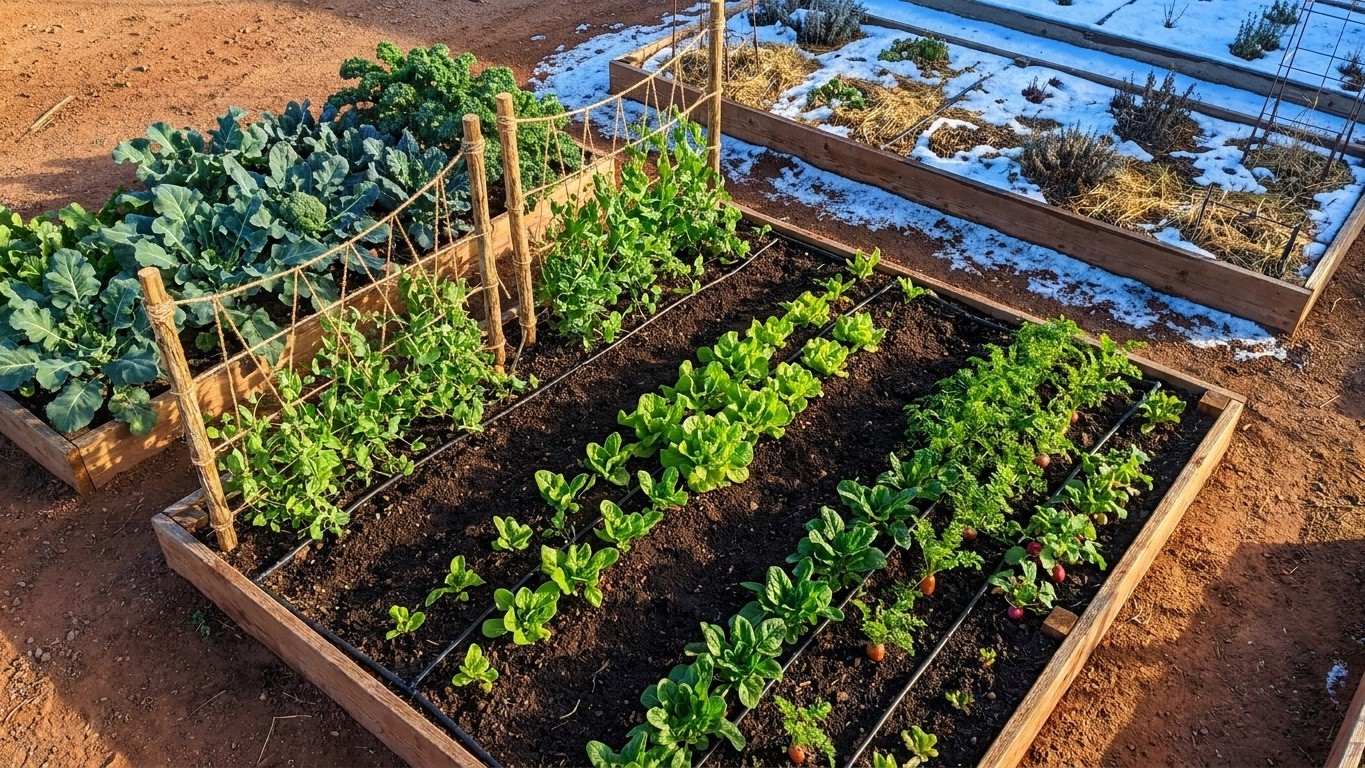

December in Arizona is really two different gardening calendars stitched into one state. In the low desert around Phoenix, Tucson, and Yuma, this is one of the most productive planting months of the year for cool-season crops. In the high country around Flagstaff and the White Mountains, the ground is frozen or snow-covered and the work moves indoors and into dormant-season maintenance.
What goes in the ground in December

The calendar page means almost nothing here without knowing the elevation. NOAA climate data for the Phoenix station (USW00023183, 1991-2020 normals) shows a frost-free season that runs essentially all year, with the reference station reaching 32°F in only 6 of the 30 springs on record. That is not a typo: for most low-desert gardeners, frost is a rare event, not a seasonal wall. The decision about what to plant here is driven by soil temperature and day length for germination, not by a frost date on a chart.
In that low-desert zone, December is prime time to direct-sow or transplant a long list of cool-season vegetables: lettuce, spinach, arugula, and other leafy greens; carrots, beets, radishes, and turnips as direct-sown roots; broccoli, cabbage, and kale as transplants; and peas along fences or trellises while nights stay cool. Garlic and shallots can still go in where the soil is workable and not waterlogged from winter rain. Cilantro and parsley, which bolt fast in heat, are at their best started now.
Climb into the mid-elevation valleys and the picture shifts toward caution: soil is colder, the odd hard freeze is more common, and cold frames or row cover buy real insurance for tender greens. Push up into the high country and the honest answer flips completely: nothing goes into open ground this month. What does work there is bare-root and dormant planting of trees and shrubs while they’re not actively growing, cold frames for anything already established, and forcing rhubarb or chicory indoors for an off-season harvest.
| Region | December frost risk | What goes in the ground |
|---|---|---|
| Low desert (Phoenix, Tucson, Yuma) | Rare; occasional 32°F snap late Dec-mid Jan | Greens, roots, brassicas, peas, garlic, shallots |
| Mid-elevation valleys | Common, variable by pocket | Cold-frame greens, garlic, dormant bare-root stock |
| High country (Flagstaff, White Mountains) | Ground frozen or snow-covered | Nothing outdoors; bare-root dormant plantings only |
What to start under cover
Warm-season vegetables, tomatoes, peppers, eggplant, are the ones worth starting indoors now, and the arithmetic runs backward from when you plan to transplant, not forward from a fixed date. Most seed packets list a number of weeks needed to reach transplant size. In the low desert, growers typically move transplants outside once the rare hard-freeze risk has clearly passed and soil has warmed, which for most of Arizona’s low elevations falls well before spring proper. Count backward from that target window using the packet’s timeline, then add a week of buffer for slow germination in cool indoor conditions.
Start too early and the seedlings outgrow their pots before the ground is ready, turning rootbound and leggy under indoor light. Start too late and they miss the mild window entirely, landing outside just as desert heat starts to climb and stress a young transplant before it has established roots. Both mistakes are common and both are avoidable simply by working backward from your real transplant date instead of a mental image of “spring.”
In the high country, the backward count runs from a much later target, since the ground there stays cold or frozen well past the low-desert planting window. Gardeners in that zone can still start slow growers like onions from seed indoors now, since onions need a long head start regardless of where they’ll eventually go in. Herbs that resent transplant shock, like dill or cilantro, are usually better sown direct later rather than started under cover now, wherever you garden in the state.
What is ready to pick
Low-desert beds planted in fall are already producing. Lettuce and spinach sown in October or November should be at cutting size, and the rule for leafy greens holds everywhere: harvest outer leaves first and let the center keep growing rather than pulling the whole plant. Radishes planted a few weeks earlier are usually ready in the range of three to four weeks from sowing, and broccoli side shoots keep coming after the main head is cut. Carrots started in early fall are often at a usable size, though they sweeten further with a few more weeks in the ground.
High-country gardens have little or nothing coming from open ground this month. What still feeds the household there is cold-frame greens that have kept growing under cover, and indoor sprouts or microgreens, which need no soil and finish in days rather than months. It’s worth walking the root cellar or pantry shelf now: stored squash, potatoes, and onions should be checked by hand for the ones going soft or sprouting, since one turning squash can spread rot to its neighbors in storage faster than most gardeners expect.
Statewide, citrus in low-desert yards is entering its main harvest stretch, and the general test holds regardless of variety: fruit that has reached full color and separates cleanly from the branch with a gentle twist is ready, while fruit that resists should stay on the tree a while longer.
The jobs that matter this month
Dormant pruning tops the list for deciduous fruit trees and cane fruit statewide, done while the wood is bare and the plant’s structure is easy to read. In the low desert this applies to trees like peach and apple that need enough chill hours to fruit well; in the high country it applies to a longer list of hardy fruit and it matters even more, since a missed pruning window before spring growth starts means cutting into live wood the plant has already invested energy in.
Seed ordering belongs on this month’s list too, and not as a someday task. Popular varieties, especially heat-tolerant tomatoes and desert-adapted greens, sell out of seed racks and catalogs well before the low desert’s early planting window opens. Soil testing and amending is easier now than in a rushed spring scramble, and turning the compost pile keeps it breaking down through the cooler months instead of stalling.
Tool maintenance is unglamorous but it pays for itself: cleaning and sharpening pruners and hoes now means they’re ready the moment planting starts, rather than fighting dull blades through the busiest week. In the low desert, this is also the month to check irrigation lines and emitters before the spring push, since a cracked line found in December is a quick fix and the same crack found in April is a dead bed. For citrus and other cold-sensitive plants in the low desert, keep frost cloth on hand and ready to deploy on short notice, since the occasional cold snap that reaches 32°F between late December and mid-January arrives with little warning.
Finally, walk stored crops on a set schedule rather than waiting to notice a smell. Squash, onions, and potatoes in storage should be checked every couple of weeks, and anything soft, sprouting, or discolored pulled before it takes its neighbors down with it.
What not to do in December
The classic low-desert mistake this month is reading a run of 70-degree afternoons as permission to plant tomatoes, peppers, or squash outdoors. Warm afternoon air does not mean warm soil, and even without a hard freeze, the rare cold snap that reaches 32°F between late December and mid-January is enough to knock back or kill a tender seedling that looked fine the week before. The fix is patience: keep warm-season starts indoors or under cover until the low-desert planting window genuinely opens, rather than gambling on a mild stretch.
The mirror-image mistake happens after a cold snap passes: gardeners strip off frost cloth or row cover the moment temperatures climb back into the 60s, only to get caught by a second snap a week or two later. Leave protection in place through the full window when cold snaps are known to occur in your area, and pull it off gradually rather than all at once.
Nitrogen timing trips people up too. Feeding a high-nitrogen fertilizer to fruit trees or perennials heading into dormancy pushes soft new growth that a cold snap can damage, and it wastes fertilizer the plant isn’t ready to use. Save nitrogen feeding for active growth in spring, and use this month instead for phosphorus- and potassium-focused soil amendments that support root development without forcing new shoots.
Last, don’t assume garlic and other alliums can go in anytime the soil looks workable. Garlic planted too late misses the cool root-development window it needs before warmer weather arrives, producing smaller bulbs at harvest.
Checking this against your own county
Arizona’s USDA hardiness zones span 4b through 10b, an enormous range for one state, and that range alone should signal that a statewide December calendar is a starting point rather than an instruction. Elevation is the main driver: a few thousand feet of elevation gain can shift a planting window by weeks, and local microclimates, urban heat pockets, canyon cold-air drainage, exposure to wind, move it further still. Before committing beds or seed trays to any date in this article, check conditions for your own county through the University of Arizona Cooperative Extension, which publishes region-specific guidance built for Arizona’s unusual range of climates.
Common questions
Can you plant tomatoes in Arizona in December?
Not as a direct outdoor planting in most of the state. Even in the mild low desert, the rare cold snap that reaches 32°F between late December and mid-January can damage or kill a young tomato plant, and cool soil slows growth regardless of frost. Start seed indoors instead and transplant once the low-desert warm-season window opens.
Does it actually frost in Phoenix in December?
Rarely. NOAA data for the Phoenix reference station shows the site reached 32°F in only 6 of 30 recorded springs, and the frost-free season there runs close to year-round. A cold snap touching freezing between late December and mid-January is possible but not typical.
What USDA hardiness zone is Arizona?
The state spans USDA zones 4b through 10b, based on the 1991-2020 average annual extreme minimum temperature. Low-desert cities sit at the warm end of that range; high-country areas like Flagstaff sit at the cold end.
What vegetables grow best in Arizona in winter?
In the low desert, leafy greens, brassicas, root vegetables, peas, and alliums are the reliable winter performers. In the high country, winter growing moves to cold frames and indoor starts, since open ground stays frozen through the season.