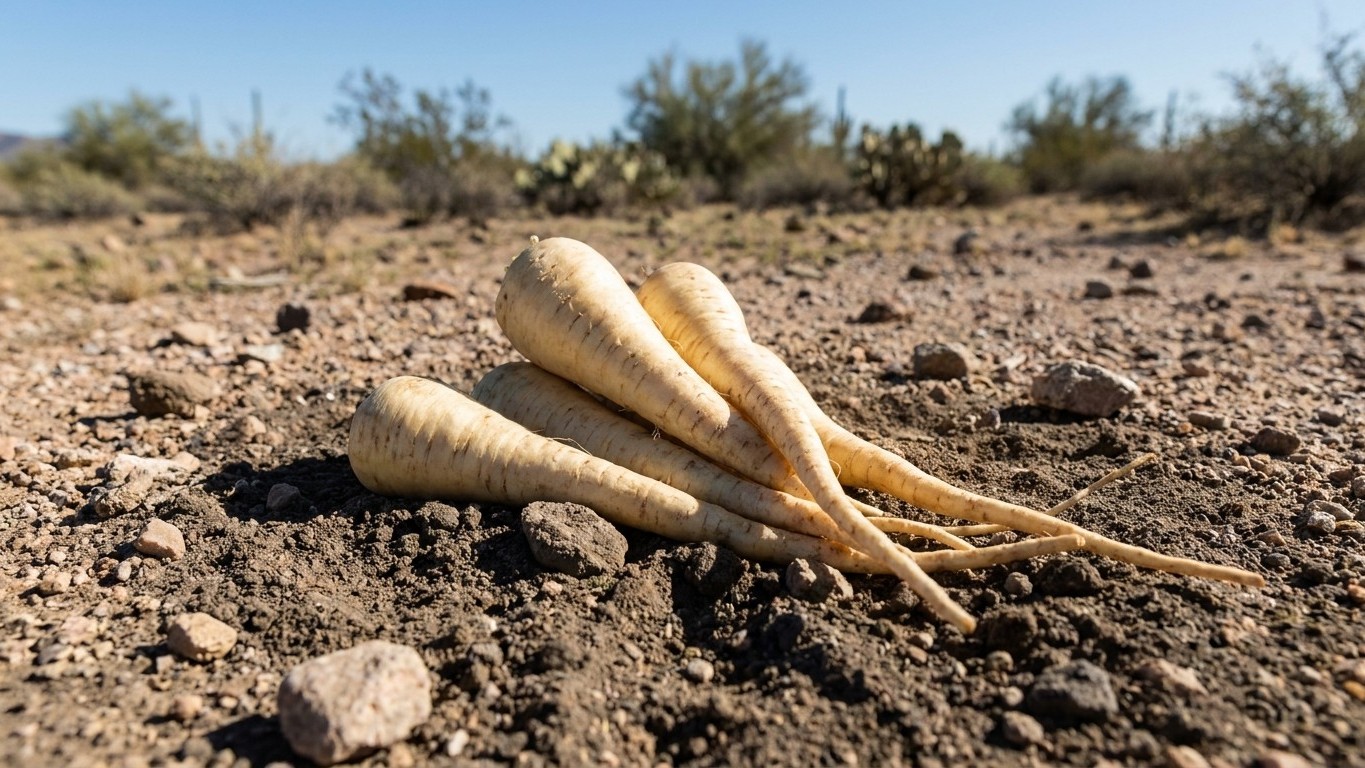

In the low desert around Phoenix, parsnips will grow just fine in the soil. What they won’t do is sweeten, because the frost that converts starch into sugar barely shows up here. Move to the state’s high country and the calculation changes completely, though no frost data for that region is covered on this page.
The short answer

Everything about whether a parsnip turns sweet comes down to one number: how cold does it actually get during the coldest stretch of winter, on an average day, not on a record-setting one. For the Phoenix reference station, NOAA’s 1991-2020 Climate Normals put the mean daily minimum of the coldest month at 45.3°F. That’s not a hard freeze. That’s not even a light frost on a typical night. It’s a mild winter evening that would barely fog a window.
Parsnips need something very different to sweeten: several weeks of cool, frosty weather working on the roots while they sit in the ground, slowly turning stored starch into sugar. A single cold snap doesn’t do it, and a mean minimum sitting comfortably above freezing doesn’t come close. In most years, the Phoenix area sees no freeze at all. NOAA’s daily records for that station (USW00023183) show the ground reached 32°F in only 6 of 30 spring seasons, and the official frost-free season for the area runs a full 365 days.
So the honest answer for low-desert Arizona is that you can absolutely grow parsnips there. The roots will size up, the foliage will look healthy, and the harvest will be usable in soups and roasts. But the flavor most gardeners associate with parsnips, that mellow sweetness that shows up after a real cold snap, is unlikely to develop when winter minimums hover in the mid-40s. This is a climate mismatch specific to the crop’s chemistry, not a soil problem and not a variety problem.
It’s worth being precise about what this figure does and doesn’t tell you. The 45.3°F mean minimum is not the same thing as a hardiness zone rating, and it isn’t the same thing as a single record cold night either. It’s an average across an entire month, over three decades of measurements, at one specific station. If you garden somewhere in Arizona with a different elevation or a different microclimate, that number will not describe your yard. Flagstaff and the high country sit in a completely different climate, with real winter freezes, but no comparable frost-exposure figure for that region is included in the data behind this article, so nothing further can be said about it here without guessing.
The practical takeaway for anyone gardening in the low desert: treat parsnips as a root vegetable you grow for the harvest itself, not for a frost-sweetened bonus. If you want that classic sweet parsnip flavor, you may simply be gardening in the wrong climate for it, no matter how good your soil prep is.
Does the season fit?
Parsnips are sown directly in the garden bed, not started indoors and transplanted, and the clock starts the day the seed goes into the soil, not the day the seedling emerges. Here’s how the timeline actually plays out against Arizona’s frost pattern.
- Germination takes 14 to 21 days. This is slow compared to most vegetables, and it’s the step gardeners most often get wrong, digging up the row after ten days because nothing seems to be happening, then re-sowing and losing another three weeks in the process.
- The full crop needs 100 to 120 days from seeding to harvest, according to Utah State University Extension. That’s the number to plan around, counted from the day you drop seed in the ground, not from germination and not from when the seedlings look established.
- Arizona’s frost-free window doesn’t constrain that timeline the way it would in a colder state. With a 365-day frost-free season at the Phoenix reference station and a genuine freeze occurring in only 6 of the last 30 springs, there’s no tight frost-to-frost window to squeeze 100 to 120 days into. In terms of raw days available, the season fits with room to spare.
- The real constraint is summer heat, not frost. A 100- to 120-day root crop sown to avoid the hottest months means timing sowing so the bulk of root development happens in the cooler part of the year, since sustained high heat stresses root vegetables and can affect quality even when it doesn’t kill the plant outright.
- The frost-sweetening step still depends on a real winter chill, and that part of the equation doesn’t fit Arizona’s low desert at all, regardless of how comfortably the growing season itself fits the calendar.
What goes wrong here
- Forked, hairy roots from heavy or stony ground. Parsnips push a long taproot straight down, and Utah State University Extension notes the crop wants deep sandy soil; heavy soil must be double dug before sowing. Skip that step in Arizona’s often clay-heavy or rocky yards and the root splits around obstructions instead of growing straight.
- Forked roots from overwatering. This is a separate cause from soil texture. Too much water, especially inconsistent watering that swings from soaked to dry, can cause the taproot to fork or branch even in reasonably good soil. Consistent, moderate moisture matters more than heavy watering.
- A season that runs out before harvest. This isn’t really a frost problem in low-desert Arizona given the long frost-free window, but sowing too late and running the 100- to 120-day clock into peak summer heat can stall root development just as effectively as an early frost would in a colder climate.
- A winter too mild to sweeten. With the coldest month averaging a 45.3°F minimum, the roots may reach full size and still lack the sweetness gardeners expect. There’s no soil fix or watering fix for this one; it’s a climate limitation tied directly to how few frosty weeks the region delivers.
Parsnip greens carry a hazard that has nothing to do with taste and everything to do with skin. North Carolina Extension Gardener Plant Toolbox states it plainly: “All parts of this plant contain furocoumarins which can make skin sensitive to light causing burns so be sure to wear gloves, long sleeves and long pants when dealing with it.”
The mechanism is what makes this surprising rather than obvious. Furocoumarins in the sap don’t burn skin on their own. The reaction needs sap on the skin and then sunlight hitting that same skin, a combination called phytophotodermatitis. That’s why the burn tends to show up after a bright afternoon spent pulling tops or harvesting roots, and why it often doesn’t appear until hours later, once the skin has been exposed to sunlight for a while. Because the reaction depends on light, not just contact, washing off the sap after the fact doesn’t undo damage that’s already been triggered by sun exposure.
That’s also why the protection has to come before you touch the plant, not after. Gloves, long sleeves, and long pants block the sap from ever reaching skin in the first place, which is a far more reliable defense than trying to wash it away once you’re back inside and the sun has already done its work. The source specifies all parts of the plant, not just the leaves, so the same caution applies to the roots and stems during harvest, not only during weeding.
Checking this against your own county
The 45.3°F figure in this article comes from one reference station near Phoenix, and Arizona’s climate varies enormously across the state, from low desert to high plateau to mountain forest. Before deciding whether parsnips will sweeten in your particular yard, it’s worth checking local frost data through the University of Arizona Cooperative Extension, which maintains county offices with soil, planting, and climate guidance specific to your region.
An extension office can also help confirm whether your soil is heavy enough to need double digging before sowing parsnip seed, and whether your local watering patterns are likely to cause the forking problems common in this crop. That kind of ground-level detail doesn’t show up in a single climate station’s numbers, but it often determines whether a parsnip crop comes out straight or split.
Common questions
Can parsnips grow in Phoenix even if they never sweeten?
Yes. The roots will size up and be edible; they simply won’t develop the frost-sweetened flavor gardeners in colder climates get, because the coldest month there averages a 45.3°F minimum rather than several weeks of hard frost.
How long before I see parsnip seedlings after sowing?
Germination takes 14 to 21 days according to Utah State University Extension. Resist the urge to dig up the row or re-sow before that window closes.
Does heavy Arizona soil always cause forked roots?
Not always, but it’s one of two common causes. Heavy or stony ground needs to be double dug before sowing; the second cause, unrelated to soil texture, is overwatering or inconsistent watering.
Should I leave parsnips in the ground longer to force sweetness in a mild climate?
Extra time in the ground doesn’t substitute for actual frost exposure. Sweetening comes from sustained cold weather converting starch to sugar, not simply from extended time in the soil.