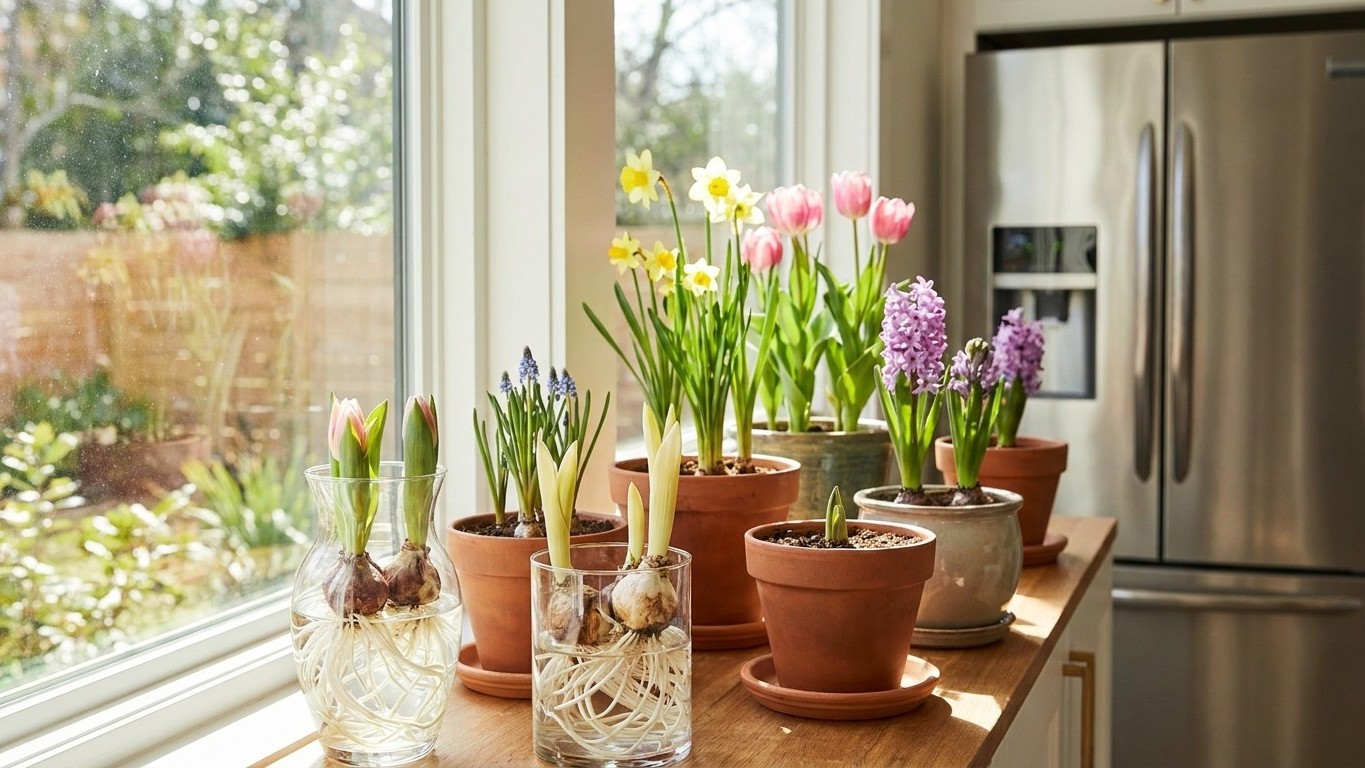

Forcing works in Houston because winter here almost never delivers the sustained chill a spring bulb needs before it will bloom. The coldest month averages a minimum of just 43.7°F, and that’s a monthly average, not twelve to fourteen weeks of consistent cold. Gardeners here supply that cold themselves, in a refrigerator drawer, then bring the bulb indoors to flower on their own schedule.
Why this matters in Texas

A tulip, hyacinth, or daffodil bulb needs roughly 12 to 14 weeks below 45°F before its flower bud will develop and push up a stem. That’s not a single cold snap. It’s a sustained stretch, week after week, cold enough and long enough to trick the bulb into thinking winter has passed. Houston’s coldest month averages a daily minimum of 43.7°F, according to NOAA NCEI Climate Normals for 1991-2020. That figure sits just under the 45°F threshold, but it’s an average across the whole month, not a guaranteed run of consecutive weeks that cold. Some winters might brush against it. Most won’t sustain it long enough for the bulb to notice.
That distinction matters more than it sounds. A gardener who leaves tulip bulbs in a flower bed here, expecting the ground to do the chilling naturally, is usually disappointed the following spring: foliage without flowers, or nothing at all. The soil simply doesn’t stay cold enough, long enough. Forcing sidesteps the problem entirely by moving the chilling step indoors, into a refrigerator, where the temperature and the timeline are both under control.
This is different from the container problem that trips up gardeners farther north, where a potted bulb left outside can freeze solid, roots and all, because a pot has none of the insulating mass of open ground. That’s a real risk in colder zones. It’s not really the risk here. The USDA Plant Hardiness Zone Map (2023 edition, based on 1991-2020 normals) places the wider territory across a broad 6a-10a range, but Houston itself sits at the milder end of that spread. Other parts of Texas, especially the Panhandle, run considerably colder and face that freeze-through risk on outdoor containers. In Houston, the problem isn’t protecting a pot from freezing. It’s finding cold at all.
How to do it here
Because Houston’s winter won’t reliably supply the chill, the method below treats the refrigerator as the primary cold source rather than an unheated garage. A garage in this climate can swing well above 45°F for stretches during winter, which breaks the sustained-cold requirement the bulb depends on. Here’s the sequence, in order:
- Pick bulbs that require a cold period to bloom, such as tulips, hyacinths, daffodils, or crocus. Buy them in early fall, while stock is fresh.
- Store bulbs in a mesh bag in the refrigerator’s crisper drawer, away from apples, bananas, or any ripening fruit. Ripening fruit releases ethylene gas, and ethylene damages the flower bud forming inside the bulb, often before you ever see it.
- Leave the bulbs chilling for 12 to 14 weeks, depending on the species. Mark a start date somewhere visible; it’s easy to lose track over three months.
- Skip the garage as a substitute for the refrigerator here. Given Houston’s mild winter minimums, an unheated garage can’t be counted on to hold steady cold for the full stretch, so it’s an unreliable stand-in for the refrigerator drawer.
- Pot the chilled bulbs in a container with drainage holes, using a well-draining potting mix, once the chilling period is complete.
- Set the pot somewhere cool and bright, around 55°F to 65°F, for a couple of weeks to let roots establish before exposing the bulb to warmth. Then move it into a warmer, sunny spot to trigger the actual bloom.
Every step above is something you can check yourself: a thermometer in the fridge, a date on the calendar, drainage holes in the pot. Nothing here depends on guessing at outdoor conditions the way in-ground planting does.
Which bulbs are worth it
Not every bulb is worth the fridge space. Some skip the chilling step entirely and force with almost no effort. Others need a long cold period and grow tall stems that flop over indoors, which makes them a poor match for forcing in a small pot.
- Paperwhite narcissus, needs no cold period at all; pot it and it blooms on its own timeline.
- Amaryllis, also skips the chill requirement, and produces a dramatic bloom from a single large bulb.
- Hyacinth, chills reliably in the refrigerator and holds a sturdy stem indoors.
- Crocus, small enough to bloom well in a shallow dish and doesn’t need a long chill.
- Tulips, need the full 12 to 14 weeks of chill and often grow a tall, top-heavy stem that leans or topples in a pot.
- Tall trumpet daffodils, same problem as tulips: a long cold requirement paired with height that doesn’t suit indoor display.
Worth remembering: none of these bulbs are expected to come back and naturalize in a Houston flower bed the way they might in a colder state. They’re grown here as one-season plantings regardless. Forcing one indoors instead of planting it outside costs nothing in the long run, since the bulb was never going to repeat the performance the following year.
What goes wrong, and when you can still fix it
Leaves grow, but no flower appears
This means the chilling period ran short. The bulb put out foliage because it had enough energy stored for that, but never accumulated enough cold hours to form a flower bud. There’s no fix once the leaves are up; the bloom simply isn’t coming this season. Note the shortfall and extend the chill period next time.
A flower opens on a stem too short to see over the pot rim
This happens when the bulb was moved from cold to warmth too quickly, before the stem had a chance to elongate in the cool, low-light rooting phase. The flower itself is fine, just low. This season, there’s nothing to do but enjoy it at pot height, or snip it for a small vase. Next round, hold the pot longer in that cool 55°F to 65°F stage before moving it into full warmth.
Bulbs rot in the pot before they ever sprout
Rot means the container never drained. Sitting water around a chilling or rooting bulb suffocates it before it has a chance to grow. This one isn’t fixable this season; a rotted bulb is done. Next time, confirm the pot has drainage holes and use a mix that doesn’t stay soggy, rather than garden soil that compacts and holds water.
Related guides
- Growing Spring Bulbs in Containers in Texas
- Forcing Spring Bulbs Indoors in Utah