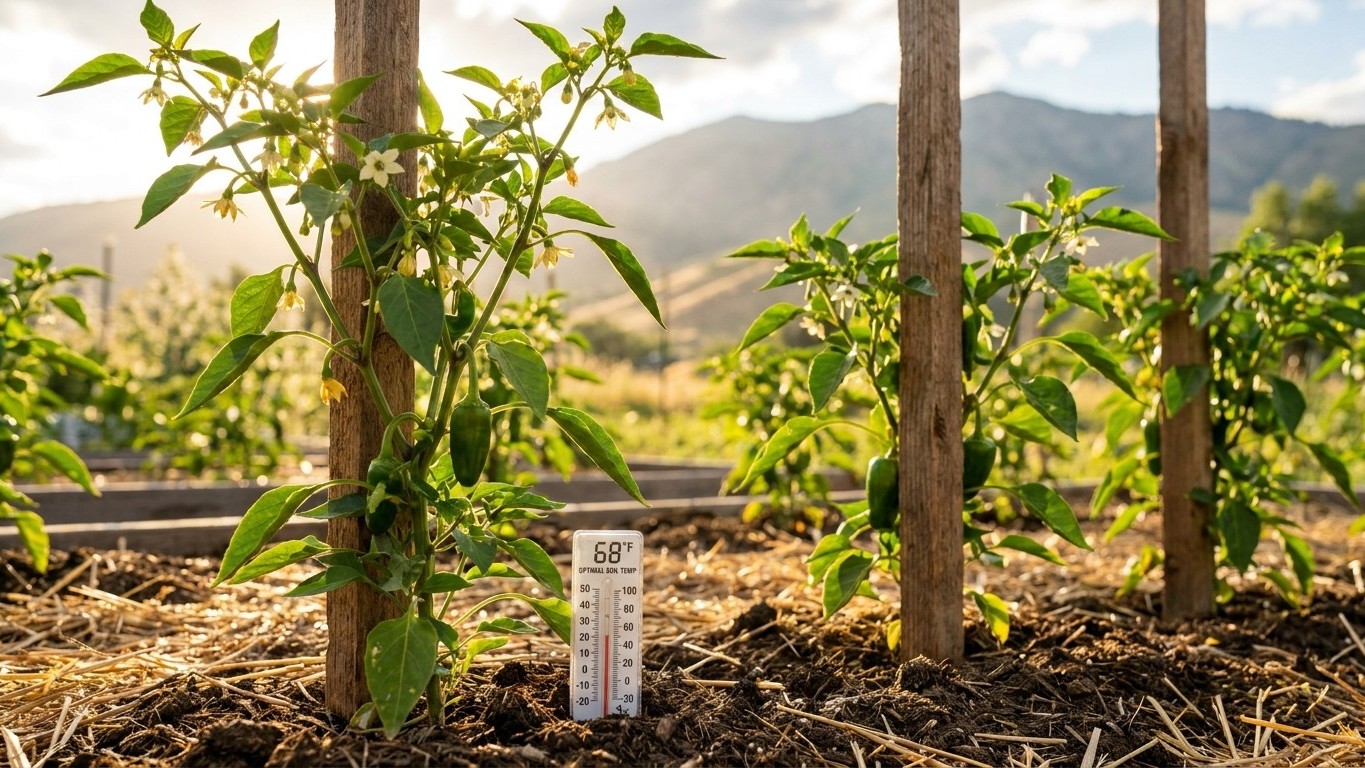

In Anchorage and most of coastal Southcentral Alaska, pepper fruit set has almost nothing to do with heat stress. With zero days a year reaching 90°F, the plants never shut down from summer heat. The real threat runs the other direction: nights that drop below 55°F, which can happen even in July at higher elevations or along exposed coastal sites. This page carries confirmed heat data for the region but not summer night minima, so that half of the equation is yours to track.
The short answer

Start with the number that actually matters for heat stress: 0.0 days a year at or above 90°F, measured at the Anchorage reference station under the NOAA NCEI 1991-2020 Climate Normals. That figure tells you the whole story on one end of pepper fruit set. Peppers stop setting fruit when daytime highs climb past 90°F for stretches at a time, because the blossoms abort under that kind of heat load. Alaska growers, at least in the coastal and Southcentral parts of the state, essentially never see that problem. The plants can flower all season without a single heat-driven blossom drop.
But fruit set fails at both ends, not just the hot one. Utah State University Extension’s guidance on peppers is direct about this: nights below 55°F cause the same failure as days above 90°F, just through a different mechanism. Cold nights disrupt pollen viability, and a plant that looks healthy can drop its flowers or hold green, unripe fruit for weeks with no explanation other than the overnight low.
This is where Alaska growers need to do their own homework. This site tracks days above 90°F for the territory because that number is measured and published at a fixed station. It does not carry summer night minima, and there is no reliable way to back into that figure from latitude, sunset time, or how cold the winters run. A site at sea level in a sheltered Anchorage yard can sit comfortably above 55°F most July nights, while a garden twenty miles away in a low-lying valley or near open water can drop into the low 50s or worse on the same night. Microclimate matters more here than almost anywhere else in the country, because the growing season is already short and there’s no margin to lose a week of fruit set to an unnoticed cold snap.
The practical takeaway: heat is not your enemy in an Alaska pepper season. Cold nights are, and you need a thermometer in your own garden, not a chart from a website, to know where you stand on any given night in June, July, or August.
When to start seed here
Because Alaska’s growing season is short and its soil warms slowly, the seed-starting date has to be worked backward from two fixed points: when it’s safe to transplant, and how many weeks a pepper seedling needs indoors before it’s ready. Here’s how to do that math for your own county.
- Find your last spring frost window. At the NOAA NCEI reference station for this region (station USW00026451), the 30-70% probability band for the last 32°F freeze runs from May 3 to May 12. That means by early-to-mid May, the odds of another hard frost drop off sharply, though they don’t disappear entirely. This station sits in one of the mildest inhabited parts of Alaska, with roughly 143 frost-free days a year. Interior Alaska and the northern parts of the state run a much shorter frost-free season, so anyone gardening outside the Anchorage area needs to pull their own local frost data rather than borrowing this window.
- Wait for the soil, not just the calendar. Utah State University Extension’s rule for transplanting peppers is soil at 60°F, after frost has passed. In Alaska, soil temperature lags well behind air temperature because the ground is still cold from a long winter and daylight, however extended, doesn’t heat soil as fast as it heats air. Many Southcentral gardeners find their soil doesn’t reach a reliable 60°F until several weeks after the last frost date, which often pushes the actual transplant date into late May or into June rather than right at the frost-free mark.
- Count back 8 to 10 weeks from that transplant date. If soil hits 60°F in early June, seed needs to go into trays indoors sometime between late March and early April. That’s the window Utah State University Extension recommends for indoor starting: 8 to 10 weeks before transplant, no more and no less. Starting too early just means leggy, root-bound seedlings sitting in trays waiting for soil that isn’t ready.
- Recheck the arithmetic against your own site. If your garden runs colder than the reference station, whether from elevation, shade, or proximity to open water that keeps spring cool longer, push the whole schedule a week or two later. If you’re gardening farther north or in the Interior, the frost-free season is shorter than the 143 days quoted here, and the same backward math needs to start from your own local frost record, not this one.
What goes wrong here
Even with the timing right, Alaska’s short, cool-leaning season creates its own set of predictable pepper failures. Here’s what tends to go wrong, and what to do about each one.
- Blossom drop from a cold night. This is the dominant failure mode in Alaska pepper gardens. A night that dips below 55°F, even one night, can cause flowers to drop without setting fruit. Since this site does not track summer night minima, the only fix is to monitor your own garden with a min-max thermometer and, when a cold night is forecast, cover plants with row cover or move containers into a garage or greenhouse overnight.
- Blossom drop from an unexpected heat spell. Even though Anchorage averages zero days above 90°F, a plastic-covered high tunnel or an unventilated greenhouse can trap heat well past that mark on a sunny day, and peppers grown that way can drop blossoms exactly as if they were in a Southern heat wave. Vent tunnels and greenhouses on bright days and don’t assume outdoor climate data applies to a covered structure.
- Sunscald on exposed fruit. Alaska’s long summer daylight means peppers get many more hours of direct light per day than they would at the same calendar date farther south, even without especially high temperatures. Fruit that’s suddenly exposed after a pruning cut or a fallen leaf can scald with a soft, sunken, whitish patch. Leave a full canopy of foliage over developing fruit and avoid heavy pruning once peppers have set.
- Blossom-end rot from uneven watering. Containers and raised beds, common in Alaska gardens because they warm faster than open ground, dry out quickly on long summer days and then get overwatered to compensate. That swing causes calcium uptake problems and the flat, leathery brown spot on the fruit’s blossom end known as blossom-end rot. Keep watering consistent, check containers daily during long-daylight stretches, and mulch to even out soil moisture.
Common questions
Do peppers actually ripen fully in an Alaska growing season?
They can, but the margin is thin. With roughly 143 frost-free days at the mildest reference station and a transplant date that often lands in late May or June once soil warms to 60°F, peppers need to move from flower to ripe fruit well before the first fall frost returns. Fast-maturing, compact types suited to short seasons give the best odds; anything bred for a long, hot growing season is unlikely to finish before the season closes.
Should I worry about heat stress on my Alaska peppers?
Not from ambient outdoor air. Zero days a year reach 90°F or above at the Anchorage reference station, so field-grown peppers rarely face the heat-driven blossom drop that gardeners in hot-summer states deal with. The exception is anything grown inside an unvented greenhouse or high tunnel, where trapped heat can climb well past that threshold on a sunny day even when the outside air stays mild.
How do I know if my nights are too cold for fruit set?
Watch your own garden with a min-max thermometer rather than relying on published averages. Utah State University Extension’s guidance puts the failure point at nights below 55°F, and this site does not carry summer night minima for Alaska because they vary too much by elevation, water proximity, and local terrain to publish a single reliable figure. A thermometer at plant height in your own yard is the only accurate read.
What happens if I start seed too early indoors?
The seedlings outgrow their trays before the garden is ready for them. Utah State University Extension recommends starting seed 8 to 10 weeks before transplant, timed to when soil reaches 60°F after the last frost. Start much earlier than that window and you end up with root-bound, stressed seedlings sitting on a windowsill waiting for soil that’s still too cold, which tends to set the plants back rather than give them a head start.