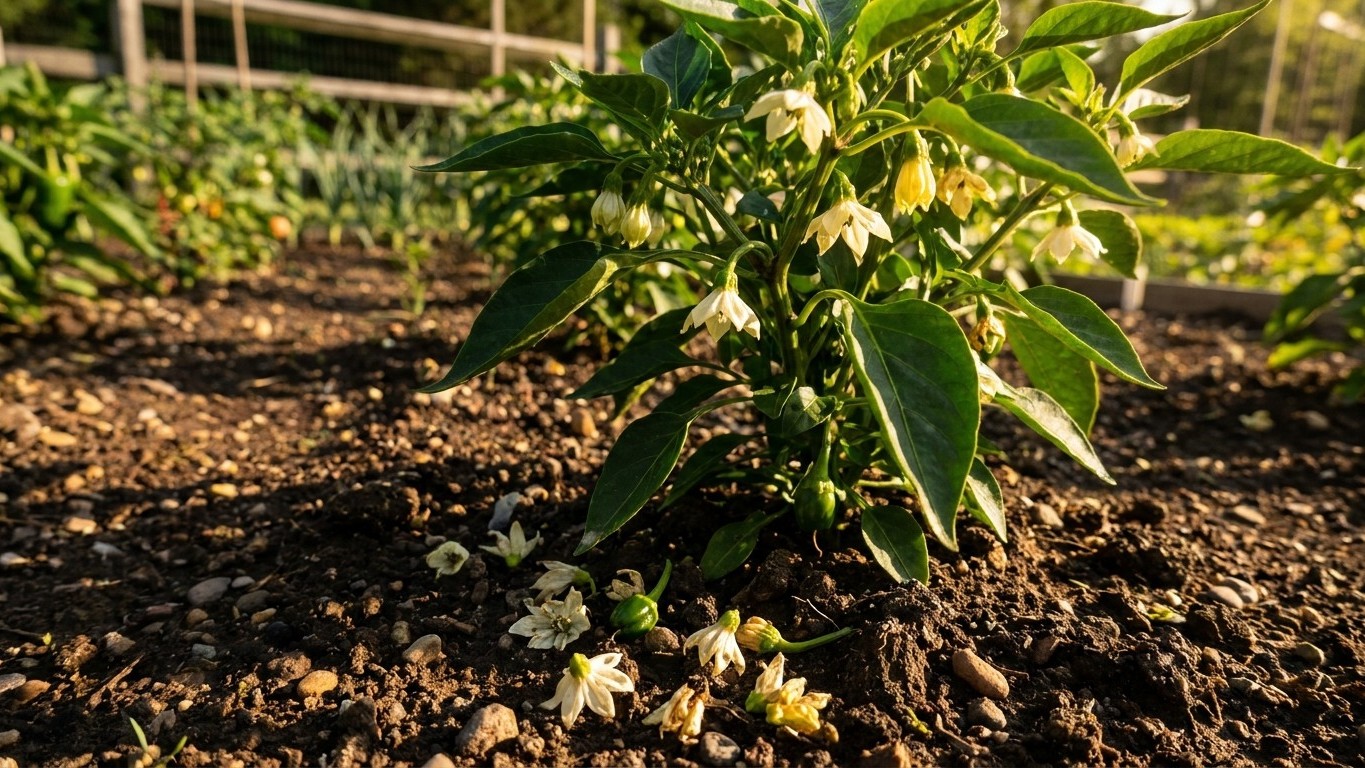

Pennsylvania peppers set fruit fine most summers, but the window narrows on both ends of the thermometer. Philadelphia’s reference station averages 24 days a year at or above 90°F, hot enough to stall pollen some afternoons. Cooler nights can do the same damage in reverse. Start seed indoors 8 to 10 weeks before soil hits 60°F, after frost, and watch the flowers during any heat spike, not just the plants.
The short answer

Twenty-four days a year at or above 90°F. That’s the number NOAA’s Climate Normals (1991-2020) log for the Philadelphia reference station, and it’s the figure that matters most for anyone trying to keep a pepper plant flowering through July and August. Pepper fruit set stalls when daytime temperatures climb past 90°F, because the flowers drop before pollination finishes. Twenty-four days isn’t a single freak heat wave. It’s close to three and a half weeks scattered across the growing season, often clustered in the hottest stretch of July, when a plant loaded with blossoms can drop most of them in a single afternoon and set nothing for a week or two afterward.
That’s the hot end. The cool end matters just as much, and it works the opposite way: pepper fruit set also fails when nights drop below 55°F, according to Utah State University Extension. A pepper plant that looks perfectly healthy, with strong stems and dark green leaves, can still refuse to hold fruit if the nights running up to and through flowering stay too cool. This is the failure mode gardeners miss most often, because nothing about the plant looks wrong. The leaves aren’t wilting, there’s no visible pest damage, the blossoms just fall off cleanly and nothing replaces them.
This is also where this site’s data runs out. Summer night minima aren’t part of the numbers carried here for any Pennsylvania territory, and that’s not a gap to guess around. Pennsylvania’s terrain does the guessing for you anyway: a valley floor in the Alleghenies can run several degrees cooler overnight than a ridge a few miles away, and river-bottom gardens in the Piedmont hold heat longer than upland fields nearby. Latitude alone won’t tell you what a night in your own backyard does, and neither will the coldest month of the year, which measures a completely different kind of cold. The only reliable fix is to put a min-max thermometer in the garden, or check a home weather station, and read what the nights near your plants are actually doing during the weeks before and during flowering.
Put the two thresholds together and the picture is clearer than either number alone. Pennsylvania pepper growers aren’t fighting one kind of weather, they’re threading a plant between two kinds of failure, hot afternoons that can hit 24 days a year in the Philadelphia area and cool nights that can just as easily stall fruit set. Choosing from the right Pepper Varieties That Ripen in a Pennsylvania Season can narrow that risk considerably, since some cultivars set fruit reliably across a wider temperature range than othersphia area and cool nights that this site simply can’t quantify for your yard. Both cost you fruit. Neither one looks dramatic while it’s happening.
When to start seed here
Working backward from frost and soil temperature turns a vague planting calendar into arithmetic anyone can redo for their own county.
- Start with the last spring frost. NOAA’s 1991-2020 climate normals put Philadelphia’s 32°F freeze probability window between March 29 and April 6, the mildest corner of the state. That’s your starting anchor, but only if you’re near Philadelphia.
- Adjust for where you actually garden. Philadelphia sits at the warm edge of Pennsylvania’s frost calendar. The northern tier and the Allegheny highlands run two to four weeks later in spring, which pushes both the last frost date and the soil-warming date later on the calendar by the same stretch.
- Wait for soil, not just air. Utah State University Extension’s guidance is specific on this point: pepper transplants go into the ground after frost has passed and once the soil itself reaches 60°F, not when the air feels warm enough. Soil in Pennsylvania’s clay-heavy ground often lags several days behind air temperature, especially in a shaded or poorly drained bed.
- Count back 8 to 10 weeks from that transplant date. If your soil is likely to hit 60°F in late April near Philadelphia, seed goes into trays roughly 8 to 10 weeks earlier, which lands in late February. Push that same math two to four weeks later for the Alleghenies or the northern tier, and the seeding date slides into March.
- Build in a buffer, not a fixed date. Because the frost window itself spans a week and soil warming varies with the spring’s rainfall and sun, treat the 8-to-10-week count as a range to seed within, not a single day to hit exactly.
None of this arithmetic is exclusive to one town. Any gardener in the state can run the same three numbers, their local last-frost window, their own soil temperature reading, and the 8-to-10-week indoor count, and land on a seeding date that fits their actual ground rather than a statewide guess.
What goes wrong here
- Blossom drop from a hot spell. When daytime temperatures push past 90°F, which happens roughly 24 days a year at the Philadelphia reference station, open flowers abort before pollination completes and drop to the ground still intact. There’s no fix once it happens to a given flush, but shading the plant during the hottest afternoons and keeping soil moisture even through a heat spell reduces how many flowers it costs.
- Blossom drop from a cool night. The opposite failure looks identical from a distance, flowers falling with no fruit behind them, but it happens when nighttime temperatures sit below 55°F during flowering. Because this site doesn’t carry night minima for any Pennsylvania territory, the only way to catch this in your own garden is to track your actual overnight lows with a thermometer near the plants, not to assume from the calendar or the region that nights are warm enough.
- Sunscald on exposed fruit. Pennsylvania summers deliver strong, direct sun during the same stretch that brings the 90°F-plus days, and fruit left exposed after heavy pruning or leaf loss can develop pale, papery patches on the side facing the sun. Leaving natural foliage cover in place, rather than stripping leaves to “let more light in,” protects developing peppers without costing yield.
- Blossom-end rot on the fruit itself. Peppers that do set fruit through a hot or uneven summer sometimes show a sunken, leathery patch at the blossom end. This traces to inconsistent watering more than to a missing nutrient in most home gardens, since irregular moisture disrupts how the plant moves calcium into the fruit even when calcium is present in the soil. Even, regular watering through fruit development is the practical fix, especially during the same hot stretches that also threaten blossom drop.
Checking this against your own county
Philadelphia’s numbers are a reference point, not a forecast for every county in Pennsylvania. A garden in Erie, Scranton, or the Alleghenies can run weeks behind Philadelphia’s frost and soil-warming dates, and no single station on the eastern edge of the state can speak for conditions across the whole commonwealth.
The most reliable next step is Penn State Extension (extension.psu.edu), the land-grant university extension service for Pennsylvania. Local extension offices track frost records, soil temperature trends, and pest pressure specific to their county, and they can tell you how far your local dates drift from the Philadelphia reference numbers used here. If nighttime lows during flowering are the piece you’re missing, a call to your county office or a look at their published planting guides is a better source than a statewide average ever will be.
Common questions
Can I speed up pepper flowering by transplanting earlier?
Transplanting before the soil reaches 60°F or before the last frost has passed tends to stall a pepper plant rather than push it forward, since cold soil slows root growth and a late frost can kill the transplant outright. The 8-to-10-week indoor count exists precisely so the transplant date lines up with warm soil, not so it can be moved earlier.
Does a single hot day in the 90s ruin the whole season?
No. A single hot day mostly costs the flowers open on that day; the plant keeps producing new blossoms afterward as long as roots stay watered and the plant isn’t stressed for water during the heat. It’s a sustained run of 90°F-plus days, closer to the pattern behind that 24-day yearly average, that does the real damage to total yield.
Why are my peppers dropping blossoms when it’s not even that hot?
Check the nights, not the days. Fruit set fails at both the hot end and the cool end, and a stretch of nights under 55°F during flowering will drop blossoms even on a mild-looking week. This site doesn’t track night minima for any Pennsylvania territory, so a thermometer in the actual garden is the only way to confirm it.
Is there a way to protect fruit from sunscald without losing yield?
Leave the plant’s natural leaf canopy largely intact rather than pruning heavily for airflow or light. The leaves shading developing fruit from direct afternoon sun are doing useful work during the same weeks that bring the highest number of 90°F-plus days.