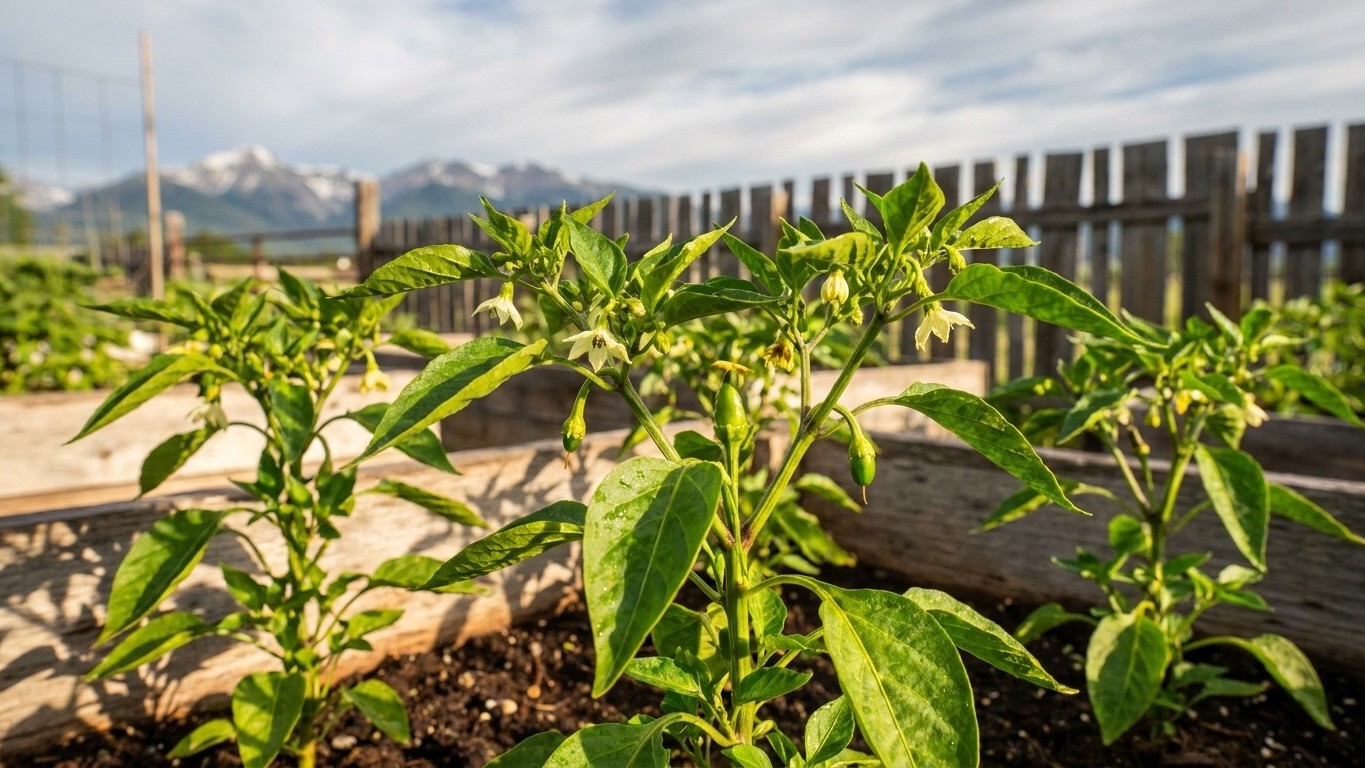

Billings averages 28.3 days a year at or above 90 F, and that number alone can shut down pepper fruit set for stretches of the summer. But heat is only half the story. The other threshold, cold nights, isn’t tracked here at the county level, which means the real answer to “will my peppers set fruit” depends on data you’ll need to gather yourself.
The short answer

Start with the heat side, because it’s the one this site can actually quantify. At the reference station in Billings, the 1991-2020 climate normal puts the count of days reaching 90 F or higher at 28.3 per year. That’s not an average summer temperature, it’s a load: nearly a month’s worth of days where the air itself works against pollen viability. Pepper flowers can drop when daytime highs push past 90 F, especially if that heat arrives in a run of consecutive days rather than a single spike. A plant can shrug off one hot afternoon. A week of them, with little overnight recovery, is a different situation.
That 28.3-day figure is a statewide reference point tied to one station, not a guarantee for every Montana garden. A backyard in a river valley with reflected heat off pavement or a south-facing wall will run hotter than the official count suggests. A garden higher up, or one that catches evening wind off nearby terrain, may see far fewer of those 90-plus days. The number is a starting point for thinking about risk, not a forecast for your specific rows.
Now the other end, and it matters just as much. Pepper fruit set also fails when nights drop below 55 F, because cool night air interferes with pollen the same way excess heat does, just from the opposite direction. This is where the available climate data runs out. This site carries daytime heat extremes by territory, but it does not carry summer overnight minimums, and there’s no reliable way to back into that number from latitude, elevation guesses, or the coldest month of the year. Montana’s terrain is too broken up for that kind of shortcut. A valley floor and a bench a few hundred feet higher can differ by several degrees on a still night.
What that means practically: track your own overnight lows through the growing season, whether with a simple min-max thermometer or a phone-linked sensor near the pepper bed. Getting this timing right often starts even earlier, with When to Start Pepper Seed in Montana, since a well-timed start gives plants a better shot at dodging both the heat and cold windows that disrupt fruit set. If you’re seeing flowers open and drop without setting fruit, and daytime highs aren’t the obvious culprit, check the night side before you blame anything else, and see Why Peppers Fail to Set Fruit in Montana for a fuller breakdown of both thresholds the plant, the soil, or the variety. It’s also worth reviewing Pepper Varieties That Ripen in a Montana Season, since some cultivars set fruit more reliably under these temperature swings than others.
When to start seed here
Utah State University Extension lays out the basic math for pepper transplants: start seed 8 to 10 weeks before you plan to move plants outside, and don’t move them outside until the soil has reached 60 F and the frost risk has passed. In Montana, both of those conditions take patience, and working the count backward from your own transplant window is more useful than following a fixed calendar date.
- Find your local last-frost window. For the Billings reference station, NOAA’s 1991-2020 normals put the 32 F freeze probability window between April 29 and May 10. That’s one of the milder valleys in the state. Mountain valleys elsewhere in Montana can see frost in any month, so treat this window as a floor, not a rule for your own ground.
- Wait for soil, not just air. Soil at 60 F usually lags behind the last frost date by one to several weeks, depending on how exposed and how well-drained your bed is. A raised bed or sandy soil warms faster; heavy clay in shade holds cold longer. Check soil temperature directly with a probe thermometer rather than guessing from the calendar.
- Set your realistic transplant date. For a garden near the Billings reference conditions, that likely lands somewhere in the second half of May into early June once both frost risk and soil temperature line up. Gardens at higher elevation or in a known frost pocket should push that later.
- Count back 8 to 10 weeks for indoor sowing. If your transplant date lands in early June, 8 weeks back is early April, and 10 weeks back is late March. Splitting the difference and sowing in the last week of March through the first week of April gives you a buffer without pushing plants to outgrow their containers indoors.
- Rerun the math for your county. Anyone gardening away from the Billings area should swap in their own last-frost window before doing this arithmetic. The method holds; the dates don’t transfer directly.
What goes wrong here
- Blossom drop from a hot spell. When daytime highs stack up near or above 90 F for several days running, flowers open and fall without setting fruit. This is the failure mode tied directly to Billings’ 28.3-day average above 90 F. There’s no way to force pollination through a heat wave, but afternoon shade cloth over the row during the worst stretch, and consistent soil moisture so the plant isn’t fighting drought stress on top of heat, both reduce how much a hot spell costs you.
- Blossom drop from a cool night. The same symptom, opposite cause: nights dropping below 55 F. Since summer night minima aren’t tracked here by territory, the fix starts with knowing your own numbers. A simple overnight thermometer near the bed tells you whether cool nights are the reason flowers keep falling before you spend money on row covers or heat retention tricks that may not be the actual problem.
- Sunscald on exposed fruit. Montana’s high elevation and clear summer skies mean strong direct sun, and peppers that lose leaf cover to pruning, wind damage, or disease can develop pale, papery patches on fruit facing the sun. Keep the plant’s natural leaf canopy intact rather than stripping foliage for airflow, and stake or cage plants so wind doesn’t tear leaves away right when fruit is sizing up.
- Blossom-end rot. This shows up as a sunken, leathery patch at the fruit’s blossom end and it’s a calcium delivery problem, usually driven by uneven watering rather than a true calcium shortage in the soil. Keep watering consistent, especially through the hot stretches when the plant’s demand spikes, since drought-and-flood cycles are what interrupt calcium uptake in the first place.
Checking this against your own county
The numbers above come from a single reference station and one set of climate normals. Montana’s mix of river valleys, benches, and mountain-adjacent gardens means your actual frost dates, soil warm-up speed, and heat exposure can differ meaningfully from what’s cited here. Before locking in a planting date, check with Montana State University Extension at montana.edu/extension, which maintains county-level offices with local frost data, soil testing services, and staff who can speak to conditions in your specific valley or bench. That local layer is what turns a statewide estimate into a planting plan you can trust for your own garden.
Common questions
Why do my pepper flowers fall off without producing fruit?
Flower drop without fruit set usually traces to temperature extremes rather than disease or nutrient issues. Daytime highs at or above 90 F and nighttime lows below 55 F both interfere with pollen viability. Since this site doesn’t track summer night minima by county, log your own overnight lows for a few weeks to see which end of the range is causing the problem in your garden.
How many days a year does Billings see 90 F or hotter?
The 1991-2020 NOAA climate normal for the Billings reference station is 28.3 days a year at or above 90 F. That figure represents summer heat load, not the average summer temperature, and it’s the main driver of heat-related blossom drop in pepper crops grown near that station.
When is the last frost date for gardens near Billings?
NOAA’s 1991-2020 climate normals put the 32 F freeze probability window for the Billings station between April 29 and May 10. Billings sits among the milder valleys in Montana; higher-elevation and mountain-adjacent gardens elsewhere in the state can see frost in any month, so this window shouldn’t be applied outside similar valley conditions.
How far in advance should I start pepper seed indoors in Montana?
Utah State University Extension recommends starting pepper seed 8 to 10 weeks before transplanting outdoors. Transplanting itself should wait until both the frost risk has passed and soil temperature has reached 60 F. Counting back from your own realistic transplant date, rather than a fixed calendar day, gives a more reliable indoor sowing window.