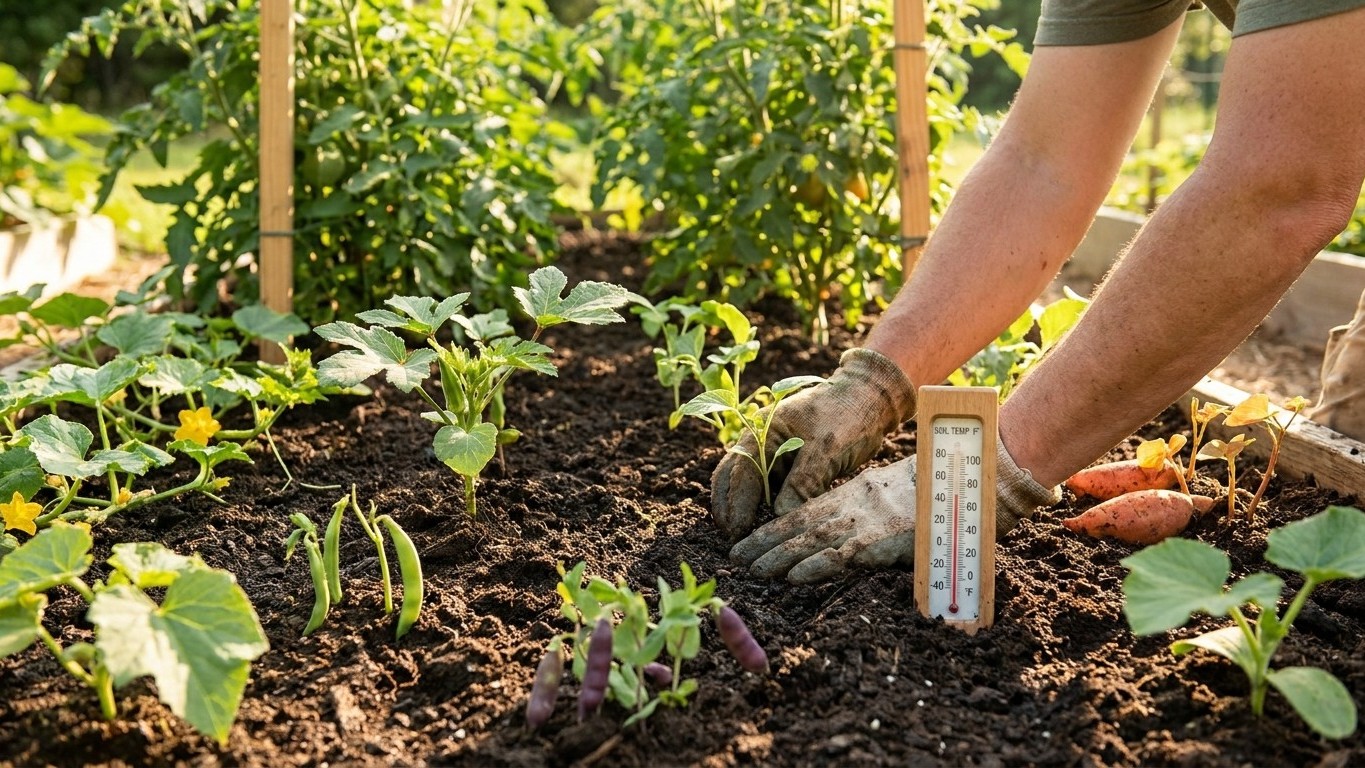

By June, Arkansas gardens are in full swing: this is the month for okra, southern peas, sweet potato slips, melons, and back-to-back plantings of beans, corn, cucumbers, and summer squash. Frost is not a factor anywhere in the state at this point. The real limit now is heat, not cold, and that changes which crops actually thrive.
What goes in the ground in June

The frost math is already settled by the time June arrives. Arkansas’s average last spring frost falls between March 12 and March 28 (NOAA NCEI 1991-2020 Climate Normals, station USW00013963), so June sits ten to fourteen weeks past that window. Soil temperature, not the calendar and not the air temperature on a given afternoon, is what decides success now. Warm-season crops germinate best once soil holds steady in the mid-70s to mid-80s Fahrenheit, and Arkansas soil is well past that mark by early June across the state.
That heat cuts both ways. It is exactly what okra, southern peas, sweet potatoes, and melons want. It is also too much for the cool-season crops that made sense two months earlier: lettuce, spinach, and peas planted now will bolt or fail to germinate at all, because their seeds sense the heat and stay dormant or bitter out fast once they do sprout.
Direct-sow candidates for June include okra, southern peas (cowpeas), snap beans, lima beans, cucumbers, summer squash, winter squash timed for fall harvest, sweet corn (as a second or third succession planting), and sweet potato slips. Transplants of tomatoes, peppers, and eggplant can still go in during the first half of the month if they missed their May window, though they will lag behind plants set out earlier.
| Crop | Method | Timing note |
|---|---|---|
| Okra | Direct sow | All month; thrives in full heat |
| Southern peas | Direct sow | Ideal warm-soil crop |
| Sweet potato slips | Transplant | Best set out early in the month |
| Cucumbers, summer squash | Direct sow | Succession every 2-3 weeks |
| Winter squash, pumpkins | Direct sow | Timed for fall harvest |
| Snap beans, lima beans | Direct sow | Repeat plantings through the month |
The state spans hardiness zones 6b to 8a on the USDA Plant Hardiness Zone Map, a system built on one variable, the average extreme annual minimum temperature. That range matters more for perennials and overwintering than for June’s warm-season vegetables, but it explains why a Little Rock garden and one in the Ozark highlands can be a couple of weeks apart in how fast the soil warmed this spring.
What to start under cover
June is when fall brassicas get their start indoors, and the arithmetic runs backward from the first fall frost rather than forward from today’s date. Arkansas’s average first fall frost falls between November 7 and November 20. Broccoli, cabbage, and cauliflower transplants need roughly six to eight weeks of growth before they go into the garden, and they need to go into the garden by late July or early August to mature before that frost window closes. Counting back from early August, seeds started under cover in June are right on schedule.
Starting brassicas outdoors in June’s heat is a losing bet: the seed either refuses to germinate or the seedlings scorch within days. Under cover, meaning in a shaded cold frame, a covered flat kept out of direct sun, or an air-conditioned space indoors, the seedlings get the cooler, more even conditions they need to establish before they face the garden.
The two failure modes here are mirror images of each other. Start fall brassicas too early in June and by transplant time they are rootbound, leggy, and stressed before they even hit the ground, which shows up later as poor heading or premature bolting. Start too late, past the first couple weeks of July, and there is not enough time left before frost for cabbage or cauliflower to size up properly. A six-to-eight-week runway, counted from the target transplant date in late July or early August, is the number to build the schedule around, not a fixed day on the calendar.
What is ready to pick
June rewards the plantings made in April and May. Garlic is one of the clearest signals of the month: when the lower third to half of the leaves have yellowed and dried, it is time to pull the bulbs, cure them in a warm, airy spot out of direct sun for a couple of weeks, and store the rest. Onions follow a similar cue, with tops falling over on their own as the bulb finishes sizing up.
Early summer squash and zucchini start coming in fast once plants establish, often doubling in size within a day or two, so daily checks matter more than weekly ones. Cucumbers picked small and often keep vines producing longer than cucumbers left to grow oversized. Green beans are ready once pods snap cleanly rather than bend, and picking regularly is what keeps the plant setting new flowers instead of shutting down.
New potatoes, dug carefully from the edges of the hill while the plant is still green, are a June treat that does not keep long but tastes nothing like a stored potato. Blueberries and blackberries ripen through the month depending on variety, and the earliest peaches in orchards across the state start coming off the tree. For anyone with produce still in storage from spring, this is also a good month to check on it: sprouting onions and softening potatoes should get used first, before they turn.
The jobs that matter this month
Heat and rapid growth make June a month where a missed week shows up fast. Deep, consistent watering matters more now than at almost any other point in the season, because inconsistent moisture on tomatoes and squash is what triggers blossom end rot and split fruit. Watering deeply once or twice a week, rather than lightly every day, encourages roots to grow down instead of staying shallow and vulnerable to the next dry spell.
Mulching, if it was not done already, needs to happen now. Two to three inches of straw, shredded leaves, or grass clippings keeps soil moisture even and keeps root zones several degrees cooler than bare soil exposed to full Arkansas sun. Staking and caging tomatoes before they sprawl saves fruit from rot and makes pest scouting far easier later in the season.
- Side-dress corn and heavy feeders with nitrogen once plants are knee-high
- Scout squash plants weekly for squash vine borer eggs at the base of stems
- Check for Japanese beetles on beans and grapes and hand-pick early before populations build
- Succession-sow beans, cucumbers, and summer squash every two to three weeks for continuous harvest
- Keep harvesting beans, squash, and cucumbers regularly to keep plants producing
None of these jobs are optional add-ons. A tomato plant that goes unstaked for two weeks in June growth is a tangled mess by July. A squash vine borer missed at the egg stage is a dead plant within days once it bores into the stem. This is the month where staying a week ahead of the garden, rather than catching up to it, decides how the rest of the summer goes.
What not to do in June
The most common mistake in June is treating cool-season crops as if there is still time. Lettuce, spinach, and peas sown now will bolt to seed within days of germinating, if they germinate at all, because the soil is already too warm for them to read it as spring. Anyone wanting a fall crop of these should wait until soil starts cooling later in the season, not push them in now hoping the heat will hold off.
Heavy nitrogen fertilizer applied once tomatoes and peppers start flowering is another classic error. Nitrogen pushes leafy growth at the expense of fruit set, so a plant that gets a big nitrogen feed right as it starts blooming often ends up lush and green with disappointingly few tomatoes to show for it. A lighter, balanced feed, or one weighted toward phosphorus and potassium once flowering starts, serves fruit production better.
Watering shallow and often, rather than deep and less frequent, trains roots to stay near the surface where they dry out fast in June heat and afternoon sun. And letting soil moisture swing between soaked and bone-dry, rather than staying even, is the direct cause of blossom end rot in tomatoes and peppers, a problem gardeners often blame on the variety when the real cause is the watering rhythm.
Checking this against your own county
A state-wide month is a starting point, not an instruction. Arkansas spans lowland delta, the Ozark and Ouachita highlands, and everything between, and elevation alone can shift when soil warms enough for heat-loving crops by a couple of weeks between a river-bottom garden and a hillside one at higher elevation. The frost windows and hardiness zone cited here are averages built from long-term climate normals, not a guarantee for any single county or backyard.
The most reliable way to narrow this down is a soil thermometer and a call to the local extension office, which tracks conditions specific to that county’s soil and microclimate. The University of Arkansas System Division of Agriculture Cooperative Extension Service publishes planting guidance tuned to the state’s different regions and is the first stop for anyone whose garden sits well outside a typical valley or lowland location.
Common questions
Is June too late to plant tomatoes in Arkansas?
Not necessarily. Transplants set out in the first half of June still have time to produce before Arkansas’s first fall frost, which averages between November 7 and November 20. They will simply lag a few weeks behind tomatoes planted in April or May.
Can I still start a vegetable garden from seed in June?
Yes, for warm-season crops. Okra, southern peas, cucumbers, summer squash, and beans all germinate readily in June’s warm soil and can be direct-sown with good results throughout the month.
Why did my lettuce bolt as soon as it came up in June?
Lettuce and other cool-season crops read soil warmth as a signal to rush to seed. By June, Arkansas soil is consistently past the temperature range these crops tolerate, so bolting happens almost immediately rather than after a few weeks of growth.
When should I start fall broccoli and cabbage seeds?
Start them under cover in June, counting back six to eight weeks from a late July or early August transplant date, so the seedlings are ready to go into the garden with enough time left before the first fall frost to mature.