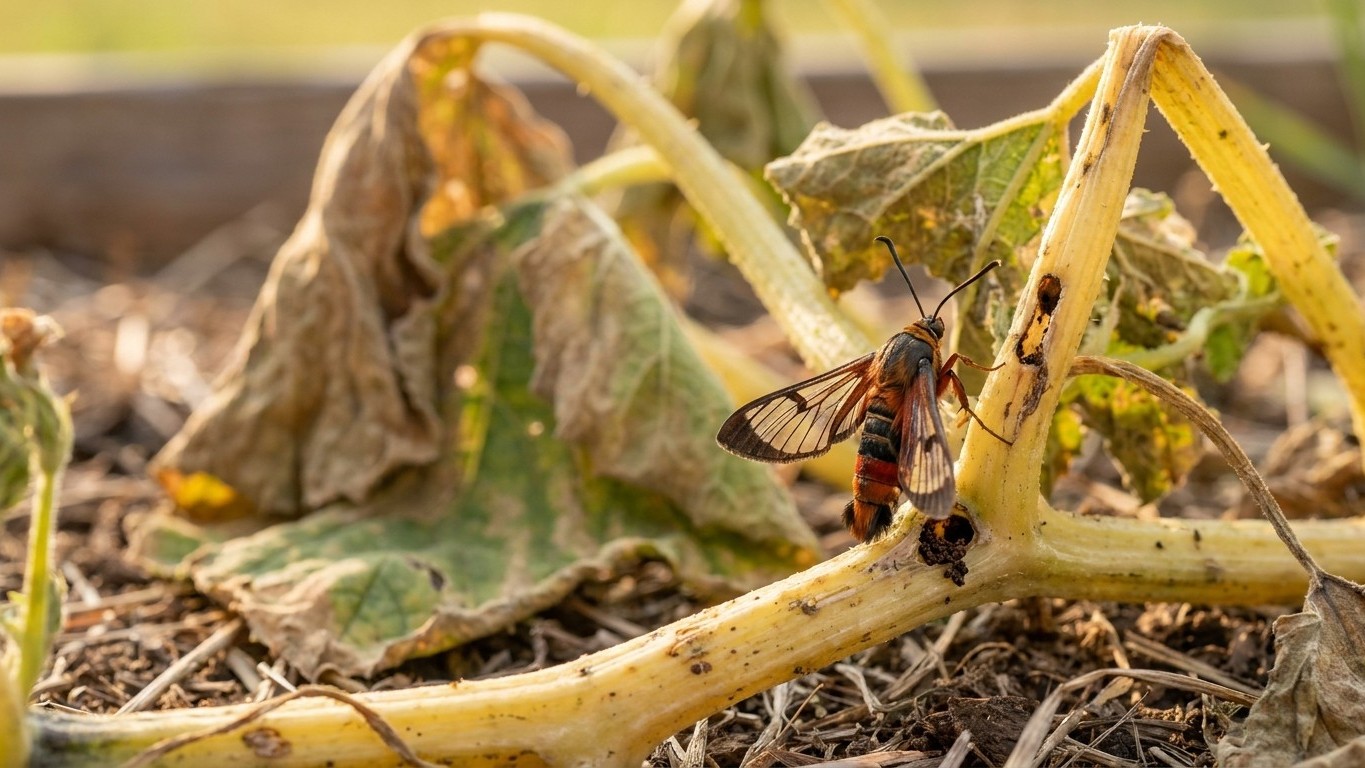

Squash vine borer moths start showing up in Arkansas gardens as early as mid-May in the southern half of the state and typically no later than early June up north. That timing lines up with soil temperatures climbing past 60°F at a two-inch depth, the trigger that pulls overwintering pupae out of the ground and sends adult moths hunting for squash and pumpkin stems to lay eggs on. Arkansas growers usually deal with two generations a year, which is exactly why a plant that looked fine on the Fourth of July can be dead by August.
The stakes are real for home gardeners here. Squash vine borer larvae tunnel inside the stem base, cutting off water and nutrients to the whole plant. By the time you notice the vine wilting in the afternoon sun, the damage is usually already done. Catching this pest early, or better yet, planning around it before it ever arrives, makes the difference between a productive squash bed and a pile of collapsed vines in July.
When squash vine borer season starts in Arkansas

Arkansas spans three USDA hardiness zones, roughly 6a in the far northern counties up to 8a in the Delta and southern lowlands. That range matters because soil warms faster in Crittenden and Chicot counties than it does around Fayetteville or Mountain Home. Growers in the southern and central parts of the state, including the Arkansas River Valley and the Delta, often see the first wave of moths by mid to late May. In the Ozarks and other northern counties, emergence tends to lag a couple weeks, landing closer to late May or early June.
The adult moth itself is easy to misidentify. It flies during the day, unlike most moths, and its orange hind legs with black wings make it look more like a wasp than a pest. That daytime activity is actually useful for gardeners, since it means you can spot moths hovering around squash plants during normal daylight hours rather than needing a flashlight at dusk.
A first generation lays eggs through June, and those larvae feed for four to six weeks before pupating in the soil. A second generation of adults then emerges in late July into August, which explains why fall squash and late-planted pumpkins often take the harder hit in Arkansas gardens. Northern parts of the state sometimes get away with a single extended generation in cooler years, but counting on that is a gamble most gardeners lose.
Which crops take the hit
Not every squash relative is equally vulnerable. Yellow summer squash and zucchini, both varieties of Cucurbita pepo, are magnets for egg-laying moths because of their hollow, relatively soft stems. Pumpkins in the same species group face similar pressure. Butternut squash and other varieties belonging to Cucurbita moschata have denser, more solid stems that borers struggle to penetrate, which is why butternut plantings in Arkansas gardens often sail through a season that wrecks the zucchini three rows over.
Signs the borer is already inside your plants
The first visible clue is rarely the moth. It’s frass, a sawdust-like material that piles up at the base of the stem near a small entry hole. That greenish-yellow debris is the larva’s waste pushed out as it tunnels deeper into the plant, and finding it is the closest thing gardeners get to an early warning system.
Wilting comes next, often starting with just one vine on an otherwise healthy plant. Because the damage happens inside the stem, watering more doesn’t help and can actually mask the real problem for a few extra days while the plant limps along on stored moisture. By the time an entire plant collapses, there are usually multiple larvae feeding inside a single stem, sometimes three or four in a heavily infested vine.
Checking stems weekly starting in late May gives you a real shot at intervening before the damage becomes irreversible. Run a finger along the base of each plant, feeling for soft spots or the telltale grit of frass, rather than waiting for visible wilting to prompt action.
What actually stops Squash vine borer in Arkansas gardens
No single tactic handles this pest on its own. The gardeners who keep squash alive through an Arkansas summer usually stack several methods together, starting before planting and continuing through harvest.
Timing the planting to dodge peak moth activity
Planting squash unusually early or unusually late can sidestep the worst of the egg-laying window. An early crop set out as soon as the soil is workable in April may already be flowering and setting fruit before the first generation of moths peaks in mid-May. A second strategy some Arkansas gardeners use is delaying planting until mid-June, letting the first wave of egg-laying pass before seedlings even emerge, then racing to harvest before the second generation shows up in late July.
Physical barriers that actually work
Floating row covers keep adult moths off young plants entirely, but they have to come off once flowers open since squash needs bees for pollination. Wrapping the lower four to six inches of stem in aluminum foil or a strip cut from a nylon stocking blocks moths from reaching the spot where they prefer to lay eggs, and it’s a low-cost trick that works well on transplants with an already-established stem base.
Mounding soil at several points along a sprawling vine encourages the plant to root at those nodes. If a borer does get into the main stem near the base, the plant has a backup water source and stands a better chance of surviving even after that section dies back.
Catching larvae before they do real damage
Once frass shows up, a fine-tipped knife can save the plant. Slitting the stem lengthwise right where the frass appears, picking out the larva with tweezers or a wire, and then mounding moist soil over the wound gives the vine a real shot at recovery. This sounds drastic, but squash stems are surprisingly forgiving, and a plant treated this way within a day or two of the first symptoms often keeps producing for weeks afterward.
Where insecticides fit in
Chemical control only works during a narrow window, before larvae bore into the stem. Products containing spinosad or synthetic pyrethroids applied directly to the stem base during egg-laying weeks can kill young larvae before they tunnel in, but once a larva is inside the stem, spraying the plant surface does nothing. Bacillus thuringiensis (Bt), a common organic option for many caterpillar pests, has limited effect here because larvae move into the stem so quickly after hatching that they don’t ingest much treated surface tissue. Weekly applications through the peak egg-laying period, roughly late May through June and again in late July, give insecticides their best chance of mattering.
Reducing next year’s population
Squash vine borer pupae overwinter in the soil, often within the top few inches near where an infested plant grew. Pulling and destroying vines immediately after the final harvest, rather than letting them sit and decompose in place through fall, removes a meaningful chunk of the pest’s overwintering habitat. Tilling the bed in late fall can expose remaining cocoons to freezing temperatures and birds, both of which reduce survival rates going into spring.
Rotating squash and pumpkin plantings to a different part of the yard each year, even a modest twenty or thirty feet, makes it harder for emerging moths to find host plants immediately. It won’t stop a determined moth from flying farther, but combined with the timing and barrier strategies above, rotation trims the odds in the gardener’s favor.
Arkansas gardeners who grow butternut or other Cucurbita moschata varieties alongside their zucchini often use those resistant plants as a hedge. Even in a bad borer year, a bed with mixed squash types tends to deliver at least some harvest, while an all-zucchini planting can go from thriving to gone in the space of about a week once larvae take hold.
Related guides
- Squash vine borer in Missouri: When It Shows Up and What Stops It
- Squash vine borer in Tennessee: When It Shows Up and What Stops It
- Squash vine borer in Connecticut: When It Shows Up and What Stops It
- Squash vine borer in Delaware: When It Shows Up and What Stops It
- Squash vine borer in Alabama: When It Shows Up and What Stops It
- Squash vine borer in Nebraska: When It Shows Up and What Stops It