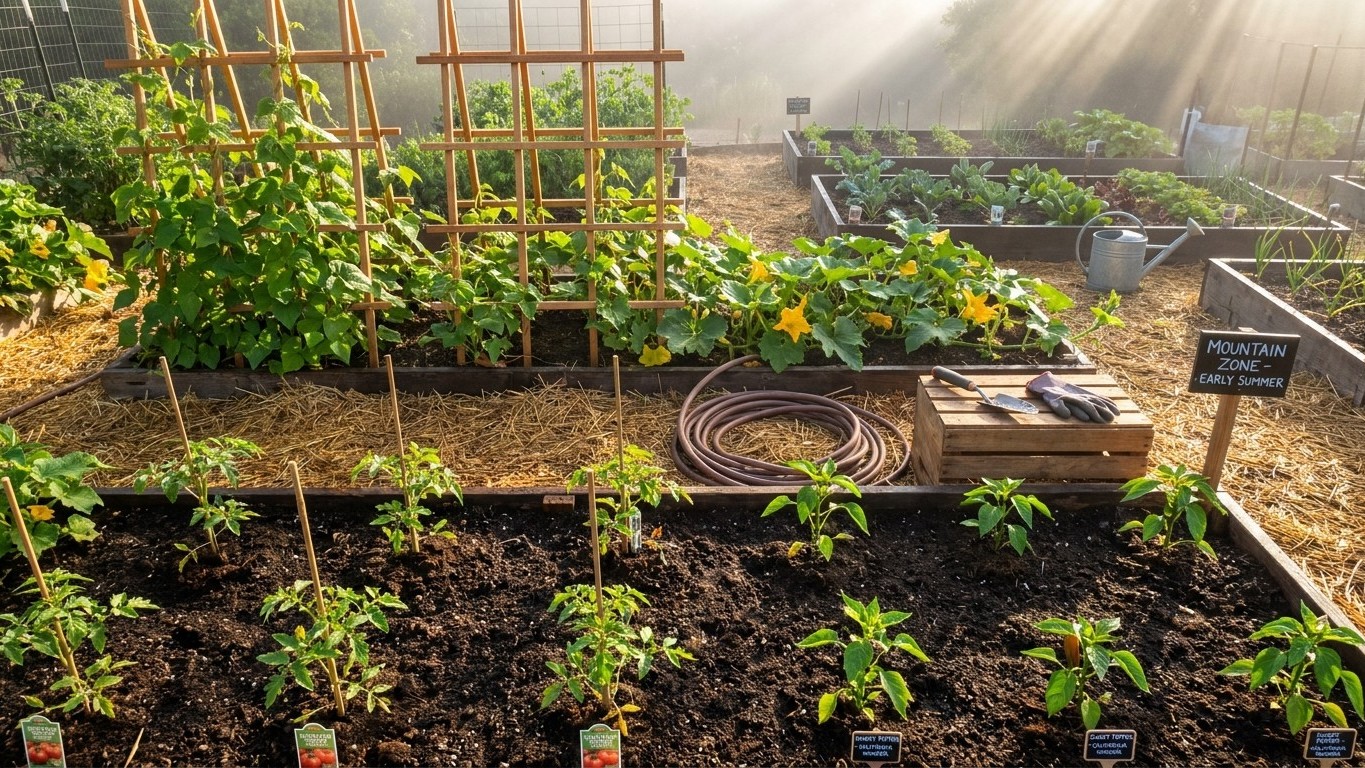

By June, California’s growing calendar splits wide open by region: warm-season crops go into the ground almost everywhere at once, from tomatoes and peppers in the Central Valley to squash and beans along the coast, while high Sierra gardens are just catching up. The real question this month isn’t whether to plant, but which region’s rules apply to your yard.
What goes in the ground in June

Soil temperature, not the calendar, decides what survives here, and June is when that finally works in most gardeners’ favor. The NOAA station representative of coastal and southern California recorded zero days at or below 32°F across three decades of data, and the Centers for Environmental Information couldn’t even calculate a frost date for it. Frost simply isn’t the constraint in Los Angeles, San Diego, or the coastal strip. Heat, drought, and water allocation are.
That doesn’t mean the whole state gardens the same way in June. Northern California, the Central Valley, and the Sierra foothills do freeze in a typical year, and by June those areas have usually cleared their last frost window, making this the safest stretch for direct-sowing corn, beans, squash, melons, and cucumbers, and for transplanting tomatoes, peppers, eggplant, and basil once nighttime lows hold reliably above 50°F. Higher elevations in the Sierra, sitting at the cooler end of USDA’s statewide 5a-11a hardiness range, may still be finishing their transplant window this month rather than starting harvest.
Coastal fog-belt gardens face a different gamble. Warm-season fruiting crops like tomatoes and peppers often sulk through June’s marine layer, setting little fruit until August. Gardeners in these microclimates do better direct-sowing beans, summer squash, and cucumbers, which tolerate the cool mornings better than a slow-ripening tomato ever will. Inland and desert valleys, meanwhile, are already flirting with heat stress; lettuce and spinach bolt fast once daytime highs push past 85°F, so those crops belong in partial afternoon shade or get skipped until fall.
Garlic and onions planted earlier in the season are finishing their bulbing now, not going in fresh. Alliums have no place on a June planting list statewide; they’re a fall or winter task here.
What to start under cover
Because so much of California is already frost-free or past its last frost by June, starting warm-season crops indoors this month is mostly a wasted step, not a head start. Tomatoes and peppers need six to eight weeks under cover before they’re transplant-ready, and by the time June seedlings reach that size, the plants that went straight into the ground in April or May will already be flowering. The arithmetic runs backward from your local last-frost window: if that window closed two months ago, indoor starting has already missed its usefulness for this season’s main crop.
Where cover still earns its keep in June is in two narrower situations. Coastal gardeners battling fog can use a cold frame or unheated greenhouse to nudge soil temperature up a few degrees, giving tomatoes and eggplant a better shot at setting fruit before autumn’s cooler nights return. And gardeners planning a fall crop of broccoli, cabbage, or kale can start those seeds indoors now under light shade, timing transplants for late summer once the worst heat has passed.
The two failure modes are the same ones that show up every month, just with different consequences here. Start too early relative to your region’s frost-free date and seedlings sit rootbound on a windowsill, stretching leggy and weak before the ground is even ready. Start too late for a fall crop and the transplants hit the garden just as fall’s shorter days slow their growth to a crawl, leaving a stunted harvest instead of a full one.
What is ready to pick
June harvest in most of California means the tail end of the cool-season crops planted back in late winter and early spring. Peas planted in February or March are finishing their run, and pods left on the vine too long turn starchy fast, so check daily once they plump up. Lettuce and spinach are on borrowed time as temperatures climb; pick heads whole rather than leaf by leaf once you see the center stem start to elongate, a sure sign the plant is bolting toward seed.
Strawberries planted the previous fall or winter hit their peak production in June across most of the state, and the fruit signals readiness by color alone, not size, since berries that stay green often stay green. Artichokes, a California specialty in the milder coastal zones, are producing their main buds now; harvest while the bud is still tight, before the bracts start to loosen and spread.
Early stone fruit varieties, particularly cherries in the Central Valley and foothill orchards, are coming off the tree this month, and ripeness shows in the color deepening fully rather than just the size looking right. Garlic planted the previous fall is close behind; when roughly half the leaves have yellowed and flopped over, it’s time to pull bulbs and start curing them in a shaded, airy spot rather than leaving them in the ground to rot from the season’s first irrigation cycles.
The jobs that matter this month
Mulching earns its keep more in June than almost any other month here, because California’s dry season is settling in and bare soil loses moisture fast under direct sun. A two to three inch layer of straw or wood chips around tomatoes, squash, and peppers cuts watering frequency and keeps roots cooler, which matters more in inland valleys where soil surface temperatures can climb well past what roots tolerate.
Staking and caging need to happen now, before plants sprawl past the point where support can be added without snapping stems. Indeterminate tomatoes especially outgrow flimsy support within weeks once the heat kicks their growth into gear, and a cage installed after the fact does more damage than good.
Watering rhythm shifts this month from the intermittent spring pattern to a deeper, less frequent summer schedule. Established vegetable beds generally do better with a thorough soak that reaches six inches down rather than daily shallow sprinkling, which encourages roots to stay near the surface where they dry out fastest. This is also the month to check drip systems and soaker hoses for clogs and leaks before the full heat of summer makes any inefficiency costly, particularly in areas under seasonal water restrictions.
Succession sowing keeps the harvest coming rather than arriving all at once; a fresh round of bush beans or summer squash seed going in every two to three weeks through June stretches the picking season into fall. Pest scouting matters too: aphid populations build quickly on new growth once temperatures warm, and catching an infestation early with a strong water spray or insecticidal soap beats losing a whole planting to a colony that had a month’s head start.
What not to do in June
The most common mistake this month is trusting warm air over cold soil. A string of 80°F days doesn’t mean the ground six inches down has caught up, and squash or melon seed dropped into soil still in the 50s often rots before it germinates rather than simply growing slowly. Check soil temperature with a simple probe thermometer rather than guessing from how the air feels on your skin.
Coastal gardeners make a related error by assuming their tomatoes should behave like a friend’s plants forty miles inland. Fog-belt conditions genuinely limit fruit set regardless of how well the plant is cared for, and no amount of extra fertilizer fixes a light and temperature problem.
Nitrogen timing trips up a lot of tomato and pepper growers this month. Heavy nitrogen feeding once plants are flowering and setting fruit pushes leafy growth at the expense of the crop itself, leaving gardeners with a lush, green plant and disappointing yield. A lower-nitrogen, phosphorus-and-potassium-leaning feed suits this stage better.
Finally, don’t ignore water restrictions in the interest of an ambitious June planting list. Many California municipalities tighten outdoor watering rules as reservoirs and snowpack readings come in for the season, and a garden planted without a realistic irrigation plan behind it often fails by midsummer regardless of what went into the ground in June.
Checking this against your own county
A statewide June guide is a starting point, not a set of instructions for your particular yard. California’s elevation range alone moves planting windows by weeks: a Sierra foothill garden at 4,000 feet behaves nothing like a coastal lot in San Diego, even though both fall under the same June calendar. Local topography, marine influence, and even which side of a valley you’re on can shift things further.
The University of California Agriculture and Natural Resources extension service maintains county-level guidance built around these local differences, and it’s worth checking against the general advice here before committing a full bed to any one crop.
Common questions
Is it too late to plant tomatoes in California in June?
No. Most of the state, outside the high Sierra and the coolest coastal fog pockets, is well within the transplant window for tomatoes in June, and Central Valley gardeners often get a full harvest from June-planted seedlings.
Do I need to worry about frost in California in June?
Not in coastal or southern California, where the reference NOAA station shows no measurable frost season at all. Sierra elevations and some inland pockets can still see cool nights early in the month, so check local conditions before setting out tender transplants there.
Why won’t my coastal tomatoes ripen in June?
Marine fog keeps daytime temperatures and sunlight lower than tomatoes need to set and ripen fruit efficiently. This is a light and heat issue tied to your microclimate, not a sign of poor plant care.
What should I plant instead if my area is too foggy for tomatoes?
Beans, summer squash, and cucumbers tolerate cooler coastal mornings far better and typically produce reliably in fog-belt gardens through June and into summer.