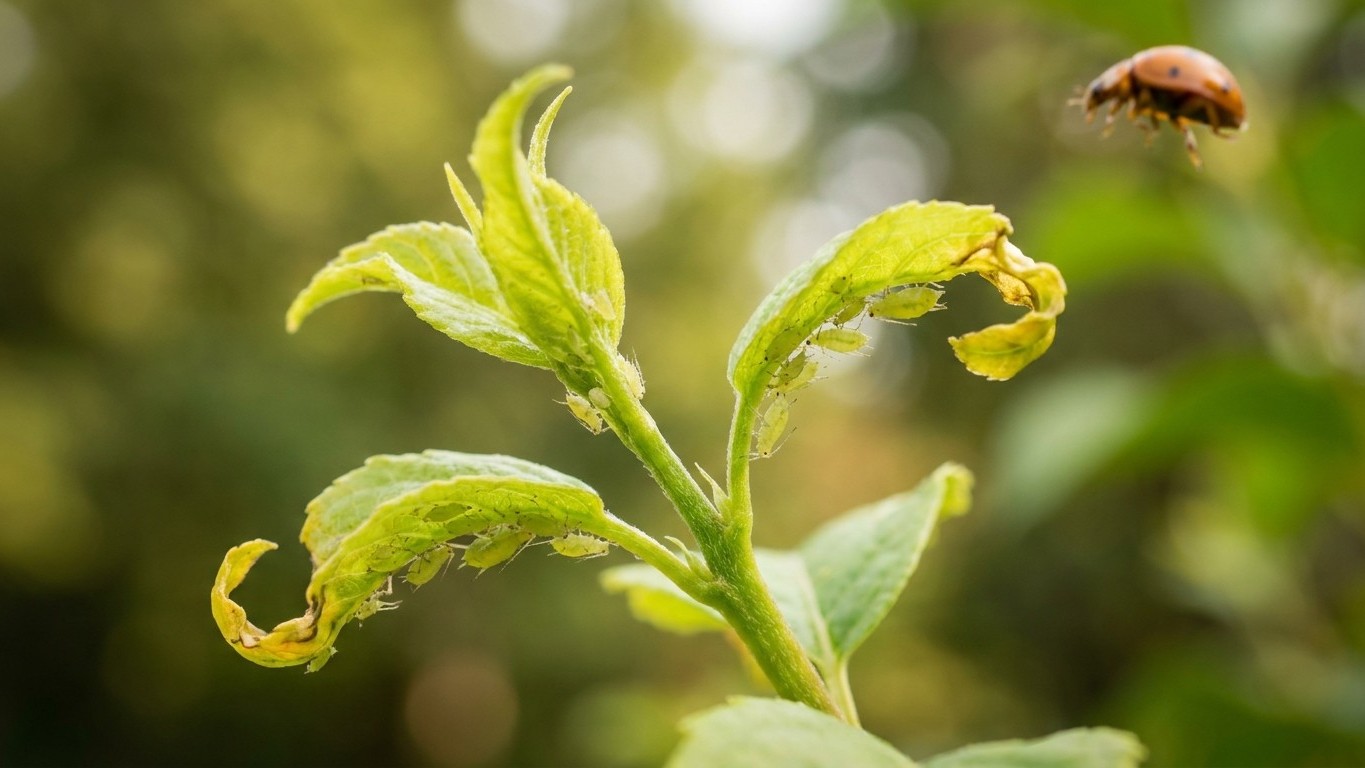

Aphids show up in California gardens nearly every month of the year in mild coastal zones, but pressure builds hardest in fall: melon aphid becomes troublesome in September and October on vegetable crops statewide. Inland valleys see earlier colonies once nights warm in spring. Cold water sprays, natural predators, and row covers timed to transplanting stop most infestations before a spray of any kind becomes necessary.
The weeks to watch

Aphids don’t wait for a single “season” the way some pests do. Because females reproduce without mating and can birth live young within days, a warm stretch in almost any month can trigger a population jump. That said, University of California pest guidance gives one specific window worth marking on the calendar for vegetable growers.
Spring and summer buildup
General aphid biology, not a specific UC-published date, drives this window: as daytime temperatures climb through spring, colonies expand quickly on tender new growth, then plateau or dip when summer heat gets extreme. This pattern applies statewide but shifts earlier in the Central Valley and later at higher elevations or along the fog-cooled coast.
The fall spike UC calls out
The UC Master Gardener Program and UC IPM Pest Notes specifically flag melon aphid as troublesome in September and October in California vegetable gardens. That’s the only species-and-month detail the extension service publishes for aphids here, and it lines up with the second flush of squash, melon, and cucurbit plantings many home gardeners put in for a fall harvest. If your zucchini or cantaloupe leaves start curling in early fall, this is the window UC data points to.
Reading the calendar from your last frost

Frost isn’t the lever that controls aphids in most of California, and that’s worth saying plainly. NOAA climate normals for coastal and southern California stations show no freeze in an average year, with a frost-free season effectively running all 365 days. In those zones, the gardening constraint is heat and water availability, not frost, so aphids can theoretically colonize plants in any month soil stays warm enough to support new growth.
Northern California, the Central Valley, and Sierra foothill gardens are a different story entirely. Those areas do freeze, and the specific last-frost date varies enormously by elevation and local microclimate, from the valley floor to a mountain foothill town twenty miles away. No single date covers all of inland California, so gardeners there need their county extension office’s frost data rather than a statewide average.
Where a last-frost date does apply, the arithmetic gardeners use looks like this:
- Note your local average last-frost date from your county extension service.
- Expect the first visible aphid colonies within a couple of weeks after transplanting, once new growth flushes, since aphids target the softest tissue on a plant.
That’s a pattern to plan around, not a promise. An early warm spell moves the whole timeline forward; a cool, wet spring delays it. Row covers should go on at transplant and come off once plants flower, so pollinators can reach the blossoms.
What it attacks, and what the damage looks like

Most gardeners spot the symptom long before they spot the insect itself. Leaves curl inward or cup downward, new growth looks stunted and twisted, and a clear, sticky residue called honeydew coats leaves and anything sitting underneath the plant. That honeydew often turns black with sooty mold days later, which is frequently the first thing a gardener actually notices. Turn the leaf over and the aphids, usually clustered in tight groups, are right there on the underside.
Both nymphs and adult aphids do the damage, piercing plant tissue to feed on sap continuously rather than chewing in a single bite. That matters for treatment: because feeding is constant and colonies grow fast through those unmated live births, a light infestation can become a heavy one within a week in warm weather. Some aphid species also transmit plant viruses while feeding, and once that transmission happens, no treatment reverses it. The affected plant carries the virus for good.
Common targets in California gardens include:
- Roses and other flowering ornamentals
- Tomatoes, peppers, and other soft-stemmed vegetables
- Squash, melons, and other cucurbits (especially melon aphid in fall)
- Beans and leafy greens
- Citrus and young fruit tree growth
How California sits in this pest’s range
Aphids are found in every U.S. state, so California isn’t unusual for having them. What sets the state apart is its internal climate range, which is wide enough that “aphids in California” covers several different timelines depending on where you garden. A coastal San Diego backyard, a Central Valley vegetable plot, and a Sierra foothill orchard can all host aphids, but the calendar for each looks nothing alike.
Coastal and southern zones, being frost-free, give aphids a longer theoretical window of activity since there’s no hard freeze to knock populations back each winter. Inland valley and mountain gardens get a natural reset when temperatures drop, which tends to compress aphid pressure into the warmer months. Neither pattern makes California’s aphid problem worse or milder overall than other states, it just changes when a gardener here needs to be watching. The published UC guidance treats this as a statewide vegetable garden concern rather than something tied to one region, which is consistent with how widespread the pest actually is.
What actually works against it

Start cheap and mechanical before reaching for anything else. The order below reflects effort and cost, not just effectiveness, since the first few steps solve most home garden infestations on their own.
- Spray colonies off with water. A firm stream from the hose dislodges aphids physically. It doesn’t kill most of them outright, but many won’t climb back onto the plant, and repeated spraying every few days keeps numbers down.
- Encourage natural predators. Lady beetles, lacewing larvae, and parasitic wasps all feed heavily on aphids. Planting small-flowered plants nearby (alyssum, dill, yarrow) gives these predators nectar to sustain themselves between aphid meals, and avoiding broad-spectrum sprays keeps them alive to do the work.
- Control ants separately. Ants protect aphid colonies from predators in exchange for honeydew, essentially farming them. Sticky barriers or bait stations placed at the base of infested plants cut that protection and let predators do their job.
- Prune or pinch out heavily colonized growth. Removing the worst-hit shoots by hand is fast and requires no equipment, and it takes a large share of the population with it.
- Avoid heavy nitrogen fertilizer. Excess nitrogen pushes soft, lush new growth that aphids prefer. Feeding plants moderately reduces how attractive the new growth is in the first place.
- Use row covers timed to transplant. Physical exclusion works only while the cover is on and sealed at the edges; it does nothing once aphids are already established underneath.
Reflective mulch shows up often in home garden advice, with the idea that it disorients winged aphids searching for a place to land. Many gardeners use it and report fewer landings, but controlled trials on how consistently it reduces aphid numbers are mixed. None of these mechanical and cultural measures reverse plant virus transmission once it’s happened. At that point, the practical step is removing the infected plant so it doesn’t become a source for spreading the virus to healthy neighbors.
Common questions
Do aphids in California ever go away completely?
Not in mild coastal and southern zones, where frost-free winters mean aphid activity can continue at some level year-round. In colder inland and mountain areas, freezing temperatures knock populations back each winter, giving gardens there more of a natural break.
What time of year are aphids worst in California gardens?
UC extension guidance specifically flags melon aphid as troublesome in September and October on vegetable crops. Other aphid species can build up earlier in spring and summer as new growth flushes, so the exact peak depends on the plant and the region.
Can ants make an aphid problem worse?
Yes. Ants feed on the honeydew aphids excrete and will actively defend aphid colonies from predators like lady beetles in exchange for that food source. Controlling ants separately, with barriers or bait at the base of the plant, removes that protection and lets natural predators reduce aphid numbers faster.