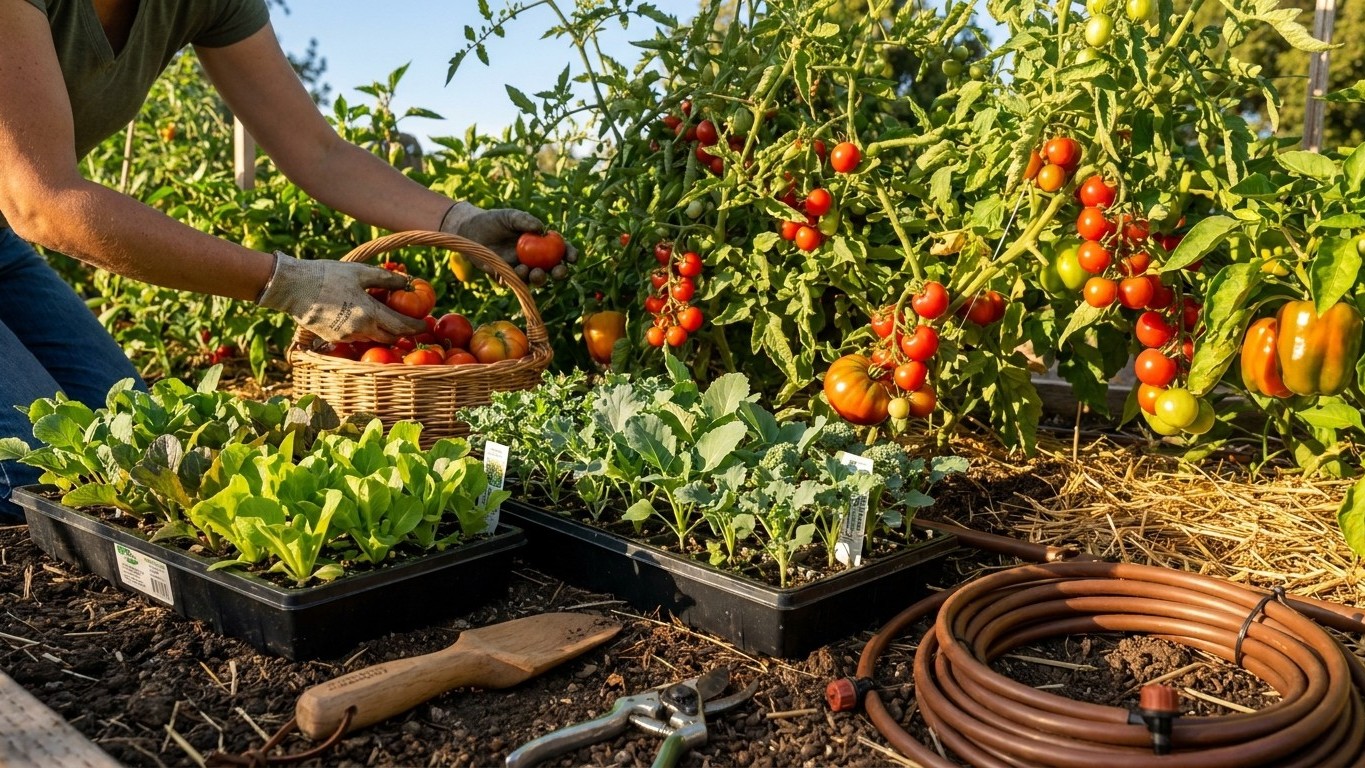

September in California means two gardens at once: you’re still pulling tomatoes and peppers off vines planted in spring, while starting the seeds and transplants that will carry the garden through winter. Frost isn’t the deciding factor for most of the state. Heat, soil temperature and water are what shape this month’s planting list.
What goes in the ground in September

California doesn’t have one September, it has at least three. Along the coast and through Southern California, freezing temperatures essentially don’t happen. NOAA’s climate data for a Southern California station shows zero days at or below 32°F across three decades of records, with the frost-free season listed as running the full year. That changes the whole calculus: the limit here isn’t cold, it’s whether the soil is still too hot and the air too dry for cool-season seeds to germinate.
In the Central Valley, September often still runs hot, sometimes into the 90s and above during the day, even as nights start to ease. Sierra foothill and mountain gardens are the exception in the state: elevation brings real autumn chill, and an early frost is possible before the month is out, though no specific date for that event is published here.
Region by region
| Region | Frost risk this month | What to plant now |
|---|---|---|
| Coastal & Southern CA | None in an average year (NOAA) | Carrots, beets, chard, lettuce, arugula, radishes, turnips, bush peas; transplant broccoli, cauliflower, cabbage, kale |
| Central Valley | Low, soil often still hot | Bed prep, root crops once soil cools; hold brassica transplants until heat breaks |
| Sierra & mountain gardens | Possible late in the month, check locally | Quick-maturing greens, row cover ready, finish harvesting before a hard cold snap |
Garlic and shallots are a fall crop in California, but most growers wait until soil temperatures drop further, typically into October or November. September is better spent prepping that bed than planting the cloves early. If you garden where summer heat is stubborn, direct-sown lettuce and other tender greens will bolt or fail to germinate; start those under cover instead, covered in the next section.
What to start under cover
For fall and winter transplants like broccoli, cauliflower, cabbage and lettuce, count backward from when you actually want them in the ground, not from a fixed date on a seed packet. Brassicas typically need four to six weeks from seed to a transplant-ready size. If your goal is to set plants out once Central Valley heat breaks, that means starting seed trays now, indoors or in a shaded, protected spot outdoors.
Coastal and Southern California gardeners have more slack because there’s no frost deadline pushing the calendar. The constraint there is heat stress on seedlings, so starting under light shade cloth or indoors under lights avoids the leggy, sun-scalded starts that come from direct exposure to a September afternoon.
Two failure modes show up every year. Start too early, especially in a lingering heat wave, and seedlings get heat-stressed, stretch for light indoors, and go into the ground rootbound and weak. Start too late, particularly in the Sierra and mountain counties where the season is shorter, and transplants don’t have enough weeks left to mature before growth slows in the cold. Splitting a sowing into two batches a couple weeks apart hedges against both problems and is worth the extra seed packet.
What is ready to pick
Summer crops are still coming in across most of California this month. Tomatoes, peppers, eggplant, summer squash, melons and beans planted in spring keep producing as long as they’re watered consistently and the heat hasn’t shut them down. Corn planted for a late crop should be nearing harvest; check for dry, brown silks and a milky kernel when pierced.
Anything sown in midsummer for a fall harvest, quick greens like arugula or baby lettuce, may already be at a pickable size. Harvest these young rather than letting them sit, since bolting risk climbs fast if a warm spell hits.
In Sierra and higher-elevation gardens, this is also the month to get winter squash and pumpkins off the vine before any early cold event, and to cure them properly (a week or two in a warm, dry spot) so they store through winter rather than rotting. Anyone with stored crops from earlier in the season, onions, garlic, potatoes, should check now for soft spots or sprouting and pull those out before they spread to the rest of the batch.
The jobs that matter this month
Emptying beds are the biggest opportunity of the month. Rather than leaving spent bean or squash beds bare, sow a cover crop like crimson clover or a cereal grain mix; it holds the soil, feeds it over winter, and saves you a bag of amendment come spring. This is also the moment to start clearing and composting truly finished plants, since disease-carrying debris left in a bed over a mild California winter can carry problems into next season.
Watering rhythm needs adjusting even where the calendar still says summer. Days are shortening and evapotranspiration is dropping, so beds that needed water every other day in July may only need it every third or fourth day now, especially along the coast. Inland, heat can still spike, so don’t set irrigation on autopilot; check soil moisture by hand.
Pest scouting matters more, not less, as the season winds down. Tomato hornworms and late-season aphids tend to build up on stressed, end-of-cycle plants, and catching them now stops them from overwintering in the soil or nearby weeds. If you’re planning to add California native plants, September is the time to prepare beds, since fall is the traditional planting window for natives ahead of the winter rains, giving roots months to establish before summer drought returns. Staking still matters too: sprawling late tomato and pepper plants loaded with fruit are prone to snapping in an early fall wind.
What not to do in September
The classic mistake is planting warm-season crops with the idea that there’s still a full season left, particularly along the coast where the frost-free climate can make it feel like summer never really ends. In practice, shortening daylight slows fruit set on new tomato or pepper plantings regardless of temperature, so a fresh warm-season planting this late rarely pays off outside the very warmest inland pockets.
Pulling shade cloth or row cover too early after a cooler stretch is another common error. California’s September regularly delivers a late heat wave, sometimes a sharp one, and tender fall transplants that were fine in mild weather can scorch or wilt fast if left exposed.
Heavy nitrogen feeding is also a mistake at this point in the season. Nitrogen pushes leafy, soft growth right when brassicas and root crops need to be building sturdy roots and thickening stems ahead of cooler weather; a balanced or lower-nitrogen feed serves the fall garden better. Finally, don’t let watering restrictions catch you off guard. Many California water districts adjust outdoor watering schedules through late summer and fall, so it’s worth checking local rules before assuming your irrigation timer is still compliant.
Checking this against your own county
Everything above is a statewide starting point, and California is too large and too varied for one set of dates to fit every garden. Elevation changes frost timing by weeks, coastal fog belts run cooler than inland valleys a few miles away, and the difference between the northern counties and the southern desert regions can be a full growing season apart. Before locking in a planting date, check the University of California’s cooperative extension network at ucanr.edu, which publishes county-level guidance and local planting calendars tailored to your specific region rather than the state as a whole.
Common questions
Is September too late to plant tomatoes in California?
In most of the state, yes, for a full harvest. Shortening daylight slows fruit set even where it’s still warm. The warmest inland and desert pockets are the exception, but check local extension guidance before trying.
Does California really have no frost in September?
Coastal and Southern California average zero freezing days a year according to NOAA climate records, so frost isn’t a September concern there. Northern California, the Central Valley and Sierra foothill and mountain areas do experience frost, and timing varies by elevation and location.
What USDA hardiness zone is California in?
The state spans USDA Plant Hardiness Zones 5a to 11a, one of the widest ranges of any state, reflecting everything from high Sierra elevations to frost-free coastal and desert areas.
Can I still start a fall vegetable garden this late in the season?
Yes, especially along the coast and in Southern California where the growing season doesn’t end with frost. Start brassica and leafy green transplants under cover now, four to six weeks ahead of when you plan to set them out.