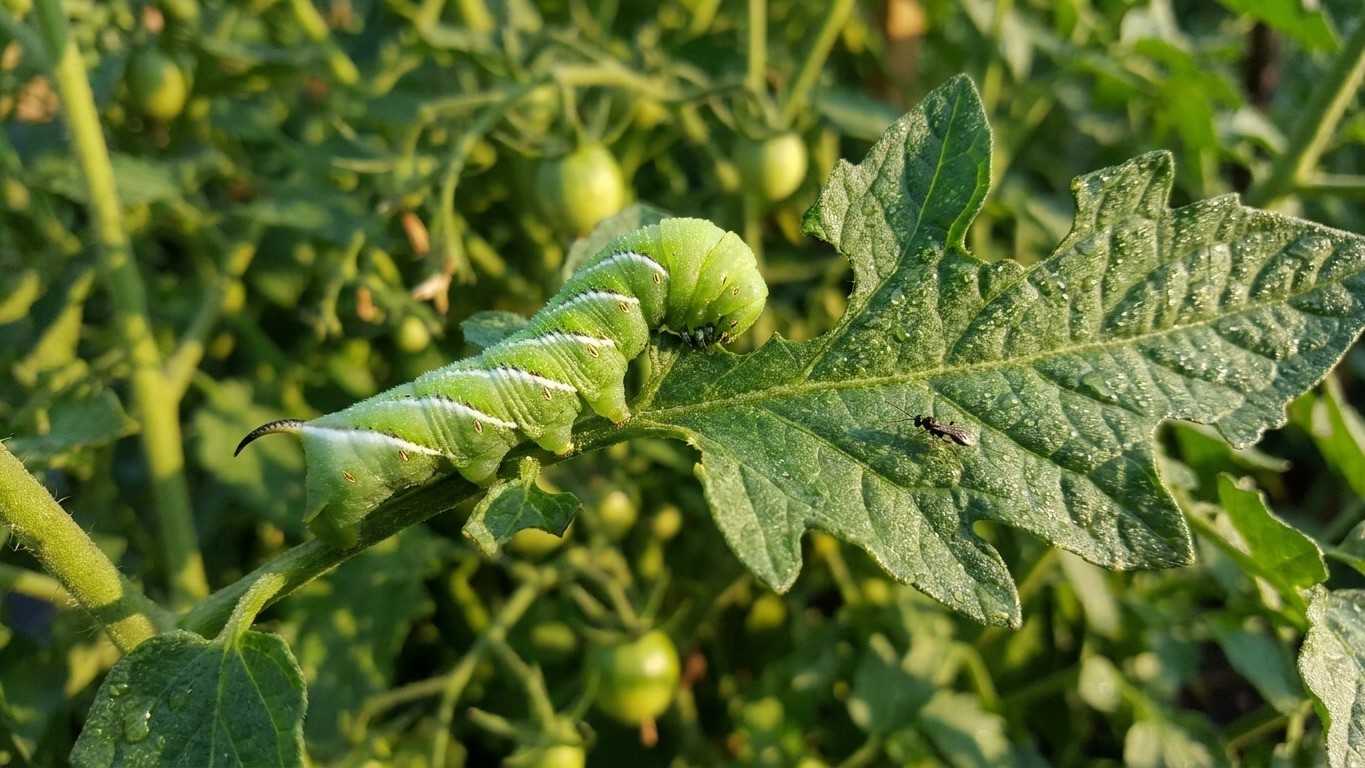

Tomato hornworms show up in California gardens as soon as night temperatures stay reliably above 50°F, which usually means late May in the Central Valley and early June along the coast. Once established, they feed hard for three to four weeks, then drop into the soil to pupate, and in the state’s warmer inland regions a second generation often emerges in August or September. Stopping them comes down to three things that actually work: hand removal, Bacillus thuringiensis (Bt) spray, and letting parasitic wasps do their job instead of reaching for a broad-spectrum insecticide.
When Tomato Hornworms Appear Across California

California’s climate is not uniform, and neither is the hornworm’s calendar. In the Central Valley, where summer nights rarely dip below 60°F, moths can start laying eggs as early as May, and gardeners in Fresno or Bakersfield sometimes see caterpillars big enough to spot by Memorial Day. Coastal gardens in the Bay Area or along the Central Coast run cooler and foggier, pushing first sightings closer to mid-June, with activity stretching into October because the mild fall delays the final die-off.
Southern California’s inland valleys, think Riverside or the Inland Empire, behave more like the Central Valley: early onset, two generations, and caterpillars still active into late September. Desert regions such as the Coachella Valley are the exception. Summer heat there can exceed the caterpillar’s comfort zone, so activity often concentrates in spring and again in fall, skipping the hottest weeks of July and August almost entirely.
Two Species, One Garden
California hosts both the tomato hornworm (Manduca quinquemaculata) and the tobacco hornworm (Manduca sexta), and they frequently share the same tomato patch. The tobacco hornworm has diagonal white stripes and a red-tipped horn; the tomato hornworm has V-shaped white marks and a horn that’s usually black or dark blue. Control methods are identical for both, so misidentifying one for the other rarely changes what a gardener should do next.
Spotting the Damage Before the Plant Takes a Hit
Hornworms are masters of camouflage. A four-inch caterpillar can vanish against tomato foliage in broad daylight, which is why most people find the evidence before they find the bug. Look for stripped stems with leaves chewed down to the midrib, and check the ground below the plant for frass, dark green or black pellets about the size of a rice grain. Fresh droppings mean an active hornworm is feeding somewhere above, usually within a foot or two.
Fruit damage tends to show up as deep, ragged gouges rather than the small round holes typical of other tomato pests like fruitworms. A single hornworm can defoliate a young tomato plant in under a week, which is longer than most gardeners assume but still fast enough to stunt fruit production for the season if it goes unchecked.
Blacklight checks at night are the most reliable way to actually see one. Hornworms feed mostly after dusk and before dawn, and a flashlight run along the stems in the evening will often reveal caterpillars that were completely invisible an hour earlier in daylight.
What Actually Stops Tomato hornworm in California
Hand removal remains the single most effective response for backyard gardens, and it costs nothing. Pulling a hornworm off by hand (gloves help, since some people react to the caterpillar’s grip and secretions) and dropping it into soapy water ends the problem for that individual immediately, with zero risk to bees or other beneficial insects working the same plant.
Bt, sold under various organic garden brands, is the next most reliable tool. It’s a naturally occurring soil bacterium that disrupts the caterpillar’s digestive system after ingestion and is considered safe for pollinators, pets, and people when used as directed. According to the UC Statewide Integrated Pest Management Program, Bt works best on younger, smaller larvae, so spraying in early June, before caterpillars reach their full three- to four-inch size, gets significantly better results than waiting until damage is obvious.
Parasitic wasps do a lot of unpaid work in California gardens. If a hornworm shows up covered in what looks like small white grains of rice along its back, leave it alone. Those are the cocoons of braconid wasps that have already parasitized the caterpillar, and the wasps that emerge will go on to attack more hornworms nearby. Killing that individual caterpillar removes a natural pest-control ally from the garden for no benefit, since the hornworm itself stops feeding heavily once parasitized.
Soil Tilling and Timing
Hornworm pupae overwinter a few inches underground near where the caterpillar fed, which makes fall or winter tilling a genuinely useful preventive step. Turning the soil after the growing season exposes pupae to birds and cold, cutting down on the population that emerges the following spring. This matters more in California than in colder states, because mild winters here let more pupae survive to become next year’s moths.
Rotating tomato, pepper, and eggplant beds to a different part of the yard each year also helps, since moths tend to lay eggs near where they themselves emerged. It’s not a guarantee, but combined with tilling it measurably reduces the odds of a repeat infestation in the same spot.
Companion Planting and Other Preventive Habits
Dill, basil, and marigold are commonly recommended around tomatoes to deter hornworm moths, though the evidence for this is more anecdotal than proven in controlled studies. What does have real backing is attracting the moths’ natural predators: planting flowering herbs that bring in adult parasitic wasps and hoverflies gives the garden a standing defense crew rather than relying on human intervention alone.
Regular inspection beats prevention products for most home gardeners. Checking tomato plants every two to three days during peak season (June through September in most of the state) catches infestations while caterpillars are still small and the damage is still minor. Waiting a week between checks is often enough time for a small hornworm to become a large, fast-eating one.
Row covers can keep egg-laying moths off young transplants in spring, but they need to come off once plants flower, since tomatoes rely on pollinators to set fruit. That timing window (cover before bloom, remove at bloom) is where a lot of home gardeners either lose the protection too early or accidentally block pollination too long.
One detail that surprises a lot of California gardeners: the adult moth that becomes a hornworm isn’t the plain brown miller moth people associate with pantry pests. It’s a five-spotted hawk moth with a wingspan that can reach five inches, sometimes mistaken for a hummingbird when it feeds on flowers at dusk. Spotting one hovering over a patch of petunias in June is a decent early warning that eggs may already be on nearby tomato leaves.
Related guides
- Tomato hornworm in Nevada: When It Shows Up and What Stops It
- Tomato hornworm in Arizona: When It Shows Up and What Stops It
- Tomato hornworm in Delaware: When It Shows Up and What Stops It
- Tomato hornworm in Idaho: When It Shows Up and What Stops It
- Earwigs in California
- Slugs in California
- Tomato hornworm in New Jersey: When It Shows Up and What Stops It