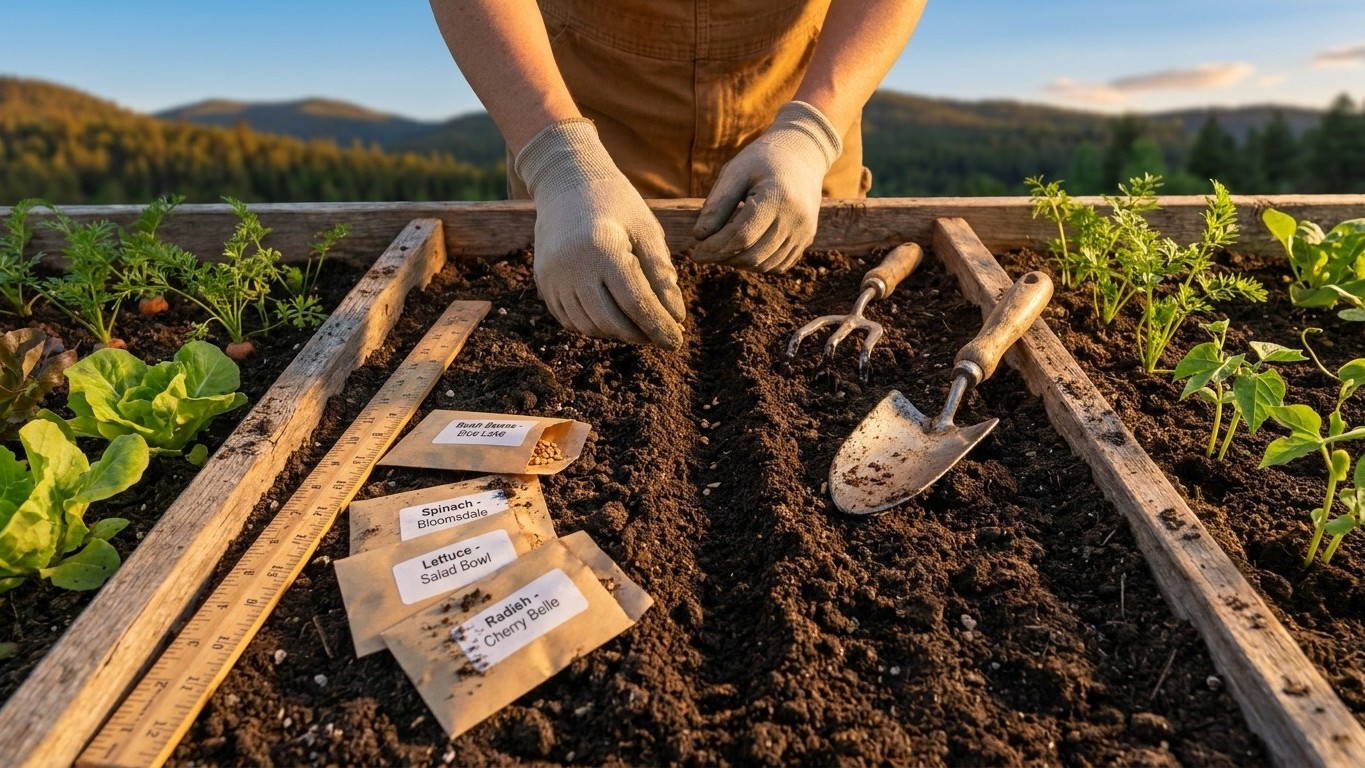

August in Colorado sits well inside the growing season, not at its edge. With the first fall frost running September 30 to October 12 across the Denver area, there are still roughly six to ten weeks of open-ground time left. That window decides everything this month: quick-maturing crops still have time to reach harvest, but anything that needs a full season is already past its planting date.
What goes in the ground in August

The math that matters here isn’t the calendar, it’s subtraction. Take the first fall frost window, September 30 to October 12 at the Denver reference station, and subtract the days to maturity printed on the seed packet. Early in the month, with eight to ten weeks still in hand, that leaves room for bush beans, beets, carrots, kale, and even a second round of peas sown directly into warm soil. By the third week of August, the runway shortens to five or six weeks, and the list narrows fast.
Late-month plantings need to lean on crops that mature in 30 to 45 days: radishes, spinach, baby lettuce, mesclun mixes, and turnips grown for greens rather than roots. These tolerate the cooling nights ahead and can be harvested young if an early frost arrives sooner than expected. Bush beans and carrots sown after mid-August are a gamble unless the fall stays mild longer than average, since the frost window is a range, not a guarantee.
Elevation changes this arithmetic more than any other factor. Colorado’s hardiness zones span 3b to 7b under the USDA system, built on average annual extreme minimum temperature, and that range covers everything from the Denver plains at 5,280 feet to high mountain valleys that can see a killing frost in July. A planting that’s safe in Denver in August can already be too late in a mountain town at 8,000 feet, where the growing season closes weeks earlier. On the western slope, warmer valley pockets can push the safe window a bit further into September. Check local soil temperature too: cool-season seeds like spinach and lettuce germinate poorly above 80°F, so a shaded bed or afternoon watering can matter more than the date on the packet.
What to start under cover
Starting seeds under cover in August is really about buying transplants a head start before the days shorten and light drops off. Count backward from the same frost window: a transplant needs roughly four to six weeks in the ground before frost to size up, and most brassica seedlings need three to four weeks indoors or in a cold frame before they’re ready to go out. That puts the sowing date for fall broccoli, cabbage, and kale transplants in the first half of August for most of the Front Range, with transplanting out in late August or the first days of September.
The two ways this goes wrong are opposite problems. Sow too early in the month’s heat and seedlings started indoors or under a shade cloth get leggy and rootbound before the weather cools enough to plant them out, and they sulk or bolt once transplanted. Sow too late, especially after the third week of August, and the plants run out of daylight and warm soil before they can size up, leaving small heads or loose leaves when frost finally arrives.
A cold frame or low tunnel buys extra flexibility either way. Starting lettuce and spinach seedlings under cover rather than direct-sowing in bare soil keeps germination more even in dry August heat, and it lets a gardener hold seedlings a week or two if a heat wave delays the ideal transplant window. For anyone gardening at higher elevation, where the frost window arrives earlier than the Denver reference dates, shifting this whole schedule a week or two earlier is the safer bet.
What is ready to pick
August is the month the garden actually pays rent. Tomatoes color up steadily now, and the test isn’t firmness but full color development plus a slight give when gently squeezed. Peppers can be picked green or left to ripen further into red, orange, or yellow depending on the variety and how much patience the household has. Summer squash and zucchini need daily checking; a fruit left two extra days can double in size and turn tough and seedy.
Cucumbers come off firm and dark-skinned before any yellowing starts, since yellowing signals bitterness setting in. Sweet corn is ready when the silks have turned brown and dry while the husk stays green, and a quick kernel-pop test with a thumbnail confirms it: milky liquid means ready, clear liquid means wait, no liquid means past its prime. Green beans should snap cleanly rather than bend, a sign they haven’t gone stringy.
Onions planted earlier in the season are curing now if their tops have flopped over and yellowed, ready to pull and dry in a shaded, airy spot before storage. Melons, where the local microclimate allows them, tell their own story: a cantaloupe slips easily from the vine when ripe, while a watermelon’s underside patch turns from white to creamy yellow. Anyone storing early harvests from cooler pockets of the state should check them now for soft spots before mold spreads to the rest of the batch.
The jobs that matter this month
Watering rhythm matters more in August than almost any other month, since heat and wind pull moisture out of Colorado’s naturally dry, often clay-heavy soils fast. Deep, infrequent watering beats a daily light sprinkle, since it pushes roots downward and makes plants more resilient during the inevitable heat spikes. A two-inch mulch layer over beds slows that evaporation and keeps soil temperatures down for the fall seeds going in this month.
Succession sowing and support
Succession sowing pays off directly here: a new short row of lettuce, spinach, or radish every week or two through the month keeps harvests coming instead of arriving all at once. Tomato and pepper plants heavy with fruit need staking or caging reinforced now, before an August thunderstorm and its wind knock over a top-heavy plant and snap stems loaded with unripe fruit.
Pest scouting and cleanup
Pest pressure peaks in the dry heat. Squash bugs and their egg clusters on the undersides of leaves, spider mites showing up as fine stippling and webbing, and tomato hornworms stripping foliage overnight all call for a daily walk-through rather than a weekly one. Pulling spent bean and pea vines as they finish frees up space and light for the fall crops going in, and it removes hiding spots for pests before they move to healthier plants nearby.
What not to do in August
The most common mistake this month is treating warm afternoons as permission to plant warm-season crops that have no real chance of maturing before frost. A new tomato or pepper transplant put in during August, even in a heat wave, is racing a clock it can’t win, since fruit set alone takes weeks and Colorado’s first fall frost lands September 30 to October 12 at the reference station, sooner at elevation.
Feeding nitrogen-heavy fertilizer to tomatoes and peppers late in their cycle is another trap. It pushes leafy growth at exactly the point when the plant should be putting energy into ripening existing fruit, and the result is a lush, green plant with little to actually harvest before the season ends. A light phosphorus-leaning feed supports fruit finishing better than another round of all-purpose fertilizer.
Pulling shade cloth or floating row cover too early after a mild stretch is a third habit worth breaking. August heat spikes are unpredictable, and cool-season seedlings started under cover can bolt or scorch if exposed too soon. And letting cool-season greens bolt unchecked, rather than harvesting promptly once seed stalks start forming, wastes a crop that could have fed the household for another week or two with regular cutting.
Checking this against your own county
A statewide frost window is a starting point, not a fixed instruction. Colorado’s elevation swings from the plains around Denver to mountain towns above 8,000 feet mean the same calendar month can carry a six- to eight-week difference in safe planting dates from one county to the next, and the western slope runs on its own pattern again. Anyone gardening outside the Front Range should treat the dates here as a rough anchor and adjust earlier at elevation.
The most reliable next step is checking local numbers directly. Colorado State University Extension publishes county-level guidance and planting calendars built for the state’s range of climates, and it’s worth a look before locking in a fall planting schedule.
Common questions
Is it too late to plant tomatoes in Colorado in August?
Yes, for new transplants. With the first fall frost arriving September 30 to October 12 in the Denver area, and sooner at higher elevations, a tomato planted in August won’t have enough time to set and ripen fruit before cold weather ends the season.
What vegetables can I still direct-sow in Colorado in August?
Fast-maturing crops work best: beets, bush beans, and carrots early in the month, then radishes, spinach, baby lettuce, and turnip greens as the month goes on and the frost window gets closer.
Does the Colorado frost date change with elevation?
It changes significantly. The September 30 to October 12 window applies near the Denver reference station at 5,280 feet. Mountain towns can see a killing frost as early as July, and the western slope follows its own separate pattern.
How do I know when to stop planting fall crops in August?
Count backward from the local first fall frost using the days-to-maturity listed on the seed packet, then add a small buffer for slower fall growth as daylight shortens. If the math doesn’t leave enough weeks, hold off until the following spring.