
Squash bugs show up in Colorado gardens once soil temperatures hold steady in the 60s, which usually lands somewhere between late May and mid-June depending on elevation. Nothing stops them completely once they’ve established themselves in a squash patch, but a combination of fall cleanup, trap boards, and early attacks on young nymphs knocks populations down enough that a garden can still produce a real harvest.
That timing window matters more here than in flatter, warmer states. Colorado’s elevation swings from around 3,300 feet in Grand Junction to over 7,000 feet in mountain valleys, and that spread changes when squash bugs wake up, how many generations they squeeze in, and whether they even become a serious problem at all.
Squash Bug Timing Across Colorado’s Climate Zones

Front Range cities including Fort Collins, Denver, and Colorado Springs sit between 5,000 and 6,200 feet, with a typical last frost in mid-May. Adult squash bugs that survived winter tucked under leaf litter, mulch, or the edge of a garden shed start moving as soon as daytime soil temps stay consistently warm, generally late May into the first weeks of June. They head straight for young cucurbit seedlings.
Western Slope towns like Grand Junction and Montrose sit lower, often 4,500 to 5,000 feet, and warm up a week or two earlier than the Front Range. Gardeners there sometimes see squash bug activity by mid-May in a mild spring. High mountain valleys such as Gunnison or Leadville, sitting above 7,000 feet with short, cool growing seasons, rarely deal with heavy squash bug pressure. Cold nights persist too late and the growing window is too short to support the insect’s full life cycle in most years.
One detail that surprises a lot of transplants from warmer states: Colorado gardens usually see just one generation of squash bugs per year, sometimes a partial second wave at lower elevations after an especially long, warm season. Compare that to states like Texas or Georgia, where two full generations can hammer a garden between planting and frost. Colorado’s shorter, cooler season is genuinely one of the few breaks gardeners get here.
Identifying Squash Bugs at Every Life Stage
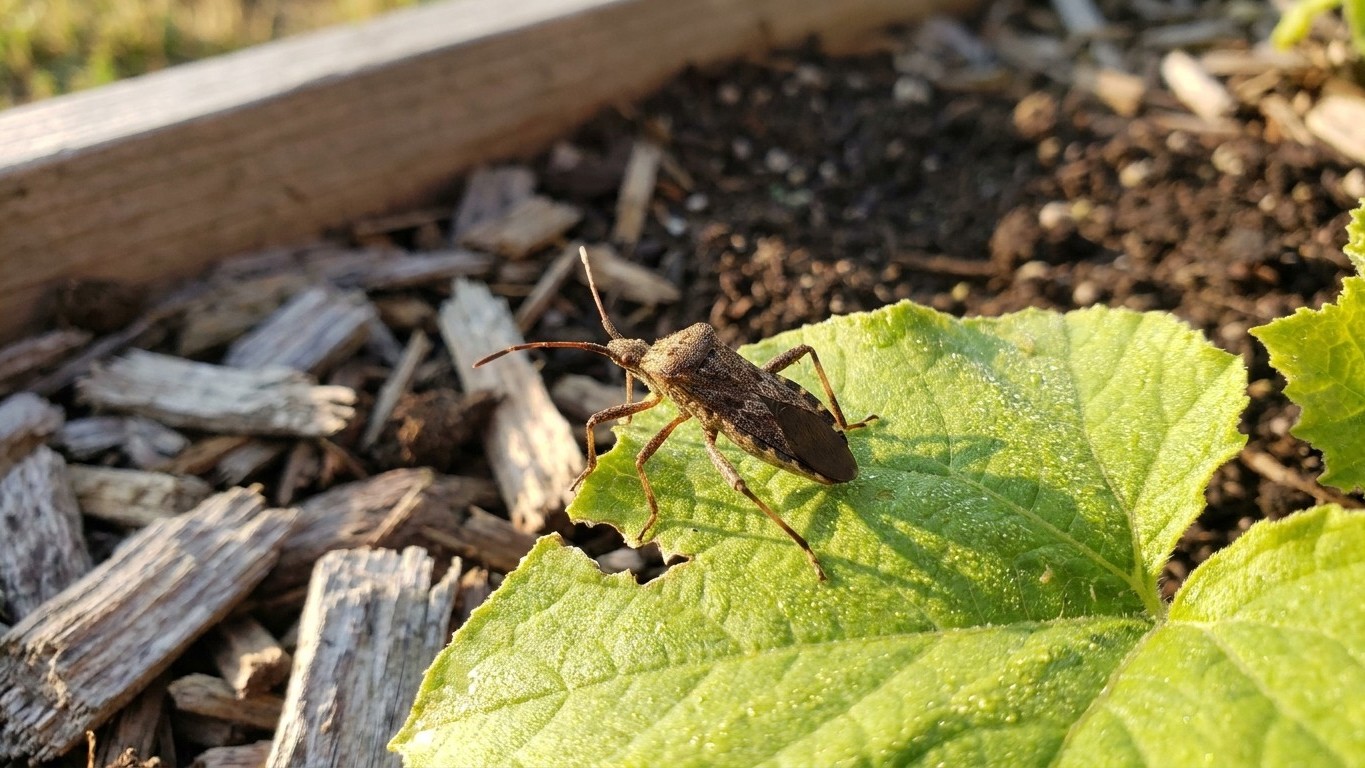
Adults are about 5/8 inch long, grayish-brown, with a flattened back and a shield-shaped body. They smell distinctly unpleasant when crushed, a defense trait shared with their stink bug relatives. Look for them clustered at the base of squash and pumpkin plants, often hiding under leaves during the hottest part of the day.
Eggs are the giveaway most gardeners miss until it’s too late. Females lay them in tight clusters of 20 to 40, bronze or copper colored, arranged in neat rows on the underside of leaves, usually near the veins. Eggs hatch in one to two weeks. Checking leaf undersides in early to mid June, right as Colorado’s warming trend kicks in, catches the problem before it multiplies.
Nymphs go through five stages over four to six weeks. Early instars are small, gray-green with black legs and a black head, almost spider-like in appearance. As they mature they turn grayish and start to resemble small, wingless adults. This is the stage where control efforts pay off the most, since young nymphs have soft bodies and haven’t yet developed the tough exoskeleton that makes adults so hard to kill with contact sprays.
The Damage Squash Bugs Actually Cause
Squash bugs feed by piercing leaves and stems and injecting a toxin as they draw out sap. That toxin causes localized wilting that spreads outward from the feeding site, and heavily infested leaves eventually turn black and brittle, almost like they were scorched. Gardeners sometimes mistake this for bacterial wilt or a watering problem before spotting the bugs themselves.
Beyond direct feeding damage, squash bugs can carry cucurbit yellow vine disease, caused by the bacterium Serratia marcescens. Infected plants show yellowing leaves and vine collapse late in the season, often right as fruit is starting to size up, which is a frustrating way to lose a pumpkin crop after months of work.
Not all cucurbits get hit equally hard. Zucchini, yellow summer squash, and pumpkins are favorites. Butternut squash and other varieties with tougher stems and fewer soft trichomes tend to see noticeably less damage, which makes variety choice a legitimate first line of defense rather than an afterthought.
What Actually Stops Squash Bugs in a Colorado Garden
Fall cleanup does more heavy lifting than most gardeners realize. Squash bugs overwinter as adults, tucked into leaf debris, under boards, inside mulch piles, and along the base of garden structures. Pulling and disposing of squash and pumpkin vines completely after harvest, rather than leaving them to break down in place, removes a huge chunk of the overwintering population before it ever gets a chance to survive Colorado’s dry winter.
Trap boards remain one of the simplest tools available. Lay a flat board or old shingle near the base of squash plants in the evening. Squash bugs gather underneath it overnight to hide from predators, and a quick check each morning lets a gardener collect and destroy dozens of them at once. It’s low-tech, but it works because it exploits the bug’s own hiding behavior against it.
Hand-picking adults and nymphs into a bucket of soapy water, and scraping off egg clusters found on leaf undersides, adds up over a season even though it feels tedious in the moment. Row covers help too, but timing matters: they need to come off once flowers open, since squash and pumpkins rely on bees for pollination and a sealed-off plant won’t set fruit.
Biological control shows up naturally in many Colorado gardens without any intervention. The tachinid fly Trichopoda pennipes lays its eggs directly on adult squash bugs, and the developing larvae kill the host from the inside. Planting flowering herbs nearby, like dill or cilantro left to bolt, tends to attract these parasitoids along with other beneficial insects.
When chemical control is necessary, insecticidal soap and pyrethrin work far better against young nymphs than against hardened adults. Spinosad is another option some Colorado State University Extension guidance points to for cucurbit pests. Spraying at dusk protects pollinating bees that are active during the day, and targeting the first and second nymph stages in early to mid June, rather than waiting for a full-blown adult population in August, makes the difference between a controlled problem and a lost crop.
Where the Real Advantage Lies
The overwintering habit is the weak point most gardeners overlook. Squash bugs don’t actually survive Colorado’s cold through hardiness alone. They survive because they find insulated microsites, thick mulch, landscape fabric edges, stacked firewood, that buffer them from the sharpest freeze-thaw swings. Stripping mulch away from the base of cucurbit beds in late fall, rather than leaving it as winter protection, removes exactly the kind of shelter that lets adults make it through to next May. That single fall habit often does more to shrink next year’s population than any spray applied during the growing season.
Related guides
- Squash bug in Nebraska: When It Shows Up and What Stops It
- Squash bug in Kansas: When It Shows Up and What Stops It
- Squash bug in Connecticut: When It Shows Up and What Stops It
- Squash bug in Delaware: When It Shows Up and What Stops It
- Squash bug in Indiana: When It Shows Up and What Stops It
- Squash bug in Minnesota: When It Shows Up and What Stops It