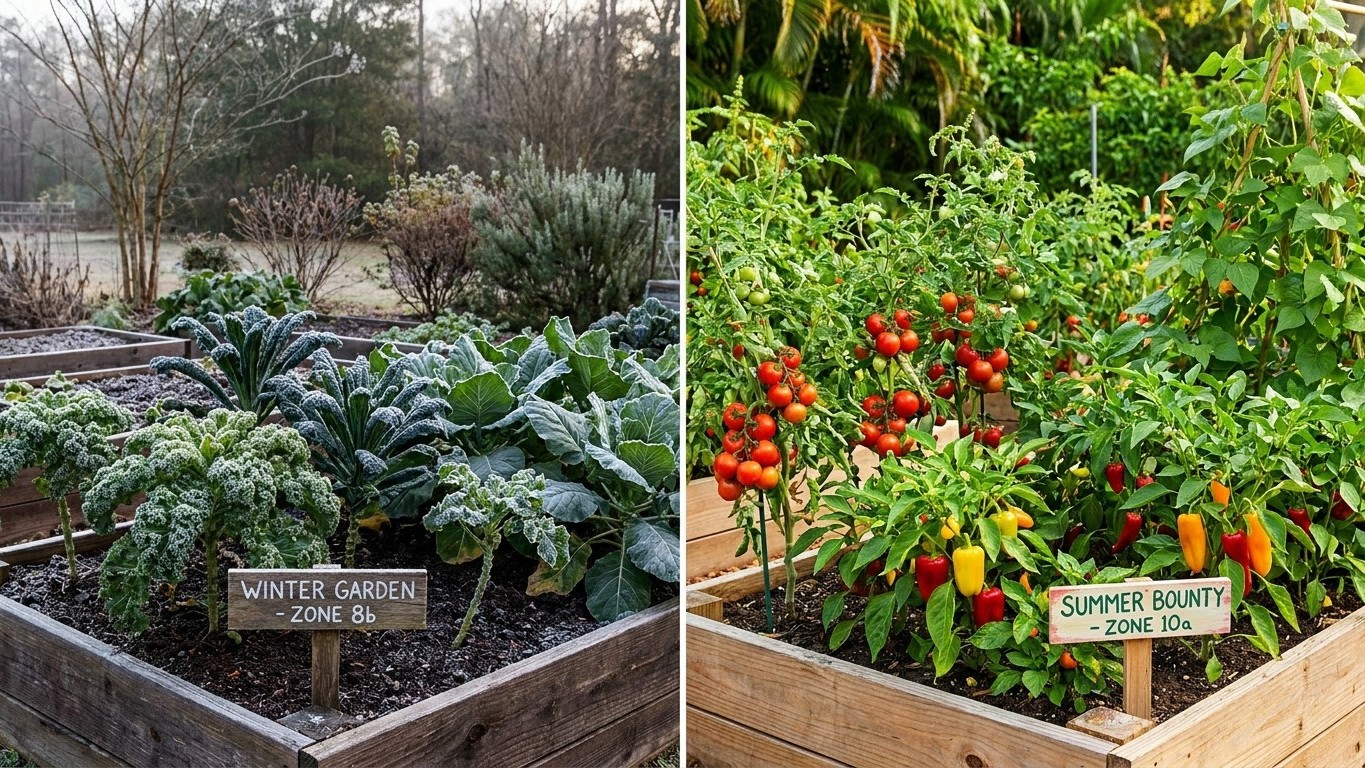

December splits Florida into two different gardens. North Florida is inside its first fall frost window, so hardy greens, alliums, and root vegetables go in the ground while frost-tender crops wait for spring. Central and south Florida, effectively frost-free under the USDA hardiness system, are in the middle of some of their best growing weeks of the year, with tomatoes, peppers, beans, and warm-season herbs all going in now. The right list depends entirely on which Florida is outside your window.
What goes in the ground in December

Soil temperature and the frost calendar decide this month’s list, not the date on a wall. Near the NOAA NCEI Jacksonville station, first fall frost arrives on average between November 26 and December 13. That window means by December, hard freezes are already possible in the north, and any crop that can’t handle a light frost is off the table until spring. Drop south past roughly Ocala, though, and the picture flips: central and south Florida sit in USDA hardiness zones running into 10 and 11, effectively frost-free, and December lands mid-season for a long list of vegetables that would burn up in July heat.
North Florida: working inside the frost window
The safe December list here is short but real: collards, kale, mustard greens, spinach, lettuce, and Swiss chard all handle a frost without complaint. So do the alliums, garlic, shallots, and bulb onions, along with root crops like carrots, beets, radishes, and turnips. English peas go in now too, since they actually germinate more evenly in cool soil than warm. None of these need protection on an average December night; a freeze colder than the typical range is a different story, and that’s where row cover or a cold frame earns its keep.
Central and south Florida: frost-free and mid-season
Gardeners here have a much longer list, because their growing season runs opposite the rest of the country’s. December sits deep in the cool, dry stretch that keeps tomatoes, peppers, snap beans, sweet corn, and cucurbits like squash and cucumbers productive without the pest and disease pressure summer humidity brings. Herbs such as basil, dill, and cilantro also do well seeded now in these zones, something a north Florida gardener has to wait for spring to attempt.
| Region | December frost status | USDA hardiness zone | What goes in the ground |
|---|---|---|---|
| North Florida (Jacksonville area) | Inside first fall frost window (Nov 26 to Dec 13) | 8b to 9a | Hardy greens, alliums, root crops, peas |
| Central and South Florida | Effectively frost-free | 10a to 11b | Tomatoes, peppers, beans, cucurbits, herbs, plus all the hardy crops above |
The lesson at either end of the state is the same: check the soil, not the sky. A warm afternoon in north Florida doesn’t undo a frost window NOAA’s thirty-year record has held steady, and a mild December in the south doesn’t mean the state’s rare cold snaps can’t reach that far once a hard front pushes through.
What to start under cover
Counting backward from the frost window works better than counting forward from a fixed date, since the window itself shifts by weeks depending on where in Florida you garden.
Counting backward from spring frost in the north
At the Jacksonville station, the last spring frost falls between February 16 and March 7. Working back from that range, warm-season seedlings like tomatoes and peppers started indoors in December will be at transplant size roughly eight weeks later, right when the frost risk is easing. Start them earlier and they turn leggy and rootbound waiting for soil that’s still too cold; start them closer to February and the transplants go out small and slow, losing weeks of harvest before summer heat arrives.
Succession sowing where frost isn’t a factor
Central and south Florida gardeners use the same backward math for a different purpose. Since December’s outdoor list already includes tomatoes and peppers, starting seed under cover now is mostly about succession, staggering a second and third round of the same warm-season crops every few weeks so the harvest doesn’t arrive all at once and then stop. Trays under a cold frame or covered porch also shield young seedlings from the state’s occasional cold fronts, which can drop temperatures well below the zone’s average even where the zone itself is rated frost-free.
Either way, the failure modes are the same. Starting too early means plants outgrow their trays before the ground or weather is ready, and a rootbound tomato seedling rarely catches up once transplanted. Starting too late means running out of mild weather before summer heat, or in the north, the last frost pushes back in. A seed packet’s stated days-to-transplant size is the number to work backward from, not a guess.
What is ready to pick
In north Florida, December harvests are thin outdoors once frost settles in, but they don’t stop. Kale, collards, and leeks planted earlier in fall often taste better after a light frost, since cold triggers the plant to convert starches to sugars. Cold-frame greens, lettuce and spinach kept under a simple cover, keep producing through the coldest weeks with little extra care beyond venting the frame on sunny days so plants don’t cook. Indoors, sprouts and microgreens fill the gap for anyone wanting fresh greens without depending on the weather at all.
Central and south Florida are harvesting at full speed by December. Broccoli, cabbage, and the same hardy greens grown in the north come in steadily, along with the tail end of fall-planted root crops. Many of Florida’s citrus varieties reach peak ripeness in the early winter stretch, which is one reason the state’s groves are busiest with picking crews around this time of year.
Checking stored crops for rot
Wherever you garden, December is when stored crops start to show their weak points. Squash, potatoes, and onions put up in fall deserve a hands-on check now: a soft spot on a squash, a sprouting potato, or an onion going papery at the neck means that one gets used first, not left to spread rot to the rest of the bin. Storage crops don’t fail all at once; they fail one piece at a time, and catching it early saves the batch.
The jobs that matter this month
Pruning, seed orders, and soil work
Dormant pruning tops the list for anyone growing deciduous fruit in north Florida. Peaches, pears, and blueberries drop their leaves and go dormant by December, and pruning now, while the wood is bare and the plant isn’t pushing new growth, shapes the tree without stressing it. Wait until buds swell in late winter and every cut becomes a cut into growth the plant already spent energy building.
Seed ordering belongs on this list too, not as an afterthought. Popular varieties, particularly the disease-resistant tomatoes and cold-hardy greens both ends of the state rely on, sell out of seed racks and mail-order catalogs well before spring planting begins. Soil work pays off for the same reason: a test now gives results in time to correct pH or nutrient gaps before spring planting instead of after seedlings are already struggling. Turning finished compost into beds, sharpening and oiling pruners and hoes before they sit unused, and repairing raised bed frames or fencing damaged over the growing season all take advantage of a slower month.
Protecting what’s already growing
For north Florida, frost protection is a standing job this month, not a one-time task. Row cover, cold frames, and mulch piled around tender perennials need checking and adjusting every time a hard front is forecast, since the region’s frost window runs clear into December. For central and south Florida, the dry season means irrigation lines deserve a check now, before peak demand hits crops that are actively fruiting.
What not to do in December
Planting or uncovering by feel instead of by soil
The classic north Florida mistake is planting warm-season crops into soil that’s still cold because the afternoon air felt like spring. A 75-degree afternoon doesn’t warm soil four inches down, and tomato or pepper seed dropped into cold ground either rots or sits stalled for weeks waiting on heat a hard front can easily undo. Check the soil with a simple probe thermometer, not the day’s forecast. A related mistake follows a mild stretch: gardeners pull row covers or open cold frames early because a few warm days felt like winter was over, then lose tender greens or seedlings to the next front. The Jacksonville station’s own thirty-year record shows three falls out of thirty with no measurable freeze at all, so a warm week proves nothing about the weeks still ahead.
Getting nitrogen timing wrong
Feeding nitrogen at the wrong point causes trouble at both ends of the state. In north Florida, a dose of high-nitrogen fertilizer right before a forecast freeze pushes soft new growth that a hard freeze then kills outright, undoing the plant’s own cold hardening. In central and south Florida, over-fertilizing fruiting tomatoes and peppers during their peak production window trades fruit for leaves, since the plant redirects nitrogen into foliage instead of setting more flowers. In both cases, feed on the crop’s schedule, not the gardener’s impatience.
Checking this against your own county
A state-wide December list is a starting point, not an instruction, and nowhere is that truer than in Florida. The frost windows cited here come from one Jacksonville-area station; move a few counties inland, up in elevation, or south past the Ocala area, and the same December date carries a completely different frost risk, or none at all. Coastal counties buffered by the Gulf Stream or Atlantic waters often run several degrees warmer than inland spots at the same latitude.
The University of Florida IFAS Extension keeps county-level offices across the state that track these local differences and can confirm what’s safe to plant in a specific zip code before it goes into the ground.
Common questions
Is it too late to plant a vegetable garden in December in Florida?
No, but the answer depends on where. North Florida gardeners are limited to frost-hardy crops until the last spring frost window, February 16 to March 7 at the Jacksonville station, passes, while central and south Florida gardeners are in the middle of their main growing season and can plant most warm-season vegetables this month.
Can citrus trees be planted in December in Florida?
Citrus is typically planted in warmer months rather than during the coolest weeks of the year, since young trees establish roots faster in warm soil. December is better used for pruning damaged wood, checking mulch, and protecting young trees from any hard freeze, especially in north Florida where frost risk is active this month.
What is the coldest stretch for gardening in north Florida?
Based on the Jacksonville station’s climate normals, the frost season runs from the first fall frost (November 26 to December 13) through the last spring frost (February 16 to March 7), which puts December, January, and February inside the coldest stretch a north Florida garden has to manage.
Do south Florida gardens ever need frost protection in December?
South Florida sits in hardiness zones rated effectively frost-free under the USDA system, but that describes an average, not a guarantee. Occasional hard cold fronts can still push temperatures low enough to damage tender crops, so keeping row cover on hand through December is a reasonable precaution even in zones rated frost-free.