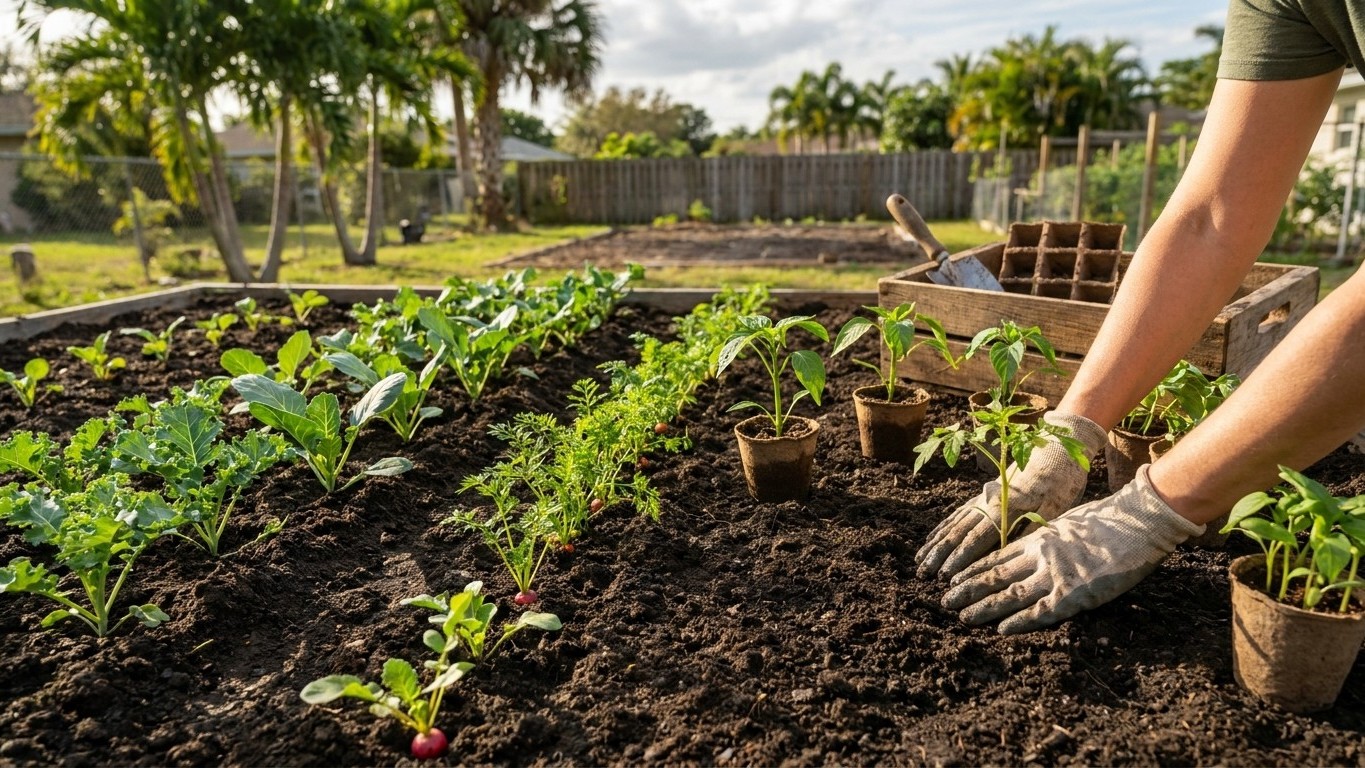

November splits Florida in two. In the north, from Jacksonville up through the Panhandle, it’s the last wide-open stretch before frost finally shows up, so cool-season vegetables go in fast. In central and south Florida, where frost is rare or nonexistent, November is the real start of the main growing season: tomatoes, peppers, and beans go in the ground now for a winter harvest.
What goes in the ground in November

Soil temperature and daylight length decide what survives here, not the date on the wall. In north Florida, near Jacksonville, the first fall frost typically lands somewhere between November 26 and December 13, based on 1991-2020 NOAA climate normals for that station. That means most of November still sits before the freeze window opens, leaving three to four weeks of workable ground for direct-sown and transplanted crops before any real cold arrives.
That window favors the same crops that do well anywhere heading into winter: collards, kale, mustard, turnips, carrots, beets, radishes, and all the alliums, garlic, shallots, and bunching onions. Snap peas and English peas go in now too, since they want cool soil to germinate evenly. Broccoli and cabbage transplants set out early in the month have time to size up before any freeze slows them down.
Central and south Florida run on a different clock entirely. USDA hardiness zones across the state span 8b up near the Georgia line to 11b in the Keys and southern Miami-Dade, a range wide enough that a single planting date is close to meaningless without naming a place. Jacksonville, as the reference city for the northern band, sits in a zone where frost is a real, expected event most winters. Orlando and points south rarely see it. There, November through February is effectively the main season for crops that would scorch or fail in the summer heat: tomatoes, peppers, snap beans, sweet corn, and strawberries all go in through the fall for a harvest that runs into winter and early spring.
| Region | Frost risk this month | What goes in now |
|---|---|---|
| North Florida (near Jacksonville) | Low early in the month, rising toward the end as the Nov 26-Dec 13 window approaches | Collards, kale, carrots, beets, garlic, onions, peas, broccoli and cabbage transplants |
| Central Florida | Minimal, occasional light cold snaps | Tomatoes, peppers, beans, strawberries, all the same greens as the north |
| South Florida | Essentially none most winters | Tomatoes, peppers, sweet corn, beans, plus tropical and warm-loving crops held over from summer |
The gamble in the north is planting anything warm-season, squash, melons, or fresh tomato starts, expecting them to make it to frost. They might, if the freeze arrives on the late end of the range, but betting a whole planting on the last week of a range that starts November 26 is a poor trade against a few more weeks of greens.
What to start under cover
Counting backward from the frost window works better than counting forward from today’s date. In north Florida, with first frost expected between November 26 and December 13, anything started under cover now, in a cold frame, a greenhouse, or on a windowsill, has roughly four to six weeks before that window opens. That’s enough time to get lettuce, spinach, and other quick greens to transplant size, but not enough for anything that needs a long juvenile stage.
In central and south Florida the math runs differently because there’s no hard frost deadline to work against. Starting seedlings under cover there is less about racing a freeze and more about giving warm-season crops, tomatoes and peppers especially, a head start before setting them out into the mild weeks ahead. A six-week-old tomato transplant handles the transition to open ground far better than one started too green.
Two mistakes show up every year. Start too early, especially tomatoes and peppers, and the seedlings get rootbound and leggy sitting in small cells waiting for the soil to be ready, stretching toward whatever light they can find. Start too late, particularly in the north, and there isn’t enough runway left before the cold arrives to get a transplant to a size that can handle the shock of open ground. The safer habit is sowing in small batches roughly a week apart rather than one large tray all at once, so there’s always a backup size ready if the first batch outgrows its pots before the ground does.
What is ready to pick
North Florida gardens are still finishing off summer’s last crops early in the month: the tail end of peppers, eggplant, and any tomatoes that hung on through the fall heat. As those wind down, the greens and roots planted in September and October start coming in, tender young collards and mustard, baby carrots, and the first cuts of lettuce sown a month or two earlier.
Central and south Florida gardens are just getting going on their main season, so harvest there in November leans on whatever was planted in late summer for a fall crop: sweet potatoes dug before any cool snap, the last of the summer squash, and herbs like basil that will keep producing until a cold night finally knocks them back.
Across the whole state, storage crops deserve a check this month. Any winter squash, onions, or sweet potatoes held from an earlier harvest should get pulled out and inspected, since a single soft or moldy one left in a bin will spread rot to its neighbors faster than most gardeners expect. Firm skin, no give when pressed, and no sweet smell are the marks of something still good to keep.
The jobs that matter this month
Soil preparation done now pays off through the whole cool season. Working compost into beds before the next round of transplants gives roots something to grow into immediately rather than waiting weeks for amendments to break down. In the north, this is also the month to get a soil test in if one hasn’t been done recently, since results take a few weeks and any lime or fertilizer adjustments work best applied before the ground turns cold.
Mulching matters differently depending on latitude. In north Florida, a two to three inch layer around newly planted greens and alliums buffers the soil against the temperature swings that come before a hard freeze finally settles in. Farther south, mulch does less to guard against cold and more to hold moisture, since the dry season is starting and rainfall drops off through the winter months.
Staking and support structures for peas, and for any tomatoes going into central or south Florida beds, are far easier to install before the plants sprawl than after. Watering rhythm needs a reset too: as temperatures cool statewide, most beds need less frequent water than they did in summer, and overwatering cool-season greens is a common way to invite root rot.
Pest scouting shouldn’t slack off just because it’s cool. Armyworms and aphids still move through fall brassica plantings, and catching an infestation on collards or cabbage early is far easier than dealing with a stripped bed two weeks later. For anyone with citrus, November is also a reasonable month to check trees for scale and to clear fallen fruit that can harbor pests over winter. Gardeners further north should also use this window to finish dormant pruning on deciduous fruit trees and berry canes once they’ve dropped their leaves, sharpen tools before the next round of transplanting, and order seed for the cool-season varieties that tend to sell out early.
What not to do in November
The most common mistake in north Florida is treating a warm afternoon as permission to plant warm-season crops. A 75-degree day in early November doesn’t mean the soil has warmed to match, and it doesn’t change the fact that a freeze is likely within the next several weeks. Squash and melon seed put in now is a bet against a frost window that opens as early as November 26.
The mirror mistake shows up after any early cold snap: gardeners pull row covers or cold frame lids too soon once temperatures bounce back, only to lose tender transplants to the next dip. Since the frost window in the north spans more than two weeks (November 26 to December 13), one mild stretch inside that range doesn’t mean the risk has passed.
Fertilizing timing trips people up too. Pushing nitrogen on greens and brassicas late in the month, right as growth naturally slows with shorter days, tends to produce soft, leggy growth that’s more vulnerable to cold damage rather than a bigger harvest. In central and south Florida, the parallel error is overfeeding tomatoes and peppers right after transplanting instead of waiting for them to establish roots first, which can push leafy growth at the expense of fruit set.
It’s also worth resisting the urge to assume the entire southern half of the state is immune to cold. Occasional cool snaps do reach central and south Florida in some years, though no specific published frost dates for those regions are included here. Keeping a few row covers on hand, even in a place that’s frost-free most winters, is cheap insurance against the exception.
Checking this against your own county
A statewide picture of November is a starting point, not an instruction for a specific yard. Elevation, distance from the coast, and simple north-to-south distance move frost windows by weeks across Florida, and a garden forty miles from the reference station used here can run noticeably warmer or colder. The University of Florida’s IFAS Extension network keeps county-level guidance and a state planting calendar built around local conditions, and it’s the better next stop for anyone deciding what to put in the ground this month: UF/IFAS Extension, Solutions for Your Life.
Common questions
Is it too late to plant tomatoes in Florida in November?
In north Florida, yes, for outdoor tomatoes meant to reach harvest before frost arrives between November 26 and December 13. In central and south Florida, no. November is close to the ideal window to set out tomato transplants for a winter and early spring harvest.
What vegetables can I still direct-sow this month in north Florida?
Carrots, beets, radishes, turnips, mustard, collards, and peas all handle direct sowing well through most of November, since the ground is typically still frost-free until late in the month.
Does Florida really have a frost-free growing season?
Parts of it do. Central and south Florida, roughly zone 10 and above on the USDA hardiness map, rarely see frost, which is why their heaviest planting happens in fall and winter rather than summer. North Florida, closer to zone 8b near Jacksonville, gets real frost most years.
When should I expect the first frost in north Florida?
Based on 1991-2020 NOAA climate normals for the Jacksonville area, the first fall frost typically falls somewhere between November 26 and December 13, though individual years can vary outside that range.