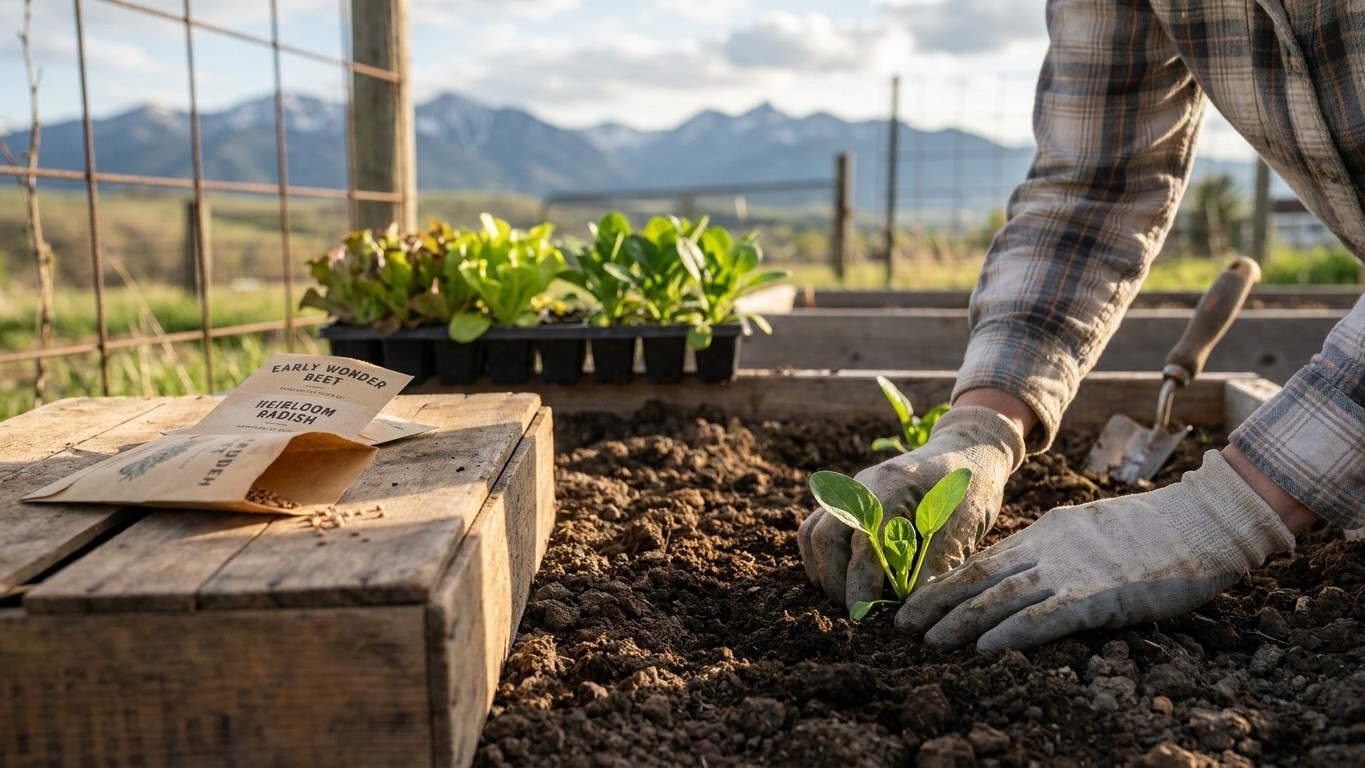

August in Idaho is a fall-crop month, not a new-season month. With the Treasure Valley’s first fall frost landing October 7 to October 21, there are roughly seven to nine weeks left to fill before the freeze line moves in. That window is enough for quick greens, roots, and a last round of beans, but too tight for anything that needs a long summer to finish.
What goes in the ground in August

The decision this month is arithmetic, not instinct. Count backward from the first fall frost, October 7 to 21 at the Boise reference station, and match that number of days against how long a crop actually needs to mature. A crop that needs 75 days is a gamble sown in early August at low elevation and a lost cause almost everywhere higher up. A crop that needs 30 to 45 days is safe almost anywhere in the state’s warmer valleys.
Cool-season greens are the easy call: spinach, lettuce, arugula, mustard greens, and mizuna all mature fast enough to go from seed to salad bowl before the ground freezes. Root crops follow close behind. Radishes are done in three to four weeks. Baby beets, turnips, and quick carrot varieties fit the window if sown in the first half of the month. Bush beans and peas are the last realistic direct-sow candidates for anyone at lower elevation who wants a second harvest, but they need to go in early, not late.
Garlic and shallots do not go into the ground in August in Idaho. Both want cooler soil and a longer chill ahead of them, which puts their planting window in fall, closer to the first frost than to now. Anyone tempted to get a head start on garlic this month should hold off; overwintering alliums planted too early can push top growth that then gets knocked back hard by the first freeze.
| Crop | Typical days to maturity | Safe to direct sow in August? |
|---|---|---|
| Radish | 25-30 | Yes, any time this month |
| Spinach / arugula | 30-40 | Yes, sow through mid-month |
| Baby beets / turnips | 40-50 | Yes, sow first half of month |
| Bush beans | 50-60 | Only in the earliest days of the month, low elevation |
| Garlic / shallots | N/A (fall planted) | No, wait for fall planting window |
What to start under cover
Starting anything under cover in August is about buying a crop a few extra weeks it wouldn’t otherwise have. The most useful move is sowing fast greens into trays or a cold frame now, then transplanting them out as soon as space opens up from whatever is finishing in the main beds. That shaves a week or two off the maturity clock compared with sowing directly outdoors into soil that’s still baked hard from summer heat.
The other real use of cover this month is season extension for crops that will feed the household after the main garden shuts down. Spinach and corn salad (mache) sown under a low tunnel or in a cold frame in late August can sit through early fall, then push new growth again once days lengthen, giving an early spring harvest with almost no spring work required. This only pencils out where the first frost lands later in the range, October 21 rather than October 7; gardeners at higher elevation with an earlier freeze should skip it and put that effort into crops that finish before winter instead.
The two ways this goes wrong are predictable. Starting under cover too early, while daytime heat is still intense, means seedlings bolt or burn before they ever get transplanted. Starting too late means the transplants never size up enough to survive the transition outdoors before frost arrives. There’s a narrow middle stretch, roughly the first two weeks of the month for anything meant to mature outdoors before frost, and that’s the target to aim for.
What is ready to pick
August is peak harvest almost everywhere in Idaho, and the job is less about planting and more about keeping up. Tomatoes are turning color and need checking every day or two once they start; a tomato is ready when it gives slightly to a gentle squeeze and the color has fully developed, not just started to blush. Summer squash and zucchini go from perfect to oversized in 48 hours, so daily checks matter more than any calendar.
Sweet corn signals readiness through the silk: when it’s turned brown and dry while the husk is still green, the ear is close. Peel back a section and check for plump, milky kernels rather than watery or hard ones. Cucumbers are best picked firm and before they yellow, since a yellowing cucumber has already gone bitter and seedy. Beans, whether bush or pole, keep producing longer if picked before the pods swell and the seeds inside get tough.
Berries and early apples round out the month in many parts of the state, and stone fruit varieties bred for shorter seasons often finish here too. The general rule holds across all of it: harvesting on schedule doesn’t just fill the kitchen, it keeps the plant producing. Tomatoes and beans left to hang past ripeness signal the plant to slow down, which cuts total yield for the rest of the season.
The jobs that matter this month
Watering rhythm is the single biggest lever in August. Heat stress during fruit set and ripening causes blossom end rot in tomatoes and bitter, misshapen cucumbers, and both trace back to inconsistent soil moisture rather than total rainfall. Deep, less frequent watering beats a daily light sprinkle, because it pushes roots downward instead of keeping them shallow and vulnerable to the next hot stretch.
Mulch matters as much now as it does in spring, just for a different reason: it’s holding moisture in and soil temperature down rather than warming the ground for germination. A two- to three-inch layer around tomatoes, squash, and peppers cuts watering needs noticeably and keeps splash-borne fungal disease off the lower leaves.
Staking and tying can’t wait. Tomato branches loaded with green fruit snap in a summer thunderstorm far more easily than empty ones, and a sprawling squash vine that’s rooted itself into the lawn is a headache to reclaim later. Pest scouting deserves a walk-through every few days rather than a reaction after damage shows: squash vine borer leaves a telltale sawdust-like frass at the base of the stem, and tomato hornworms are easiest to spot at dusk when they’re actively feeding.
Succession sowing keeps the fall harvest coming rather than arriving all at once. A short row of lettuce or radish every ten days through the month, rather than one big sowing, spreads the harvest out and hedges against any one batch failing. And it’s worth starting to think ahead: this is the month to order garlic sets for the fall planting window and to start scouting which beds will need a cover crop or compost top-up once the summer crops come out.
What not to do in August
The most common mistake is sowing something that needed a full summer, like a slow tomato variety or winter squash, straight into the ground in August because the weather still feels warm. Air temperature is not the constraint here; the calendar between now and the first fall frost, October 7 to 21, is. A crop that needs 90 days from seed simply doesn’t have 90 days left in most of the state.
Cutting back on water because the peak of summer feels past is another one. Idaho’s dry heat doesn’t ease up just because harvest has started, and a tomato plant that gets stressed by drought late in fruit development is the plant most likely to drop fruit or develop blossom end rot right when the crop should be paying off.
Heavy nitrogen feeding this late in the season works against the garden rather than for it. Nitrogen pushes leafy green growth at the expense of fruit ripening, and on perennial plants and fruiting shrubs it can trigger a flush of tender new growth that has no time to harden off before the first freeze. If a boost is needed this month, a lower-nitrogen, higher-phosphorus and -potassium feed supports the fruit already forming instead of generating new growth that frost will simply kill.
Letting overripe produce sit on the plant is a quieter mistake with a real cost. Beyond slowing future production, rotting fruit and vegetables left in place draw in the same pests, wasps and fruit flies especially, that then spread to everything else nearby.
Checking this against your own county
Idaho’s hardiness range runs from USDA zone 3b to 7b, and that spread says everything about why a single statewide answer only goes so far. The Boise frost dates used here, April 23 to May 7 in spring and October 7 to October 21 in fall, describe a low valley. Higher ground, the panhandle, and anywhere with lake or canyon effect can move those windows by two to four weeks in either direction, which changes what’s actually safe to sow this week.
The most reliable next step is checking those numbers against the local station rather than assuming Boise’s window applies. The University of Idaho Extension tracks county-level frost data and crop guidance built for the state’s actual range of elevations and microclimates, and it’s the better source for anyone gardening outside the Treasure Valley.
Common questions
Can I still plant tomatoes in August in Idaho?
Not from seed, and transplants are risky too. With the first fall frost landing October 7 to 21, there isn’t enough season left for a tomato plant to set and ripen fruit if it isn’t already established and fruiting by August.
What vegetables can I direct sow in Idaho in August?
Fast-maturing crops work best: radishes, spinach, arugula, mustard greens, baby beets, turnips, and bush beans if sown in the first days of the month at lower elevation.
When should garlic actually go in the ground in Idaho?
Fall, not August. Garlic and shallots need cooler soil and a longer chill ahead of them, which puts the real planting window closer to the first frost than to midsummer.
What USDA hardiness zone is most of Idaho in?
The state spans USDA zones 3b to 7b, according to the USDA Plant Hardiness Zone Map. That’s a wide range built on one measure, average annual extreme minimum temperature, so a reading from a low valley won’t match a mountain county.