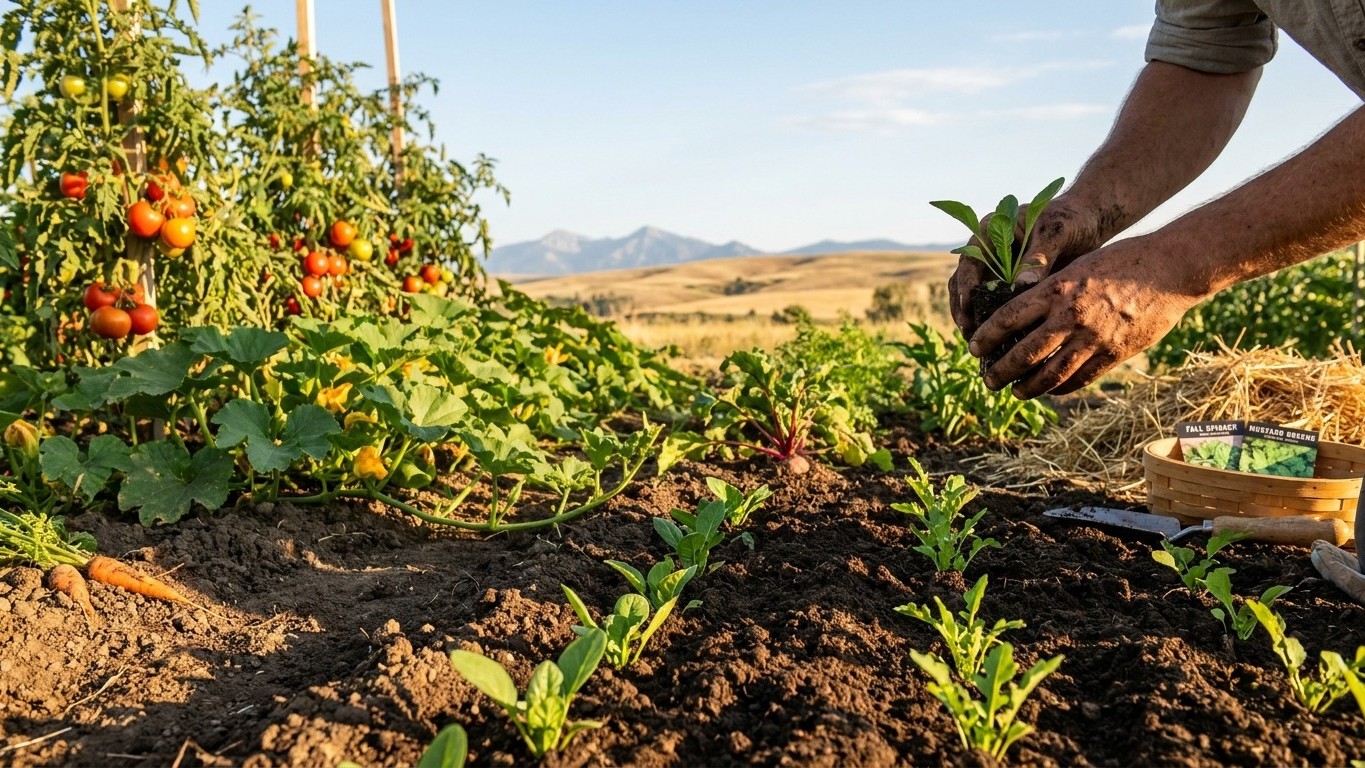

In Boise, September still runs largely frost-free, with the first fall freeze typically landing between October 7 and October 21. That leaves a real window to direct-sow quick cool-season greens, keep root crops moving, and pull in the last of the tomatoes and squash. Higher, colder parts of Idaho work on a much shorter clock. What follows sorts out what is safe to plant now and what is better left for the region’s own timing.
What goes in the ground in September

Soil temperature, not the wall calendar, decides what survives outdoors in September. In Boise, the first fall freeze lands somewhere between October 7 and October 21 (NOAA NCEI 1991-2020 Climate Normals, station USW00024131). That leaves anywhere from roughly three to seven weeks of safe growing time, depending on which day of September a seed goes in and which end of that freeze window actually shows up. Crops that finish in 30 to 45 days fit comfortably. Anything needing two months or more is a gamble unless it can shrug off a light frost.
Higher ground changes the math entirely. Mountain valleys, the Panhandle’s colder pockets, and anywhere above the Snake River Plain often see their first freeze weeks before Boise does, sometimes before September even starts. In those spots, September planting means only the toughest crops, and the safe list narrows fast.
What still works almost everywhere in the state this month:
- Spinach, arugula, and mustard greens, quick enough to mature before a light frost and hardy enough to survive one anyway
- Radishes and turnips, both fast growing and cold-tolerant
- Lettuce grown for baby greens, cut young rather than left to head up
- Peas, sown early in the month for a fall crop rather than a summer one
- Garlic and shallot cloves, pushed into worked soil for bulbs that form the following summer
What is a real gamble now: anything in the squash, bean, or corn family. These need a full summer’s heat behind them and a frost-free stretch ahead of them that September in most of Idaho simply does not offer. Direct-sowing them this late risks losing the crop to the first hard freeze before it produces anything worth harvesting.
What to start under cover
Counting backward from the first fall freeze does more for a fall garden than any date on a seed packet. Take October 7, the early edge of Boise’s typical freeze window, subtract the days a transplant needs before it goes in the ground, and check whether September even leaves room to start it. For most transplant-ready fall crops, that math already ran out in August. That does not close the month down entirely.
Where a cold frame, low tunnel, or a bright windowsill enters the picture, the window opens back up. Sowing lettuce, spinach, or Asian greens directly into a cold frame in early September gives them roughly a month of open growth before the frame’s cover starts doing the real work of holding heat through October and beyond. The same greens started in trays indoors can be pricked out and moved under cover once true leaves show, buying an extra two to three weeks over a crop sown straight into open ground.
The two ways this goes wrong both come from bad timing. Start too early without a way to protect the seedlings, and by the time they are ready to transplant the season has already turned against them. Start too late, and long-day greens that need real daylight to bulk up run out of light hours before they run out of frost-free days, leaving small plants that stall rather than finish. Idaho’s shortening daylight in late September is as much a limit as the temperature is, especially for anything still in a seed tray rather than already growing under cover.
What is ready to pick
September is harvest month for the crops that have been building all summer. Tomatoes should be coming in steadily, and any that split or crack after a heavy watering are worth pulling slightly underripe rather than left to rot on the vine. Peppers, both sweet and hot, color up faster once cooler nights arrive. Summer squash and cucumbers need checking every two to three days, since a zucchini left unnoticed for a week turns from dinner into a baseball bat.
Winter squash and pumpkins tell their own story: a fingernail pressed into the skin that does not leave a mark means the rind has hardened enough for storage. Sweet corn is ready when the husks dry and the kernels run milky rather than watery when pierced. Melons tend to slip cleanly from the vine at the stem when they are actually ripe, rather than needing to be cut.
Onions and potatoes planted earlier in the season often finish curing or bulking through September. Onion tops flopping over and drying at the neck signal it is time to pull and cure them somewhere dry and airy. Potatoes can stay in the ground a little longer, but once the foliage dies back fully, digging them before a hard rain keeps the tubers from rotting in wet soil.
Apples and pears in home orchards across much of Idaho ripen through September as well, though the exact week varies by variety and elevation. A gentle twist that lets fruit separate from the branch without tugging is the simplest ripeness test there is.
The jobs that matter this month
Watering rhythm changes first. As nights cool and days shorten, most vegetable beds need less water than they did in midsummer, and overwatering now can push soft new growth that a frost will simply kill. Cutting back frequency while watching for actual wilting, rather than sticking to a summer schedule, keeps plants tougher going into fall.
Succession sowing still pays off in the first half of the month. A second round of radishes, spinach, or baby lettuce sown in the first week or two of September often has just enough runway to mature before the average freeze date arrives. Sown any later, the odds tip against it across most of the state.
Garlic beds deserve attention now even where the cloves themselves go in closer to October. Working compost into the planned bed, clearing old crop residue, and checking drainage means the soil is ready the moment planting time actually arrives, rather than scrambling with a shovel in cold, wet ground later.
Mulching around perennials, berry canes, and any crop planned to overwinter matters more with each week that passes. A few inches of straw or shredded leaves laid down before the first hard freeze insulates roots far better than the same mulch applied after the ground has already frozen once.
Tall, top-heavy fall crops like broccoli and Brussels sprouts benefit from staking or a stake-and-twine support now, before September winds knock them sideways and snap stems that were fine a week earlier.
Pest scouting keeps paying dividends too. Aphids and cabbage worms often surge on fall brassicas just as gardeners start paying less attention, and a quick check under leaves twice a week catches an infestation while hand-picking still works, before it needs anything stronger. Stored crops from earlier harvests need a look as well, since one soft or moldy squash in a bin can spread trouble to its neighbors within days.
What not to do in September
Warm afternoons in September fool a lot of gardeners into planting like it’s still midsummer. The air can feel warm while the soil underneath has already started cooling from shorter days, and warm-season seeds like beans or squash sown into that soil either rot before germinating or come up too slowly to ever catch up to the approaching freeze. If summer crops are still producing, letting them run their course beats replacing them with more of the same this late.
Pulling row cover or cold frame lids off too early after a mild stretch is another classic misstep. A few unseasonably warm days in the middle of September do not mean the frost risk has passed, they mean the freeze window described by NOAA’s climate normals for Boise, October 7 to October 21, is still coming on schedule. Uncovering tender fall seedlings during a warm spell just leaves them exposed the next time temperatures drop.
Nitrogen-heavy feeding is the third trap. Fertilizer that pushes leafy, watery growth in September works against a plant’s own preparation for cold, since that soft new tissue is exactly what a light frost damages first. Established perennials, fruit trees, and anything meant to overwinter are better served by holding off on nitrogen from this point and letting growth harden off naturally.
Finally, treating a single statewide frost window as gospel for every garden in Idaho causes real losses. A date that fits Boise’s valley floor can miss a mountain garden’s actual first freeze by weeks in either direction.
Checking this against your own county
Everything above is built around Boise’s own recorded climate data, and Boise sits in one of Idaho’s lowest, mildest valleys. Elevation changes the picture fast: gardens a few thousand feet higher, across much of the Panhandle, the Sawtooth region, or the eastern high desert, often see their first freeze weeks earlier than the Treasure Valley does, on a completely different clock. The USDA’s own hardiness zone map places Idaho anywhere from zone 3b to zone 7b, a spread wide enough that a planting guide written for one end tells the other end almost nothing useful.
For a planting window built around a specific county’s own station data, the University of Idaho Extension is the place to check before trusting a statewide date over a local one.
Common questions
Can tomatoes still be planted in Idaho in September?
No. Tomatoes need a long, warm stretch to fruit, and September leaves nowhere near enough frost-free time in any part of Idaho for a newly planted tomato to produce anything. September is for harvesting the tomatoes already in the ground, not starting new ones.
Is it too late to plant garlic in September in Idaho?
Not too late to prepare, but most gardeners hold the actual cloves for closer to the first freeze, since garlic planted too early can push top growth that gets damaged by cold before winter dormancy sets in. September is better spent preparing the bed than planting the cloves.
What vegetables can handle a light frost in Idaho gardens?
Spinach, kale, arugula, turnips, and radishes all tolerate a light frost without much damage, and a few even taste sweeter afterward as the plant converts starches to sugars in the cold. Squash, beans, corn, and tomatoes have no such tolerance and die at the first freeze.
Does Idaho’s growing season really vary that much by region?
Yes. The USDA Plant Hardiness Zone Map places the state anywhere from zone 3b to zone 7b, and that range reflects real differences in winter extremes between the low Snake River valleys and the state’s mountain and northern regions. A frost date drawn from one station, such as Boise’s, will not match a garden sitting a few thousand feet higher.
Gardeners who plant by the Moon can check the September 2027 moon planting calendar, a tradition rather than a proven method.