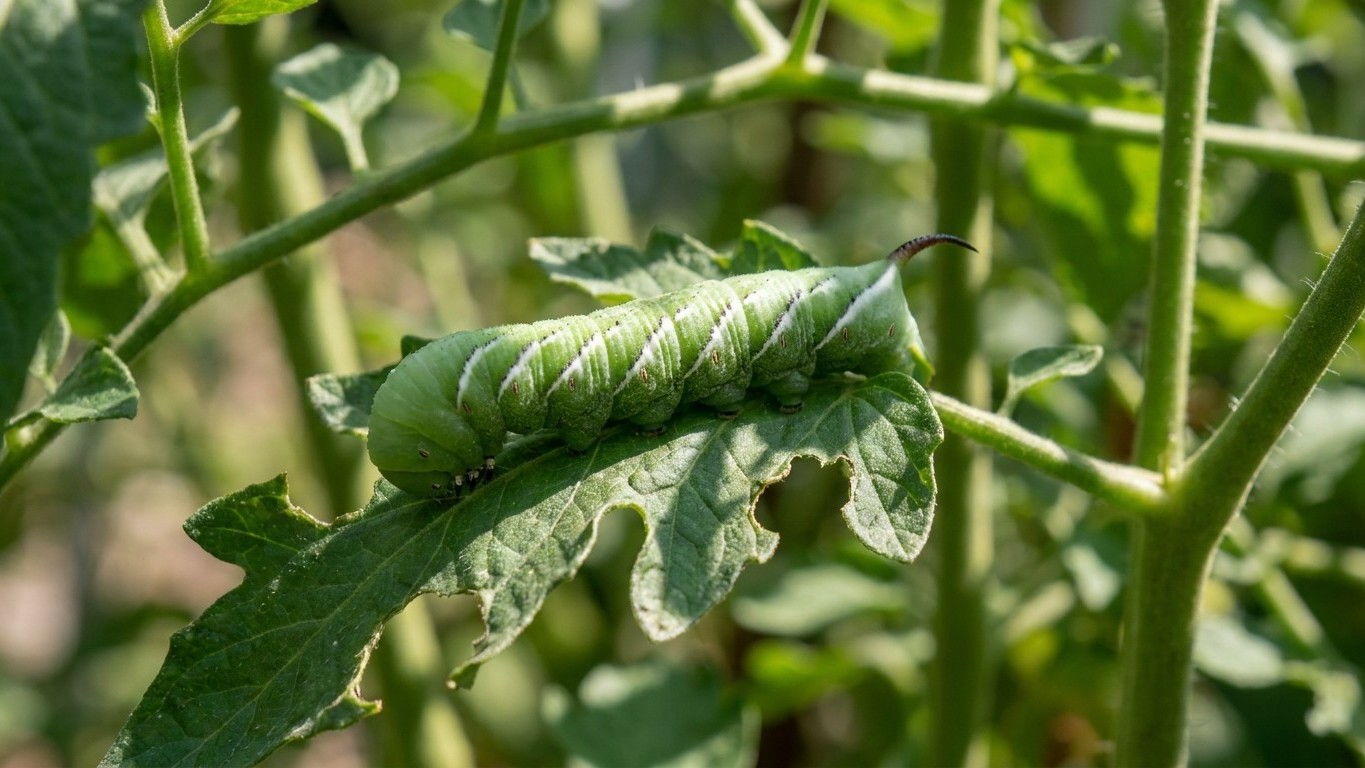

Tomato hornworms typically appear in Idaho gardens from mid-July through early September, with the heaviest feeding damage showing up in late July and August. In most of the state, you’ll deal with a single generation per year, not the two or three cycles gardeners battle in warmer southern states. That shorter window matters because it changes when you need to watch closely and when you can stop worrying.
The pest itself is the larval stage of the five-spotted hawkmoth (Manduca quinquemaculata), a chunky green caterpillar that can grow to nearly 4 inches long before it’s done feeding. It strips tomato foliage fast, sometimes overnight, and its size makes the sudden disappearance of leaves feel almost personal.
When Hornworms Actually Show Up in Idaho

Idaho’s climate splits the state into distinct pest timelines. In the Treasure Valley around Boise (USDA zone 6-7), soil warms early enough that overwintered pupae wake up and moths emerge by late May or early June. Eggs get laid on the undersides of tomato leaves through June, and the caterpillars you actually notice start showing real size by mid-July.
Northern Idaho and the higher-elevation valleys around Idaho Falls or Sun Valley run cooler and sit in zones 3-5. There, the whole cycle shifts two to three weeks later. Gardeners in those areas often don’t see hornworm damage until August, and sometimes the population never builds to a level worth panicking over because the growing season simply isn’t long enough for the moth to complete its full life cycle before frost.
One generation is the norm statewide. That’s a real advantage compared to states like Texas or Florida, where warm winters let two or three overlapping generations chew through gardens from spring into fall. In Idaho, once you get past that single wave, typically by early September, you’re largely in the clear until next year.
What Triggers the Population to Build
Hornworm moths, sometimes called hawkmoths or sphinx moths, are strong fliers active at dusk, which is why you rarely spot the adult even though it resembles a small hummingbird hovering at flowers. They lay pale green, round eggs singly on leaf undersides. A mild, wet spring followed by a warm early summer tends to produce a bigger hatch, since the pupae overwintering in garden soil need consistent warmth to trigger emergence. A late, cold spring in place like Coeur d’Alene can push emergence back far enough that some years pass with barely noticeable damage.
Spotting Damage Before the Caterpillar Does More Harm
The caterpillar’s green coloring and diagonal white stripes make it nearly invisible against tomato foliage. Most gardeners find hornworms by the evidence first: stripped stems, dark green or black droppings (frass) on leaves below, and entire branches suddenly bare. By the time you see obvious damage, the caterpillar responsible is usually already in its final growth stage and eating aggressively to store energy for pupation.
A useful trick for actually finding them: check plants at dusk or with a blacklight after dark. Hornworms fluoresce under UV light, turning a visible glowing color that makes them far easier to spot than during a daytime leaf-by-leaf search. Idaho State University Extension and other regional programs recommend this method specifically because daytime searches miss a large share of the population hiding on lower stems and shaded leaf undersides.
Idaho gardens can also host the tobacco hornworm (Manduca sexta), which looks similar but has a red horn at its tail end instead of black, and diagonal stripes that run in a slightly different pattern. The tobacco hornworm is more common in warmer states, but it does turn up in southern Idaho on occasion. Either species causes the same kind of damage and responds to the same control methods, so misidentifying one for the other doesn’t change what you should do next.
What Actually Stops Tomato Hornworm in an Idaho Garden
Hand removal remains the most reliable method for backyard-scale infestations, and it costs nothing. Check plants every two to three days once you notice any stripped leaves, since a single hornworm can defoliate several branches in under 48 hours. Drop collected caterpillars into soapy water or relocate them far from the garden. Wear gloves if the idea of handling a 4-inch caterpillar bothers you, though hornworms are harmless to touch and have no sting or bite.
Look closely before you squash one, though. If you see small white, rice-grain-shaped cocoons stuck to a hornworm’s back, leave that caterpillar alone. Those are the pupal cases of parasitic braconid wasps, tiny beneficial insects that lay eggs inside the caterpillar. The wasp larvae eventually kill their host, and letting that process finish helps build a natural predator population in your garden for future seasons. Killing a parasitized hornworm early just wastes free pest control.
For gardeners who want a more hands-off approach, Bacillus thuringiensis var. kurstaki, commonly sold as Bt, is a bacterial spray that specifically targets caterpillars without harming bees, birds, or beneficial insects. It works by disrupting the caterpillar’s digestive system after ingestion, so it needs to be applied directly to foliage the hornworm is actively eating. Bt breaks down in sunlight within a few days, which means reapplication after heavy feeding activity or rain is often necessary during peak hornworm weeks in July and August.
Soil Prep and Timing That Reduce Next Year’s Population
Because Idaho hornworms overwinter as pupae buried a few inches into garden soil, fall and early spring tilling disrupts that cycle directly. Turning the soil after harvest exposes pupae to freezing temperatures and hungry birds, both of which reduce the number of moths that emerge the following season. This step matters more in Idaho than in milder climates precisely because the state only gets one generation a year, so knocking down the overwintering population has an outsized effect on next summer’s numbers.
Companion planting with dill, borage, or basil doesn’t repel hornworms directly, but it attracts the parasitic wasps and predatory insects that keep populations in check. Marigolds get mentioned often in general pest-control advice, though their actual effect on hornworms specifically is weaker than the beneficial-insect approach. If you’re planning next year’s garden layout, prioritize flowering herbs near tomato rows over marigolds if hornworm pressure was a problem this season.
Crop rotation helps too, though it’s less practical for small backyard plots than for larger garden spaces. Moving tomato plants to a different section of the yard each year means emerging moths have to search further to find host plants, and some portion of the population simply doesn’t relocate successfully.
Why Idaho’s Single Generation Changes the Math
Gardeners who moved to Idaho from states with longer growing seasons sometimes over-prepare for hornworm season, treating it like a months-long battle. It isn’t, typically. Once the one annual generation has pupated (usually by early September in southern Idaho, slightly later further north), the threat is done until next year’s emergence. That’s a meaningfully lower-maintenance pest compared to regions where overlapping generations mean new hatches every few weeks from June through October.
The tradeoff is that the single generation tends to hit hard and fast once it arrives, since all the caterpillars in an area are roughly the same age and feeding simultaneously rather than staggered. A garden that looked fine on Monday can show serious defoliation by that Friday. Checking plants every few days during the mid-July to late-August window, rather than waiting for a weekly garden walk-through, catches the problem while hand removal or a single Bt application is still enough to handle it.
Idaho’s dry summer air also plays a role that gardeners in humid states don’t have to think about. Low humidity slows fungal disease spread on tomato plants generally, but it doesn’t affect hornworm survival much, since the caterpillars get most of their moisture from the plant tissue they’re eating rather than ambient air. That’s worth knowing if you were hoping a dry August might do some of the pest control work for you. It won’t.
Related guides
- Tomato hornworm in Nevada: When It Shows Up and What Stops It
- Tomato hornworm in Utah: When It Shows Up and What Stops It
- Tomato hornworm in Maryland: When It Shows Up and What Stops It
- Tomato hornworm in Missouri: When It Shows Up and What Stops It
- Squash bug in Idaho
- Onion maggot in Idaho
- Pea leaf weevil in Idaho
- Tomato hornworm in Nebraska: When It Shows Up and What Stops It