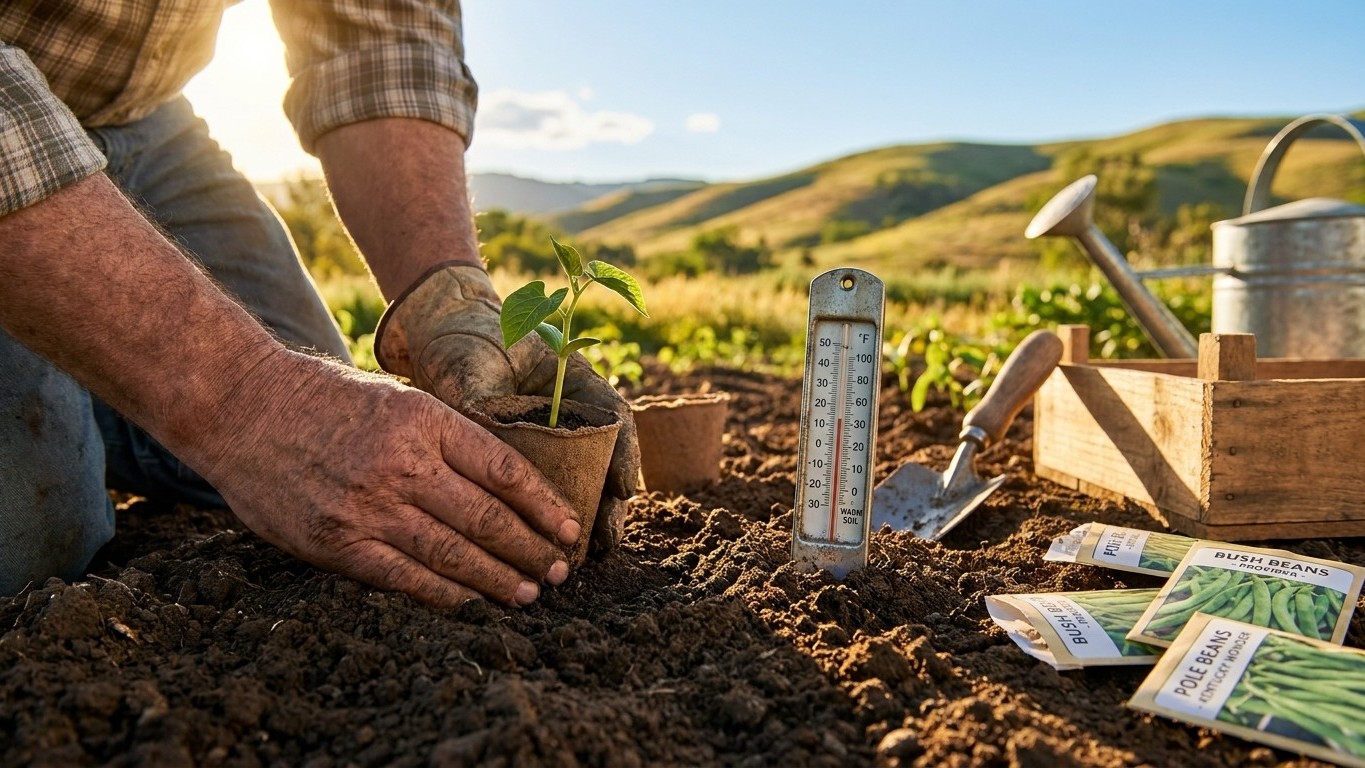

July in Idaho means working with soil that’s already warm and days that run long, not starting from scratch. In the Boise valley, NOAA’s 1991-2020 climate normals put the last spring frost between April 23 and May 7, and the first fall frost between October 7 and October 21. The real planting job now is succession-sowing warm-season crops and starting fall brassicas under cover, all while remembering that elevation and northern latitude can push those dates around by weeks.
What goes in the ground in July

Soil temperature, not the calendar, decides what survives a July planting in Idaho. By this point in the Boise valley the ground has been frost-free since sometime between April 23 and May 7, and it stays that way until October 7 to October 21 at the earliest. That’s a working season of roughly five months in the low valleys, but the USDA Plant Hardiness Zone Map puts Idaho anywhere from zone 3b to zone 7b, a range wide enough to cover a mild desert valley and a high mountain meadow inside the same state border. Anyone gardening above the valley floor should treat the Boise dates as generous, not guaranteed.
The math that actually matters is days-to-maturity against days-left-before-frost. A packet of bush beans that needs 55 days will still make it from a July sowing. A pumpkin that needs 100 days almost certainly will not, not from seed. That single calculation, more than any rule about planting by the month, decides what belongs in open ground right now.
Direct-sown crops that still make sense in July:
- Bush beans and pole beans, sown as a second or third succession
- Summer squash and cucumbers, for a fresh crop to replace ones slowing down from squash bugs or mildew
- Carrots, beets, and radishes, timed for a fall harvest once the heat breaks
- Lettuce and spinach, sown in the coolest part of a bed or under light shade cloth so hot soil doesn’t kill germination
Garlic and shallots don’t belong on that list. Both go into the ground in fall, not summer, and a July planting wastes a bulb that should be overwintering and sizing up. Peas are a related case: the spring pea crop is already finishing, but a fall pea crop sown now for a September harvest can still work in most valleys, provided the days-to-maturity math clears the October frost window.
What to start under cover
The seed-starting job in July isn’t spring tomatoes, it’s fall brassicas. Broccoli, cabbage, and cauliflower transplants need roughly four to six weeks indoors or in a shaded cold frame before they’re ready to go outside, and then another eight to ten weeks in the ground to reach harvest. Counted backward from a first fall frost of October 7 to October 21, that puts the seed-starting window in early-to-mid July, with transplanting by mid-to-late August, for a real shot at a fall harvest before the season shuts down.
Two mistakes show up every year around this timing. Start too early and the transplants sit in their cells waiting for outdoor heat to ease off, going rootbound and leggy before they get a fair start in soil. Start too late and the arithmetic simply fails: a cabbage needing eighteen total weeks between tray and bed has no business being sown in August if frost lands in the first three weeks of October.
| Crop | Weeks under cover before transplant | Why the timing matters |
|---|---|---|
| Broccoli | 4 to 5 weeks | Needs a cool finish; late sowing risks bolting or frost before heads form |
| Cabbage | 5 to 6 weeks | Long total time to maturity leaves little room for delay |
| Cauliflower | 5 to 6 weeks | Head formation stalls badly in heat, so hitting the cool finish matters even more than for cabbage |
Lettuce and other quick greens can also be started under light shade in cell trays now, mainly to sidestep the poor germination that comes from sowing directly into hot July soil.
What is ready to pick
July is when the spring’s patience starts paying off. Garlic and onions planted the previous fall or early spring are usually ready when their tops yellow and fall over, a sign that curing time, not more growing time, is what they need next. Spring-sown peas are finishing their run, and the last pods should come off before the vines turn to mush in the heat.
Bush beans, summer squash, and cucumbers hit their steady output this month, and all three punish neglect: a zucchini checked every third day turns into a baseball bat, and cucumbers left too long go bitter and seedy. Picking every day or two, even when the haul looks small, keeps the plants producing instead of setting seed and quitting.
Berries run on their own clock. Strawberries are usually wrapping up their main flush, while raspberries and currants, where planted, often peak. In the warmer valleys, early stone fruit like cherries and apricots can be coming off the tree, though timing varies enough by variety and site that no single date is worth pinning down here.
Tomatoes test patience the most. In most Idaho gardens the first ripe fruit doesn’t show up until late July at the earliest, often not until August. A slight give at the stem end and full color change, rather than size alone, is the more reliable sign that a tomato is actually ready.
The jobs that matter this month
Watering rhythm decides more outcomes in July than almost any other single job. Deep, infrequent watering, soaking the root zone and letting the top few inches dry between sessions, builds steadier plants than a light daily sprinkle ever does. Inconsistent watering on tomatoes and squash, wet one week and dry the next, is the direct cause of blossom end rot and split fruit, and there’s no fixing that damage once it shows.
Mulch is cheap insurance against everything July throws at a bed. A few inches of straw or shredded leaves over exposed soil cuts evaporation, holds down weed pressure, and moderates the soil temperature swings that stress shallow-rooted crops like lettuce and beans.
Staking and caging need to happen before, not after, a plant sprawls. Tomato branches loaded with green fruit snap easily once they’ve grown horizontal, and untangling a sprawled cucumber vine from its neighbors usually costs more damage than it saves.
Succession sowing keeps the harvest from arriving all at once and then stopping cold. A new short row of bush beans or lettuce every two to three weeks through July smooths out the gap that shows up in August once the first plantings are spent.
Pest pressure builds fast in summer heat. Aphids, squash bugs, and spider mites all reproduce quickly once temperatures climb, and checking leaf undersides weekly catches an infestation while it’s still small enough to hand-pick or hose off.
Garlic and onion harvest and curing belong on this month’s list too. Bulbs left in the ground too long after their tops fall over start to rot or resprout, and curing in a dry, airy spot for one to two weeks is what turns them into storage crops instead of compost.
What not to do in July
Planting a long-season crop from seed and expecting it to reach harvest before fall frost is the most common mistake this month. A winter squash needing 100 days, sown in mid-July, is racing a frost that can land as early as October 7 in the Boise valley, and earlier still at elevation. If the days-to-maturity number doesn’t clearly clear that window, the crop belongs in next spring’s transplant tray, not in July’s soil.
Letting soil dry out completely between waterings, then flooding it to compensate, causes more damage than steady underwatering ever would. Tomatoes and peppers respond to that swing with blossom end rot and cracked fruit, and no amendment reverses it once it’s happened.
Heavy nitrogen fertilizer applied to fruiting crops in July usually backfires. Tomatoes, squash, and beans that get a big nitrogen boost this late respond with lush leafy growth at the expense of flowers and fruit set, the opposite of what most gardeners want from a midsummer feeding.
Sowing cool-season greens directly into bare, hot soil without any shade is a reliable way to get poor or no germination. Lettuce and spinach seed can stall out entirely above certain soil temperatures, so a light shade cloth or a spot shaded by taller plants matters more than which variety was chosen.
Skipping the weekly pest check because nothing looks wrong yet is its own mistake. Aphid colonies and squash bug eggs are easiest to deal with in their first week, not their third.
Checking this against your own county
Every date and range in this article comes from a single weather station in the Boise valley. Idaho’s elevation swings, the difference between the Panhandle and the southern deserts, and local canyon or lake effects can move a real frost date by weeks in either direction from what’s published for Boise. A garden sitting at 6,000 feet in central Idaho is working with a season that looks nothing like the one described here.
The University of Idaho Extension tracks local frost data and planting calendars by county, and it’s the more reliable starting point for anyone gardening outside the Boise valley itself.
Common questions
Can tomatoes still be planted in Idaho in July?
Transplants can go in early in the month in most valley gardens, but fruit set will run late and light. A tomato transplanted in July is racing the same October frost window as everything else, so it works better as a backup plant than a main crop.
Is it too late to plant a vegetable garden in July in Idaho?
No, but the crop list narrows. Fast-maturing beans, squash, cucumbers, and greens still have time to produce before fall frost; anything needing more than about 70 to 80 days from seed is a gamble across most of the state.
When should fall garlic be planted instead of summer garlic?
Garlic goes into the ground in fall, not July, so it can establish roots before winter dormancy and size up the following summer. A July garlic planting wastes the bulb.
How much does elevation change Idaho’s growing season?
Enough to matter a great deal. The frost dates published for the Boise valley describe a low-elevation, relatively mild season; gardens at higher elevation across most of the state face a shorter frost-free window on both ends, which is why checking a local extension calendar matters more than following one statewide date.