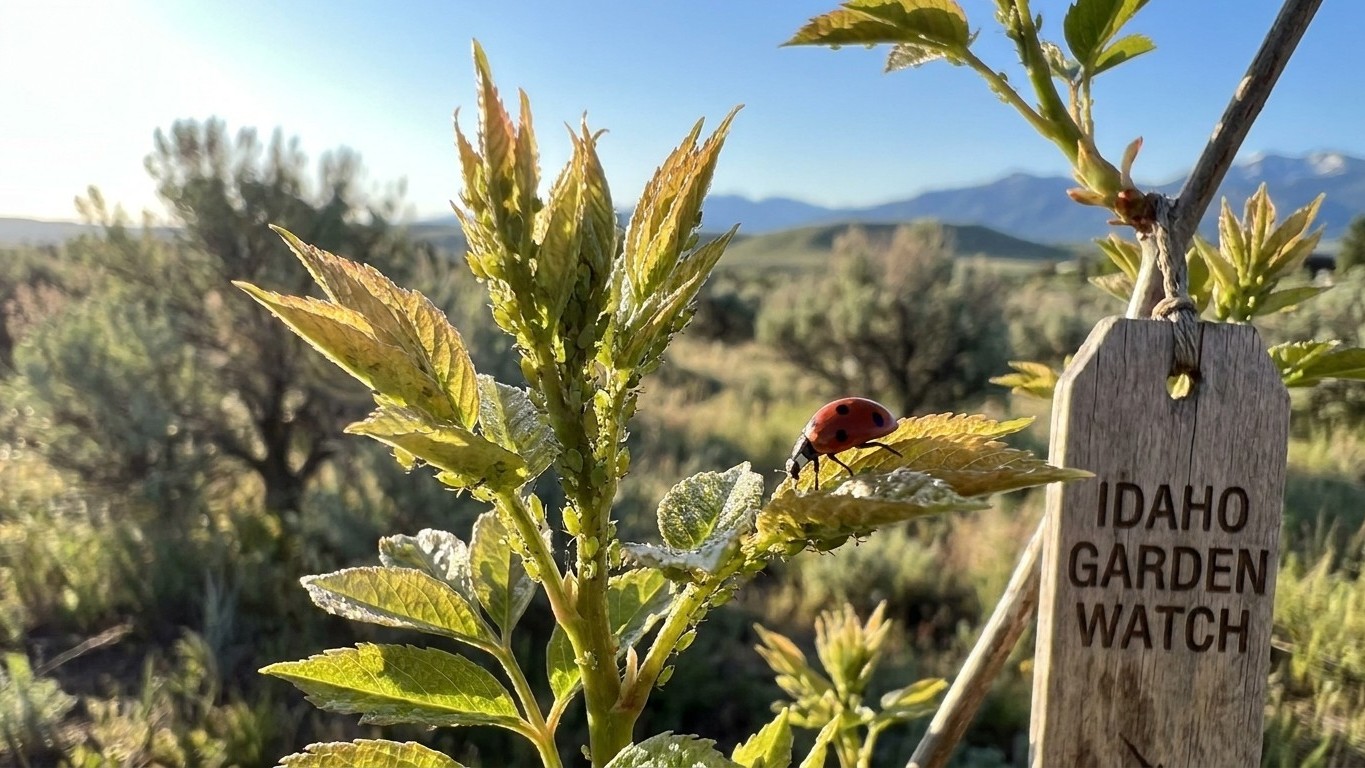

Aphids start showing up in Idaho gardens and fields as soon as daytime temperatures hold steady in the 50s, which usually means late April in the Treasure Valley and closer to mid-May in the Panhandle or the higher elevations around Idaho Falls. They don’t wait for warm weather to feel comfortable, they wait for it to feel consistent. One warm week followed by a frost won’t trigger the population explosion. Two or three weeks of stable mild temps will.
What stops them isn’t one single product or trick. It’s a combination of timing, plant health, and letting natural predators do a chunk of the work before you ever reach for a spray. Idaho’s dry climate and wide temperature swings between day and night actually work in a homeowner’s favor here, compared to the humid Southeast where aphid populations can spiral out of control faster.
Why Idaho’s Climate Shapes the Aphid Calendar

Idaho isn’t one climate zone, it’s at least three. The Panhandle gets more moisture and a longer cool spring. The Snake River Plain, where most of the population lives, runs hot and dry through summer with irrigation-fed gardens and farms. Eastern Idaho’s higher elevation means a shorter window overall, but that window can still get intense aphid pressure because the growing season is compressed and plants push out tender new growth fast.
Aphids overwinter as eggs laid on woody hosts, things like rose bushes, fruit trees, and certain shrubs. Those eggs hatch into wingless females once temperatures warm up, and here’s the part that catches people off guard: those females don’t need to mate to reproduce. They give birth to live young, already pregnant with the next generation. Under good conditions, a single aphid can be a grandmother within a week. That’s how a plant can look fine on Monday and be coated by Friday.
By July, when temperatures in Boise or Twin Falls routinely hit the 90s, aphid reproduction actually slows down. Extreme heat isn’t great for them either. This creates a two-peak pattern that a lot of Idaho gardeners notice without quite naming it: a spring surge from late April through June, a summer lull, and then a second smaller wave in September when temperatures moderate again before frost.
Which Aphids Actually Matter in Idaho
Not all aphids are equal here, and the state’s identity as a major agricultural producer shapes which species get the most attention from researchers and extension offices.
The Ones Hitting Farms and Field Crops
The Russian wheat aphid is a serious concern for Idaho’s grain growers. It doesn’t just feed on wheat, it injects a toxin while feeding that causes the leaves to curl and streak white or purple, which reduces yield even when the visible aphid numbers look manageable. Idaho’s wheat belt, especially in the southern and eastern parts of the state, has dealt with periodic outbreaks tied to mild winters that let more of the pest survive.
The green peach aphid is the other major one, and it’s a bigger deal than its name suggests. It feeds on potatoes, one of Idaho’s defining crops, and it’s the primary vector for potato virus Y, a disease that can hurt seed potato certification. For an industry where Idaho produces roughly a third of the nation’s potatoes in a typical year, an aphid that spreads plant viruses gets serious attention from growers and researchers alike.
The Ones Hitting Home Gardens and Landscaping
For homeowners, the potato aphid and the rose aphid are the most familiar problems, showing up on tomatoes, roses, and a wide range of ornamentals. They’re usually green or pink, soft-bodied, and cluster on new growth and flower buds. The green peach aphid also shows up in home vegetable gardens, not just commercial potato fields, particularly on peppers and brassicas like broccoli and kale.
What Actually Stops Aphids in Idaho Conditions
Control works best as a sequence, not a single action. Skipping straight to a chemical spray without trying the earlier steps usually means killing off the predators that would have solved the problem for free.
Natural Predators Do More Than People Expect
Ladybugs get all the attention, but lacewing larvae and hoverfly larvae are more effective aphid predators because they’re less mobile and stay put in a colony, eating steadily rather than flying off. Idaho’s dry summers actually support healthy populations of these predators as long as pesticide use is limited. A single lacewing larva can eat several hundred aphids before it pupates into an adult.
Planting flowering plants with small, shallow blooms, things like dill, yarrow, and alyssum, near vegetable beds gives adult hoverflies and parasitic wasps a nectar source, which keeps them in the area to lay eggs near aphid colonies. This is a slower fix than spraying, but it’s also the one that keeps working season after season without any ongoing cost.
Water and a Garden Hose Solve More Than People Realize
A strong blast of water from a hose knocks aphids off plants, and most of them don’t find their way back. Their legs aren’t built for climbing back up a stem from the ground, especially in Idaho’s dry soil where they dehydrate quickly once dislodged. This works best in the early morning, done every few days for a week or two during the spring surge, and it costs nothing.
Insecticidal Soap and Horticultural Oil, Used Correctly
These products work by contact, meaning they only kill the aphids they physically touch, so thorough coverage of leaf undersides matters more than the product itself. They break down fast in sunlight and don’t leave lasting residue, which is part of why they’re considered lower-risk options for home use. Applying them in the evening or early morning, when Idaho’s daytime heat isn’t at its peak, prevents leaf burn on sensitive plants like squash.
Neem oil works on a similar contact basis but also has some effect on aphid feeding behavior and molting. It needs reapplication every week or so during an active infestation, and it shouldn’t be sprayed on plants in full sun during a Boise summer afternoon, since oil on leaves in direct heat can scorch foliage.
When Broader Pesticides Make Sense
For row crop growers dealing with Russian wheat aphid or green peach aphid at levels that threaten yield, systemic insecticides applied through seed treatment or foliar spray are standard tools, timed according to scouting thresholds rather than a fixed calendar date. This is a different scale of decision than a backyard tomato plant, and it typically involves consulting current guidance from agricultural extension services, since thresholds and approved products shift from year to year. The EPA’s integrated pest management framework is the baseline most extension recommendations build from, combining monitoring, prevention, and targeted treatment rather than routine spraying.
Preventing the Problem Before It Starts
Over-fertilizing with nitrogen is one of the most common mistakes Idaho gardeners make without realizing it’s feeding the aphid problem directly. Nitrogen-heavy growth produces soft, sappy new stems and leaves, which is exactly the tissue aphids prefer to feed on. Cutting back on high-nitrogen fertilizer, especially on roses and leafy vegetables, reduces the amount of tender growth available and makes plants less attractive to a new colony in the first place.
Ant control matters more than most people expect, since certain ant species farm aphids for the honeydew they excrete, actively protecting them from ladybugs and other predators. If ants are visibly trailing up and down a plant stem with an aphid colony present, dealing with the ant trail (often just cinnamon or a sticky barrier around the stem base) removes their protection and lets natural predators move back in.
Checking new nursery plants before bringing them home is worth the extra minute. Aphids and their eggs travel easily on purchased plants, and a colony that arrives already established on a rose bush or pepper start has a head start that’s much harder to catch early.
Idaho State University and University of Idaho Extension both track pest pressure trends by region each season, and local county extension offices are usually the fastest way to confirm whether a particular outbreak is part of a wider regional pattern or an isolated garden problem tied to something specific, like overwatering or a sheltered microclimate against a south-facing wall.