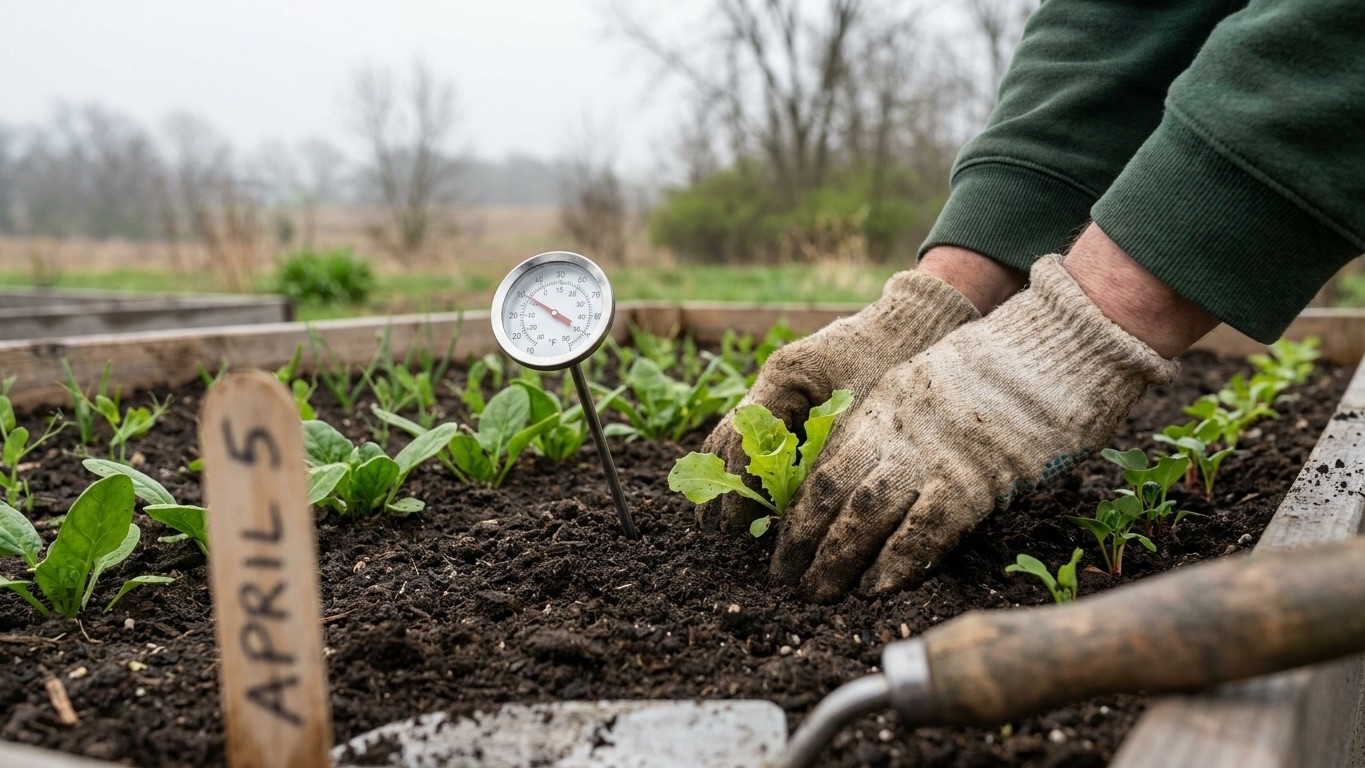

Early April in Illinois is a gamble month: cold-hardy crops can go into the ground now, but the state’s last spring frost typically falls between April 11 and April 22, so tender vegetables still need to wait. The safe move is to split the month in two and plant according to what each half actually tolerates, not according to how warm the air feels.
What goes in the ground in April

Soil temperature, not the calendar, decides what survives this month. A thermometer pushed four inches into the bed tells you more than any date on a seed packet. Cold-hardy crops germinate and grow in soil in the low 40s Fahrenheit, while tomatoes, peppers, beans and squash need soil closer to 60 degrees and zero frost risk, which in Illinois usually does not arrive until well after the reference station’s last-frost window closes.
Safe to plant now
Peas, spinach, lettuce, radishes, carrots, beets and onion sets tolerate a light frost and can go into workable ground through the first half of April. Seed potatoes go in once soil can be worked without turning to mud in your hand. Asparagus crowns and rhubarb divisions, if you’re establishing new beds, are dormant plantings and go in early. Hardened-off transplants of broccoli, cabbage and kale can move outdoors under a floating row cover for insurance against a late cold snap.
What to hold off on
Tomato, pepper, cucumber, melon and squash transplants, along with direct-sown beans and corn, are a gamble anywhere near the frost window listed above. A soil temperature in the 50s might look fine on the surface but still stalls or kills these crops if a freeze follows a warm spell, which is a common Illinois pattern. Wait until the frost risk has genuinely passed in your county, not just at the reference station.
| Frost tolerance | Examples | April timing |
|---|---|---|
| Hardy | Peas, spinach, onions, garlic | Early April, as soon as soil is workable |
| Semi-hardy | Lettuce, kale, broccoli transplants | Mid-April, with row cover on cold nights |
| Tender | Tomatoes, peppers, beans, squash | Wait until after the local last frost |
What to start under cover
The math for indoor starts runs backward from your expected last frost, not forward from the first day of the month. Melons, cucumbers and summer squash are typically started indoors three to four weeks before they go outside, which puts an April start right on schedule for a transplant date in mid to late May, safely past the reference frost window of April 11 to 22 in most Illinois gardens. If you haven’t started tomatoes and peppers yet, an April sowing still works for a slightly later harvest, since those seedlings need six to eight weeks under cover before they can handle outdoor conditions.
The two ways this goes wrong
Start too early and you end up with leggy, rootbound seedlings straining against a small pot weeks before it’s safe to transplant them, a problem no amount of fertilizer fixes. Start too late and the plant never has time to size up before the growing season runs out, especially for long-season crops like melons and eggplant. Count backward from your realistic transplant date, add the crop’s stated weeks-to-transplant, and that’s your sowing day, no earlier and no later.
A bright windowsill rarely provides enough light for stocky seedlings; a simple shop light kept a few inches above the leaves does more for stem strength than any amount of fertilizer. Bottom heat helps peppers and eggplant germinate faster, since both are notoriously slow and erratic in cool soil or cool trays.
What is ready to pick
Outdoor harvests are thin in April, but they’re not zero, and what does come out of the garden matters more for morale than for volume. Overwintered kale and spinach, if they made it through winter under mulch or row cover, put on fast new growth as soil warms and are usually the first real harvest of the season. Rhubarb stalks thick enough to pull start showing up toward the end of the month in established beds, and the first thin asparagus spears can appear where the crowns are several years old.
Checking what you stored over winter
Stored potatoes, onions and winter squash need a hard look this month. Potatoes that have started sprouting eyes in storage are still edible but should be used first, before the sprouts pull too much energy from the tuber. Onions gone soft at the neck or squash with a sunken, damp spot are past saving and belong in the compost, not back on the shelf. Sorting the stored crop now, rather than waiting for it to fail on its own, keeps one rotten squash from spreading trouble to the rest of the bin.
Cold-frame greens, if you’ve kept one running, are usually at their best in April before the frame heats up too much on sunny days. Crack the lid on warm afternoons so the plants don’t cook while you’re at it.
The jobs that matter this month
April rewards the gardener who gets ahead of the season instead of chasing it. Soil preparation tops the list: working compost or aged manure into beds now, while they’re still workable but not waterlogged, sets up everything planted later. A soil test taken this month gives results back in time to correct pH or nutrient gaps before the main planting rush in May.
Structure before the plants need it
Staking and trellising for peas and early brassicas should go in before the plants sprawl, not after, since driving a stake through an established root system does real damage. Mulch that was pulled back in late winter to let soil warm can go back down once the ground has actually warmed, holding moisture as rain becomes less reliable. Succession sowing of radishes and lettuce every couple of weeks starting now, rather than one big sowing, spreads the harvest out instead of dumping it all at once.
Pest scouting starts early too. Slugs are active as soon as nights stay above freezing, and flea beetles show up on brassica seedlings almost as soon as the first true leaves appear. A quick evening walk with a flashlight catches both before they do real damage. Tool maintenance, if it slipped over winter, needs to happen now: a dull hoe or a rusted pruner slows down every job that follows.
What not to do in April
The classic April mistake in Illinois is trusting the air temperature instead of the soil. A run of 70-degree afternoons convinces gardeners the season has turned, and tomatoes go into the ground while the last-frost window is still open at the reference station through April 22. A single cold night after that undoes weeks of head start, and the plant either dies outright or sits stunted for a month recovering.
A related error is pulling row cover or mulch off hardened beds too soon after a mild stretch. Frost doesn’t need a forecast to show up; a clear, still night after a warm day is exactly the setup that produces a surprise freeze. Keep protection within reach even after the weather turns friendly.
Nitrogen timing trips people up too. Heavy nitrogen applied to brassicas or greens too early in cool soil mostly feeds soil microbes rather than the plant, and it can push leafy growth at the expense of root development in crops like carrots and beets, where a fat root is the entire point. Feed lightly and side-dress again once plants are actively growing, rather than front-loading fertilizer at planting.
Checking this against your own county
A statewide month is a starting point, not an instruction. Illinois spans USDA hardiness zones 5a to 7b, and the difference between the northern counties near the Wisconsin border and the southern tip near Kentucky can shift a safe planting date by several weeks in either direction. Elevation and local microclimates move the window further still, and the reference-station frost dates above will run later in most home gardens than at the airport station where they were measured.
Check your county’s numbers directly through the University of Illinois Extension, which keeps region-specific planting guidance and can flag conditions the statewide averages miss.
Common questions
Is it too early to plant tomatoes in Illinois in April?
For most of the state, yes. The last spring frost typically falls between April 11 and April 22 at the reference station, and home gardens often run later than that. Tomato transplants need soil to be reliably frost-free, which usually means waiting until May.
Can I plant peas and lettuce in early April?
Yes. Both tolerate a light frost and grow well in cool soil, making them among the safest crops for early April planting across Illinois.
What if my area still gets frost after April 22?
That’s common, especially away from the reference station and at higher elevations. Keep row cover on hand through the end of the month and check your local extension office for a county-specific frost date.
Should I fertilize my garden heavily in April?
No. Light feeding at planting followed by a second application once plants are actively growing works better than a heavy dose upfront, which mostly benefits soil microbes rather than young roots.