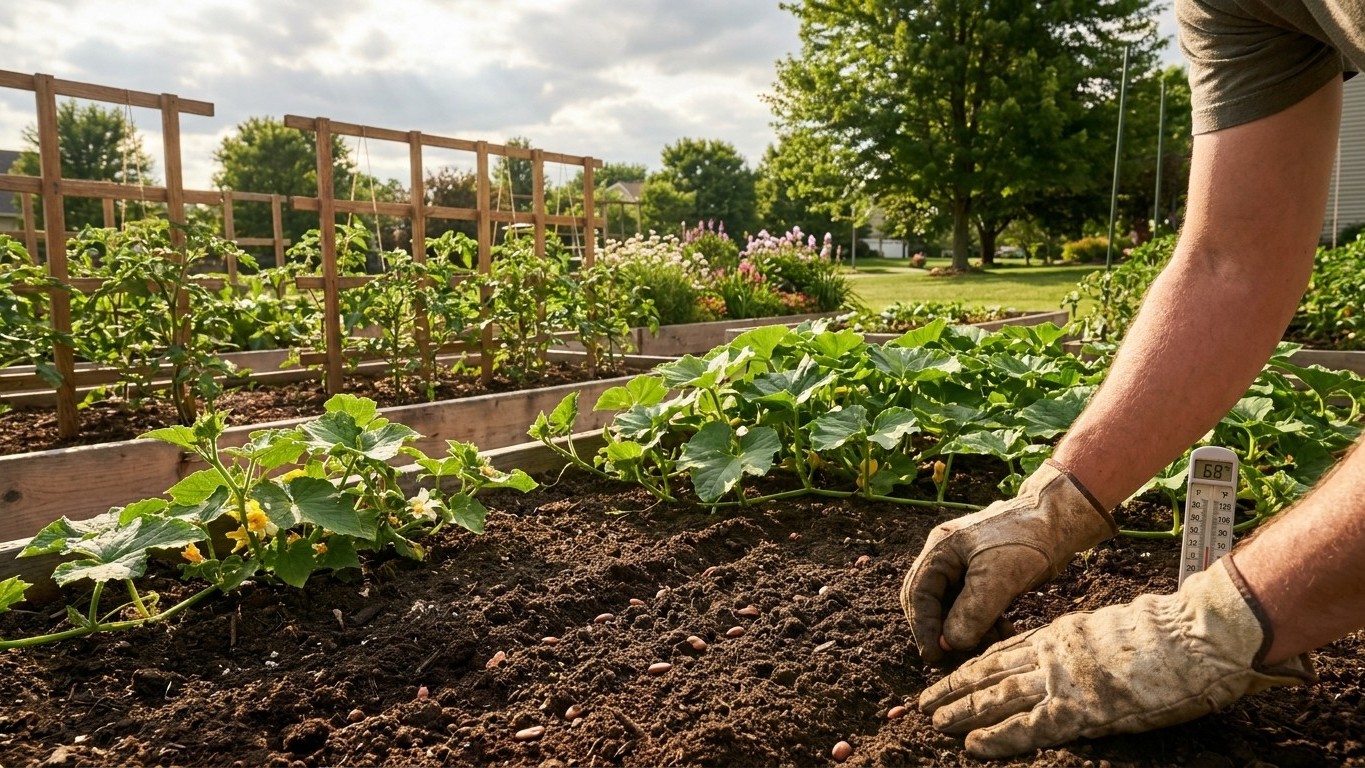

June is the month Illinois gardens hit full stride. By now the state’s last frost window (April 11 to April 22 at the Chicago reference station) is well behind you, soil has warmed enough for heat-loving crops, and the growing clock is ticking toward the first fall frost, October 24 to November 3. Direct-sow beans, squash, cucumbers, and melons; get tomatoes and peppers in if you haven’t already; and start thinking about succession planting before the month runs out.
What goes in the ground in June

Soil temperature, not the date on the wall, decides what survives in the ground this month. By early June, garden soil across most of Illinois has typically climbed into the mid-60s to low-70s Fahrenheit, which is exactly the range warm-season crops need to germinate without rotting. That’s the real reason gardeners wait until now for beans, squash, and melons rather than rushing them in during a warm spell in April.
Bush beans, pole beans, sweet corn, cucumbers, summer squash, winter squash, and melons can all go straight into the ground as seed through most of June. Sunflowers and okra belong on that list too, especially in the southern third of the state where the growing season runs longer. If you haven’t transplanted tomatoes, peppers, eggplant, or basil yet, early June is still workable, though later transplants will lag behind ones set out in May.
Early June versus late June
The window narrows as the month goes on. Early June still supports slower warm-season crops like winter squash or pumpkins that need a full season to mature before the fall frost. By late June, lean toward faster-maturing varieties and succession plantings of beans, bush squash, and quick greens rather than anything that needs 90-plus days.
Illinois spans USDA Hardiness Zones 5a to 7b, and that range matters here: a gardener near the Wisconsin border is working with a shorter season than one near the Ohio River. Treat the frost dates above as a reference-city figure from the Chicago station, not a statewide guarantee, and check your own county’s typical frost timing before committing to a long-season crop this late.
What to start under cover
June isn’t just about what goes outside, it’s when many gardeners start seeds indoors or in trays for a fall harvest. The trick is counting backward from the first fall frost window (October 24 to November 3) rather than picking a date out of habit.
Broccoli, cabbage, and cauliflower for fall harvest typically need 45 to 60 days from transplant to maturity, plus another four to six weeks as seedlings before they’re ready to go into the garden. Working backward from late October, that puts seed-starting for fall brassicas squarely in early to mid-June, with transplanting out in mid to late July once the worst of summer heat starts easing.
There are two ways this goes wrong. Start too early and you end up babysitting rootbound, leggy seedlings for weeks longer than necessary, waiting for outdoor conditions to cool enough for transplanting. Start too late and the plants never reach maturity before frost shuts the season down. Neither mistake is fatal on its own, but both cost you weeks of harvest you can’t get back once the calendar catches up.
If starting fall brassicas indoors under lights isn’t practical, a shaded cold frame or a spot under taller companion plants works as a stand-in nursery bed until temperatures drop enough to move seedlings to their final spot.
What is ready to pick
June is when the spring planting finally pays off. Peas sown in early spring hit their peak here, and the test is simple: pods should feel plump and full when you run a finger along them, not flat or wrinkled. Wait too long and the peas inside turn starchy.
Strawberries usually reach full production in June, and ripeness means solid red color all the way to the cap, not just on the shoulders. Lettuce and spinach sown earlier in spring are still harvestable early in the month, but heat pushes both toward bolting fast, so pick regularly and don’t let a hot stretch catch you off guard; once lettuce sends up a flower stalk, the leaves turn bitter within days.
Garlic scapes, the curling seed stalks that garlic sends up before bulbing, are ready to snip in early to mid June, and cutting them actually redirects the plant’s energy back into bulb size. Herbs like chives, dill, and cilantro are usually productive by now too, though cilantro bolts as fast as lettuce once temperatures climb.
By late June, the first zucchini and summer squash from early plantings may already be sizeable enough to pick, sometimes overnight it feels like. Check daily once squash plants start flowering; a zucchini left two extra days can double in size and turn tough.
The jobs that matter this month
Mulching earns its keep in June more than any other month. As temperatures climb, bare soil loses moisture fast, and a 2 to 3 inch layer of straw, shredded leaves, or wood chips around vegetable beds slows evaporation and keeps weed pressure down at the exact moment both problems accelerate.
Staking and caging need to happen now, before plants sprawl past the point where support is easy to install. Tomatoes, peas, and pole beans all grow fast enough in June that a cage put in a week late means fighting tangled vines to get it in place at all.
Watering rhythm matters more than watering frequency. Vegetable gardens generally need the equivalent of 1 to 1.5 inches of water per week, delivered in one or two deep soakings rather than a light sprinkle every day. Shallow, frequent watering trains roots to stay near the surface, which makes plants more vulnerable the moment a hot, dry stretch hits.
Succession sowing keeps the harvest coming instead of arriving all at once. Reseed bush beans, summer squash, and quick greens every two to three weeks through the month so you’re not staring at fifteen zucchini in one week and none the next.
Pest scouting is worth five minutes every few days in June. Squash vine borer moths lay eggs at the base of squash and pumpkin stems starting this month, and catching the problem early, before larvae bore into the stem, is far easier than treating it after the damage is done. Japanese beetles and Colorado potato beetles also tend to show up in numbers by mid to late June, so check the undersides of leaves regularly rather than waiting for visible damage.
Thin any direct-sown carrots, beets, or lettuce that came up too thick. Crowded roots stay small and misshapen no matter how good the soil is underneath them.
What not to do in June
The most common June mistake is trusting warm air over cold soil. A run of 80-degree days doesn’t mean the ground six inches down has caught up, especially after a wet spring. If soil still feels cold and heavy when you dig a test hole, hold off on melons and squash a few more days rather than planting into conditions that invite seed rot.
Overwatering shallow and often is another habit that backfires. It feels productive to water every evening, but it actually weakens root systems and can encourage fungal issues in humid Illinois summers. Deep, infrequent watering builds more resilient plants than a daily light spray ever will.
Piling nitrogen-heavy fertilizer on tomatoes and peppers once they start flowering is a classic error. Too much nitrogen at that stage pushes lush green foliage at the expense of fruit set, leaving you with a bushy plant and a disappointing harvest. Switch to a lower-nitrogen, higher-phosphorus feed once flowering begins.
Letting mulch pile directly against plant stems invites rot and gives pests a cozy hiding spot right at the base of the plant. Keep mulch pulled back an inch or two from stems even while covering the surrounding soil generously.
Skipping the hardening-off step for transplants started indoors is another shortcut that costs more than it saves. Seedlings moved straight from a controlled indoor setup into full June sun and wind can scorch or wilt within a day; a few days of gradual outdoor exposure first makes the difference between a transplant that stalls and one that takes off.
Checking this against your own county
A statewide planting month is a starting point, not an instruction written for your specific yard. Illinois covers USDA Hardiness Zones 5a through 7b, and the difference between the Chicago area, lake-effect pockets along Lake Michigan, and the warmer southern tip near the Ohio River can shift frost timing and planting windows by two to three weeks in either direction. Elevation and local microclimates push those numbers around even further.
Before locking in a planting date for a long-season crop, check conditions specific to your county through the University of Illinois Extension, which maintains local planting guidance and can point you toward frost data closer to your actual garden than a single airport station.
Common questions
Is it too late to plant tomatoes in June in Illinois?
No. Early June transplants still have a full season ahead before the first fall frost window in late October to early November. They’ll simply mature a couple of weeks behind tomatoes set out in May.
Can I still direct sow corn in June?
Yes, sweet corn seeded through most of June still has time to mature before frost across the majority of the state, particularly in central and southern Illinois where the growing season runs longer.
What vegetables can I still plant in late June in Illinois?
Fast-maturing crops work best this late: bush beans, summer squash, cucumbers, and quick greens for a second harvest. Save long-season crops like pumpkins or winter squash for earlier in the month.
When should I start fall crops in Illinois?
For fall broccoli, cabbage, or cauliflower, start seeds indoors in early to mid June, then transplant outside in mid to late July once summer heat starts to ease, giving them enough time to mature before frost.