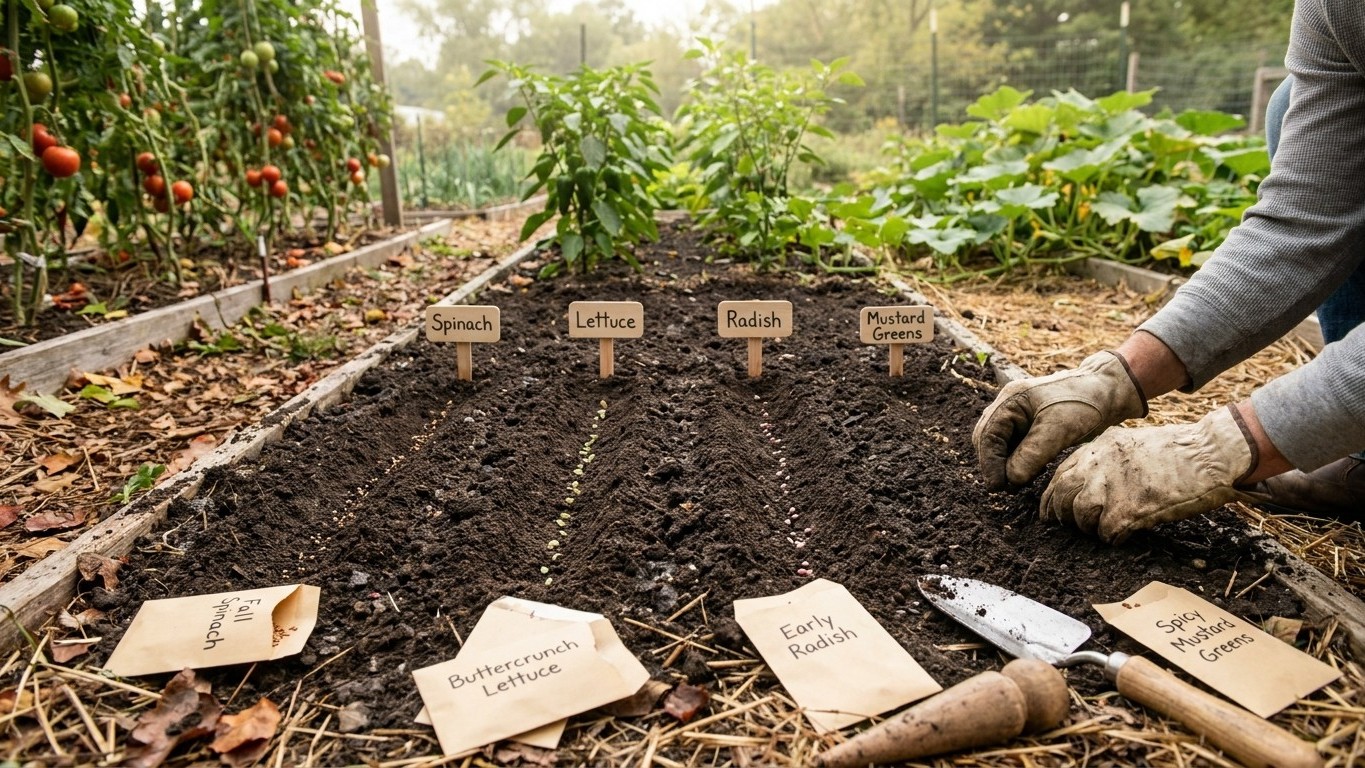

September in Indiana rewards a gardener who moves fast on quick crops and starts thinking ahead on slow ones. Direct-sow spinach, lettuce, radishes, turnips, and mustard greens for a fall harvest, start kale and lettuce transplants under cover, and keep picking tomatoes, peppers, sweet corn, and the first ripening apples and winter squash. The first fall frost lands October 21 to October 30 in the Indianapolis area, and that closing window, not the calendar, is what decides which of these still has time to finish.
What goes in the ground in September

The math starts with the frost window. NOAA’s 1991-2020 Climate Normals put the first fall freeze at Indianapolis between October 21 and October 30, based on 32F freeze probability data from station USW00093819. Count back from the early end of that range, October 21, and a crop sown in the first week of September has roughly 45 to 50 days to reach the table. That is tight for anything but the fastest growers, and it gets tighter with every week the calendar slides forward.
Radishes fit easily, most varieties finish in 25 to 30 days. Arugula, mustard greens, and baby spinach for cutting also clear the bar with room to spare. Full-size lettuce and turnips are closer calls once sown after mid-month; they can still make it, but a light frost cover should be ready. Peas sown for a fall crop need to go in during the first half of the month at the latest, since a 60-day pea variety sown after that risks running out of warm days before it runs out of frost-free ones.
Garlic is the exception worth flagging early: the cloves themselves generally wait for cooler, more settled soil later in fall across Indiana. September’s job on that bed is prep, not planting, working in compost and marking the row so the ground is ready when the time comes.
| Crop | Method | Typical days to maturity | September fit |
|---|---|---|---|
| Radish | Direct sow | 25-30 | Safe all month |
| Spinach (baby leaf) | Direct sow | 30-40 | Safe through mid-month |
| Lettuce (head) | Direct sow or transplant | 45-55 | Best in first two weeks |
| Turnip | Direct sow | 40-50 | Best in first two weeks |
| Fall pea | Direct sow | 55-65 | Sow by early September |
Because these dates come from a single reference station, treat them as a starting line rather than a rule. A gardener in southern Indiana, where fall arrives later, has extra margin on every one of these crops; someone farther north or at higher elevation has less.
What to start under cover
Working backward from that October 21-30 window changes what makes sense to sow indoors this month. A lettuce transplant needs three to four weeks to reach a size worth setting out, plus another four to five weeks in the ground to head up. Add that together and any lettuce started indoors after the first week or so of September is racing a closing door. Kale and collard transplants have a bit more slack since they tolerate light frost and can be harvested as baby greens even if they never reach full size before the cold sets in.
The two ways this goes wrong are almost mirror images. Start too early, before there is a real destination bed free of summer crops, and the seedlings sit too long in small cells, turn leggy, and stall once transplanted, a plant that spent three extra weeks rootbound rarely catches up. Start too late, and the arithmetic simply runs out: a transplant that needed seven weeks total from seed to harvest but only got five weeks of frost-free ground ends the season unfinished, whatever its size.
Cold frames and low tunnels change this math for the better. Crops started under cover in September and kept there through the transition into fall can add two to three extra weeks of growing time beyond what open ground allows, which is often the difference between a lettuce that heads up and one that doesn’t. For anyone without a frame, a simple floating row cover pulled over a bed on the nights temperatures threaten the 30s buys some of that same margin without the structure.
What is ready to pick
September is a harvest month first and a planting month second. Tomatoes and peppers are typically still producing early in the month, though the pace slows as nights cool. Sweet corn wraps up its run. Summer squash and cucumbers keep coming as long as the vines stay healthy, though powdery mildew often starts thinning them out by now.
Winter squash and pumpkins are the crops to watch closely. The signal to pick is the skin: press a thumbnail into it, and if it resists rather than punctures easily, the fruit is ready to cure. Leave the stem intact, that stub is what keeps rot from working its way in during storage. Apples and pears in home orchards are ripening through the month as well, with the exact timing depending heavily on variety.
- Onions: tops have flopped over and dried, time to lift and cure in a warm, airy spot
- Potatoes: foliage has died back, dig on a dry day and let skins set before storing
- Winter squash: skin resists a thumbnail, stem left on, curing in a warm room for one to two weeks
Anything already in storage from earlier crops deserves a check this month too. A single soft potato or onion with a sour smell can spread rot through a whole bin if it sits unnoticed, so a quick sort now saves the rest.
The jobs that matter this month
Succession sowing is the job with the shortest fuse. Every week that passes without a fresh row of radishes, spinach, or salad greens going in is a week of harvest that won’t happen before frost closes the door, so this is the last real month for it in most of the state.
Soil, mulch, and water
Beds that finish producing this month should not sit bare. A cover crop of crimson clover or winter rye, or even a thick layer of mulch, protects soil structure through fall rain and keeps weeds from getting a head start. Watering rhythm should also shift: as days shorten and heat breaks, most beds need less frequent watering than they did in midsummer, and overwatering cooling soil invites root rot in the crops still finishing up.
Pests, staking, and cleanup
Late-season pests like squash vine borer and cabbage worms are still active into September, and a quick scouting pass through brassicas and squash beds catches problems while they’re still small. Fall brassicas planted for a late harvest benefit from staking or a light cage before their outer leaves get heavy enough to flop into the mud. Pulling spent tomato and squash vines promptly, rather than letting them break down in place, denies overwintering pests and diseases a head start on next season.
None of this is busywork. A bed left unmulched through fall rain loses structure that takes a full season to rebuild, and a cover crop sown two weeks late may not establish enough growth to survive winter at all.
What not to do in September
The most common mistake this month is trusting a warm afternoon over the soil thermometer. A stretch of 80-degree days can make it feel like there’s time for one more warm-season planting, but starting tomatoes, peppers, or squash from seed now guarantees they won’t mature before the first freeze arrives sometime in that October 21-30 window. If a warm-season crop hasn’t already set fruit by September, it isn’t going to.
Uncovering cold frames or removing row cover too early after a mild stretch is the second trap. NOAA’s own data carries roughly a 10% chance of a freeze event outside the published date range, which means a frame opened on the strength of one warm week can still catch a hard frost the following night. Keep the cover on hand even when the forecast looks friendly.
Feeding nitrogen to trees, shrubs, or perennials this month is a mistake that shows up later, not now. Nitrogen pushes soft new growth, and that growth has no time to harden off before frost, leaving the plant with tender tissue exactly when it can least afford it. If woody plants need feeding, that’s a spring job, not a fall one. Squash and pumpkins left in the field past the first light frost also lose storage life fast, since a nipped stem or skin invites rot within days even if the fruit looks fine at first glance.
Checking this against your own county
Every date and window here is anchored to Indianapolis, and Indiana is a long state. Southern counties along the Ohio River typically see frost arrive later in fall and leave earlier in spring than the Indianapolis average, sometimes by two weeks or more, while areas near Lake Michigan and the higher ground of the north can run the opposite direction, with lake effect snow and cold settling in sooner. Elevation shifts things further still, even within a single county.
The USDA Plant Hardiness Zone Map places Indiana across zones 5b to 7a, and that range alone signals how much this varies from one end of the state to the other. For a planting calendar tuned to a specific county, Purdue’s Purdue Extension service is the next stop.
Common questions
Is it too late to plant lettuce in Indiana in September?
Not if it goes in during the first half of the month. Lettuce sown after that is racing the October 21-30 frost window and may need a row cover to finish.
Can garlic be planted in September in Indiana?
September is better spent prepping the garlic bed with compost than planting cloves. Garlic in Indiana generally goes in once the soil has cooled further into fall.
What vegetables are still producing in an Indiana garden in September?
Tomatoes, peppers, summer squash, and cucumbers often keep going early in the month, while sweet corn, winter squash, onions, and potatoes are typically ready to harvest and cure.
Should row covers go on Indiana gardens in September?
Keep them on hand rather than deployed constantly. With roughly a 10% chance of a freeze event outside the published frost date range, a cover ready to pull over tender crops on a cold-forecast night is cheap insurance.
Gardeners who plant by the Moon can check the September 2027 moon planting calendar, a tradition rather than a proven method.