
April in Iowa is the hinge month: cold-hardy crops go into the ground while warm-season plants stay indoors until the frost risk clears. The state’s last spring frost falls between April 12 and April 24 at the reference station, and county-level records run about four days later, so treat late April as the realistic target for most yards rather than the calendar’s early dates.
What goes in the ground in April

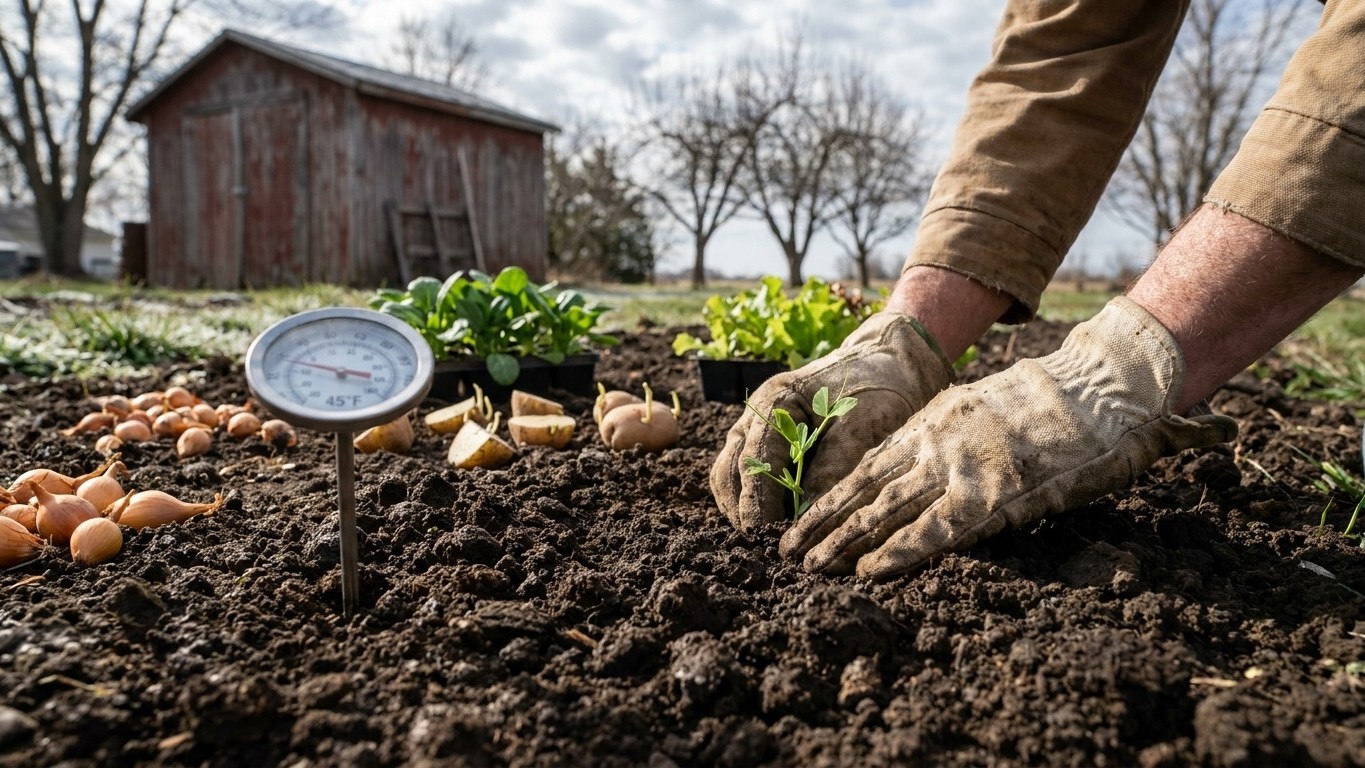
Soil temperature, not the date on the wall, decides what survives outdoors this month. A thermometer pushed 4 inches into the bed tells you more than any planting chart. Iowa’s last freeze window runs April 12 to April 24 at the reference airport station, and Iowa State University Extension’s county-level data pushes that roughly four days later, which means many counties are still inside frost range for the first three weeks of the month.
That makes April a month for the cold-tolerant crops, not the tender ones. Peas go into workable soil as soon as it crumbles rather than clumps, and they shrug off a light frost. Spinach, lettuce, and other leafy greens can go in directly once the ground has thawed and drained, and they hold up fine under a stray freeze. Onion sets and transplants, along with shallots, are safe bets for early to mid-April planting since they tolerate near-freezing nights without damage.
Potatoes are a common April crop in Iowa gardens, planted once the soil is workable, though a hard freeze after sprouting can nip the tops (the plant usually recovers). Carrots, beets, and radishes can be direct-sown by mid-month in most counties. Cole crops such as cabbage and broccoli, if started earlier indoors, can move outside as hardened-off transplants toward the back half of the month, ideally with a floating row cover on hand for cold nights.
What does not belong in the ground yet: tomatoes, peppers, squash, beans, cucumbers, and anything else that came from a warm climate originally. Soil that feels warm to bare feet in the afternoon sun can still sit in the 40s a few inches down, and that is cold enough to stall or rot the roots of a warm-season seedling. Wait for the frost window to close and for the soil itself to warm before those go outside.
What to start under cover
Seed packets often give a start date, but the honest way to plan is to count backward from the local frost window rather than from a fixed calendar day. With the last freeze landing anywhere from April 12 to late April (and later still once you add the extension’s four-day adjustment), a gardener aiming to set out tomato transplants in the first half of May needs to start those seeds indoors roughly six to eight weeks earlier, which lands squarely in March for most of the state. If those seeds have not gone in yet, there is still a workable window in early April for a slightly later transplant date.
Peppers and eggplant need more lead time, closer to eight to ten weeks before the expected outdoor planting date, so April sowings of those two are already running late for an early transplant and more realistically aimed at a mid-to-late May move outside. Basil and other tender herbs fall on a similar six-week clock and can still be started indoors through the first half of April.
The two ways this goes wrong are familiar to anyone who has grown seedlings on a windowsill. Start too early and the plants outgrow their pots weeks before it is safe to plant them out, leaving you with leggy, rootbound stock that struggles once it finally hits the garden. Start too late and the transplants go outside too small, giving them less time to produce before the shorter days and eventual fall frost catch up. Counting backward from Iowa’s actual frost window, adjusted for your county rather than the state average, keeps both mistakes off the table.
What is ready to pick
April harvests in Iowa are modest but real. Overwintered kale, if it made it through the cold months under mulch or row cover, often perks back up and produces a fresh flush of tender leaves as the soil warms, and the flavor after a winter of cold exposure tends to be sweeter than fall-grown leaves. Rhubarb is one of the surer April harvests in the state, with stalks thick enough to cut by mid-to-late month in many yards, though the first-year rule still applies: leave a newly planted crown alone for its first full season.
Asparagus beds established in prior seasons start sending up spears as soil temperatures climb, and once spears reach about 6 to 8 inches, they are ready to snap or cut at ground level. Cold-frame greens, spinach and lettuce especially, often outpace anything started in open soil since the frame traps heat during sunny days even while nights stay cold.
For households leaning on stored crops, April is a good month to go through the root cellar or basement shelf one more time. Potatoes that have started sprouting eyes are still usable if you cut the sprouts and the flesh underneath is firm. Onions that have gone soft at the neck or squash with a sunken, wet-looking patch on the skin are past saving and should come out before they spread rot to the rest of the bin.
The jobs that matter this month
April rewards the gardener who gets ahead of the season rather than reacting to it. Soil preparation tops the list: working compost or aged manure into beds now, while the ground is workable but crops have not gone in yet, avoids the compaction and root disturbance that comes from amending later. A basic soil test, sent to a lab or run with an at-home kit, is worth doing this month too, since results that flag a nutrient gap or pH problem can still be corrected before the heavy planting push in May.
Pruning fruit trees and berry canes should wrap up in early April if it has not happened already. Once buds swell and break, cuts heal more slowly and the tree loses more stored energy to the wound. Grape vines and raspberry canes fall into the same window: last chance for dormant-season cuts before active growth locks in the shape for the season.
Mulch that was pulled back for winter protection can start going down again around perennials and any early transplants, but hold off spreading it thick over bare soil that still needs to warm; a few weeks of full sun exposure on open soil speeds warming more than mulch does. Staking material and trellis frames for peas and climbing crops should go in now, before the plants are tall enough to need support and while the soil is still soft enough to sink a post cleanly.
Tool maintenance and bed repair belong on the April list too: sharpening pruners and hoes, checking fencing for winter damage before deer or rabbits find the gap, and cleaning out cold frames or seed trays before they get pressed into service for the next round of starts.
What not to do in April
The most common April mistake in Iowa is trusting the air rather than the soil. A run of 70-degree afternoons feels like summer, but if that warm spell lands before mid-month, the soil 4 inches down is often still in the 40s, cold enough to rot tomato or pepper seeds or seedlings set out too soon. Wait for the ground itself, checked with a thermometer, before moving tender crops outside, regardless of how the air feels.
A second mistake is pulling mulch and row covers off too early after a mild stretch. Iowa’s frost window runs through April 24 at the earliest end and later once the county-level adjustment is factored in, and a cold snap after an early uncovering can undo weeks of protected growth on greens or brassicas that had started to thrive under cover.
Nitrogen timing trips up a lot of April gardens as well. Heavy nitrogen feeding early in the month, before roots are established and before the plant has real leaf area to use it, tends to push soft, leggy top growth that is more vulnerable to the very frosts still possible this month. A lighter feeding once plants are established, rather than a heavy dose at planting, produces sturdier growth that handles a cold night better.
Finally, resist the urge to till wet soil just because the calendar says spring planting has arrived. Working ground that is still saturated compacts it into clumps that take the rest of the season to break down, undoing any benefit from the amendments worked in earlier.
Checking this against your own county
Everything above describes Iowa as a whole, and the state stretches across USDA hardiness zones 4b to 6a, meaning a garden in the far north can lag weeks behind one near the Missouri border. Elevation, local terrain, and distance from the Mississippi or Missouri rivers all shift frost timing in ways a single state-wide date cannot capture. Before committing seed to soil, check the frost outlook and planting calendar published by Iowa State University Extension and Outreach, which breaks recommendations down by county rather than by state average.
Common questions
Is it safe to plant tomatoes outside in Iowa in April?
No. The state’s last spring frost falls between April 12 and April 24 at the reference station, and county records run later still, so tomatoes set out in April face a real risk of frost damage or death. Keep them indoors until after the local frost window closes.
What vegetables can I direct-sow in Iowa in April?
Peas, spinach, lettuce, radishes, carrots, beets, and onion sets tolerate the cold nights still possible this month and are commonly direct-sown in Iowa gardens through April.
When should I start seeds indoors for an Iowa garden?
Count backward from your local frost date rather than a fixed calendar day. Tomatoes generally need six to eight weeks indoors before transplanting, and peppers and eggplant need eight to ten weeks, so timing depends on when your county’s frost window actually closes.
How much later is my county’s frost date than the state average?
Iowa State University Extension’s county-level figures, drawn from 1950-2021 records, run about four days later in spring than the reference airport station’s April 12 to April 24 window, so many counties see their last frost risk extend into late April or beyond.