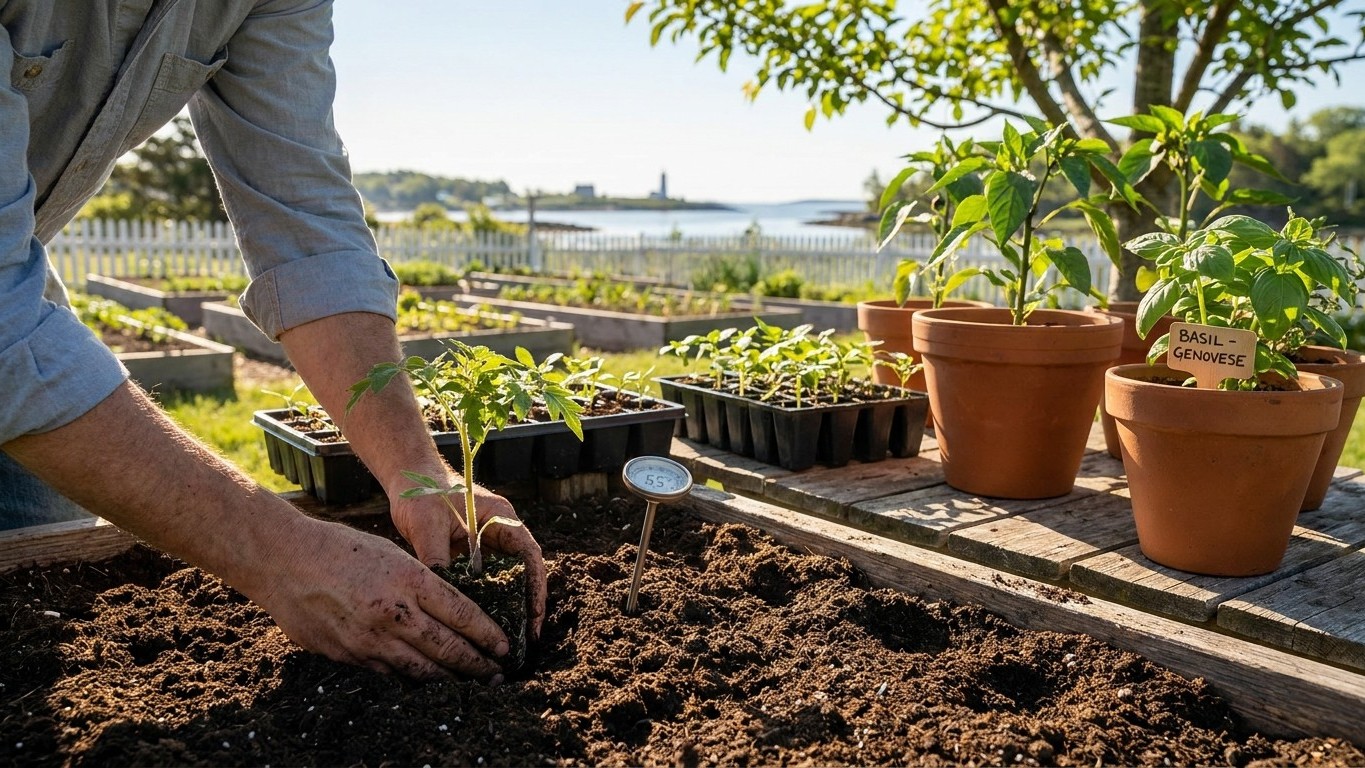

By June, coastal Maine has cleared its last frost window of April 22 to May 1, and the soil has finally warmed enough to take the crops that sat waiting on a windowsill for weeks. Tomatoes, peppers, squash, beans and basil can all go into open ground along the coast. Inland and northern counties are a different story, some are only just clearing frost risk as June opens, so the safe move there is to watch the soil, not the date on the wall.
What goes in the ground in June

Soil temperature decides this month, not the calendar. Warm-season crops like tomatoes, peppers, squash, cucumbers and beans need soil consistently above 60°F to root well; planted into cold, wet ground they sit and sulk, or rot outright. Along the coast, where the last spring frost typically falls between April 22 and May 1, that threshold is usually met by early June. Inland valleys and the northern two-thirds of the state, sitting in USDA hardiness zones as cold as 3b compared to the milder 6a near Portland, often need another one to two weeks before the ground catches up, even if the air feels warm.
Direct-sow beans, summer squash, cucumbers and corn once the soil has warmed. Transplant tomatoes, peppers, eggplant and basil that were started indoors, but harden them off over seven to ten days first, a week of wind and sun exposure before transplanting prevents the scorched, stunted look that sends people back to the garden center for replacements.
Cold-tolerant crops have more room to maneuver. Peas, planted as seed, can still go in early in the month if they weren’t already in the ground. Onion and leek sets, if not yet planted, should go in as soon as possible, they lose very little by going in a bit later than ideal, unlike tender crops that lose everything to a late cold snap.
The inland gamble
Gardeners in Aroostook County or the western mountains sometimes push tomatoes and squash into the ground in the first week of June because a neighbor did it and got lucky. The honest math: a 30-70% freeze probability band around the frost date means real risk still lingers into early June at elevation. Keep a lightweight row cover on hand for the first two weeks after transplanting, and be ready to use it on any night the forecast dips toward the 30s.
What to start under cover
Most spring seed-starting under grow lights or in a cold frame is finished by June, but the month isn’t done asking for indoor starts. Fall brassicas, broccoli, cabbage, cauliflower, need eight to ten weeks from seed to a transplant-ready size, and they go into the garden roughly ten to twelve weeks before first fall frost so they mature before cold shuts things down. With first fall frost landing between October 9 and October 21 depending on location, that puts the ideal transplant window in late July to early August, which means starting those seeds indoors or in a shaded cold frame in June, not July.
Succession starts of lettuce and other quick greens also make sense now, started in trays kept out of direct afternoon heat so they don’t bolt before they ever reach the garden.
The two ways this goes wrong are mirror images of each other. Start fall brassicas too early and they sit as leggy, rootbound seedlings for weeks with nowhere to go, since the summer garden is still full of spring and early-summer crops. Start them too late and they hit the July heat as tiny plants, stall, and never catch up before the fall frost line arrives. Counting backward from the first fall frost range for your part of the state, rather than from a fixed June date, is the only way to get this window right in both a warm coastal yard and a cooler inland one.
What is ready to pick
June is when the garden starts paying back the early spring work. Asparagus, if the bed is more than two years established, is in full harvest, cut spears at soil level once they reach 6 to 8 inches, and stop cutting by early summer to let the plant rebuild for next year. Rhubarb stalks are ready once they’ve reached a good length and the leaf has fully unfurled; twist and pull rather than cutting, and always leave a few stalks per plant.
Spring-planted lettuce, spinach and other quick greens planted in April or May are hitting peak size now. Harvest in the cool of morning for the best flavor and least wilt, and check spinach daily once the weather turns warm since it bolts to seed fast once temperatures climb. Radishes sown in early spring are ready within three to four weeks of sowing; pull a test radish rather than guessing by the size of the greens, since top growth doesn’t always match root size.
Overwintered crops are largely finished by now, but any garlic planted the previous fall is still weeks from harvest, scapes, the curling flower stalks, are the June signal that bulbs are sizing up underground and should be cut off to redirect energy into the bulb. Stored onions, potatoes and squash from the last harvest should get a final check this month; anything soft, sprouting heavily, or smelling off belongs in the compost before it spreads to the rest of the stash.
The jobs that matter this month
Mulching tops the list, and timing matters. Apply mulch once the soil has warmed rather than at planting, so heat isn’t trapped against cold ground, straw, shredded leaves or grass clippings laid 2 to 3 inches deep around warm-season crops now will cut watering needs by half over the coming weeks and keep weed pressure down before it explodes.
Staking and caging come next, and this is a job with a narrow window. Tomato cages and pea trellises installed after the plant has sprawled damage roots and stems; put supports in place while plants are still small and let them grow into the structure instead of fighting it later.
Watering rhythm matters more in June than almost any other month, since young transplants haven’t built deep root systems yet. Deep, infrequent watering, enough to soak 6 inches down, done two or three times a week rather than a light daily sprinkle — trains roots to grow downward instead of staying shallow and drought-prone.
Succession sowing keeps the harvest coming instead of arriving all at once. Sow another short row of beans, lettuce or radishes every two weeks through the month rather than planting the whole packet at once.
Pest scouting pays for itself now, before populations build. Check the undersides of brassica leaves for cabbage worm eggs, look for the first flea beetle damage on eggplant, and inspect squash stems near the soil line for the entry holes squash vine borers leave behind. Catching any of these in the first week saves the plant; catching them in the third week often doesn’t.
What not to do in June
The most common mistake is trusting air temperature over soil temperature. A run of 70-degree days doesn’t mean the ground has caught up, especially in clay-heavy or shaded inland soils that hold cold longer than sandy coastal ground. Planting tomatoes or peppers into soil that’s still cold sets them back for weeks even if they survive, since chilled roots simply stop taking up nutrients.
Uncovering plants too early after a mild stretch is the second trap. A few warm nights in a row tempt gardeners to pull row covers and cold frame lids off for good, right before a late cold snap moves through, and inland Maine’s frost probability doesn’t fully clear until well into the month in some years. Keep covers within reach through at least the first half of June if you garden away from the coast.
Feeding nitrogen at the wrong moment causes its own damage. A heavy dose of high-nitrogen fertilizer on tomatoes or peppers right as they start setting fruit pushes leafy growth at the expense of flowers and fruit, feed for foliage early, then shift to a lower-nitrogen, higher-phosphorus feed once flowering starts.
Finally, resist the urge to crowd. Warm soil and long daylight make everything grow fast this month, and seedlings that looked properly spaced at planting can be shading each other out within three weeks. Thin ruthlessly; a few sacrificed seedlings now mean stronger plants for the rest of the season.
Checking this against your own county
Everything above is a starting point built around coastal Maine’s climate data, and the state’s geography moves these windows by weeks in either direction. Elevation in the western mountains, the moderating effect of the coast versus the colder interior, and the sharp north-south divide between York County and Aroostook County all shift both the last spring frost and the first fall frost. A garden 20 miles inland from Portland can lag the coast by a week or more; a garden in the northern reaches of the state can lag by a month.
For localized planting calendars and frost guidance specific to your county, the University of Maine Cooperative Extension is the reliable next stop.
Common questions
Is it too late to plant tomatoes in Maine in June?
No. Along the coast, June is prime tomato transplant season since the soil has had time to warm past the late April to early May frost window. Inland and northern gardeners can still plant tomatoes through the month, though earlier is better for a full harvest before fall frost returns.
Can I still direct-sow beans and squash this month?
Yes, and June is one of the best months to do it. Both crops need warm soil to germinate well, and by June most of the state has cleared that threshold, with cooler inland pockets catching up as the month goes on.
What happens if I plant warm-season crops too early in cold soil?
Seeds rot before germinating, or transplants sit stunted for weeks even if they technically survive. Chilled roots can’t take up nutrients efficiently, so a plant set into cold ground often ends up smaller and later-fruiting than one planted a week or two later into properly warmed soil.
Should I fertilize my vegetable garden in June?
It depends on the crop stage. Leafy crops and young transplants benefit from a balanced feed early in the month, but heavy nitrogen right as tomatoes and peppers begin flowering pushes foliage growth instead of fruit, shift to a lower-nitrogen feed once flowering starts.