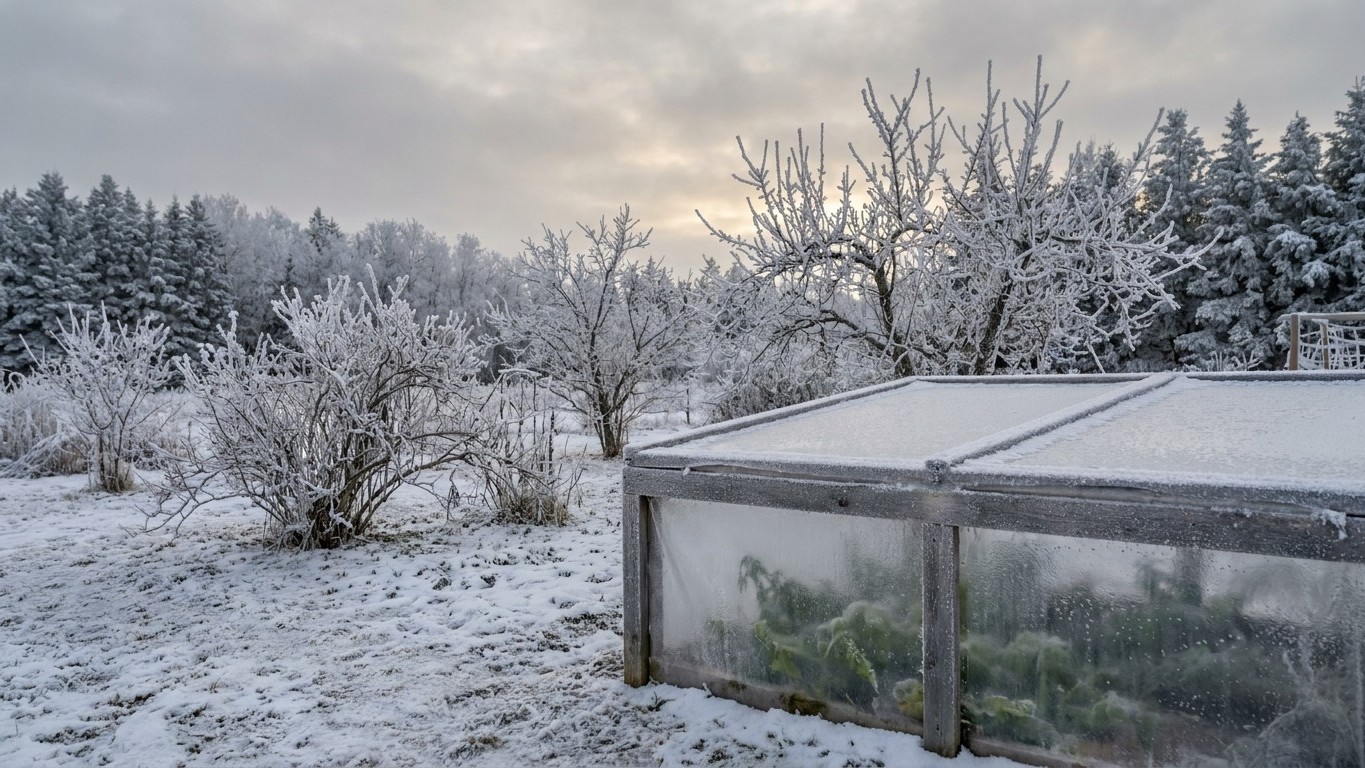

Short answer: in Manitoba, December closes the door on outdoor planting almost entirely. The ground is frozen solid, snow cover is the norm, and the average first fall frost at Winnipeg already passed back on September 22. What’s left this month is indoor sowing, dormant-season plant work, and protecting what’s already stored or overwintering.
What goes in the ground in December

The mechanism that matters here isn’t the calendar, it’s soil temperature. Once the ground freezes, roots stop taking up water and nutrients, and nothing new can establish itself, no matter how mild an afternoon feels. In Manitoba, that freeze typically locks in well before December arrives, since the average first fall frost at the Winnipeg Richardson station sits at September 22, and hard ground follows within weeks of that date most years.
So the honest answer for direct-sown or transplanted crops in open soil this month is none. Garlic and shallots, which do go into the ground here, need to be in by mid-to-late fall so roots form before freeze-up; by December that window has closed unless you’ve got an unusually unfrozen pocket of soil under heavy mulch, and even then it’s a gamble, not a plan.
What’s still possible
That doesn’t mean the garden goes fully silent. A few things still work with cover or a controlled environment:
- Cold frames or low tunnels holding over hardy greens planted earlier in the season, if they were established before the deep freeze
- Bare-root fruit trees and shrubs, but only where they can be heeled into an unfrozen holding bed or kept cool and moist indoors until spring planting
- Forcing rhubarb or chicory (Belgian endive) indoors from dormant crowns kept in a dark, cool space
- Dormant potted perennials or shrubs stored in an unheated garage or root cellar, watered sparingly, waiting out winter
None of these are substitutes for a spring planting season. They’re the small moves that keep a Manitoba gardener’s hands busy while the actual ground is off-limits.
What to start under cover
The right way to time indoor sowing is to count backward from your transplant date, not forward from today’s date. The mean last spring frost at Winnipeg falls around May 23, but that figure is a midpoint, not a guarantee. In roughly half of all years, frost arrives later than that, so most Manitoba gardeners treat early June as the safer target for moving tender seedlings outside.
Work backward from there. A crop that needs 10 to 12 weeks of indoor growth before it goes outside in early June should be started in mid-to-late March, not December. That puts most tomatoes, peppers, and squash well outside this month’s window. Starting them now risks the first failure mode: leggy, rootbound plants that have outgrown every pot you own long before the ground is workable.
December does suit a narrower list. Very long-season hot peppers, which some growers start 12 to 16 weeks before their earliest realistic transplant date, can go in now under grow lights. So can seeds for perennials and native plants that require a period of cold, moist stratification before they’ll germinate; potting them up and setting them in a cold frame, unheated porch, or the refrigerator for six to ten weeks is exactly a December-through-February task. The second failure mode is the opposite problem: waiting too long on these slow stratification projects and running out of stratification time before the outdoor season starts. December is early for almost everything else, but it’s exactly on time for the slowest starters.
What is ready to pick
Outdoors, the honest answer is little to nothing. Snow cover and frozen ground rule out fresh harvests from open beds this month. But that’s not the same as an empty kitchen.
Kale and leeks planted for overwintering, if they were established and mulched heavily before freeze-up, can sometimes still be dug from under snow in a mild spell, provided the ground hasn’t locked them in completely. A cold frame with hardy greens like spinach or mâche, insulated well, can keep producing small pickings through the darkest weeks, though growth slows to a crawl once daylight drops this low.
Indoors, sprouts and microgreens are the most reliable December harvest a home gardener can count on. A tray of sunflower or pea shoots on a countertop takes seven to ten days from seed to scissors, no outdoor conditions required.
The other job this month is quality control on what’s already stored. Squash should be checked for soft spots or a sweet, fermenting smell, both signs it’s turning and should be used immediately rather than left in storage. Potatoes need sorting for any that have gone soft, sprouted early, or turned green from light exposure. Onions and shallots should be checked for any going soft at the neck, since one spoiling bulb in a bag can take down its neighbors. Catching these now means fewer losses by midwinter.
The jobs that matter this month
A winter month in Manitoba isn’t a gap in the gardening calendar, it’s when a lot of the season’s real groundwork gets done.
Pruning and structure
Dormant pruning of fruit trees and cane fruit is best done now, while the plant’s structure is visible without leaves and while it’s fully dormant, reducing stress on the plant compared to pruning during active growth. Cutting out dead, crossing, or diseased wood now also means less disease pressure to manage once the growing season starts.
Planning and ordering
Seed catalogs move fast, and popular varieties, especially short-season ones bred for zone 3b conditions, sell out well before spring. Ordering now, while selection is still full, beats settling for a substitute in April. This is also the month to sketch next year’s crop rotation, so beds that grew heavy feeders don’t repeat the same crop family in the same spot.
Soil, tools, and storage
A soil test sent off now gives results back in plenty of time to amend before spring planting, and it’s a task that’s easy to put off once the busy season starts. Turning an insulated compost pile, even slowly, keeps decomposition moving through the cold months instead of stalling completely. Cleaning and sharpening tools, oiling wooden handles, and checking that pruners cut cleanly rather than tearing all pay off the first time they’re picked up again in spring. Fences and raised bed frames damaged by fall winds or heavy snow loads are far easier to repair now, before they’re buried, than to fix under a spring deadline.
What not to do in December
The classic December mistake in Manitoba is trusting a mild afternoon. A day or two above freezing doesn’t mean the ground has thawed, and it doesn’t mean it’s safe to uncover mulched perennials, bulbs, or overwintering crops. Pulling back protection during a warm spell exposes roots and crowns to the hard freeze that almost always follows, which does more damage than if the mulch had stayed put all winter.
Feeding nitrogen to anything right now is another one to avoid. Dormant plants aren’t taking up nutrients the way they do during active growth, and a late-season nitrogen application on trees or shrubs can push soft new growth that has no chance of hardening off before the next hard freeze arrives.
Overwatering stored crops is a quieter mistake. Potatoes, squash, and onions all need a cool, dry environment; too much humidity in a storage space accelerates rot rather than preventing shriveling, which is the actual risk in a too-dry space. Check ventilation before adding moisture, not the other way around.
Finally, resist the urge to walk across frozen lawns or garden beds repeatedly. Compacted, frozen soil recovers slowly, and repeated foot traffic over the same frozen path can leave visible damage that shows up as poor drainage or bare patches come spring.
Checking this against your own county
Everything above is built around Winnipeg’s climate normals, and Manitoba is not one climate. Elevation, distance from Lake Winnipeg, and simple latitude shift both frost dates and freeze depth by weeks in either direction. A garden in the Interlake region or up toward The Pas is working with a shorter season and an earlier freeze than one in the Red River Valley near the US border.
The Winnipeg reference station sits in Canadian hardiness zone 3b, a rating built from the Canadian system’s seven climate variables rather than the single-variable USDA scale, so it shouldn’t be read as interchangeable with USDA zone numbers used elsewhere. For local frost data and planting guidance specific to your district, Manitoba Agriculture’s extension service is the right place to check before finalizing any planting date.
Common questions
Can I still plant garlic in Manitoba in December?
It’s late. Garlic planted in Manitoba needs several weeks of root growth before the ground freezes solid, and by December that window has generally closed. If your ground is still workable and you mulch heavily immediately after planting, it’s a gamble rather than a reliable method.
Is it too late to start seeds indoors for spring?
Not for the slowest starters. Long-season hot peppers and perennial or native seeds that need cold stratification are exactly on schedule if started in December. Tomatoes, squash, and most vegetables should wait until closer to their 8-to-12-week countback from an early June transplant date.
What should I check on my stored vegetables this month?
Go through squash, potatoes, and onions for soft spots, sprouting, or a sweet fermenting smell, and remove any affected item immediately so it doesn’t spread rot to its neighbors in storage.
Why does the average frost date not tell me when it’s safe to plant?
Because it’s a mean, not a guarantee. At Winnipeg, frost falls later than the average date in roughly half of all years, so treating May 23 as a firm safe date leads to real frost losses more often than gardeners expect.