
Nothing goes into open garden soil safely in Maryland in January. Soil sits too cold and the last spring frost falls anywhere from April 3 to April 16, months away. What actually works this month: garlic and shallots into workable ground, bare-root fruit stock while it’s dormant, cold frames and low tunnels for hardy greens, and forcing rhubarb or chicory indoors.
What goes in the ground in January

The calendar says January, but soil temperature makes the real decision here, not the date on the wall. Maryland sits in USDA Hardiness Zone 5b-8a on the 2023 Plant Hardiness Zone Map, a range built from average annual extreme minimum temperatures across the state, and the last spring frost runs April 3 to April 16 depending on where you garden. That’s ten to fifteen weeks out. For most of the state, direct-sowing or transplanting warm-season vegetables outdoors this month simply isn’t an option, and pretending otherwise wastes seed and time.
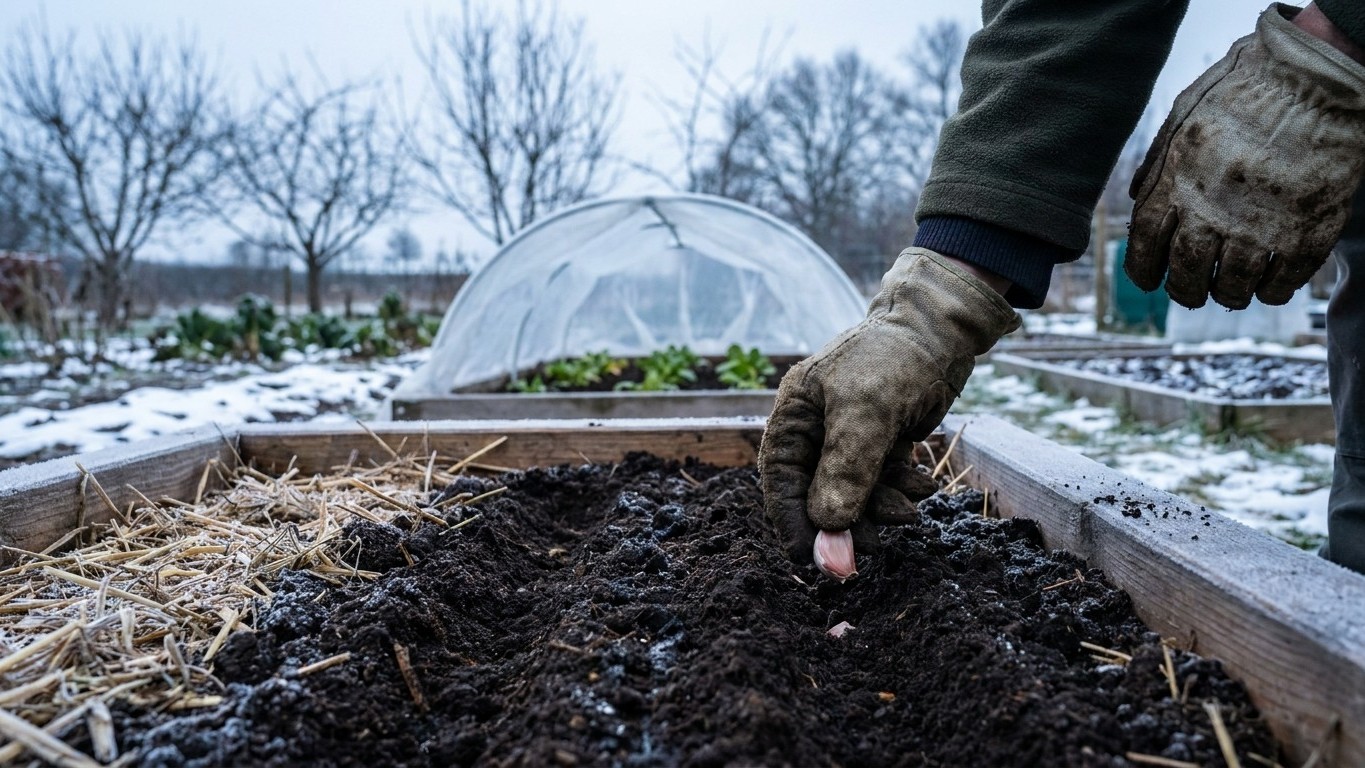
What is worth doing outdoors: garlic and shallots. If you missed the fall planting window, cloves can still go in early in the month wherever the ground remains unfrozen and workable, though later planting usually means smaller bulbs by harvest. Treat this as a last chance rather than the ideal timing.
Cold frames and low tunnels buy real weeks. Hardy greens like spinach, mache, and arugula can go into protected beds now and germinate slowly even when open-ground soil sits near freezing. The cover doesn’t heat the soil much, but it blocks wind and holds a few extra degrees, which is often the difference between germination and rot.
Bare-root and dormant planting is the other January job that actually belongs outdoors. Fruit trees, blueberry bushes, raspberry canes, and asparagus crowns can go into the ground any time the soil isn’t frozen solid or waterlogged, because dormancy protects the roots from the kind of shock that would kill an actively growing plant. Many mail-order nurseries ship bare-root stock specifically in late winter for this reason.
Indoors, this is the month for forcing. Rhubarb crowns and chicory roots (for blanched Belgian endive) can be dug or potted and moved into a dark, cool space to produce tender, pale stalks weeks before anything similar would appear outside. It’s a small trick, but it’s one of the few ways to get fresh homegrown produce in the dead of winter.
What to start under cover
Seed starting this month runs on arithmetic, not instinct, and the math starts from the last frost window of April 3 to April 16. Peppers and eggplant need roughly eight to ten weeks of indoor growth before they’re ready to go outside, which puts their start date in early-to-mid January for gardeners near the earlier end of that frost window, and a bit later for those near April 16. Onions and leeks grown from seed need closer to ten to twelve weeks, so an early January start isn’t unreasonable for either.
| Crop | Weeks before last frost to start indoors | Approximate start window |
|---|---|---|
| Onions, leeks (from seed) | 10-12 weeks | Early to late January |
| Peppers, eggplant | 8-10 weeks | Mid to late January |
| Broccoli, cabbage, other cole crops | 6-8 weeks | Late January to mid-February |
Two mistakes show up every year with this kind of counting. Start too early and seedlings outgrow their pots before the ground and air are actually warm enough to plant them out, producing leggy, rootbound plants that stall for weeks after transplant. Start too late and cole crops in particular run out of cool spring weather before they can size up, bolting as soon as heat arrives. Neither mistake is fatal on its own, but both cost weeks of garden productivity that are hard to get back once the season shortens toward summer.
A grow light or a bright south-facing window matters more this month than at any other point in the year, since January daylight in Maryland is short and weak. Weak light is usually the real cause of leggy seedlings, not an early start date by itself.
What is ready to pick
Little to nothing comes out of open Maryland garden beds this month, and there’s no point dressing that up. But a garden planned with winter in mind still feeds a household. Kale, collards, and leeks left in the ground under mulch or snow cover often taste better after hard frost, since cold converts stored starches to sugars. Brussels sprouts respond the same way, and many gardeners deliberately leave them standing through winter for exactly that reason.
Cold frames extend the harvest of spinach, lettuce mixes, and mache by picking outer leaves and letting the center keep producing, sometimes for weeks longer than an equivalent bed in the open. Indoors, sprouts and microgreens are the fastest payoff in the garden calendar, ready in one to two weeks from seed and requiring nothing more than a windowsill and a tray.
This is also the month to check stored crops before small problems become big losses. Winter squash should feel firm with no soft spots near the stem; any give means it’s turning and should be used first. Potatoes with green-tinged skin or active sprouting should be used or trimmed promptly, since sprouting draws down the tuber’s food reserves. Onions and garlic that feel soft at the neck or show sprouting are past their storage life and belong in the kitchen now, not back on the shelf. A five-minute check of the root cellar or pantry shelf once a week catches these before rot spreads to the rest of the batch.
The jobs that matter this month
January carries the season’s planning weight even without much happening in open beds, and the jobs done now set up everything that follows.
Pruning, ordering, and soil work
Dormant pruning of apple, pear, and peach trees, along with brambles like raspberries and blackberries, is best done now while the branch structure is visible and most insect pests are inactive. Cuts made in dormancy heal faster once growth resumes and carry less disease risk than pruning during the growing season. Seed catalogs are already circulating, and ordering now avoids the disappointment of a sold-out variety by the time spring planting actually arrives; popular tomato and pepper varieties routinely sell out by late winter.
Soil, compost, and equipment
Soil testing through a lab, rather than guessing, is worth doing now because results take a couple of weeks to come back and amendments like lime need months of contact with soil to actually shift pH before spring planting. Turning a compost pile keeps it active through cold weather instead of letting it stall. Tools deserve attention too: cleaning soil and rust off blades, sharpening pruners and hoes, and oiling metal parts prevents the kind of mid-season tool failure that slows down planting day. Raised beds, trellises, and fencing are easier to repair now, before soil work and planting compete for the same hours later on. None of these jobs are glamorous, but skipping them shows up as lost time in March and April.
What not to do in January
The most common mistake this month is being fooled by a warm afternoon. Air temperature can climb into the 50s for a day or two even in the coldest stretch of winter, but soil several inches down often stays near freezing regardless, and direct-sowing warm-season seed into that soil usually ends in rot rather than germination. Wait for the soil itself, not the air, to warm.
A related trap: uncovering cold frames or pulling back mulch after a mild spell, only to have a hard freeze return days later and kill the tender growth that had just been exposed. Cold frames and mulch layers are meant to stay in place through the whole cold season, not to be opened and closed with every warm afternoon.
Nitrogen fertilizer applied now does little good and some harm. Dormant plants aren’t using it, so it either leaches away with winter rain and snowmelt or, worse, pushes a flush of soft new growth that a hard freeze then damages. Hold nitrogen applications until active growth resumes closer to the frost-free window.
Pruning spring-flowering shrubs like azaleas, forsythia, or lilac this month is another classic error, since these plants set their flower buds the previous summer and a winter pruning cut removes the very buds that would have bloomed. Save that pruning task for right after they finish flowering instead.
Checking this against your own county
A statewide frost window is a starting point, not an instruction for your specific yard. Elevation and regional climate shift these dates by weeks across Maryland.
| Region | How it differs from the statewide range |
|---|---|
| Western Maryland (Garrett, Allegany) | Mountainous terrain pushes last spring frost later and first fall frost earlier than the statewide range |
| Central Maryland | Generally tracks close to the statewide April 3-16 and October 26-November 5 range |
| Eastern Shore | Milder conditions typically bring an earlier end to spring frost and a later start to fall frost |
For a planting schedule tuned to your county, the University of Maryland Extension publishes local guidance and a state planting calendar worth checking against anything written for the state as a whole.
Common questions
Can I plant garlic in Maryland in January?
Yes, if the ground is unfrozen and workable, though fall planting produces larger bulbs. January cloves are a last window, not the ideal one.
What hardiness zone is Maryland for planting?
Maryland spans USDA Hardiness Zone 5b-8a on the 2023 Plant Hardiness Zone Map, a range based on average annual extreme minimum temperature that varies widely from the western mountains to the Eastern Shore.
When is the last frost in Maryland?
The statewide range runs April 3 to April 16 based on NOAA NCEI 1991-2020 climate normals, with Western Maryland typically later and the Eastern Shore typically earlier.
What vegetables can survive winter in a Maryland garden?
Kale, collards, leeks, and Brussels sprouts commonly survive under mulch or snow cover, and cold frames can keep spinach, lettuce mixes, and mache producing through the coldest months.