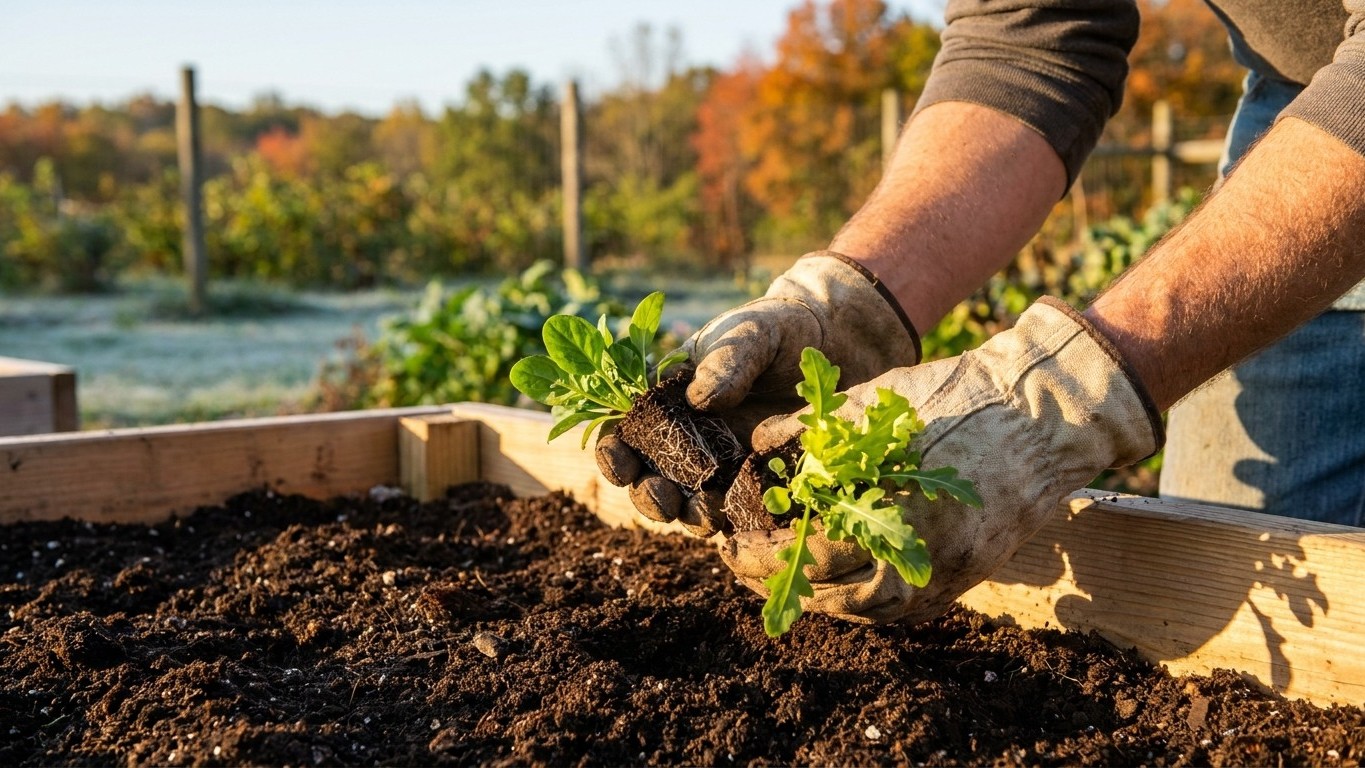

Direct-sow fall greens, root crops, and second plantings of quick vegetables through September in Maryland. The month sits roughly eight to twelve weeks ahead of the first fall frost, which lands between October 26 and November 5 depending on where you garden. That window, not the calendar page, is what decides what still has time to mature.
What goes in the ground in September

Soil temperature and the frost countdown run this month, not the date on the wall. With first frost still six to nine weeks out for most of the state, September is prime time for cool-season crops that don’t mind cooling nights and can finish before the cold shuts things down.
Spinach, lettuce, arugula, and mustard greens can go in as seed through most of the month. Radishes are close to foolproof here; they mature in three to four weeks, so even late-month sowings usually beat the frost with room to spare. Turnips and beets planted in the first half of September have enough runway to size up. Kale and collards seeded now will often outlast several frosts once established, since both crops actually sweeten after a cold snap.
Carrots are the gamble crop. They need close to 70 days to reach a decent size, so sowing after the first week or so of September pushes the harvest right up against the frost line, especially in the cooler counties. If you’re past that window, treat carrots as a next-season plan rather than this month’s project.
Transplants started under cover in August, broccoli, cauliflower, and cabbage among them, move into the garden early in the month while soil is still warm enough to avoid transplant shock. Peas sown now for a fall crop need enough weeks of mild weather before frost to flower and set pods; check your local frost date against the days-to-maturity on the seed packet before committing a full bed to them.
Garlic and shallots are not a September crop in Maryland. Both go in later, once the ground has cooled further, typically in the weeks after this month closes. Trying to plant them now usually pushes premature top growth before winter, which weakens the bulb. If you’ve got garlic cloves in hand, hold them in a cool, dry spot rather than rushing them into the ground.
What to start under cover
Counting backward from the first fall frost, whichever end of the October 26 to November 5 window applies to your county, tells you how much runway is left for anything started under a cold frame, row cover, or unheated hoop structure. A crop that needs 60 days to reach a pickable size, started under cover in early September, still finishes before the coldest stretch even in a year that leans toward the earlier frost date.
Lettuce and spinach sown under a cold frame or low tunnel in September can carry well past the open-ground frost line, since the cover buys several degrees of protection and cuts wind exposure. This is also the window to get a second round of lettuce going for a frame that will keep producing into the colder months, staggered a couple of weeks apart from the open-ground sowing so you’re not harvesting everything at once.
The two ways this goes wrong are predictable. Start too early, while September days are still warm, and greens under cover can bolt or get leggy from heat stress trapped inside the cover. Start too late, past the point where the remaining daylight and warmth support real growth, and the seedlings stall out small and never size up before the short, cold days of late fall arrive. Splitting the difference, sowing in the first half of the month rather than pushing it to the last week, gives the most margin for either mistake.
Biennial crops like kale, meant to overwinter and resume growth in spring, can also go in under cover now. They won’t reach full size before frost, and that’s fine. The goal is a hardy young plant going into winter, not a harvest this fall.
What is ready to pick
September is when the summer garden and the fall garden overlap, and that overlap is what makes the harvest list long. Tomatoes are still coloring up on the vine; a fruit that’s fully red (or fully yellow, orange, whatever the variety calls for) and gives slightly to a gentle squeeze is ready. Peppers and eggplant keep producing until a real cold snap slows them, and picking regularly actually pushes the plant to set more fruit.
Summer squash and cucumbers are winding down but still worth checking every couple of days, since both can go from perfect to oversized fast in warm weather. Sweet corn planted for a late crop finishes this month; check for a filled-out ear with milky (not watery, not dry) kernels when you pierce one with a thumbnail.
Melons are ready when the stem starts to separate cleanly from the fruit with light pressure, a trait called “slipping” that’s easy to feel once you know what to look for. Beans left on the vine too long turn tough, so pick pods while they’re still snapping crisp rather than letting them bulge with mature seed, unless you’re deliberately drying them for shell beans.
Early apple varieties come off the tree this month too. A ripe apple releases from the branch with a slight upward twist; if you have to yank it, it’s not quite there yet.
The jobs that matter this month
Succession sowing is the job that slips fastest and costs the most if it does. A bed of radishes or lettuce sown now, then again in two weeks, keeps the harvest coming instead of arriving all at once and then stopping. Skip the second sowing and there’s a gap in the kitchen in six weeks that’s hard to fill retroactively.
Watering rhythm needs adjusting as September temperatures ease. Newly seeded fall crops still need consistent moisture to germinate, but the days are shorter and evaporation slower, so the same watering schedule that worked in July can drown seedlings now. Check soil moisture by hand rather than by habit.
Pest scouting matters more, not less, as the season turns. Cabbage worms move onto the new plantings of broccoli and kale, and squash vine borers are finishing their damage on summer squash plants that are already declining. A few minutes checking the undersides of leaves catches an infestation while it’s still small enough to hand-pick or treat.
Clearing spent plants, especially anything that showed disease like powdery mildew on squash vines or blight on tomatoes, keeps that problem from overwintering in the bed. Compost healthy debris; bag and remove diseased material rather than composting it. Empty beds not going into a fall crop are worth seeding with a cover crop like winter rye or clover, which holds soil through winter and adds organic matter back in spring. And if perennial beds or asparagus ferns are sprawling, staking or a light trim now prevents wind damage before the die-back that comes with frost.
What not to do in September
The most common mistake is planting warm-season crops because the afternoons still feel like summer. A tomato or pepper transplant put in mid-September has no real path to a harvest before frost arrives in late October or early November; the plant spends its energy on growth it never gets to use. If a crop needs 70-plus days and there aren’t 70-plus days left before your local frost window, it’s a greenhouse project for next year, not a September planting.
Skipping the backward count from frost date is the underlying error behind most of this. It’s tempting to plant by feel, especially during a warm stretch, but the frost window (October 26 to November 5 across most of the state, later in the mountains) is the fixed point everything else should be measured against.
Late-season nitrogen is another trap, particularly on trees, shrubs, and perennials. A dose of high-nitrogen fertilizer in September pushes soft new growth that has no time to harden off before cold weather, making that growth the first thing damaged by frost. If anything, September calls for tapering nitrogen on woody plants, not adding more.
Pulling row covers off too early after a warm afternoon is a smaller but real mistake. A cover can trap unwanted heat on a genuinely hot day, but yanking it off entirely and forgetting to replace it before an evening cool-down undoes the protection it was providing in the first place.
Checking this against your own county
A statewide frost window is a starting point, not a personal instruction. Maryland spans real elevation and coastal differences: Garrett and Allegany counties in the mountainous west run their frost dates weeks later than the rest of the state, while the Eastern Shore tends to stay milder longer into fall. A planting plan built on the statewide range can be off by two or three weeks in either direction depending on where you actually garden.
The University of Maryland Extension is the reliable next stop for county-level guidance, local planting calendars, and answers specific to your soil and microclimate.
Common questions
Is September too late to plant a vegetable garden in Maryland?
No. September is well suited to fast-maturing, cool-tolerant crops like radishes, lettuce, spinach, and turnips, all of which can finish well before the first fall frost lands between October 26 and November 5.
Can I still plant tomatoes or peppers in September in Maryland?
It’s not worth it in most cases. Both need more growing time than remains before the fall frost window, so transplants put in this month rarely produce a real harvest before cold weather ends the season.
When should garlic go in the ground in Maryland?
Not in September. Garlic and shallots are planted later in fall, after the soil has cooled further, so the cloves don’t push premature top growth before winter sets in.
What USDA hardiness zone is Maryland in?
Maryland spans USDA Plant Hardiness Zones 5b through 8a, based on the USDA Plant Hardiness Zone Map, so the western mountains and the milder coastal areas can differ by more than one full zone.
Gardeners who plant by the Moon can check the September 2027 moon planting calendar, a tradition rather than a proven method.