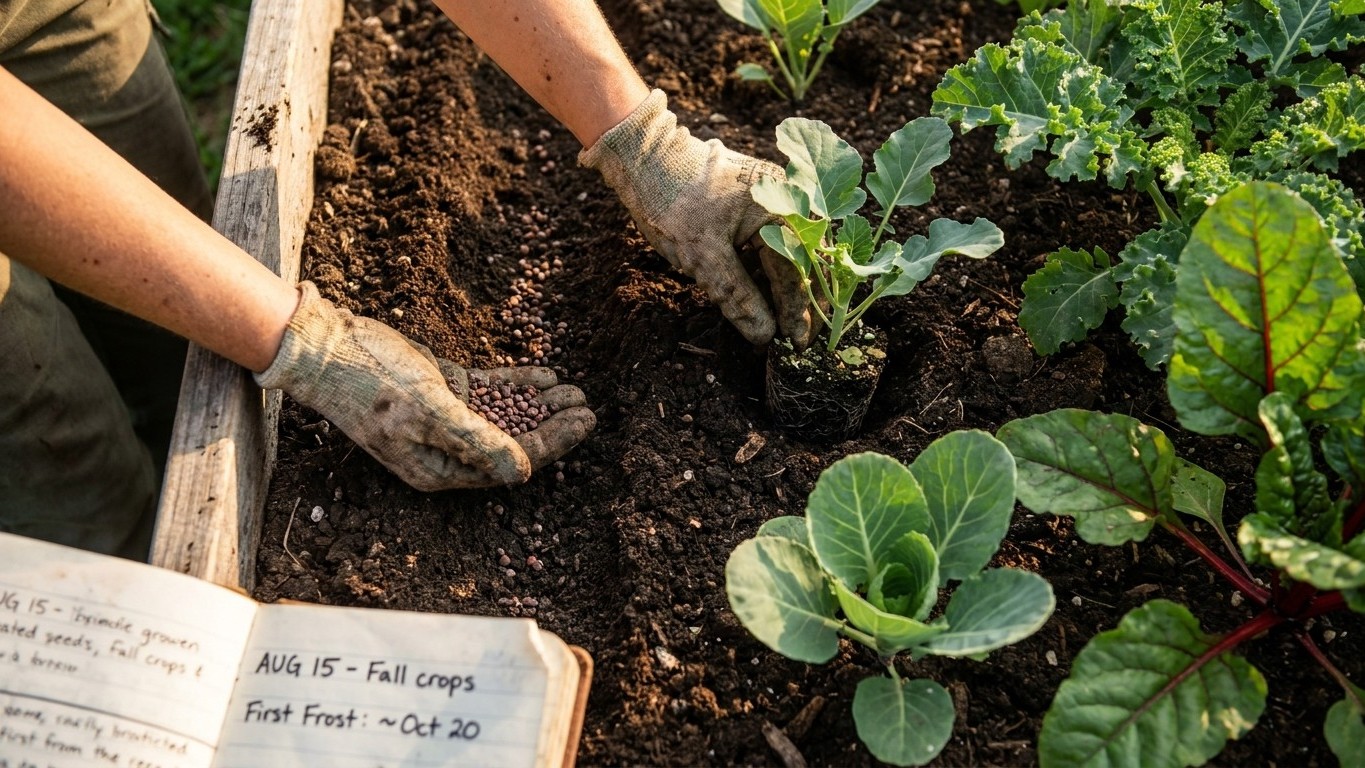

August in Maryland is a second planting season, not a pause between spring and fall. With the first fall frost running October 26 to November 5 statewide (NOAA NCEI 1991-2020 Climate Normals), there’s still an 11-to-14-week window for fast root crops, greens, and a second round of beans before the ground closes. What you plant this week depends less on the calendar and more on counting backward from that frost date.
What goes in the ground in August

The decision that matters this month isn’t “is it August”, it’s “how many days of growing season are left before that October 26-November 5 frost window arrives.” Bush beans need roughly 50-60 days to harvest, so early August direct-sowing still works in most of the state; by the third week, the math gets tight unless you’re in a warmer Eastern Shore county. Beets, carrots, and turnips sown now, from seed, typically mature in 50-70 days and land comfortably before frost.
Leafy crops are the safest bet all month. Direct-sow kale, collards, Swiss chard, and spinach (spinach does best once nights start cooling toward late August), along with fast lettuce varieties and radishes, which can go in every 10-14 days for a rolling harvest into fall. These crops tolerate a light frost once mature, which buys extra margin if the season runs long.
Transplants matter here too. Broccoli, cabbage, and cauliflower seedlings started under cover in June or July should go into the ground in early August so they have time to size up before cold weather. Waiting past the first week or two of the month starts to squeeze cauliflower especially, since it’s the least frost-tolerant of the three.
What’s a gamble: any new warm-season planting. Tomatoes, peppers, squash, and melons started from seed in August won’t reach harvest before frost in Maryland’s USDA Hardiness Zones 5b-8a (USDA Plant Hardiness Zone Map, 2023 normals). Garlic and shallots aren’t an August crop here either, that planting window falls in October, closer to frost, not now. If you’re holding garlic sets, keep them dry and dark and wait.
What to start under cover
Counting backward from the October 26-November 5 frost window is the only reliable method, because a fixed calendar date ignores how much the season varies between the mountains and the shore. If a crop needs 70 days to maturity and you want it harvested with a couple of weeks of buffer before the earliest expected frost (October 26), that puts the outdoor planting deadline around mid-August, which means anything started under cover for transplanting should already be seeded or very close to it.
Trays or cold-frame starts of lettuce, spinach, and Asian greens made in early-to-mid August give you transplants ready for open ground by the time the weather cools, and they skip the stage where direct-sown seedlings can bolt in residual summer heat. A second round of broccoli or cabbage for a late fall harvest is possible only in the earliest days of the month, under shade cloth to keep soil temperatures down enough for germination.
The two ways this goes wrong are opposite problems. Start too early in blazing midsummer heat and seedlings stall, get leggy, or bolt before they ever reach the garden. Start too late, past mid-month for anything needing 60-plus days, and you run out of daylight and warmth before harvest, even with row cover extending the season by a couple of weeks. Neither mistake is fixable once the seed hits the soil, so the backward count from frost, not from “it’s still summer,” should decide the sowing date.
What is ready to pick
August is peak harvest for the crops planted back in spring. Tomatoes are usually running full production by now: ripe fruit gives slightly to a gentle squeeze and separates from the vine with a light twist rather than a tug. Peppers can be picked green or left to color fully, depending on preference, there’s no wrong answer, just a flavor tradeoff.
Summer squash and zucchini need picking every day or two once they start; an 8-inch zucchini is far better eating than a two-foot baseball bat, and letting fruit sit on the vine signals the plant to slow production. Cucumbers follow the same logic. Sweet corn is ready when the silks turn brown and dry while the husk stays green, pull back a bit of husk and press a kernel; if the liquid runs milky rather than clear, it’s ready.
Beans, both bush and pole, keep producing longer if picked before the pods bulge with mature seed. Basil should be harvested by cutting stems just above a leaf node, which also delays flowering. Early apples and peaches, where planted, are typically coming in through the month; a peach that releases from the branch with a gentle lift is ripe, while apples are best judged by color and a taste test rather than the calendar.
The jobs that matter this month
Succession sowing is the single job that determines whether the fall garden exists at all. Every 10 to 14 days, another round of lettuce, radishes, and quick greens should go in, because a one-time August planting leaves a gap in the harvest come October. Skipping this step doesn’t cost you today, it costs you six weeks from now, when the pantry is thin and there’s nothing left to pick.
Watering rhythm matters more in August than almost any other month, since heat and inconsistent rain stress both fruiting plants and new seedlings. Deep, infrequent watering, aimed at the root zone rather than a daily light sprinkle, builds more resilient plants and reduces blossom end rot in tomatoes and peppers, which is a calcium-uptake problem tied directly to inconsistent soil moisture rather than a soil deficiency.
Mulching around late-summer transplants holds that moisture and keeps soil temperatures down enough for cool-season seeds like spinach to germinate, which they often won’t do in bare, sun-baked soil above roughly 75°F. Staking and caging should already be in place for tomatoes and pole beans; if it isn’t, do it now before the plants sprawl further and stems snap trying to lift them later.
Pest scouting pays off directly in August. Squash vine borer damage shows as sudden wilting of a single vine even with wet soil, check the base for a small entry hole and frass. Japanese beetles skeletonize leaves in clusters and are easiest to control by hand-picking into soapy water in the cooler morning hours. Tomato hornworms are large and well camouflaged; look for stripped stems and black droppings on the leaves below.
What not to do in August
The most common mistake is planting anything warm-season, thinking there’s plenty of summer left because the air still feels hot. Soil-driven crops like new tomato or pepper starts don’t care about the current temperature; they care about the days remaining before frost, and by August that math has already run out for anything needing 70-90 days to fruit.
Feeding heavy nitrogen to established tomatoes, peppers, or squash in August is another frequent misstep. Nitrogen pushes leafy growth at the expense of fruit set right when the plant should be putting energy into ripening what it’s already carrying. If a soil test or plant appearance calls for feeding, a lower-nitrogen, higher-potassium approach supports fruit development instead of vegetative sprawl.
Watering shallow and often, rather than deep and less frequent, trains roots to stay near the surface where they dry out faster and where the plant becomes more vulnerable to a stretch of dry heat. It also does little to prevent blossom end rot, which shallow watering habits tend to make worse rather than better.
Leaving mature vegetables on the vine “for later” backfires too, overripe zucchini, cucumbers, and beans signal the plant to stop producing, which shortens the harvest window right when production should be at its peak.
Checking this against your own county
A statewide frost window is a starting point, not a personal instruction. Elevation changes everything in Western Maryland: Garrett and Allegany counties sit in mountainous terrain and typically see frost weeks earlier than the April 3-April 16 last-frost and October 26-November 5 first-frost dates measured near the reference station. The Eastern Shore, by contrast, tends to run milder on both ends of the season, stretching the growing window longer than the state average suggests.
Before locking in a planting date based on the ranges here, check the University of Maryland Extension for county-level guidance and local planting calendars, since they account for these regional differences directly.
Common questions
Is it too late to plant tomatoes in Maryland in August?
Yes, for outdoor starts from seed or new transplants expecting a full harvest. With the first fall frost arriving October 26-November 5, there typically isn’t enough time left for tomatoes to mature, though established plants already fruiting should keep producing into September.
Can I still plant green beans in August in Maryland?
Early August works for bush beans, which usually mature in 50-60 days, putting harvest before the frost window. Waiting until late August cuts that margin close, especially outside the milder Eastern Shore counties.
What vegetables can I direct-sow in Maryland in August?
Beets, carrots, turnips, radishes, kale, collards, Swiss chard, spinach, and quick lettuce varieties all work well as direct-sown crops this month, since they tolerate cooling fall temperatures and finish within the remaining growing window.
When should I plant garlic in Maryland?
Not in August. Garlic and shallots go into the ground closer to the first fall frost, typically in October, so sets should be stored dry and dark until that later planting window arrives.