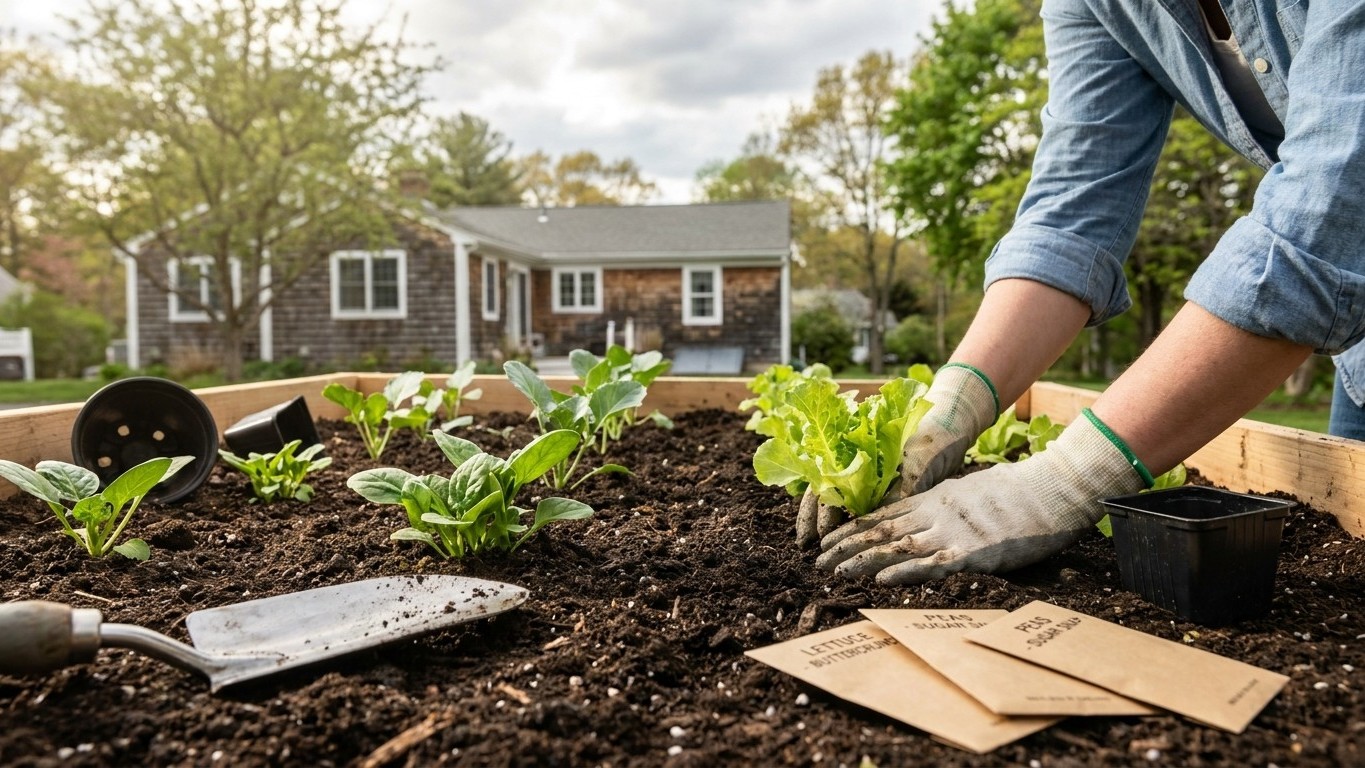

May is the month Massachusetts gardeners have been waiting for. By the time the calendar turns, most of the state is past its frost risk, soil has finally warmed, and the list of what can go into the ground stretches from hardy greens to the first tender transplants. The short version: plant fast, but read your soil before you read the calendar.
What goes in the ground in May

The decision this month isn’t whether to plant, it’s what kind of plant your soil can handle. NOAA’s 1991-2020 climate data puts the last spring freeze at Boston’s Logan Airport station in the window of April 1 to April 8, based on the 30-70% probability band for a 32°F freeze. That means by the start of May, the coastal and near-coastal parts of the state are generally clear of freeze risk. But Logan is a waterfront, urban station, the mildest spot in Massachusetts. Inland valleys, the suburbs west of Route 128, and especially the Berkshires (which sit at the colder end of the state’s 5a-7b hardiness range) frost later in spring than that window suggests. If your yard has ever had a hard frost in the first half of May, treat that as your real local date, not the Logan number.
With that caveat in place, early May is prime time for hardy direct-sown crops: peas, spinach, lettuce, radishes, beets, carrots, and the alliums (onion sets, shallots, leeks) all handle cool, damp soil without complaint. Potatoes go in now too. Brassica transplants, broccoli, cabbage, kale, Brussels sprouts, can go out once they’ve been hardened off for several days, since a light frost won’t kill an established seedling the way it would a tender one.
The gamble crops are the warm-season ones: tomatoes, peppers, squash, cucumbers, melons, corn, and beans. These want soil that has actually warmed through, not just air that felt pleasant on a sunny afternoon. Early May is still borderline for these in much of the state, and inland or higher-elevation gardens should wait until the back half of the month, or later, before setting them out unprotected. If you’re not sure, wait a week. A week of lost growing time costs far less than replacing a flat of seedlings killed by a late cold snap.
What to start under cover
Most of the big indoor-starting window (tomatoes, peppers, the slow growers) has already passed by May, since those are typically started six to eight weeks ahead of transplanting, counting back from the local last-frost window. What’s left to start under cover now are the fast crops: cucumbers, summer squash, zucchini, and melons only need three to four weeks indoors before they’re ready to go out, so a start in early May lines up neatly with an outdoor move once soil has warmed further.
This is also the month to start a second round of quick crops for succession: more lettuce, more brassica transplants for a fall crop, basil, and annual herbs. Counting backward matters more than counting forward here. If your garden typically holds warmth into November (per the state’s later fall frost range of November 3 to November 14 at the Logan station, again with the same coastal caveat), you have room to start fall broccoli or cabbage under cover in late spring for a second harvest window.
The two failure modes are worth naming plainly. Start too early under cover and you get rootbound, leggy plants sitting in trays too long, stretching for light and sulking when finally transplanted. Start too late and the crop runs out of season before it matures, particularly with anything that needs 70 to 90 days to finish. May sits right in the sweet spot for the fast crops. Use it before the window narrows.
What is ready to pick
May is a genuine harvest month, even if the bounty is still modest compared to summer. Asparagus, if you have an established bed, is at its peak, and rhubarb stalks are thick enough to cut. Perennial herbs, chives especially, are back in full growth and ready for cutting.
Anything sown as hardy greens in early spring under cover or in a cold frame, spinach, lettuce, radishes, arugula, should be sizing up nicely by now. Radishes in particular move fast: check them at three to four weeks from sowing, and pull the largest ones first rather than waiting for the whole row to mature at once, since radishes left too long in warming soil turn woody and hot.
Overwintered greens, kale or leeks that made it through the cold months, are often still producing in early May before they bolt with the lengthening days. Once you see a kale plant sending up a central flower stalk, that’s the signal it’s finishing, not slowing down, so harvest the leaves promptly. If you’re storing last season’s potatoes, onions, or winter squash, this is a good month to do a final check of the storage bin. Any squash with a soft spot or an onion that’s gone soft at the neck should come out before it spreads to the rest of the batch.
The jobs that matter this month
Soil preparation done now sets the tone for the whole season. Working compost or aged manure into beds before the tender transplants go in is far easier than trying to feed a crop later once roots are established. If you haven’t tested your soil in a couple of seasons, May is a reasonable window to send a sample in and adjust pH or nutrients before planting gets fully underway.
Mulching pays off directly this month, since bare soil in May loses moisture fast as the days lengthen and warm. A layer of straw or shredded leaves around new transplants holds moisture, suppresses the first flush of weeds, and moderates soil temperature swings that stress young roots. Staking and caging matter too, and they matter now rather than later: put a tomato cage in place at transplanting, not after the plant has already sprawled sideways and snapped a stem trying to force it upright.
Watering rhythm is worth establishing early. Deep, infrequent watering trains roots to grow down rather than clustering near the surface chasing light daily sprinkles. Succession sowing, a new short row of lettuce or radishes every couple of weeks, keeps a steady harvest coming instead of one glut followed by a gap. And pest scouting starts in earnest this month: flea beetles on brassicas, slugs on tender seedlings after rain, aphids on the undersides of new leaves. Catching an infestation in its first week is manageable. Catching it in its third week often means losing the planting.
What not to do in May
The most common mistake in Massachusetts gardens this month is trusting the air temperature over the soil. A run of 70-degree afternoons doesn’t mean the ground six inches down has caught up, and tender transplants set into cold, wet soil often just sit there stalled, or rot outright, even without a frost touching them. If you can grab a handful of soil and it feels cold and clammy rather than merely damp, tender crops should wait.
Uncovering too early after a mild stretch is the second trap. A few warm days in early May can tempt gardeners to pull row covers or cold frame lids off permanently, right before a cooler night undoes weeks of protected growth. Keep covers within reach until you’re confident the mild pattern is holding, especially away from the coast.
Nitrogen timing trips people up too. Heavy nitrogen feeding right as tomatoes, peppers, or squash are just getting established pushes lush leafy growth at the expense of root development and, later, fruiting. A modest feed at transplanting is enough; save the heavier applications for once plants are flowering. And working wet soil, turning beds while they’re still saturated from spring rain, compacts the structure and undoes months of good soil work in a single afternoon. Wait until a squeezed handful crumbles rather than clumps.
Checking this against your own county
A statewide picture of May is a starting point, not an instruction sheet. Massachusetts spans USDA hardiness zones 5a to 7b, and elevation, distance from the coast, and local terrain shift frost timing by weeks in either direction. A garden in the Berkshires runs on a noticeably different clock than one in a coastal suburb near Logan. Before committing tender crops to open ground, check your own frost history and local conditions against the UMass Extension service, which tracks planting guidance specific to Massachusetts growing conditions county by county.
Common questions
Is it too late to start tomatoes from seed in May?
Starting tomato seed indoors in May will usually give you a much later harvest than transplants started in late winter, since tomatoes typically need six to eight weeks indoors before going out. If you missed the earlier window, buying started transplants is the more reliable route for a full-season harvest.
Can I still plant peas in May in Massachusetts?
Yes, peas tolerate cool soil well and early May is still a fine window, particularly inland where soil warms more slowly. Once temperatures push consistently warmer later in the month, pea germination and pod set both decline, so earlier in the month is better than later.
Why did my squash seedlings stall after transplanting in May?
This usually points to cold soil rather than cold air. Squash and its relatives (cucumbers, melons) want soil that has genuinely warmed through, not just a few mild afternoons. A stalled, sulking transplant in otherwise healthy soil often recovers once the ground truly warms later in the month.
Do I need to worry about frost after the first week of May?
In coastal areas near the Logan station’s April 1 to April 8 window, frost risk is generally low by then. But inland, elevated, and western Massachusetts locations, including the Berkshires, can see frost later into spring than that coastal window reflects, so hold tender crops back a bit longer if you’re outside the immediate coastal belt.