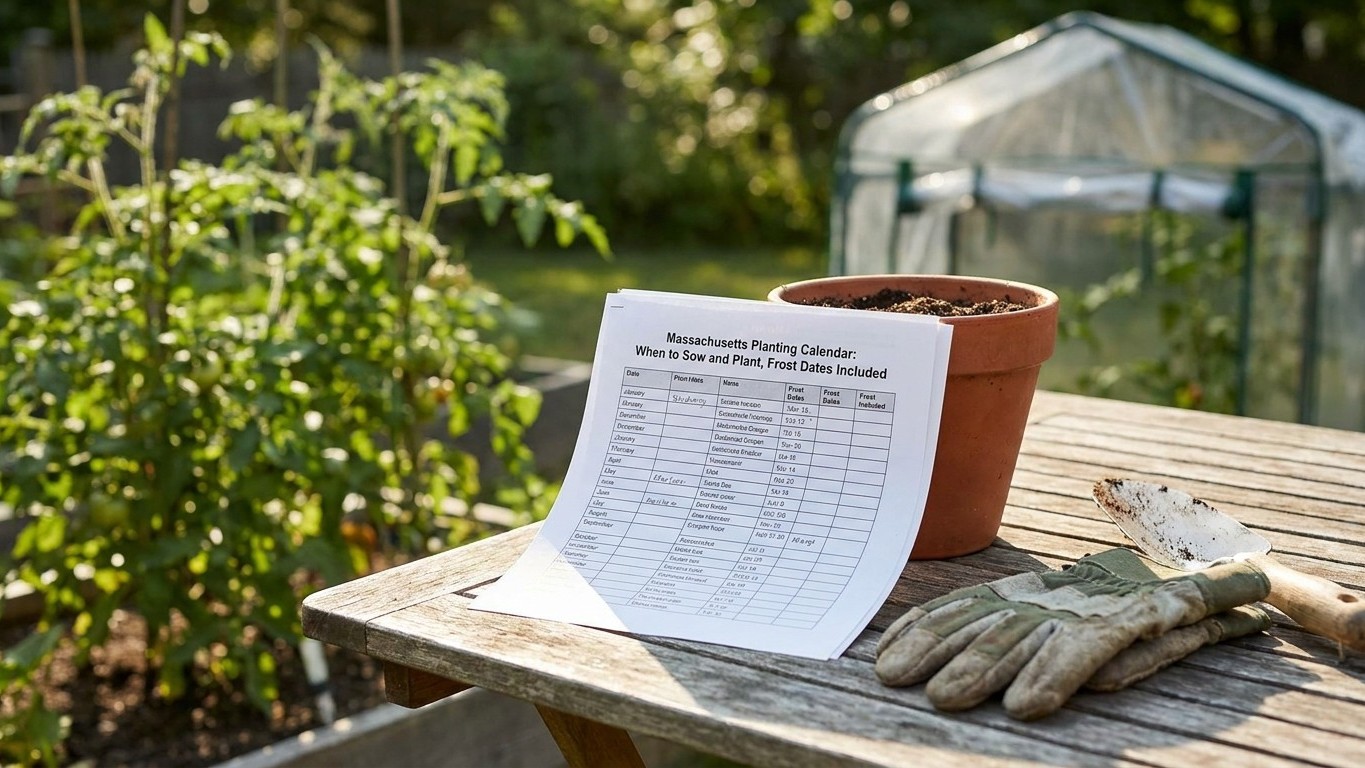

Massachusetts gardeners, here’s the honest answer: near Boston you’re safe to plant tender crops only after soil warms following that April 1–8 last-frost window, and you’re done once frost returns in early-to-mid November — but that’s the mild, coastal version of the story, not necessarily yours. If you’re inland, in the hill towns, or out in the Berkshires, your real dates sit further inside that window on both ends, so the calendar numbers alone will mislead you. Before you plant anything warm-season, go check your actual soil Temperature rather than trusting the date on a seed packet.
The frost window in Massachusetts

NOAA’s National Centers for Environmental Information puts the last spring freeze near Boston, measured at Logan Airport’s climate station, in the window of April 1 to April 8, using the 1991-2020 climate normals. The same dataset puts the first fall freeze at that station between November 3 and November 14. Those two dates bracket the growing season for the reference city, and they are the numbers most seed packets and generic planting charts assume when they mention Massachusetts without specifying where.
Logan is a waterfront, urban station, which makes it the mildest spot in the state for frost purposes. Inland valleys, the hill towns of central Massachusetts, and especially the Berkshires in the west run measurably colder. Their last frost typically arrives later in spring and their first frost comes earlier in fall, which shortens the frost-free season compared to the Boston figures above. If you garden outside the immediate Boston area, treat the NOAA dates as the mild end of the range rather than your actual local date.
What the numbers mean for your garden
Counting from the latest date in the spring window to the earliest date in the fall window (April 8 to November 3) gives a conservative frost-free season of about 209 days near Boston. Counting from the earliest spring date to the latest fall date (April 1 to November 14) gives an optimistic season closer to 227 days. Your actual season falls somewhere between those two figures depending on the year, and colder inland sites should plan for something shorter still. Treat the frost-free season as a range, not a countdown to a single day, and build a buffer into any planting plan that depends on a crop finishing before frost — if you’re wondering what to get started earlier in the season, see What to Plant in Massachusetts in January, or check what comes next with What to Plant in Massachusetts in September, or check what comes next with What to Plant in Massachusetts in February What to Plant in Massachusetts in November, or check what comes next with What to Plant in Massachusetts in July, or with What to Plant in Massachusetts in April, once the spring frost window has passedar/february/”>What to Plant in Massachusetts in February, or if you want to know what to get started once that spring window opens, see What to Plant in Massachusetts in Marchsteadpost.com/massachusetts/garden/planting-calendar/april/”>What to Plant in Massachusetts in April for a month-by-month breakdown, check the October guide for the tail end of the season, see What to Plant in Massachusetts in August for late-summer succession planting, or look ahead to the dormant months with What to Plant in Massachusetts in December: What to Plant in Massachusetts in October.
Cool-season crops
Peas, spinach, lettuce, brassica transplants, and most root crops don’t wait for the last frost. They tolerate a light freeze and actually perform worse if you delay them into warm soil, since several of these crops bolt or turn bitter once daytime temperatures climb. For a fuller month-by-month breakdown, see What to Plant in Massachusetts in May. For a month-by-month breakdown, see What to Plant in Massachusetts in June. Soil condition, not the calendar, decides when these go in: as soon as the ground can be worked without turning to mud, in the weeks leading up to the last spring frost of April 1 to April 8 near Boston (NOAA’s 1991-2020 normals), you can get them started.
Which cool-season crops go in first
- Peas: direct-sow as soon as the soil can be worked, well ahead of the last frost window.
- Spinach: direct-sow alongside peas, it germinates in cold soil that would rot a bean or squash seed.
- Lettuce: direct-sow or transplant seedlings ahead of the last frost, then succession-sow every couple of weeks.
- Brassica transplants (broccoli, cabbage, kale): set out started seedlings ahead of the frost date, they shrug off a light freeze once hardened off.
- Root crops (carrots, beets, radishes): direct-sow ahead of the frost date, since transplanting disturbs the taproot.
None of these crops need the ground to warm up first. Radishes and lettuce germinate in soil that would leave a bean seed sitting inert and eventually rotting. The risk with cool-season crops isn’t frost, it’s waiting too long: once nights stay reliably mild, spinach and lettuce bolt to seed and turn bitter, and peas stop setting pods. Get these in on the early side of the window rather than the late side, since Massachusetts summers arrive fast enough to cut a delayed cool-season harvest short either way.
Warm-season crops

Tomatoes, peppers, squash, beans, and corn all sit out the cool part of spring regardless of what the frost date says, because their real limiting factor is soil temperature, not just the presence of frost. A tomato transplant can survive a cool night and still sulk for two weeks if the soil underneath it stays cold. Wait until the soil itself has warmed, which for most of Massachusetts happens some days to a couple of weeks after the last spring frost date of April 1 to April 8 (NOAA’s 1991-2020 climate normals, Boston reference).
Matching tomato varieties to the calendar
Catalogue days-to-maturity figures for tomatoes count from the transplant date, not from seed, and they shift by a week or two depending on the season’s heat. Working from a Massachusetts transplant window of mid to late April, here’s how a range of tomato varieties line up against the state’s growing season, with the margin measured against the earliest likely fall frost of November 3 (NOAA’s 1991-2020 normals):
| Variety | Days to Maturity | Type | First Ripe (est.) | Margin Before Frost |
|---|---|---|---|---|
| Sakura | 55 | Indeterminate | mid June | 140 days |
| Edox | 55 | Indeterminate | mid June | 140 days |
| Valentine | 55 | Indeterminate | mid June | 140 days |
| Glacier | 55 | Determinate | mid June | 140 days |
| Sun Gold | 57 | Indeterminate | mid June | 138 days |
| Juliet | 60 | Indeterminate | late June | 135 days |
| Supersweet 100 | 60 | Indeterminate | late June | 135 days |
| Amalfi | 68 | Determinate | late June | 127 days |
| Cherokee Purple | 72 | Indeterminate | early July | 123 days |
| Big Beef Plus | 72 | Indeterminate | early July | 123 days |
| Tiren | 75 | Indeterminate | early July | 120 days |
| Granadero | 75 | Indeterminate | early July | 120 days |
| San Marzano II | 78 | Indeterminate | early July | 117 days |
| Celebrity Plus | 78 | Determinate | early July | 117 days |
Every variety on this list, even the latest-maturing paste tomatoes, finishes with well over three months of margin before the first fall frost. That margin exists because Massachusetts summers, short as the spring feels, run hot enough to ripen a full season of tomatoes once they get going. Fast varieties like Sakura or Valentine make sense if you want an early harvest, or if you’re gardening somewhere colder than Boston; slower ones like San Marzano II or Celebrity Plus are worth the wait for canning-scale harvests since the season easily supports them. Sun Gold’s Fusarium resistance and Cherokee Purple’s flavor reputation are two reasons growers pick a specific cultivar rather than whatever’s cheapest at the garden center.
For peppers, squash, beans, and corn, count backward the same way: figure your transplant or direct-sow date a week or two after the soil has warmed following the last frost, add the days-to-maturity from the seed packet, and check the total against the first fall frost window of November 3 to November 14. Start tomato and pepper seed indoors roughly six to eight weeks before your planned transplant date, which lands seed-starting in late February to early March for a mid-to-late-April transplant. Don’t rush transplants outdoors just because the calendar date has passed. Cold, wet soil sets a warm-season crop back further than a week’s delay ever will. Gardeners in North Carolina, where the frost-free season starts far earlier, can direct-seed these same crops weeks ahead of Massachusetts timing, as the North Carolina Planting Calendar lays out.
The fall planting window
Fall planting means counting backward from the first frost instead of forward from the last one. Boston’s NOAA 1991-2020 normals put the first fall frost at November 3 to November 14, so a fall crop needs to reach usable size before the earlier end of that window in case your particular year runs cold. Take the days-to-maturity on the seed packet, add one to two weeks to account for the slower growth of shortening fall days, and count back from November 3 rather than November 14 to build in a safety margin.
Working backward from fall frost
Fast crops like radishes and leaf lettuce fit easily into a fall slot even sown in August. Slower ones, kale, broccoli, and Brussels sprouts started from seed, need to go in during summer to have any real size on them by the time frost threatens. Direct-sown fall root crops and greens are far more forgiving of a late start than fall broccoli or cauliflower, which really need transplants rather than direct seed if you’re aiming for a fall harvest. A layer of row cover or a simple cold frame can push the harvest window past the first frost date entirely for cold-hardy greens, buying another few weeks beyond the November dates above.
Several crops actually improve after a light frost rather than being ended by it. Kale and Brussels sprouts sweeten once temperatures drop, as the plant converts stored starches to sugars in response to cold. Carrots and parsnips left in the ground do the same underground, which is why some gardeners leave root crops in place and mulch heavily rather than harvesting them all before the first freeze. Spinach sown in late summer will often sit through winter under a cold frame or heavy mulch and resume growth in spring, effectively giving you two planting windows from one sowing. None of this works for warm-season crops. A tomato or pepper plant caught by even a light frost is finished for the season, so the fall countdown for those crops runs the other way, toward pulling them before the first frost date rather than timing a harvest around it.
Reading a planting calendar properly
A state-wide planting calendar, this one included, is built from a single reference station: Boston’s Logan Airport, in NOAA’s case. That’s a useful baseline, but Massachusetts is not one climate. Elevation, distance from the coast, and even how much pavement surrounds a garden all shift the actual frost dates a plant experiences.
What actually determines your local dates
Higher ground cools faster and holds cold longer, which is why the Berkshires and the hill towns of Worcester County run behind the Boston dates in both directions: later to lose frost in spring, earlier to gain it back in fall. Coastal towns on the South Shore and Cape Cod see the opposite effect, since the ocean moderates temperature swings and delays the first fall frost past what an inland location at the same latitude would see. Urban and suburban areas with lots of pavement and buildings hold heat overnight, which is part of why Logan’s own readings run mild for its region. None of these adjustments are numbers you can look up for your specific yard. They’re patterns you confirm by watching your own garden over a season or two.
A late cold snap after a warm stretch is the failure mode that catches people out most often. A run of warm days in early April tempts gardeners into setting out tomatoes, and then a cold front drops overnight temperatures back toward freezing a week later, killing transplants that would have been fine under row cover. Track your own soil temperature with a simple probe thermometer rather than relying on air temperature or the calendar date, since it’s a better predictor of whether a warm-season seed will germinate or a transplant will sit and sulk. Gardeners in colder parts of New England face this even more sharply. New Hampshire’s higher terrain runs its whole calendar later, as detailed in our New Hampshire Planting Calendar, and the same logic applies within Massachusetts itself between the coast and the hills.
Local help
For frost dates and soil data specific to your county, the UMass Extension service maintains county-level growing information and offers soil testing that a state-wide calendar like this one can’t replace. A soil test is worth the small fee before you plant anything, since it tells you what a frost date never will: your actual pH and nutrient levels. Browse our Massachusetts guides for more on siting and building beds for the state’s specific soils and climate.
Common questions
When should I plant tomatoes outside in Massachusetts?
Set tomato transplants out mid to late April near Boston, once nights aren’t dropping near freezing and the soil has had time to warm past the last frost window of April 1 to April 8 (NOAA’s 1991-2020 normals). Gardeners inland or at higher elevation should wait longer, since their last frost typically runs later than the Boston figure.
Is it too late to plant a vegetable garden in June in Massachusetts?
No, June is still early enough for most warm-season crops and plenty of fast cool-season ones. Beans, summer squash, and cucumbers direct-sown in June still have well over 100 days before the first fall frost near Boston (November 3 to November 14, NOAA’s 1991-2020 normals), and quick greens like lettuce and radishes can go in through midsummer for a fall harvest.
Do I need to worry about frost after May in Massachusetts?
Frost after early May is uncommon near Boston based on NOAA’s climate normals, but it isn’t impossible, especially away from the coast. Keep row cover on hand through May if you’ve set out warm-season transplants early, since a single cold night can undo weeks of growth.
Why did my seed packet’s days-to-maturity not match what I got?
Because catalogue days-to-maturity figures are measured from transplant for most tomatoes and peppers, not from the seed-starting date, and they assume average heat for the region the breeder tested in. A cool, cloudy stretch in June or July will push actual ripening later than the packet suggests, regardless of the variety you planted.
Does Massachusetts have a big enough growing season for a fall garden after tomatoes?
Usually yes, if you clear tomato beds by late summer. With the first fall frost near Boston falling between November 3 and November 14 under NOAA’s 1991-2020 normals, there’s typically enough time after a July tomato harvest to fit a round of fast greens, radishes, or a second planting of bush beans before the season ends.
Some gardeners layer an older custom on top of frost dates: planting by the moon, which we explain as almanac tradition, not fact.
Related guides
- New Hampshire Planting Calendar: When to Sow and Plant, Frost Dates Included
- Vermont Planting Calendar: When to Sow and Plant, Frost Dates Included
- New Jersey Planting Calendar: When to Sow and Plant, Frost Dates Included
- When to Plant Cucumbers in Massachusetts
- Beet Soil in Massachusetts
- Growing Asparagus in Massachusetts