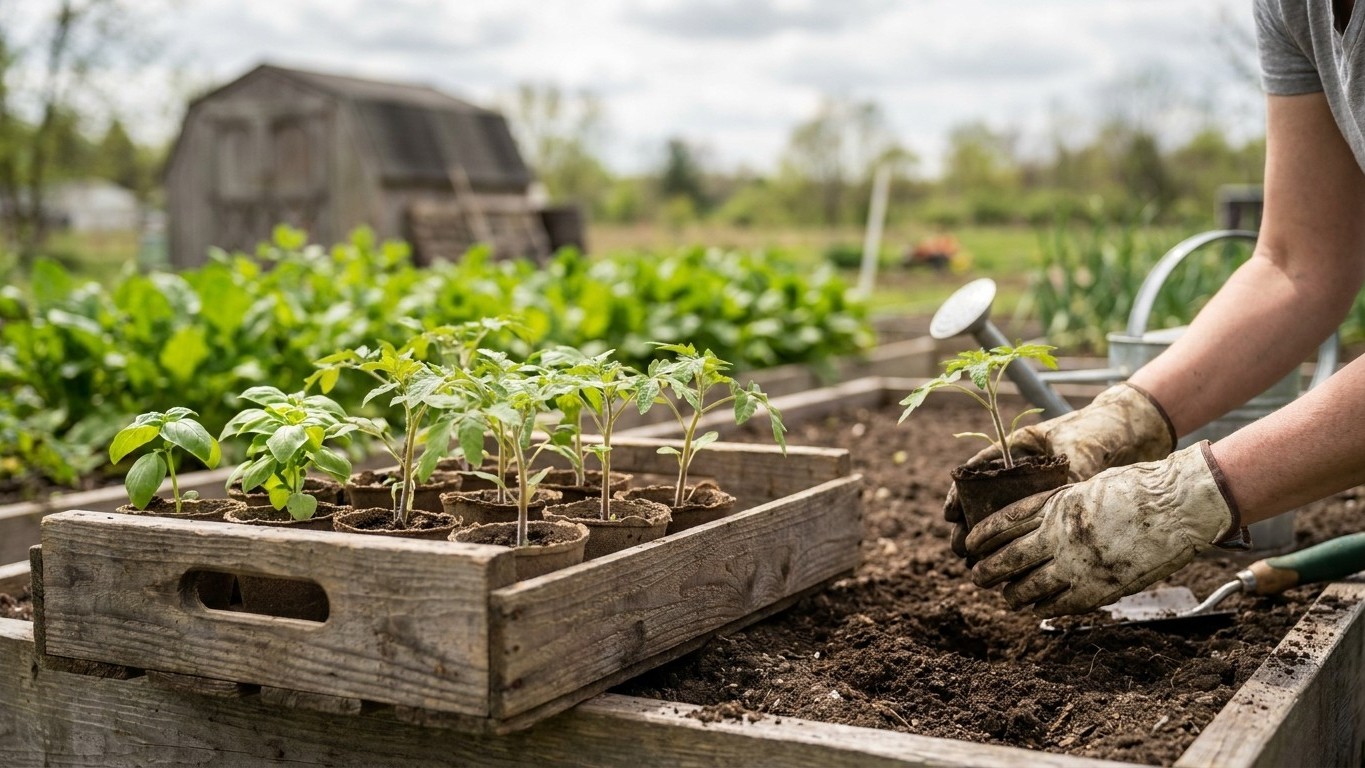

By May, most of Missouri has already cleared its last frost window of April 6 to April 20, so the answer is straightforward: this is the month to get warm-season crops into the ground. Tomatoes, peppers, beans, squash, corn and melons can all go in once soil has warmed, while cool-season holdovers like lettuce and spinach are finishing their run before summer heat pushes them to bolt.
What goes in the ground in May

The frost math matters more than the date on the calendar. NOAA’s 1991-2020 climate normals put the 30-70% probability band for the last spring freeze at Kansas City between April 6 and April 20, based on the downtown-adjacent station data. That means by the time May opens, the statistical frost risk for most of the state has already passed. But “most of the state” is doing a lot of work in that sentence: the reference station sits north of the city center, and southern Missouri, including the Ozark counties near the Arkansas line, tends to clear its last frost days earlier still. Northern Missouri and any higher-elevation pockets can lag behind.
What that means in practice: tomato and pepper transplants, once hardened off, are safe to set out for the vast majority of gardeners statewide. Direct-sow beans, sweet corn, cucumbers, summer and winter squash, melons, and okra once soil has had a chance to warm through a stretch of mild days. Sweet potato slips go in now too, since they sulk in cold ground far more than they sulk in a late start.
Soil temperature, not air temperature, is the real gatekeeper. A warm afternoon does not mean warm soil four inches down, and cold soil rots bean seed and stunts squash before it ever breaks the surface. Beans generally want soil in the 60s to germinate reliably; corn will push through cooler ground, closer to 50 degrees, but slowly. If a cold snap moved through in the past week, wait a few more days rather than trusting the thermometer on the porch.
Cool-season crops still have a short window here. Lettuce, spinach, radishes, and peas planted at the start of the month can still mature before heat turns them bitter or causes them to bolt, especially in northern counties where the season lags. By the back half of May, though, that window is closing fast, and effort is better spent on the summer lineup.
What to start under cover
Because the main warm-season transplants are already headed outdoors, starting things under cover in May shifts purpose: it is less about beating frost and more about staggering harvests or getting a jump on fall. Gardeners in the cooler end of the state’s 5b-7b hardiness range, where growing seasons run shorter, can start a second wave of squash or cucumbers indoors for transplanting a few weeks out, buying an extra two to three weeks of maturity time over direct-seeding alone.
The other use of cover this month is counting backward from the first fall frost, which lands between October 18 and October 29 across the reference range. Fall broccoli and cabbage typically need six to eight weeks under cover before they are ready to move to the garden, plus another eight to ten weeks in the ground to mature. Starting those trays in late May or early June, rather than waiting until midsummer heat is already punishing, keeps transplants from getting stressed and stunted before they ever reach the bed.
The two failure modes are familiar to anyone who has run a seed tray too long. Start too early and the transplants get rootbound and leggy, stretching for light and never quite recovering once planted out. Start too late, especially for fall brassicas, and the plant runs out of cool fall weather before it finishes bulking up. A rough rule: if a seedling has outgrown its cell and started circling roots at the bottom, it needed to be in the ground a week or two ago.
What is ready to pick
Asparagus beds hit their stride now, and established crowns can be cut steadily through the month before letting the ferns grow out to recharge the roots for next season. Rhubarb stalks are thick enough to harvest as well, and the general guide is to stop pulling by early summer to let the plant rebuild.
Spring greens are at their peak and their most urgent. Lettuce, spinach, and mustard greens planted earlier are ready and will not wait politely, since a run of 80-degree days can push them to bolt within days. Radishes sown in early spring should be pulling now too, and any left in the ground too long turn woody and hot-flavored.
Strawberries begin coming in toward the latter part of the month in much of the state, earlier in southern counties. The tell for ripeness is color all the way to the shoulders of the berry, not just the tip, since strawberries do not sweeten further once picked.
Green onions and early peas planted in late winter or very early spring round out the month’s harvest. For peas, snap pods when they feel full but still snap crisply; left too long on the vine they turn starchy and lose the sweetness that makes them worth growing at all.
The jobs that matter this month
Staking and caging go on before plants sprawl, not after. A tomato plant set into a cage at transplant time trains itself upward with little fuss; the same plant left to flop for three weeks fights the cage and snaps branches once someone finally tries to force it in. Do this in the first week after transplanting, not the third.
Mulching follows soil warming, and the order matters. Lay mulch too early, while soil is still cool from spring rains, and it insulates the cold in rather than keeping heat out. Wait until the soil has had a stretch of warm days, then mulch to lock that warmth in and cut back on weeding and watering for the rest of the season.
Succession sowing is the job most gardeners skip and most regret skipping. Beans, corn, and summer squash planted all in one week produce a single overwhelming glut and then nothing. Staggering plantings of the same crop every two to three weeks through late spring spreads the harvest out and avoids the annual scramble to give away four dozen zucchini at once.
Pest scouting starts now because populations are smallest now. Colorado potato beetle adults emerge as soil warms and lay eggs on the undersides of potato and eggplant leaves; checking those leaves weekly and crushing egg clusters early prevents the larval explosion that defoliates plants by midsummer. Cucumber beetles show up around the same time on young cucurbit seedlings, when the plants are least able to tolerate the damage.
Watering rhythm shifts too. Spring rains that carried seedlings through April often taper by late May, and new transplants without an established root system dry out fast in a sudden dry spell. A deep soak twice a week beats a light sprinkle every day, since it trains roots to grow down rather than staying shallow and vulnerable.
What not to do in May
The classic mistake is trusting a warm afternoon over the soil itself. Air temperature in the 70s does not mean the ground four inches down has caught up, and squash or bean seed planted into soil that is still cold from a wet spring often rots before it germinates rather than simply germinating slowly. If in doubt, wait three or four more days.
Pulling row cover or cold frames too early after a mild stretch is the second trap. A run of warm days can feel like permission, but a late cold pocket can still settle into low-lying gardens even after the statistical frost window has technically closed, particularly in northern counties or shaded valley locations that hold cold air longer than open ground nearby. Leave protection in place a few extra days past the point that feels necessary.
Heavy nitrogen at the wrong moment causes its own kind of failure. Feeding tomatoes and peppers a strong nitrogen dose right after transplanting pushes lush green foliage at the expense of flowering and fruit set. Hold off on nitrogen-heavy feeding until plants have set their first flush of blooms, then feed to support fruit rather than leaves.
Finally, planting everything in one sitting because it is all technically safe to plant now sets up the succession problem covered above before it even starts. Spreading warm-season plantings across two or three sessions a couple of weeks apart costs almost nothing in effort and pays off in a harvest that lasts rather than one that arrives all at once and then vanishes.
Checking this against your own county
A statewide frost window is a starting point, not an instruction for a specific backyard. Elevation, valley cold pockets, and the real distance between the state’s northern border and its southern Ozark counties can shift these dates by two or three weeks in either direction. A garden near the Iowa line and one near the Arkansas line are not on the same clock, even though both sit inside Missouri’s 5b-7b hardiness range.
The most reliable way to narrow this down is the University of Missouri Extension, which tracks local conditions and crop guidance by region: extension.missouri.edu. A quick call or visit to the county office pins down where a specific property falls within the statewide range.
Common questions
Is it safe to plant tomatoes in Missouri in May?
For most of the state, yes. The last spring frost window runs April 6 to April 20 at the Kansas City reference station, and southern counties tend to clear frost even earlier. Northern counties and low-lying cold pockets carry slightly more risk into early May, so hardening off transplants and watching the forecast for a week before setting them out is still worth the effort.
Can I still direct-sow beans and corn in May?
Yes, and May is the prime month for it, since soil has had time to warm past the point where seed rots rather than germinates. Staggering plantings every two to three weeks through the month keeps harvest spread out instead of arriving in one overwhelming wave.
What cool-season crops are running out of time?
Lettuce, spinach, and radishes sown in early spring are finishing their window now, particularly in the southern half of the state where heat arrives sooner. Once daytime temperatures push into the 80s consistently, these crops bolt and turn bitter regardless of watering.
How do I know if my area is warmer or cooler than the statewide frost window?
Elevation and latitude both matter. A property in the Ozarks near the Arkansas border typically clears frost earlier than one near the Iowa line, and the Kansas City reference data itself runs a few days later than downtown conditions. The county Extension office is the most direct way to confirm local timing.
Gardeners who plant by the Moon can check the May 2027 moon planting calendar, a tradition rather than a proven method.