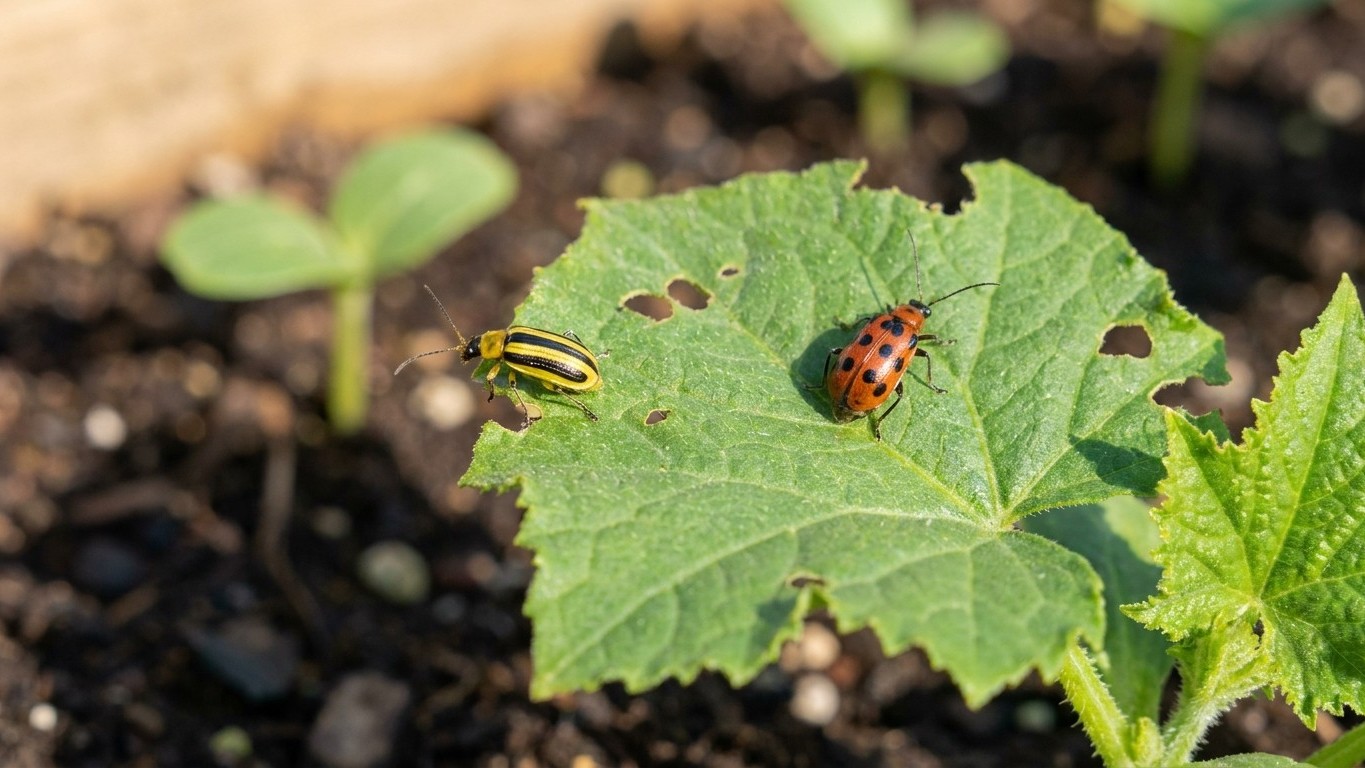

Cucumber beetles arrive in Missouri gardens the moment soil temperatures climb past 65°F, which usually lands between late April in the Bootheel and mid-May in northern counties near the Iowa border. If your squash and cucumber seedlings just broke ground, that’s exactly when these pests start scouting for tender leaves. Two species do the damage here: the Striped cucumber beetle and the Spotted cucumber beetle, and knowing which one you’re dealing with changes how you fight back.
When Cucumber Beetles Show Up in Missouri

Both species overwinter as adults, tucked into leaf litter, fence rows, and the edges of wooded lots. They wait out the cold, then emerge once the ground warms enough to trigger movement. Missouri’s climate splits into rough bands: the Bootheel and southern counties see beetles active by late April, the I-70 corridor typically by the first week of May, and northern Missouri counties often a week or two behind that.
What happens next matters as much as when it starts. Cucumber beetles in Missouri run through two generations most years. The overwintering adults feed and mate through May and June, laying eggs at the base of cucurbit plants. Larvae feed on roots for a few weeks, then pupate and emerge as a second wave of adults in late July through August. That second generation is the one gardeners often miss, because by then attention has shifted to harvest instead of pest patrol.
Spotted cucumber beetles tend to range more widely across Missouri, showing up in soybean fields and corn too, since their larvae (sometimes called southern corn rootworm) aren’t picky about host plants. Striped cucumber beetles stick closer to cucurbits specifically, which makes them more predictable but no less destructive once they settle into a squash patch.
Why They’re Worse Than the Holes They Chew
Chewed leaves and scarred rinds are the visible damage, but the real threat rides inside the beetle’s gut. Striped cucumber beetles carry the bacterium responsible for bacterial wilt, a disease that can kill a healthy cucumber or muskmelon vine within a week or two once symptoms start. The bacteria overwinter inside the beetle itself, so a single beetle feeding on a wound can inoculate an entire plant before you notice anything wrong.
Bacterial wilt shows up first as flagging leaves on one vine, usually starting at the tips during the hottest part of the afternoon. Cut a wilting stem near the base and press the two halves together, then pull them slowly apart. If you see thin, sticky strands of white ooze bridging the gap, that’s the bacterial signature, not just heat stress or underwatering. Cucumbers and muskmelons are the most vulnerable; squash and pumpkins show more resistance but aren’t immune.
Spotted cucumber beetles are less efficient at spreading bacterial wilt but still transmit squash mosaic virus, which stunts growth and mottles leaves without necessarily killing the plant outright. Between the two species, striped cucumber beetles cause the sharper, faster losses in a Missouri garden, especially on young seedlings that haven’t developed enough leaf mass to shrug off feeding damage.
What Actually Stops Them
No single tactic handles cucumber beetles on its own. Missouri gardeners who keep populations manageable usually stack two or three approaches together, timed around that late-April-to-May emergence window.
Prevention Before Planting
Timing your planting date matters more than most gardeners realize. Pushing transplant or direct-seed dates back by even a week or two, once soil temperatures are already warm enough for fast germination, means seedlings emerge with more established leaf tissue right as beetle pressure peaks. Fast-growing plants tolerate feeding better than fragile seedlings.
Crop rotation helps break the cycle, since larvae feed on roots in the same soil where eggs were laid. Moving cucurbits to a different bed each year, even a modest 10 to 15 feet away, reduces the odds that emerging larvae find a host plant right where they hatched.
Some squash varieties resist Striped cucumber beetle feeding better than others, particularly certain butternut and Hubbard types, which produce cucurbitacin compounds beetles find less appealing at certain concentrations. Seed catalogs and university trial data list beetle tolerance for specific varieties, worth checking before you order seed for next season.
Physical and Organic Controls
Floating row covers remain one of the most reliable tools, especially for the first three to four weeks after planting when seedlings are most vulnerable. Secure the edges tightly with soil or landscape staples, since beetles will find any gap. The catch: row covers have to come off once flowers open, because cucurbits need pollinator access, and that removal timing often lines up with peak beetle activity. Some gardeners hand-pollinate a few flowers before pulling covers, buying a little more protection time.
Trap cropping works surprisingly well in Missouri conditions. Blue Hubbard squash is highly attractive to striped cucumber beetles, so planting a border row of it around your main cucumber or melon crop pulls beetles toward the trap plants first. Treating just the border row with an insecticide, rather than the whole planting, cuts chemical use significantly while still protecting the crop you actually want to harvest.
Kaolin clay, sprayed as a fine particle film over leaves and stems, disrupts beetle feeding and egg-laying without killing beneficial insects. It needs reapplication after rain, which in a typical Missouri summer with afternoon thunderstorms means checking coverage every few days during heavy pressure periods.
Yellow sticky traps placed near cucurbit beds catch adults and give you an early read on population buildup, which helps you decide whether to escalate treatment. For organic options with faster knockdown, spinosad-based products applied directly to beetles (not as a broad preventive spray) give control while sparing most pollinators if applied in early morning or evening when bees aren’t actively foraging.
When Chemical Control Makes Sense
For gardeners dealing with heavy infestations, pyrethroid insecticides labeled for cucumber beetles offer the fastest knockdown, but timing and targeting matter. Spraying at dusk, after bees have finished foraging for the day, reduces harm to pollinators that cucurbits depend on for fruit set. Rotating between different insecticide classes, rather than reaching for the same product every time, slows the development of resistance in local beetle populations, something Missouri State University Extension IPM programs have flagged as an increasing concern in row-crop and garden settings alike.
Systemic soil-applied insecticides at transplant offer another route, protecting seedlings from the roots up during that critical early window without requiring repeat spraying. They come with tighter application rules around pollinator protection, so read labels carefully before use, particularly regarding pre-bloom cutoff dates.
Missouri gardeners dealing with related pests in the same cucurbit patch, like squash bugs, often find that many of these same strategies, row covers, trap crops, timed planting, overlap in usefulness. The two pests frequently show up in the same beds within weeks of each other, so a combined defense plan saves time compared to treating each threat separately.
One detail that catches Missouri gardeners off guard: beetle pressure doesn’t always decline steadily through summer. That second-generation emergence in late July or August can hit a garden just as fruit is setting on fall squash or late cucumber plantings, meaning the fight isn’t over once June’s beetles seem to have thinned out. Checking under leaves and along stems through Labor Day, not just in spring, catches that second wave before it triggers a fresh round of bacterial wilt on plants that had looked perfectly healthy all summer.