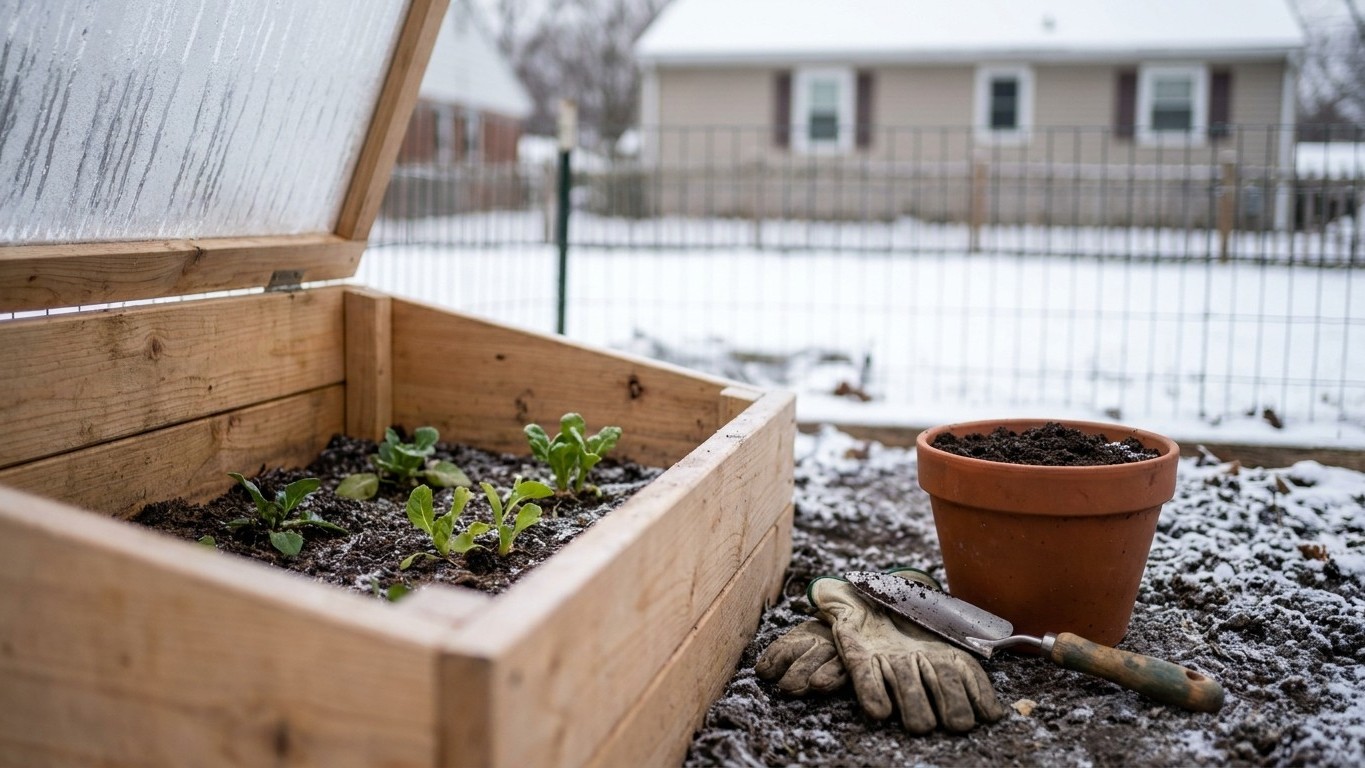

January in Nebraska means frozen ground almost everywhere in the state, so the direct-sow list is short to nonexistent. What actually happens this month is indoor seed-starting for the slowest crops, dormant-season orchard work, and protecting whatever is already tucked under a cold frame or a heavy mulch layer from the swings between deep freeze and January thaw.
What goes in the ground in January

With Nebraska sitting in USDA hardiness zone 4a-5b, soil across the state is frozen solid in January, and the last spring frost at the reference station doesn’t arrive until somewhere between April 12 and April 23. That means direct field planting is off the table this month, full stop. No amount of a warm afternoon changes what the soil thermometer would tell you six inches down.
What still moves forward is anything that doesn’t depend on open, workable ground. If garlic or shallot cloves didn’t get into the bed during the fall planting window, a rare January thaw in the southeastern counties can occasionally allow a late, marginal planting where the soil has actually softened, but this is a backup plan, not a strategy. Better to treat garlic as fall’s job and use January for everything else.
Cold frames and low tunnels are doing real work right now if they were set up in the fall. Spinach, mache, and claytonia sown back then are sitting nearly dormant under the glazing, and the frame’s job is simply to buffer the worst of the cold, not to promote fast growth. Bare-root fruit trees, brambles, and roses can go into the ground on the rare day when frost has lifted enough to dig a hole, though most gardeners heel them into a protected trench or a bucket of damp sand until conditions improve.
Indoors, this is the month for forcing. Rhubarb crowns dug in the fall and kept cold can be brought into a dark, warm space to push pale, tender stalks weeks ahead of the garden. Chicory roots handled the same way, forced in darkness, produce Belgian endive, a genuinely useful trick for a household that wants something fresh from a plant that technically isn’t growing outside at all.
What to start under cover
The arithmetic for January seed-starting runs backward from that April 12-23 frost window, not forward from the calendar page. The slowest, earliest-sown crops are the ones that need 8 to 12 weeks of indoor growth before they’re ready to go outside, and January is exactly that stretch of time before the frost window opens.
Onions grown from seed rather than sets need roughly 8 to 10 weeks indoors before transplanting, and transplanting itself typically happens about 4 weeks ahead of the last frost, since young onion plants tolerate cold soil well. Counting back from an April 12-23 frost date puts onion transplanting in early-to-mid March, which pushes the indoor sowing date into early-to-mid January. Leeks follow a similar timeline, sometimes slightly earlier since they’re planted out closer to the frost date itself but need a longer head start. Celery and celeriac are the true slow-pokes of the vegetable garden, needing 10 to 12 weeks indoors before they’re transplanted near the last frost, which lands their sowing date in mid-to-late January.
| Crop | Weeks indoors before transplanting | Approximate sowing window |
|---|---|---|
| Onions (seed) | 8-10 weeks | Early to mid-January |
| Leeks | 10-12 weeks | Early to mid-January |
| Celery / celeriac | 10-12 weeks | Mid to late January |
The two ways this goes wrong are mirror images of each other. Start too early, without enough light or space to keep up with growth, and the seedlings turn leggy and rootbound long before the ground is ready for them, a stress they often never fully recover from. Start too late and there’s not enough runway left before the frost window closes, especially with onions, which bulb according to day length regardless of how big the plant is by then. A grow light and a spot to bump plants into bigger pots as they grow solves most of this.
What is ready to pick
Almost nothing is coming out of an open Nebraska garden bed in January, and that’s just the reality of zone 4a-5b in the dead of winter. What still feeds a household comes from three sources: what’s protected outside, what’s growing indoors, and what’s sitting in storage.
Kale planted for fall harvest often survives under a thick mulch layer or snow cover well into winter, and a spell of milder weather can make it worth digging out for a harvest, since cold exposure actually sweetens the leaves. Leeks left in the ground with heavy mulch around the base can sometimes be lifted the same way, soil permitting. Inside a cold frame, spinach, mache, and claytonia sown in fall keep producing small but usable harvests through the coldest months, since the frame doesn’t need to warm the soil much, just take the edge off the air temperature.
Indoors, sprouts and microgreens are the fastest fresh food a January kitchen can produce, ready in a week to ten days from a jar or a tray with no soil required at all. This is also the month to go through the root cellar or basement storage shelf. Squash should feel firm with no soft spots near the stem end; potatoes that have started sprouting or gone green need to be pulled and used first; onions that have gone soft at the neck or started smelling won’t improve with more time. Checking storage now, rather than waiting for a bad smell to announce the problem, saves the rest of the batch.
The jobs that matter this month
January carries more weight for a Nebraska garden than the bare beds suggest, because most of what happens now determines how the whole season unfolds.
Pruning and structural work
Dormant pruning of apple and pear trees, along with raspberry and blackberry canes, is best done in late winter while the plant is fully dormant and the structure is easy to see without leaves in the way. Grapevines benefit from the same timing. Cutting now, rather than waiting until buds swell, reduces stress on the plant and lowers disease risk since pruning wounds heal faster before sap starts flowing heavily.
Ordering, planning, and soil
Seed catalogs move fast, and the popular open-pollinated and disease-resistant varieties tend to sell out first, so placing seed orders in January, rather than waiting until spring fever hits everyone at once, is a real advantage rather than an act of impatience. This is also the natural point to sketch out crop rotation for the coming season, moving nightshades and brassicas to beds where they weren’t grown the year before to interrupt disease cycles. Soil samples can be collected any time the ground isn’t frozen solid and sent for testing, giving results back well before spring amendments need to go down.
Maintenance that has nowhere else to go
Compost piles benefit from a turn even in cold weather, since it keeps the pile from going anaerobic and stalling out completely. Tools left dirty since fall should get cleaned, oiled, and sharpened now, when there’s time for it, rather than in the rush of the first warm week. Raised bed frames, trellises, and fencing showing winter damage are easier to repair while nothing is planted around them.
What not to do in January
The most common mistake this month is starting warm-season crops like tomatoes and squash indoors far too early, tempted by cabin fever rather than the calendar’s actual math. Given the April 12-23 frost window, tomatoes started in January will be leggy, rootbound, and stressed long before it’s safe to move them outside; six to eight weeks before the frost date is the right window, which for most of Nebraska lands in late February to March, not January.
A second mistake follows any stretch of unusually mild January weather: pulling mulch or row cover off overwintering crops and beds because it finally feels like spring. Nebraska’s January thaws are real but brief, and the cold that follows can hit newly exposed plants and soil hard. Mulch stays on until the frost pattern actually shifts, not until one warm afternoon suggests it might.
Fertilizing is the third trap. Applying nitrogen to dormant lawns, trees, or overwintering vegetables in January does the plant no good since it isn’t in active growth to use it, and on lawns it can simply wash away with snowmelt before spring green-up even starts. Save the nitrogen application for when growth actually resumes.
Checking this against your own county
A statewide frost window is a starting point, not a guarantee for any particular garden. The April 12-23 range comes from one reference weather station, and elevation, local terrain, and the real difference between Nebraska’s Panhandle and its southeastern counties can shift that window by a couple of weeks in either direction. Rural and suburban gardens away from the airport station often see frost arrive earlier in fall and linger later in spring than these figures suggest.
The most reliable next step is checking those local patterns directly through the University of Nebraska-Lincoln Extension, which tracks county-level growing conditions and planting guidance specific to the state.
Common questions
Can I plant anything directly outside in a Nebraska garden in January?
No. Soil across the state is frozen in January, and with the last spring frost not arriving until between April 12 and April 23 at the reference station, direct outdoor sowing has to wait for spring.
Is January too early to start tomato seeds indoors?
Yes, for most of the state. Tomatoes are typically started 6 to 8 weeks before the last frost, which points to late February or March sowing rather than January, since seedlings started this early usually become leggy and stressed by transplant time.
What can I still harvest from a Nebraska garden in January?
Very little from open ground. Overwintered kale or leeks under mulch, greens from a cold frame, and indoor sprouts or microgreens are realistic options, along with whatever squash, potatoes, and onions are holding up in storage.
Why does this page give a range for frost dates instead of one exact day?
Frost timing varies year to year and by location even within the same county, so NOAA’s climate data expresses it as a probability window rather than a single date. Treat the range as the planning tool it is, and check local conditions before committing tender plants to the garden.