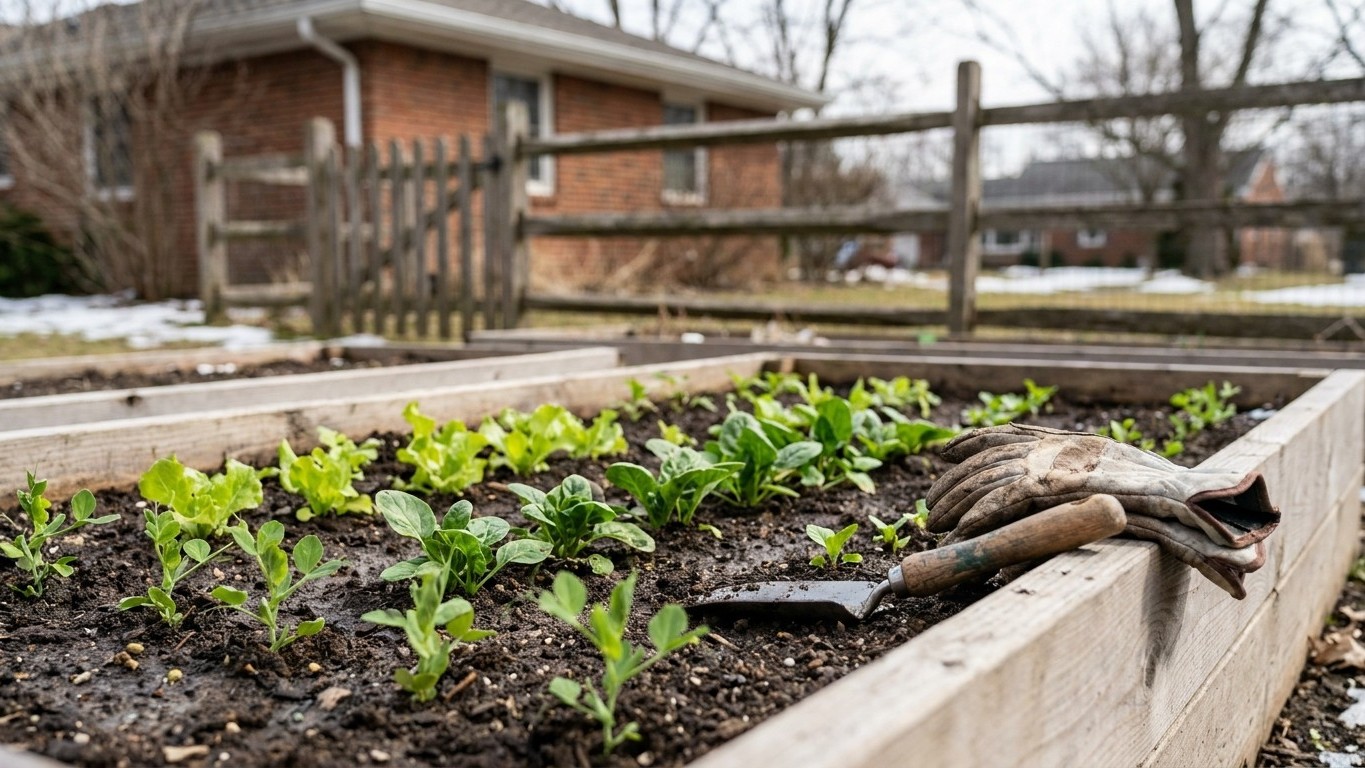

Nebraska gardeners can put a short list of cold-hardy crops into workable soil this month: peas, spinach, radishes, lettuce and onion sets, along with bare-root asparagus, rhubarb and fruit stock. Everything else, especially tomatoes, peppers, beans and squash, waits until after the region’s last spring frost, which lands between April 12 and April 23 at the Omaha reference station. March is a soil-temperature month, not a soil-color month.
What goes in the ground in March

The frost window matters more than the calendar page. With the last spring freeze typically falling between April 12 and April 23 near Omaha, March sits three to seven weeks ahead of that date across most of Nebraska, and soil temperature, not air temperature, decides what survives. A 60-degree afternoon in the third week of March does not mean the top two inches of soil have warmed enough for a seed to germinate rather than rot.
What tolerates this is a short, specific list. Peas germinate in soil as cold as 40 degrees and shrug off a light frost once up. Spinach, lettuce, radishes and kale seed can go into a bed the moment it can be raked, not shoveled. Onion sets and onion transplants belong in the ground as soon as the soil is workable, since bulb size depends on how much cool growth happens before daylight triggers bulbing. Garlic is normally a fall-planted crop across the state’s 4a-5b range, so March garlic is a rescue plan for a bed that got missed in autumn, not the preferred schedule.
Bare-root stock is the other March category worth attention: asparagus crowns, rhubarb divisions, and dormant fruit trees, brambles and grapevines can all go into prepared ground while they’re still dormant, provided the soil isn’t waterlogged from snowmelt. Cold frames and low tunnels stretch the window further, letting a gardener direct-sow spinach or mesclun two to three weeks earlier than open ground would allow.
What doesn’t belong outdoors yet is everything that dies at 32 degrees: tomatoes, peppers, eggplant, beans, cucumbers, squash and corn. Six to seven weeks of frost risk remain after most of March, and a warm afternoon doesn’t change that math.
What to start under cover
Seed-starting dates work backward from the last frost window, not forward from the first day of the month. With the frost range set at April 12 to April 23, a tomato seedling that needs six to eight weeks to reach transplant size should be started roughly in mid-to-late February for the earliest part of the state, or into early March for gardeners closer to the later end of that window. Peppers and eggplant run slower, eight to ten weeks from seed to a sturdy transplant, so March is often the last reasonable window to start them indoors without ending up short on time.
Cole crops behave differently because they tolerate cold once hardened off. Broccoli, cabbage and cauliflower started indoors in March, on a six-to-eight-week clock, can go outside two to four weeks before the last frost date rather than after it, since a light freeze doesn’t bother them the way it bothers a tomato.
Two mistakes show up every year. Starting too early produces a rootbound, leggy plant sitting on a windowsill for weeks past its prime, stretched and weak by the time the ground is finally warm enough to receive it. Starting too late means a transplant that goes into the garden undersized, losing weeks of growing season it can never fully make up, especially for long-season peppers and eggplant. Counting backward from the actual frost window for a specific county, rather than a fixed date on the wall calendar, is the only way to land in between those two failures.
What is ready to pick
Little comes out of open Nebraska ground in March, and there’s no point dressing that up. What still feeds a household is what survived winter under cover or in storage. Overwintered kale, and leeks that were mulched heavily in fall, can still be harvestable where they made it through the 4a-5b winter, often sweeter after repeated cold exposure. Parsnips left in the ground over winter, if the bed didn’t freeze solid to the crown, dig out remarkably sweet this time of year.
Cold frames earn their keep in March: spinach, mache, arugula and other greens seeded in late winter or left over from fall keep producing thin harvests as light returns. Indoors, sprouts and microgreens take seven to fourteen days from seed to plate and don’t depend on outdoor conditions at all, a useful stopgap while the garden itself sits mostly dormant.
Storage crops need a check-in this month. Squash held since fall should be examined for soft spots or a sweet, fermented smell near the stem, both signs it’s turning. Potatoes sprouting eyes in storage are still usable if firm, but any that have gone soft or green should be pulled before they affect the rest of the bin. Onions that have started to sprout green shoots from the neck are on borrowed time and worth using first.
The jobs that matter this month
March carries more weight for the rest of the season than the empty rows suggest. Dormant pruning of fruit trees, brambles and grapevines needs to happen before buds break, since cuts made after growth resumes cost the plant stored energy it needs for the season ahead. This is also the last comfortable window to order seed before the more popular varieties sell out, a real risk with certain tomato and pepper cultivars that go out of stock by early spring.
Soil, tools and structure
Soil testing done now gives results back in time to amend before planting, rather than guessing at fertility after the fact. Compost piles built up over winter benefit from a turn as temperatures climb, speeding the breakdown that will feed spring beds. Tools left dirty since fall, pruners especially, should be cleaned and sharpened; a dull blade crushes rather than cuts, leaving wounds that heal slower and invite disease.
Repairs and rotation planning
Raised beds heaved by winter frost, and fencing loosened by snow load, are easier to fix now than after seedlings are already in the ground and every repair risks trampling something. This is also the month to finalize crop rotation on paper, since once transplants go in, that plan is locked for the season. Stored crops deserve one more inspection pass, since a single rotting potato or onion left in a bin can spread to its neighbors within days.
What not to do in March
The most common mistake is planting warm-season crops into cold soil because the air finally felt like spring. A 65-degree afternoon doesn’t warm the top six inches of soil enough for bean or squash seed to germinate before it rots, and transplanting a tomato this early, weeks ahead of the April 12-23 frost window, risks losing it to a single cold night. Wait for the soil, not the sunshine.
Uncovering perennials and mulched beds too early after a mild stretch is the second trap. Nebraska’s zone 4a-5b range means late cold snaps are normal, not exceptional, and a rhubarb crown or strawberry bed stripped of its mulch during a warm week can still take a hard hit from the freeze that follows. Leave protective mulch in place until the frost risk has genuinely passed, checking the extension service’s local guidance rather than trusting a single warm forecast.
Nitrogen timing trips up a lot of gardeners too. Feeding a heavy dose of nitrogen to dormant perennials or bare beds before real growth resumes mostly feeds weeds and leaches away with spring rain, rather than reaching the roots that could use it once active growth starts. Hold fertilizer until there’s visible green growth to receive it, and skip pruning on spring-flowering shrubs like lilac or forsythia now, since they bloom on last year’s wood and a March cut removes the very flowers the plant was about to produce.
Checking this against your own county
A state-wide month is a starting point, not an instruction. Nebraska’s hardiness range runs from 4a to 5b, and elevation, local topography and the difference between the state’s northern and southern counties can shift the last frost date by two weeks or more from the Omaha-area figures cited here. A garden in the Panhandle behaves differently than one along the Missouri River, even in the same month.
The reliable next step is county-specific: check the University of Nebraska-Lincoln Extension for local planting calendars and frost data tailored to a specific area, rather than treating any single reference city’s numbers as a guarantee.
Common questions
Can I plant tomatoes outdoors in Nebraska in March?
No. The last spring frost in the reference data runs between April 12 and April 23, and tomatoes are killed by a single freeze. Start tomato seed indoors in March instead, six to eight weeks before the local frost date, and transplant only after that window has passed.
Is it too early to plant peas in March in Nebraska?
Not if the soil is workable. Peas germinate in soil as cool as 40 degrees and tolerate light frost once sprouted, making them one of the few crops suited to direct sowing this early in the state’s 4a-5b range.
Should I still plant garlic in March if I missed the fall window?
It can be done, but expect smaller bulbs than fall-planted garlic, since the crop normally needs a longer cold period before shoot growth begins. Fall planting remains the standard recommendation for the region.
When should I uncover mulched perennials in spring?
Wait until the frost risk has genuinely passed rather than reacting to one warm week. Given the April 12-23 last-frost range, a mild stretch in March is not a reliable signal, and removing mulch too early can expose crowns to a later cold snap.