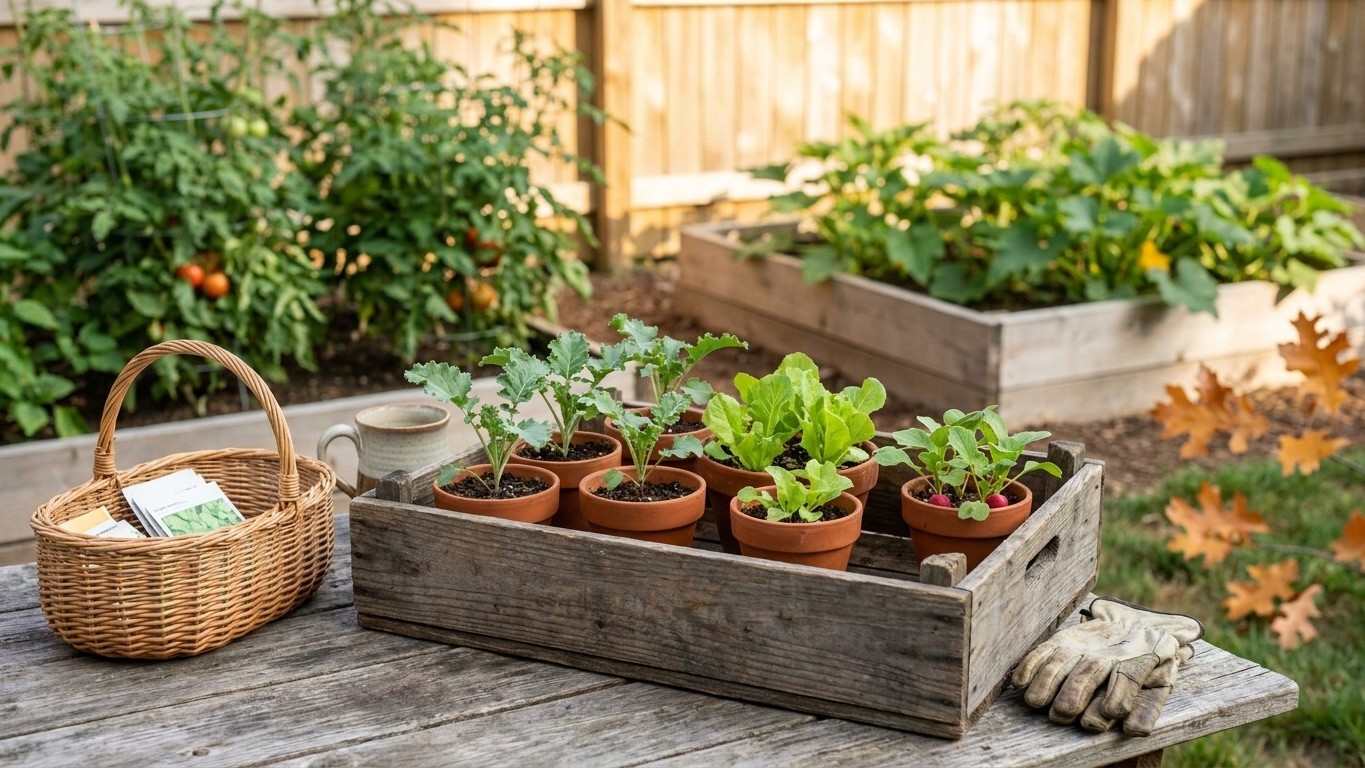

August in Nevada splits along elevation lines more than almost any other month. In the low desert around Las Vegas, this is peak heat and a holding pattern for most direct-sown seed. In Reno, Carson City, and the high mountain valleys, August is the real start of fall planning: cooler nights are still weeks away, but the clock for the second season is already running.
What goes in the ground in August

Soil temperature, not the date on the calendar, decides what survives in Nevada in August. Bare desert soil can sit well above 95°F at seed depth through the afternoon, hot enough to push most cool-season seed into dormancy before it ever germinates. That’s true even in the higher valleys, where daytime air feels comfortable but exposed soil still bakes under direct sun.
In the low desert, direct sowing is mostly a gamble unless the crop is built for heat. Southern peas, okra, and heat-tolerant amaranth greens can still go into open ground early in the month and finish before conditions turn. Bush beans planted in the first week or two of August often have just enough runway to mature before nights cool enough to slow them down. Everything else, tomatoes, peppers, squash transplants, is a loss at this point; there isn’t enough season left to justify the risk, and transplant shock in 105°F afternoon sun is close to a guarantee of failure.
At elevation, the picture loosens slightly as the month goes on. Once soil temperatures start easing in the last week or two of August, root crops like carrots, beets, and turnips can go in directly, especially under a layer of light mulch or shade cloth that keeps the seed zone from overheating. Garlic and shallots are not an August crop in Nevada; that planting comes later, once soil has cooled further into fall, so hold that seed stock rather than rushing it into ground that’s still too warm to root well.
The safest rule for the month: if soil measured at a two-inch depth is still hot to the touch in the early morning, wait. Anything you plant now competes with heat stress before it competes with anything else.
What to start under cover
August is when Nevada gardeners should be starting fall brassicas and greens, but the timing has to be counted backward from the local first frost rather than from a fixed date. NOAA’s 1991-2020 climate normals put the average first fall freeze for the Las Vegas area in the December 8 to December 23 window, which is one of the latest in the country and reflects an extreme urban desert heat pattern, not a statewide figure. In Reno, Carson City, and anywhere with real elevation, first frost typically arrives far earlier in the fall. Nobody publishes a single Nevada-wide date for that reason; check with your county extension office for a number that fits your actual site.
Where frost holds off until December, as it does in the low desert, there’s a wide buffer: brassica and lettuce seed started indoors or under shade in August has plenty of time to become sturdy transplants before outdoor conditions cool enough to receive them in September or October. Where frost lands much earlier, the window is tighter, and seed started now needs to move outside as soon as nighttime temperatures allow, not sit and wait.
Start seed trays somewhere protected from direct afternoon sun, indoors near a bright window or under shade cloth outside, since ambient heat this month is enough to cook young seedlings in open trays. The two failure modes show up fast: start too early in a hot, low-light spot and you get leggy, rootbound plants stretching for light before they ever see real ground; start too late and the transplants miss the mild stretch of fall entirely, landing in ground that’s either still too hot or already turning cold.
What is ready to pick
August is one of the fullest harvest months in Nevada’s low desert and mid-elevation gardens alike. Tomatoes planted in spring are producing steadily, though fruit set often slows once nighttime temperatures stay above roughly 75°F, a heat effect rather than a plant problem. Peppers, squash, cucumbers, melons, sweet corn, and beans are all coming in, and daily picking matters more now than in any cooler month, since heat accelerates both ripening and spoilage on the vine.
Melons are ready when the stem near the fruit separates easily with light pressure, a sign gardeners call “slipping.” Summer squash is best picked young and often, before the skin toughens; left too long in August heat it turns from tender to woody within days. Tomatoes that split after a heavy watering are still edible if picked immediately; leaving them cracked in the heat invites pests and rot fast.
Garlic and onions harvested earlier in summer should already be curing in a shaded, ventilated spot by now. Check that stash regularly through August; the same heat that ripens fruit on the vine also accelerates spoilage in storage, so any soft or sprouting bulb needs to be pulled and used before it takes neighbors with it.
The jobs that matter this month
Watering rhythm is the single job that matters most in a Nevada August. Deep, infrequent watering that reaches the full root zone beats frequent shallow watering, which trains roots to stay near the hot surface and makes plants more heat-vulnerable, not less. Early morning is the right time to water, giving foliage a chance to dry before the intense midday sun hits wet leaves.
Mulch does double duty this month, holding soil moisture and keeping root zones several degrees cooler than bare exposed soil. A two- to three-inch layer around established plants, kept a little back from stems, pays for itself in reduced water use alone. Shade cloth over vulnerable crops, tomatoes and peppers especially, prevents sunscald on fruit and cuts plant stress during the hottest afternoon stretch.
Pest pressure builds with the heat. Spider mites thrive in hot, dry, dusty conditions and can defoliate a plant within a couple of weeks if missed; a strong water spray on the underside of leaves knocks populations back without chemicals. Squash bugs and their egg clusters are worth checking for on the undersides of leaves every few days, since a small early infestation is manageable and a large one usually isn’t.
Staking and tying sprawling tomato and melon vines now, before they collapse under their own weight in the heat, saves fruit from sitting on hot soil where it rots or scalds. This is also the month to start prepping beds that will go into fall crops, working in compost and letting it settle, so the ground is ready the moment soil temperatures drop enough for planting rather than losing another two weeks to prep later.
What not to do in August
The most common mistake is direct-sowing cool-season seed, lettuce, spinach, peas, straight into bare August soil because the forecast says the air will cool off later in the week. Seed sitting at 90°F-plus soil temperature often just won’t germinate; it isn’t damaged, it’s dormant, and it will sit there wasted while the gardener assumes something went wrong with the seed itself. Start that seed under cover instead and transplant once soil actually cools.
Overwatering on a frequent, shallow schedule is another one. It feels responsible during a heat wave, but it keeps roots shallow and thirsty instead of deep and resilient, so plants end up needing even more water to survive the next hot stretch. Switching to less frequent, deeper watering solves more heat stress than adding extra light waterings ever will.
Pulling shade cloth or mulch during a brief cool spell is a trap worth naming directly: Nevada’s August heat rarely breaks for good this early, and a plant that’s had a few easy days under shade often scalds badly the moment full sun returns unprotected.
Heavy nitrogen feeding this month tends to backfire too. It pushes soft new leafy growth right when plants are already under water stress, and that new growth is the first tissue to wilt and burn in afternoon heat. Hold major fertilizing for the cooler growth window once temperatures ease, and stick to light, balanced feeding if anything is needed now.
Checking this against your own county
A single statewide answer for Nevada is a starting point, not an instruction. The USDA Plant Hardiness Zone Map places the state anywhere from zone 4a to zone 10a, a spread built on average extreme minimum winter temperature alone, and it says nothing about summer heat, elevation, or how far apart Las Vegas and the high mountain valleys really sit on any growing calendar. Local elevation, exposure, and microclimate can shift real planting windows by weeks in either direction.
The most reliable next step is checking that window against your own county rather than a state average. The University of Nevada Cooperative Extension maintains county-level guidance built for exactly this kind of variation.
Common questions
Can I plant tomatoes in Nevada in August?
Not as a new planting. There isn’t enough season left before heat stress and eventual cooler fall conditions to justify transplanting tomatoes now, and existing plants already in the ground are the ones worth focusing on through the heat.
Why won’t my lettuce seed germinate when I plant it in August?
Most lettuce seed goes dormant above roughly 80°F soil temperature rather than dying outright. Start it under cover in a cooler, shaded spot and move transplants outside once soil has cooled, instead of sowing directly into hot August ground.
Is August too late to start fall vegetables in Nevada?
No, but timing depends heavily on your local first frost, which varies enormously across the state by elevation. Start brassica and green transplants under cover now and check your county extension office for the frost window that applies to your specific area.
How often should I water vegetables during Nevada’s August heat?
Less often but deeper is the general principle: watering that reaches the full root zone a few times a week outperforms light daily watering, which keeps roots shallow and makes plants more vulnerable to heat stress, not less.