
Squash bugs show up in Nevada gardens right after the soil warms in spring, typically mid-April in the Las Vegas Valley and closer to late May or June in Reno and the northern valleys. What actually stops them isn’t a single spray. It’s a mix of destroying their winter hiding spots, catching the eggs before they hatch, and hitting the nymphs while they’re still soft and clustered.
That timing gap between southern and northern Nevada matters more than most gardeners realize. A grower in Pahrump might be scraping egg clusters off zucchini leaves in early May while someone in Carson Valley hasn’t even seen an adult yet. Knowing which climate zone you’re gardening in is the first real step toward getting ahead of this pest instead of chasing it all summer.
Nevada’s Climate Shapes When Squash Bugs Appear

Nevada isn’t one growing region. The Mojave Desert stretch around Las Vegas and Pahrump sits in USDA hardiness zones 8-9, with long, hot seasons that let cucurbits go in the ground as early as March. Squash bugs (Anasa tristis) overwinter as adults in that region too, tucked into dead leaves, wood piles, and the edges of raised beds, and they emerge as soon as daytime temperatures hold steady in the 70s.
Head north into the Great Basin, around Reno, Carson City, and the Truckee Meadows, and you’re dealing with zones 6-7. Frost can linger into May, which delays both planting and the bug’s emergence. The trade-off: a shorter window means Nevada’s northern gardens usually see just one squash bug generation per season, while the extended growing season down south can support a second wave by late summer if the first one isn’t controlled.
Irrigation habits in Nevada’s arid climate add another wrinkle. Straw mulch and drip-irrigated beds hold moisture that plants desperately need in the desert, but that same mulch layer is exactly where adult squash bugs like to spend the winter. Clearing it out at season’s end does more to reduce next year’s population than most pesticide treatments applied mid-summer.
How to Spot Squash Bug Damage Before It’s Too Late
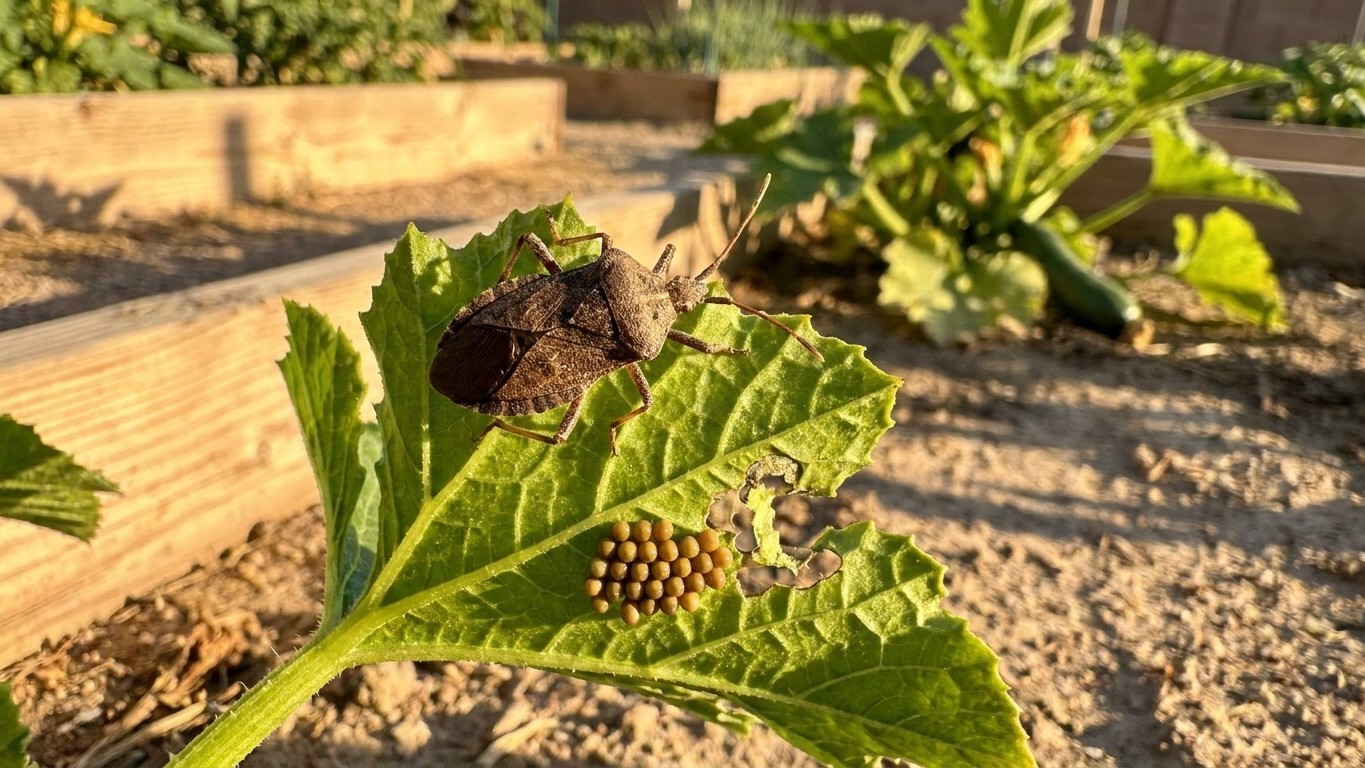
Adults are flat, shield-shaped, and grayish-brown, running about five-eighths of an inch long. They move slowly and tend to hide at the base of plants or under leaves when the sun gets intense, which happens fast in Nevada’s summer heat. Flip a leaf over on a hot afternoon and that’s usually where you’ll find them, motionless and easy to miss if you’re not looking closely.
Eggs are the giveaway most gardeners spot first. They’re a distinctive bronze or copper color, laid in tight clusters on the underside of leaves, often lined up neatly between the leaf veins in a V-shaped pattern. A single cluster can hold dozens of eggs, and one female can lay hundreds over her lifetime.
Nymphs hatch gray with black legs and cluster together in groups, feeding side by side on stems and leaf undersides. This is the stage where damage accelerates fast, because nymphs feed in numbers and their piercing mouthparts inject a toxin that disrupts the plant’s ability to move water and nutrients. The result looks a lot like bacterial wilt: yellow speckling on leaves that turns brown, then black, followed by whole leaves collapsing even though the soil underneath is moist. Extension entomologists sometimes call this “Anasa wilt,” and in Nevada’s dry heat, a wilting squash plant gets written off as drought stress more often than it should be.
Which Squash Are Hit Hardest
Zucchini and yellow summer squash take the worst damage, followed closely by pumpkins. Butternut squash carries some natural resistance, which makes it a smarter pick for gardeners in hotter Nevada zones who’ve had repeat squash bug trouble. Cucumbers and melons can host the bug too, but injury tends to be lighter than what happens to true squash and pumpkin plants.
What Actually Stops Squash Bug in Nevada Gardens
Sanitation does more heavy lifting here than anywhere else in pest control, mostly because Nevada’s dry climate means garden debris doesn’t break down quickly. Removing spent squash vines, old mulch, and boards or stones near the garden bed at the end of the season eliminates the exact shelter adults need to survive winter. In a state where water conservation pushes people toward heavy mulching, this is the one place where less mulch, at least right up against cucurbit plants, pays off.
Row covers work well in the early weeks after planting, blocking adults from reaching young plants before they’ve had a chance to flower. The catch is timing: covers need to come off once flowers open so pollinators can reach the blossoms, and that removal window is exactly when adult squash bugs start looking for a place to lay eggs. Growers who pull covers off gradually, checking leaf undersides daily for the first week or two, catch egg clusters before nymphs ever hatch.
Hand removal still holds up as one of the most effective tactics, especially for home gardeners with a handful of plants rather than a full field. Scraping egg clusters directly into a bucket of soapy water, or pressing a strip of tape over them, kills the batch before it becomes a nymph problem. Checking plants every two to three days during the active season in southern Nevada, where the season runs longer, catches new clusters before they mature.
Trap cropping gives gardeners a way to concentrate the pest where it’s easier to manage. Blue hubbard squash, planted around the perimeter of a garden bed, tends to draw squash bugs away from the main crop. Once the trap plants are covered in adults and eggs, treating or removing those specific plants clears out a large share of the population without spraying the whole bed.
Insecticidal soap and neem-based sprays work best against young nymphs, which have softer bodies than adults. Adult squash bugs shrug off most contact treatments, which is why timing sprays to the nymph stage, right after eggs hatch, gets far better results than blanket applications later in the season. Kaolin clay, applied as a fine coating on leaves, also disrupts feeding and egg-laying without harming pollinators, an important detail in Nevada where native bee populations already deal with limited forage in the desert landscape. For anyone considering chemical options, the National Pesticide Information Center maintains plain-language fact sheets on active ingredients and safe handling.
Resistant Varieties Worth Planting
Swapping susceptible varieties for tougher ones cuts down on the work needed later. Butternut, Royal Acorn, and Sweet Cheese squash have all shown better tolerance to squash bug feeding in university trials, while standard zucchini and pattypan varieties remain the most vulnerable. Gardeners in the hottest Nevada valleys, where a longer season means more time for bug populations to build, benefit most from choosing resistant types from the start.
Second Generations and Southern Nevada’s Longer Season
The extended frost-free window around Las Vegas and Pahrump, sometimes running from March into November, gives squash bugs more time to complete a second generation compared to the shorter seasons up north. That second wave typically shows up in late July or August, right as squash plants are already stressed from summer heat. Gardeners who controlled the first generation well in spring sometimes get caught off guard by this second push, especially if they stopped checking leaves once the initial wilting symptoms cleared up.
Staggering plantings, common in Nevada gardens to spread out harvest through a long season, can unintentionally extend squash bug pressure too, since younger plants keep offering fresh feeding sites even after earlier plantings are pulled. Removing finished plants promptly, rather than leaving them in the ground past their productive life, closes off that food source and pushes remaining adults to look elsewhere, ideally somewhere outside the garden.
Northern Nevada growers generally get a break here. With one generation per season and a shorter window of high heat, the fall cleanup routine of clearing vines and mulch does most of the work needed to keep next year’s population in check. The real vulnerability up north is a mild winter, since squash bug survival rates climb when hard freezes are scarce, something to watch for as Nevada’s high desert winters trend milder in some years than others.