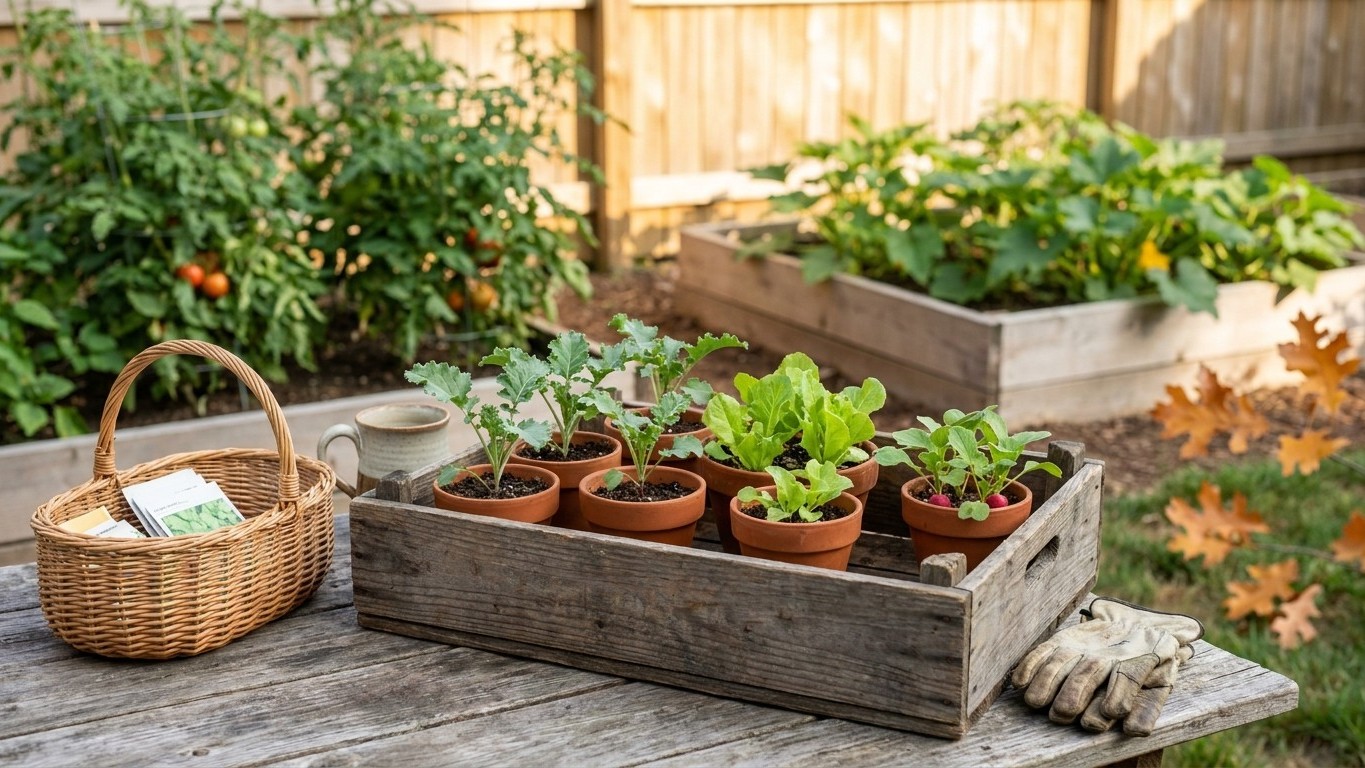

August in New Mexico is a fall-planting month, not a summer wind-down. Soil is still hot, the monsoon is delivering moisture, and the state’s long frost-free window at lower elevations leaves room for a full second round of cool-season vegetables. What changes the answer from Albuquerque to Taos is elevation and the local frost date, not the calendar page.
What goes in the ground in August

The decision this month hinges on one number: how many days are left before the first fall frost in your specific spot, not the state average. At the reference weather station used for New Mexico’s climate normals, the first fall freeze arrives somewhere between October 29 and November 9. That is a wide window on its own, and gardens outside town, especially at higher elevation, often see frost one to two weeks earlier than an airport station does. Count from the early end of that range, not the late end, and you will rarely be caught out.
With that math in hand, August is prime time to direct-sow a second wave of quick cool-season crops: beets, carrots, radishes, turnips, kohlrabi, and bush beans in the low desert valleys around Las Cruces and Deming where the growing season runs longest. Spinach, chard, and loose-leaf lettuce also go straight into the ground now, since they germinate fine in warm soil and simply slow down as the nights cool. Bunching onions and scallions from sets or transplants fit the same window.
Peas deserve a special mention. Unlike the spring crop, a fall pea sown in August finishes in the cooler, more forgiving weather of October, and many New Mexico gardeners get a better pod set this way than in the heat of a spring planting rushed ahead of the last frost.
Two crops are worth ruling out clearly. Garlic and shallots are a fall planting, not an August one, in New Mexico; they go in closer to October so the cloves root before winter dormancy without pushing top growth too early. And any new tomato, pepper, or squash transplant put in the ground in August is racing a clock it will almost certainly lose before frost. Save the space for something that actually has time to finish.
What to start under cover
The arithmetic for cover-grown seedlings works backward from that same fall frost window. Broccoli, cauliflower, and cabbage transplants typically need somewhere around two months from transplant to harvest, plus another few weeks of seedling growth before they go out. Counting back from an early-to-mid-fall frost, that puts the seed-starting date for these brassicas squarely in early-to-mid August for most of the state, with growers in the cooler north (Santa Fe, Taos, and the higher mountain valleys) leaning toward the earlier half of that window and the warmer Rio Grande and southern desert valleys able to push a bit later.
Start the seed under light shade cloth or indoors under lights rather than in bare open sun. New Mexico’s August sun and low humidity will scorch tender brassica seedlings and dry out trays fast; a cell tray kept consistently moist in a shaded spot germinates far more reliably than one left exposed on a bare patio.
Two failure modes bracket this window. Start too early, before the worst heat has broken, and seedlings often bolt or stall, becoming leggy and rootbound in their trays while waiting for weather that never quite cools enough to transplant them safely. Start too late, past the final weeks of August, and the plants run out of runway before frost shuts them down, especially at higher elevation where that October frost date arrives on the early end of the range. Splitting a sowing into two batches roughly ten days apart hedges against both problems.
What is ready to pick
August is the state’s signature harvest month, and nowhere is that more visible than in the roasting drums that show up outside grocery stores as New Mexico’s chile crop turns. Green chile is picked while the pods are still firm and glossy, before they begin to blush red; growers waiting for the fully ripe red pods, used for drying and ristras, let those same plants run longer into September. Either way, a pod that snaps cleanly off the stem with a light tug is ready; one that resists and bends the branch usually needs another week.
Tomatoes color from the blossom end first, and a fruit that gives slightly to gentle pressure at the shoulder is at peak flavor; picking a shade before full color develops and letting it finish on a counter actually protects flavor from splitting in the heat. Summer squash and cucumbers should come off young and often, since a single overlooked zucchini left on the vine for a few extra days will stall the whole plant’s production.
Sweet corn is ready when the silks have browned and dried but the husk is still green; a quick thumbnail test on a kernel that produces a milky liquid rather than a clear one confirms it. Melons are trickier: a cantaloupe slips cleanly from the vine at the stem when ripe, while watermelon ripeness is better judged by the dulling of the skin’s sheen and the drying of the tendril nearest the fruit than by the often-unreliable thump test.
The jobs that matter this month
Watering rhythm matters more in August than in almost any other month, because New Mexico’s monsoon season delivers rain in uneven bursts rather than steady soakings. A garden that gets a heavy downpour one week and nothing the next is exactly the setup that produces blossom end rot in tomatoes and peppers, since the fruit’s calcium uptake depends on even soil moisture. A deep, scheduled watering two or three times a week, adjusted down after a real monsoon storm rather than skipped entirely, evens that out far better than relying on the sky.
Mulch earns its keep hardest in August heat. A three-to-four-inch layer of straw or wood mulch around chile, tomato, and squash beds cuts soil evaporation dramatically and keeps root zones from swinging between soaked and bone-dry, which is the same swing that drives fruit cracking and blossom end rot.
Staking and caging should already be done by now for tomatoes and chile, but August is the month to check ties and add support before the plants get top-heavy with their peak fruit load; a cage that tips over in a monsoon downpour can snap a season’s worth of stems in one storm.
Succession sowing of the quick crops listed above, staggered every one to two weeks through the month, spreads the fall harvest out instead of dumping it all at once. And pest scouting matters most right now: squash bugs and squash vine borers peak in late summer, and a five-minute check under leaves twice a week catches egg clusters before they become an infestation that overwinters in the bed.
What not to do in August
The most common mistake is treating August like a second spring and setting out new tomato, pepper, or squash starts because the weather still feels warm. It is warm, but there is no longer enough season left before the fall frost window for these crops to mature; that effort is better spent on the fall vegetables that actually finish in time.
Feeding a heavy dose of high-nitrogen fertilizer to tomatoes and peppers this late in the season is another classic error. Nitrogen pushes leafy green growth at exactly the point the plant should be finishing fruit, and the result is a lush plant with a disappointing late-season fruit set. A light phosphorus-and-potassium feed supports the fruit already forming without triggering more foliage.
Letting soil dry out completely between monsoon storms, then flooding it once rain finally arrives, is the direct path to blossom end rot and split tomatoes discussed above; a consistent watering schedule beats reacting to the weather. And harvesting green chile too early, before the pod has filled out and firmed, sacrifices both flavor and yield compared with waiting the extra few days a firm pod needs.
Finally, overhead watering late in the day during monsoon humidity invites powdery mildew and other fungal disease on squash and melon leaves. Watering at the base, earlier in the day, gives foliage time to dry before evening humidity sets in.
Checking this against your own county
New Mexico’s hardiness zones span 4b to 9a under the USDA Plant Hardiness Zone Map, a range built from a single measurement, the average extreme minimum winter temperature. That spread alone tells you how differently a garden in Carlsbad behaves compared with one in Taos or Chama. Elevation shifts frost dates by weeks, not days, across the state, and the figures cited here come from one reference weather station, not a statewide guarantee.
Before committing a bed to any of the timing above, check your own county’s typical frost dates and cross-reference against New Mexico State University’s Cooperative Extension Service at aces.nmsu.edu, which publishes county-level guidance built for the state’s elevation swings.
Common questions
Can I still plant tomatoes in August in New Mexico?
New transplants set out in August rarely have enough time to mature before the first fall frost, which arrives between October 29 and November 9 at the reference station used for the state’s climate normals, and earlier than that at higher elevation. Established plants already in the ground should keep producing through the month.
Is it too late to plant chile in August?
Yes. New Mexico’s chile crop needs a full spring-to-summer season to mature; August plantings would not size up before cooler weather sets in. August is harvest time for chile started earlier in the year, not planting time for new starts.
What vegetables can I direct sow in August in New Mexico?
Beets, carrots, radishes, turnips, kohlrabi, bush beans in the longer-season southern valleys, spinach, chard, loose-leaf lettuce, and fall peas all handle direct sowing into the still-warm August soil.
When should I plant garlic in New Mexico?
Garlic and shallots go in during fall, closer to October, so the cloves can root before winter dormancy without pushing premature top growth. August is too early for garlic in most of the state.