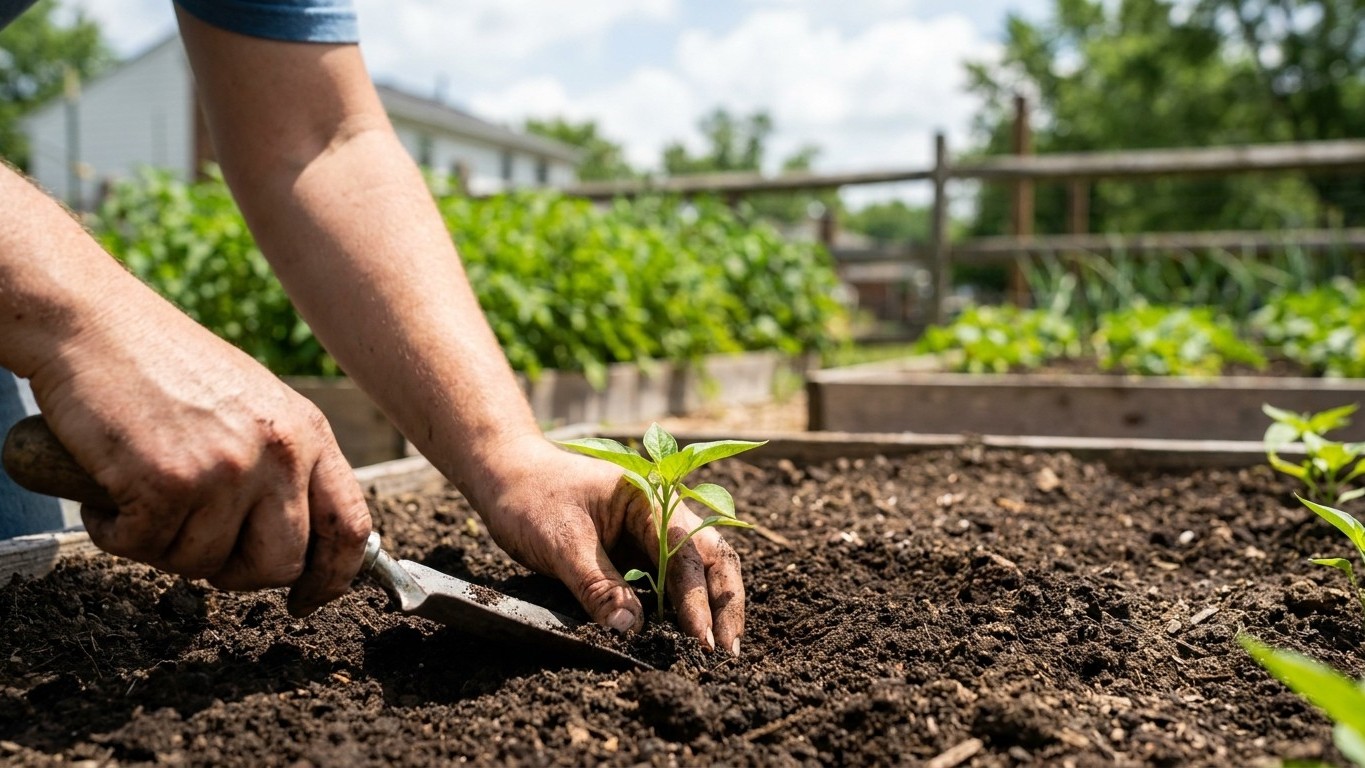

July in New Mexico means direct-sowing heat-loving crops like beans, squash, cucumbers, and okra while the soil is warm and the calendar still leaves enough days before the first fall frost (October 29 to November 9) for them to mature. It’s also the month to start fall brassicas under cover and to protect everything else from the intensity of high-desert sun and the arrival of monsoon rain.
What goes in the ground in July

Soil temperature, not the date on a seed packet, decides what survives in New Mexico right now. By July, ground temperatures across the state sit well above the 60F to 70F germination threshold most warm-season crops need, and that opens the door to direct-sown beans, summer squash, cucumbers, and okra, all of which can mature in 55 to 70 days, well inside the window before the first fall frost lands between October 29 and November 9.
Melons and winter squash are a tighter call. Cantaloupe and watermelon typically need 75 to 90 days, and pumpkins or butternut can run past 100. Planted in early July, they can still finish before frost in the lower deserts around Las Cruces or Albuquerque, but at higher elevations in Santa Fe or Taos, where the growing season is shorter, that math gets risky. If the seed packet lists a maturity date past 85 days, treat it as a gamble unless the garden sits below about 5,500 feet.
Corn is worth a second look too. A second, quick-maturing planting of sweet corn in the first half of July can still tassel and fill before the cold arrives in the lower valleys, though it’s a poor bet anywhere above 6,000 feet.
What to skip this month
Cool-season crops like spinach, peas, and lettuce are not for the open garden in July. New Mexico’s daytime highs push most of these straight to bolting within days, wasting the seed. Save them for a fall sowing once temperatures start dropping back down in late August or September.
What to start under cover
The trick with fall crops is counting backward from the first frost window rather than forward from the calendar. Broccoli and cabbage transplants need roughly 60 to 70 days from transplant to harvest, plus another three to four weeks as seedlings before they go in the ground. Working back from the earliest expected frost date of October 29, that puts the seed-starting window for these squarely in July, with transplanting into the garden happening in mid to late August.
Cauliflower runs a little longer, often 75 to 85 days, which pushes the safe seed-starting date earlier in July rather than later. Kale and collards are more forgiving, tolerating a light frost and even improving in flavor after one, so they have a bit more slack in the schedule.
The two ways this goes wrong are familiar to anyone who has started seedlings before. Start too early under grow lights or in a hot garage, and the plants get leggy and rootbound long before the garden is ready for them, stunting growth once they finally go in. Start too late, chasing cooler weather that hasn’t arrived yet, and the transplants run out of daylight and warmth before they mature, leaving a half-grown crop when the first real cold hits.
Because New Mexico summers run hot even after sunset in many regions, seedlings started indoors or under light shade cloth tend to do better than those started in full sun on a patio, where soil in small containers can spike well above what young roots tolerate.
What is ready to pick
July is when the garden starts paying back the spring’s work. Tomatoes planted after the last frost window in early April are typically setting and ripening fruit by now, especially early varieties. Peppers follow a similar timeline, though they often take a bit longer to color up fully.
Summer squash and cucumbers, if the plants went in during the earlier warm weeks, are usually producing steadily by July and need checking every day or two, since both can go from perfectly sized to oversized and seedy within 48 hours in this kind of heat.
Garlic and onions planted the previous fall are typically ready for harvest as their tops yellow and fall over, a sign that bulbs have stopped sizing up and it’s time to pull and cure them rather than leave them in ground that’s only getting hotter.
Green beans from an earlier planting should be picked young and often, both for tenderness and because leaving mature pods on the vine signals the plant to stop producing new ones. Melons are trickier to judge; a cantaloupe usually separates cleanly from the vine with a light tug when ripe, while watermelon relies more on a dulling of the skin’s sheen and a hollow sound when thumped.
The jobs that matter this month
Mulch is the single highest-value job in a New Mexico garden in July. A three-to-four-inch layer of straw or wood chips around tomatoes, peppers, and squash slows moisture loss from soil that can otherwise dry out within hours under full desert sun, and it keeps root zones several degrees cooler, which matters more than most gardeners assume when daytime highs regularly climb past 90F.
Watering rhythm matters as much as volume. Deep, infrequent watering, early in the morning before heat sets in, encourages roots to grow downward and access cooler soil, while shallow daily watering trains roots to stay near the surface where they’re more vulnerable to heat stress. Drip irrigation or soaker hoses waste far less water to evaporation than overhead sprinklers, a real consideration in a state where water is never treated casually.
Monsoon season typically arrives in New Mexico around this point in the summer, bringing sudden, heavy downpours after weeks of dry heat. Staking tomatoes, peppers, and tall flowers before the first big storm prevents snapped stems, and checking that garden beds drain properly rather than pooling water avoids root rot setting in overnight.
Succession sowing keeps beans, squash, and cucumbers producing instead of tapering off; a new round of seed every two to three weeks through mid-July keeps the harvest steady into fall. Pest scouting matters too, since squash bugs and hornworms multiply fast in the heat, and catching an infestation in its first week is far easier than fighting it once it’s established across a whole bed.
What not to do in July
The most common mistake this month is treating a warm afternoon as proof the soil is ready, when air temperature and soil temperature are two different measurements. Planting warm-season seed into soil that’s still cool a few inches down, common in shaded beds or heavier clay soils even in midsummer, leads to slow, uneven germination that never quite catches up.
Overwatering is a close second, especially once monsoon rains start. A gardener used to dry spring weeks can keep running the drip system on the old schedule and end up drowning roots that are already getting more water from the sky than they need. Checking soil moisture with a finger before watering, rather than following a fixed timer, avoids this.
Fertilizing with high-nitrogen feed at this point in the season is another frequent misstep. Nitrogen pushes leafy growth, which is useful early in a plant’s life but counterproductive once tomatoes, peppers, and squash are trying to set and ripen fruit. A feed lower in nitrogen and higher in phosphorus and potassium supports fruiting instead of just adding more foliage that shades the fruit and slows ripening.
Leaving fall brassica transplants in full, unshaded sun while they’re still small seedlings is a quieter mistake, but it stunts them just as badly as an early frost would in spring. Light shade cloth for the first couple of weeks after transplanting gives them a fighting chance against July’s harshest afternoon sun.
Checking this against your own county
These dates and windows describe a starting point for New Mexico as a whole, not a fixed instruction for every garden in it. Elevation swings across the state, from the low deserts around Las Cruces to the high mountain valleys near Taos, can shift both frost windows and summer heat intensity by several weeks in either direction, and the hardiness zone range of 4b to 9a reflects just how much that varies from one county to the next.
For a planting calendar tuned to a specific New Mexico county, and for local guidance on monsoon timing and irrigation, the New Mexico State University Cooperative Extension Service is the reliable next stop.
Common questions
Is it too late to plant tomatoes in New Mexico in July?
Direct-seeding tomatoes in July is generally too late to reach maturity before frost in most of the state. Transplants already growing since spring will still be producing, but starting new tomato plants from seed this month is a poor bet outside the lowest, warmest valleys.
Can I still plant squash in July in New Mexico?
Yes, summer squash direct-sown in early to mid-July typically has enough time to mature before the first fall frost in most of the state, especially in lower-elevation gardens. Winter squash varieties with longer maturity times are riskier and depend heavily on elevation.
Why is my garden bolting in the July heat?
Cool-season crops like lettuce and spinach bolt when daytime temperatures climb too high for too long, a common occurrence across New Mexico in midsummer. These crops belong in a fall sowing once temperatures drop, not in the peak of summer heat.
Does monsoon rain mean I can stop watering in July?
Not entirely. Monsoon storms are often brief and intense rather than steady, and they can miss parts of a garden depending on wind and cloud cover. Checking actual soil moisture rather than assuming rainfall was enough avoids both drought stress and accidental overwatering.